Tag: Ape

  • How We Discovered The Ape Within Us

    How We Discovered The Ape Within Us


    For centuries, humans have grappled with the question of our origins and our place in the natural world. It wasn’t until the groundbreaking work of scientists like Charles Darwin and Thomas Huxley that we began to unravel the profound truth: humans are not a separate creation from other animals, but rather a branch of the great ape family tree. This realization shattered long-held beliefs and sparked heated debates, but ultimately paved the way for a deeper understanding of our evolutionary past.

    The Ancient Observers

    Long before modern science, ancient philosophers and naturalists had observed the striking similarities between humans and apes. Aristotle, the famous Greek philosopher, noted the resemblance between apes and humans in his writings. In the 3rd century BCE, the Roman writer Claudius Aelianus remarked on the human-like behaviors of apes, such as their ability to learn and their social nature.

    However, these early observations were often dismissed or interpreted through the lens of religious beliefs, which placed humans as a separate and superior creation from animals.

    The Dawn of Evolutionary Theory

    It wasn’t until the 19th century that the scientific foundations were laid for understanding our true kinship with apes. In 1859, Charles Darwin published his revolutionary work, “On the Origin of Species,” which introduced the theory of evolution by natural selection. While Darwin initially shied away from explicitly linking humans to apes, his groundbreaking ideas paved the way for further exploration of our evolutionary origins

    The Ape-Man Debate

    One of the fiercest proponents of the ape-human connection was Thomas Huxley, a renowned biologist and staunch supporter of Darwin’s theory. In 1863, Huxley delivered a powerful lecture titled “Evidence as to Man’s Place in Nature,” where he presented compelling anatomical and physiological evidence that humans and apes share a common ancestor.

    Huxley’s bold assertions ignited a firestorm of controversy, as they challenged deeply rooted religious and cultural beliefs about human exceptionalism. The debate between Huxley and his opponents, such as Richard Owen, the renowned anatomist, became known as the “Ape-Man Debate,” a clash of ideas that captivated the public imagination.

    The Missing Link

    As the debate raged on, scientists sought to find the elusive “missing link” — a fossil that would bridge the evolutionary gap between apes and humans. In 1891, a remarkable discovery was made in Java, Indonesia: the fossilized remains of a human-like creature, later named Homo erectus, which lived around 1.8 million years ago.

    While not the direct ancestor of modern humans, Homo erectus provided tangible evidence of our ape-like ancestors, further solidifying the evolutionary connection. Additional fossil discoveries, such as the famous “Lucy” skeleton found in Ethiopia in 1974, continued to shed light on our ancient primate relatives.

    The Genetic Evidence

    In the latter half of the 20th century, a new field of study emerged that would provide the most compelling evidence yet of our ape ancestry: molecular biology. By comparing the genetic makeup of humans and other primates, scientists were able to quantify the remarkable similarities between our species.

    Groundbreaking studies revealed that humans share over 98% of our DNA with chimpanzees and bonobos, our closest living relatives in the ape family. This genetic evidence, coupled with the fossil record and anatomical comparisons, cemented our place as a branch on the ape evolutionary tree.

    In a Nutshell

    The journey to unraveling our ape origins was long and arduous, fraught with religious and cultural resistance. However, through the tireless efforts of scientists like Darwin, Huxley, and countless others, the truth emerged: we are not a separate creation, but an integral part of the rich tapestry of life on Earth, sharing a common ancestry with our ape cousins.

    This realization not only deepens our understanding of our past but also shapes our perspective on our present and future. By embracing our evolutionary roots, we can better appreciate our place in the natural world and how interconnected life on our planet is.


    Further Reading

    Nested Hierarchies, the Order of Nature: Carolus Linnaeus
    Homo sapiens, Tyrannosaurus rex, Escherichia coli -our English conversation is littered with pairs of Latin names for…evolution.berkeley.edu

    Human taxonomy – Wikipedia
    From Wikipedia, the free encyclopedia Homo (“humans”) Scientific classification Genus: Homo Linnaeus, 1758 Type species…en.wikipedia.org

    Human evolutionary genetics – Wikipedia
    Human evolutionary genetics studies how one human genome differs from another human genome, the evolutionary past that…en.wikipedia.org

    How humans and apes are different, and why it matters
    Why it’s important to study the deep similarities, and the critical differences, between humans and the apes to seek an…www.sciencedaily.com

    New Fossil Discovery May Change What We Know About Human Evolution
    The ancient species Homo naledi had small brains and seems to have intentionally carried their dead into caveswww.smithsonianmag.com


    A Brief History of Human Evolution From the Dawn of Life

    The journey of human evolution is a remarkable story that spans billions of years, tracing its origins back to the most humble and microscopic of beginnings – the unicellular organism. These single-celled lifeforms, tiny though they were, laid the foundation for the incredible diversity of life that would eventually emerge on our planet, including the rise of our own species, Homo sapiens.

    The earliest forms of unicellular life are believed to have arisen on Earth around 3.8 billion years ago, simple prokaryotic cells that lacked a true nucleus or membrane-bound organelles. These primitive cells, powered by the chemical reactions of their internal metabolic processes, represented the first stirrings of life on our planet.

    The Rise of Complexity

    Over vast stretches of time, these unicellular organisms diversified and evolved, giving rise to more complex eukaryotic cells with a true nucleus and specialized organelles. It was from these eukaryotic cells that the first multicellular organisms emerged, a pivotal moment in the grand tapestry of evolution. These early multicellular lifeforms, such as simple algae and fungi, paved the way for the subsequent emergence of more complex lifeforms, including the earliest animals and plants.

    The Evolutionary Leap to Multicellularity

    The evolution of animals, in particular, set the stage for the eventual rise of vertebrates, a diverse group of organisms characterized by the possession of a backbone or spinal column. Among these vertebrates, a lineage of small, shrew-like mammals emerged, adapted to a nocturnal lifestyle and possessing a remarkable ability to adapt and survive.

    The Primate Lineage

    It was from this lineage of early mammals that the ancestors of primates, including humans, eventually emerged. Over millions of years, these primate ancestors underwent a series of evolutionary changes, adapting to life in the trees and developing traits such as grasping hands, binocular vision, and increased intelligence.

    The First Human Ancestors

    The first true human ancestors, members of the genus Australopithecus, emerged around 4 million years ago in Africa. These early hominins walked upright on two legs, a trait that would become a defining characteristic of our species. Over time, the genus Homo emerged, with species like Homo erectus and Homo neanderthalensis representing important milestones in our evolutionary journey.

    The Emergence of Homo Sapiens

    Finally, around 300,000 years ago, our own species, Homo sapiens, appeared on the evolutionary stage. These modern humans possessed a larger brain, advanced cognitive abilities, and a capacity for language and complex tool-making that set them apart from their predecessors.

    The Legacy of Evolution

    From these humble beginnings as unicellular organisms, our species has undergone an extraordinary journey of evolution, one that has taken us from the microscopic realm to the heights of technological and cultural achievement. Yet, despite our remarkable progress, we remain inextricably linked to the vast web of life that surrounds us, a testament to the incredible power of evolution to shape and transform the living world.

  • What Is It To Be an Ape?

    What Is It To Be an Ape?


    For centuries, the human-ape evolutionary connection has been a topic of intense debate within the scientific community. While it is widely acknowledged that humans belong to the primate order, the question of whether we should be classified as members of the ape family has sparked intellectual discourse and rigorous examination. This evolutionary link between humans and apes is supported by a wealth of anatomical, genetic, and behavioral evidence that warrants a thorough exploration.

    Through the lens of anatomical similarities, the striking resemblances between humans and other great apes, such as chimpanzees, gorillas, and orangutans, are undeniable. From the structure of our skeletal system and muscular arrangement to the presence of vestigial traits like tailbones and wisdom teeth, the anatomical parallels paint a compelling picture of our shared evolutionary heritage.

    Furthermore, the advancement of genetic studies has unveiled the profound genetic kinship between humans and apes. With an overwhelming similarity in our genetic makeup, the evidence suggests that we share a common ancestor with our ape counterparts, solidifying the Human-ape evolutionary connection as a scientifically grounded concept.

    Behavioral observations also lend credence to this connection. The intricate social structures, tool-making abilities, and displays of emotions exhibited by apes bear striking resemblances to human behaviors, hinting at our shared evolutionary roots and cognitive capabilities.

    Join us as we delve into the multifaceted aspects of the our evolutionary connection to apes, a perspective that challenges preconceived notions and invites us to embrace our place within the grand tapestry of primate evolution.

    Anatomical Evidence

    Underscoring our evolutionary connection to apes, the anatomical similarities between humans and other apes are striking and impossible to ignore. Like our closest genetic relatives, chimpanzees and gorillas, we possess a suite of physical characteristics that firmly place humans within the ape family. One of the most conspicuous traits exemplifying this connection is the absence of a tail, a defining characteristic of apes that sets them apart from monkeys.

    Moreover, the human-ape evolutionary connection is further reinforced by the shared presence of opposable thumbs and the ability to grasp objects with precision among humans and other apes. This adaptation has been instrumental in the development of our advanced tool-making capabilities, a hallmark of human culture and ingenuity that finds its roots in our ape ancestry.

    Genetic Evidence

    Reinforcing the human-ape evolutionary connection, the field of molecular biology has provided compelling evidence of our close genetic kinship with other apes. Through the analysis of DNA sequences, scientists have established that humans share a remarkable 98.8% of their genetic makeup with chimpanzees, our closest living relatives. This staggering genetic similarity underscores the evolutionary ties that bind us to the ape lineage and solidifies the human-ape evolutionary connection.

    Furthermore, studies of genetic markers and genomic architecture have revealed that humans and other apes share a common ancestor that lived approximately 6 million years ago. This shared ancestry, coupled with the high degree of genetic similarity, provides a strong foundation for classifying humans as an ape species within the context of the human-ape evolutionary connection.

    The genetic evidence, from our near-identical DNA sequences to our shared ancestral roots, paints an unequivocal picture of the evolutionary bond between humans and apes, cementing the human-ape evolutionary connection as a scientifically validated reality.CopyRetry

    Behavioral and Cognitive Evidence

    Extending beyond the realms of anatomy and genetics, the human-ape evolutionary connection is further reinforced by the range of behaviors and cognitive capacities that humans exhibit, which are quintessentially ape-like. Like our ape cousins, we live in complex social groups, engage in intricate communication through language and gestures, and exhibit advanced problem-solving abilities – traits that are hallmarks of our shared evolutionary heritage.

    Moreover, the human-ape evolutionary connection is underscored by the capacity for empathy, self-awareness, and emotional intelligence that humans possess – traits that were once thought to be unique to our species but have since been observed in varying degrees among other apes. These cognitive and behavioral parallels further reinforce the notion that humans are indeed part of the ape family.

    The behavioral and cognitive evidence, from our intricate social structures to our emotional depth, paints a compelling picture of the evolutionary bond between humans and apes, cementing our connection as a multifaceted and scientifically grounded perspective.

    Evolutionary Perspective

    From an evolutionary standpoint, the classification of humans as an ape species is a logical and parsimonious conclusion that further solidifies the human-ape evolutionary connection. The theory of evolution, supported by overwhelming scientific evidence, posits that all life on Earth is connected through a vast web of shared ancestry. Humans, like all other species, have evolved from earlier forms of life, tracing our lineage back to the common ancestor we share with other apes, underscoring the undeniable human-ape evolutionary connection.

    To deny our ape heritage would be to reject the fundamental principles of evolutionary biology and the overwhelming evidence that supports our kinship with these remarkable creatures, effectively dismissing our well-established evolutionary connection to apes.

    The evolutionary perspective, grounded in scientific rigor and backed by a wealth of evidence, firmly establishes the human-ape evolutionary connection as an inescapable reality, reinforcing the notion that humans are indeed members of the ape family.

    In a Nutshell

    The cumulative weight of anatomical, genetic, behavioral, and evolutionary evidence compels us to embrace the scientific consensus that humans are, indeed, an ape species – a conclusion that reinforces the profound human-ape evolutionary connection. While this classification may initially seem unsettling to some, it is a testament to our remarkable evolutionary journey and the interconnectedness of all life on our planet, underscored by our undeniable connection to apes.

    By acknowledging our place within the ape family through the lens of our evolutionary connection, we not only gain a deeper understanding of our origins but also a profound appreciation for the biodiversity that surrounds us. Ultimately, this recognition should inspire us to become better stewards of our planet and to protect the habitats and well-being of our ape cousins, with whom we share an indelible evolutionary bond as highlighted by the human-ape evolutionary connection.

    Embracing our link to other apes is a scientific imperative, a humbling acknowledgment of our place in nature, and a call to action to preserve the remarkable diversity of life that has evolved in our shared planetary home.


    Further Reading

    1. “Humans are apes: an introduction to human evolution” by Stanford University Link: https://humanorigins.si.edu/education/introduction-human-evolution
    2. “Humans are apes” by the Australian Museum Link: https://australianmuseum.net.au/learn/science/human-evolution/humans-are-apes/
    3. “Are humans apes?” by the Cleveland Museum of Natural History Link: https://www.cmnh.org/CMNH/media/CMNH_Media/documents/pdf/Humans-are-Apes.pdf
    4. “Humans are apes: a primatological perspective” by the American Museum of Natural History Link: https://www.amnh.org/exhibitions/permanent/human-origins-and-cultural-halls/anne-d.-moehlman-hall-of-human-origins/dna-research

    Extant Ape Species

    Of all the animals on Earth, apes are among our closest genetic relatives in the animal kingdom. Apes, including humans, belong to the primate order and are part of the superfamily Hominoidea. There are several extant, or living, ape species that continue to exist in the present day.

    Humans (Homo sapiens) are a species of great ape that evolved in Africa before migrating across the globe over tens of thousands of years. As the only surviving species of the Homo genus of great apes, modern humans are characterized by their high intelligence, upright bipedal locomotion, ability to construct complex tools and technologies, and development of language and culture.

    The other great apes are gorillas, chimpanzees, bonobos, and orangutans. These apes are characterized by their high intelligence, use of tools, upright posture, and lack of a tail.

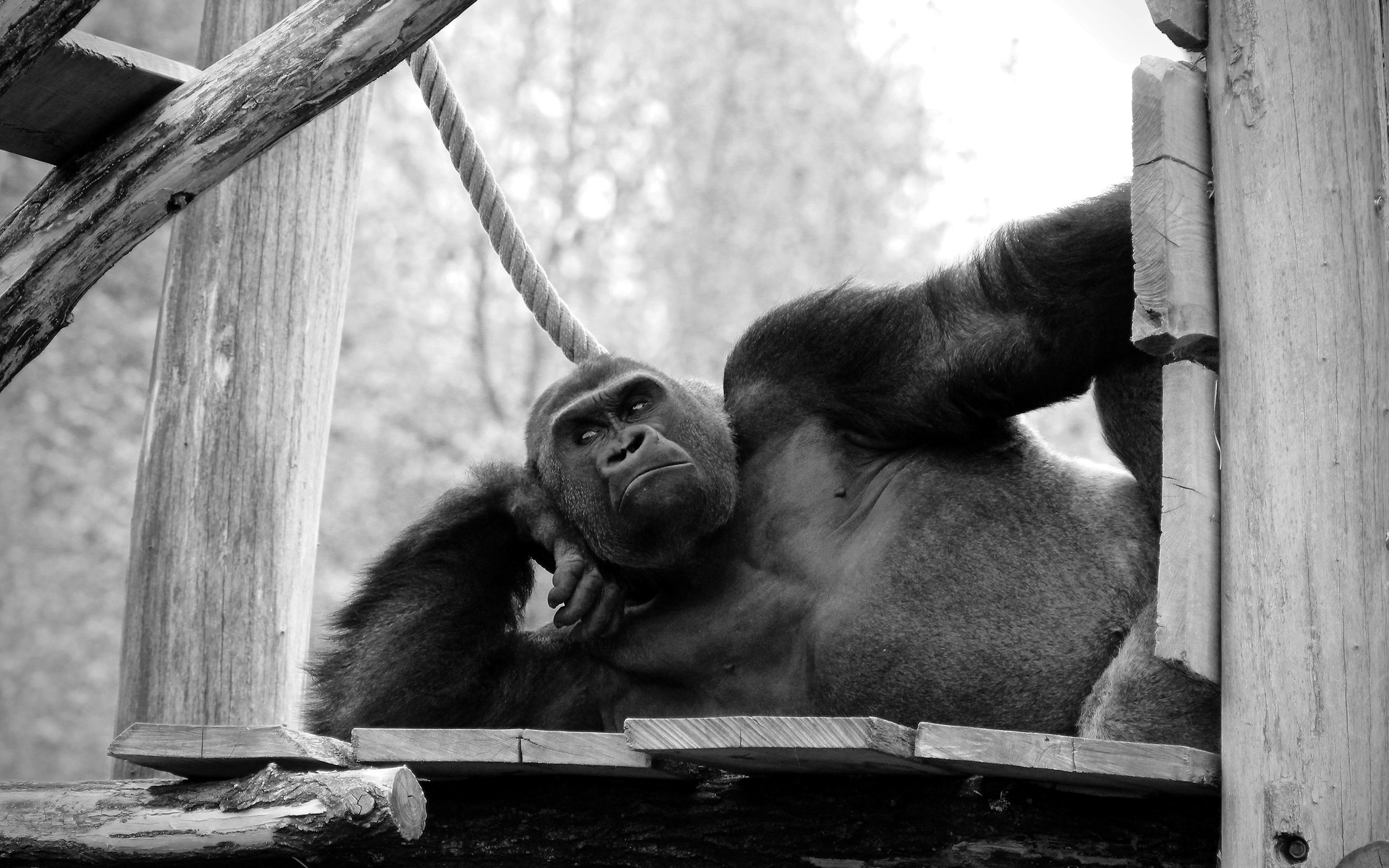
    Gorillas are the largest living primates after humans, with the western and eastern lowland gorillas found in equatorial Africa. Mountain gorillas, a subspecies critically endangered due to habitat loss and poaching, dwell in the mountainous forests of central Africa.

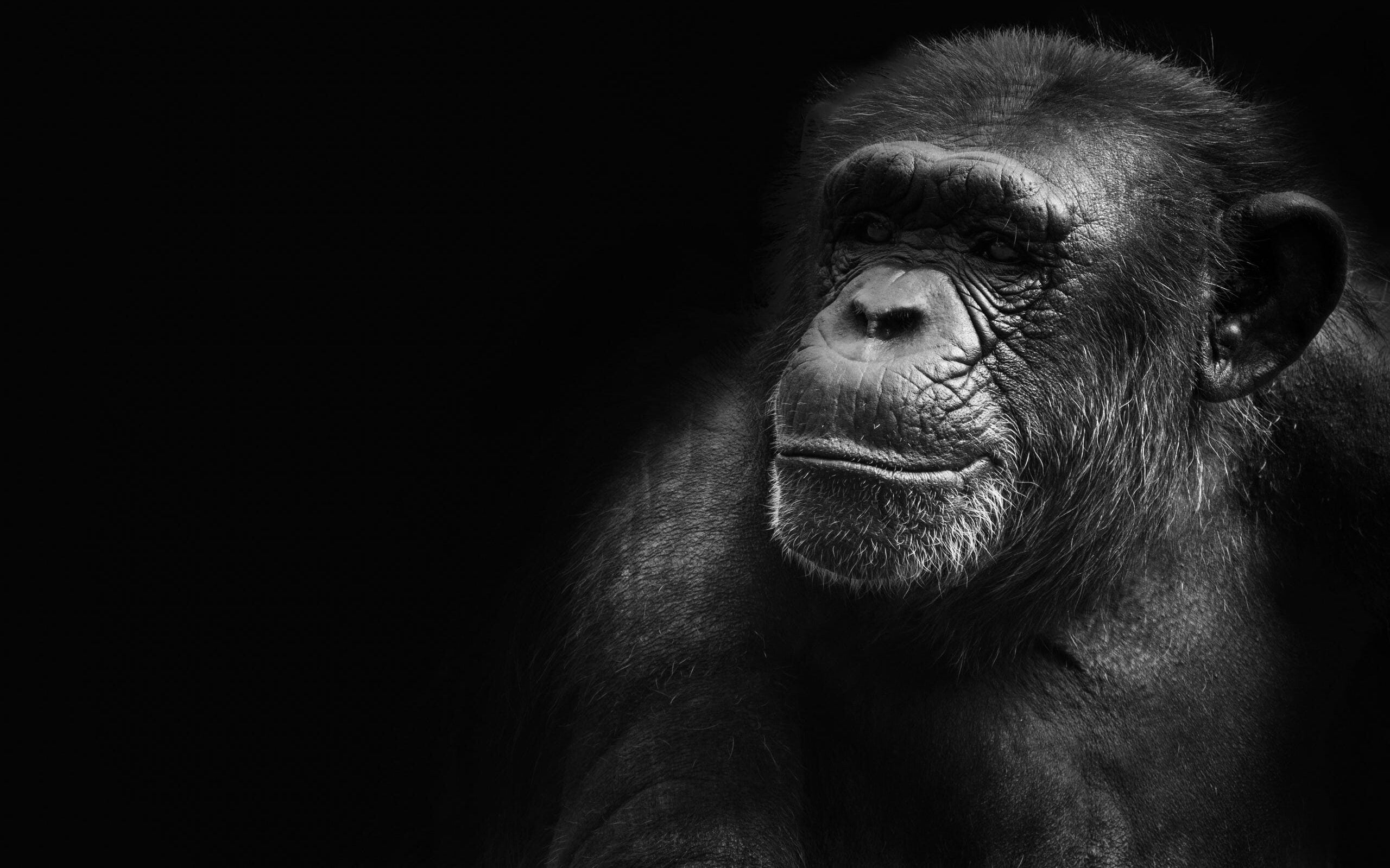
    Chimpanzees are our closest genetic relatives after bonobos, sharing around 98% of our DNA. Common chimpanzees use basic tools and communicate with vocalizations and gestures. The bonobo is the other chimpanzee species native to the Congo basin.

    The orangutan is the only great ape found in Asia, with species inhabiting the islands of Sumatra and Borneo. These large, arboreal apes have reddish fur and are known for their intelligence and solitary lifestyle.

    Aside from the great apes, the other living apes are the gibbons or lesser apes found in the rainforests of Southeast Asia. Species like the siamang and white-handed gibbon are renowned for their loud, haunting calls.

    As our closest genetic relatives, the study and conservation of non-human ape species is critically important. Along with our own species, these primates offer insights into ape evolution and behavior. Ensuring the survival of great apes and lesser apes helps preserve a precious part of our collective heritage on Earth.