Tag: Biology

  • Seeing is Believing? Debating the Eye’s Origins

    Seeing is Believing? Debating the Eye’s Origins

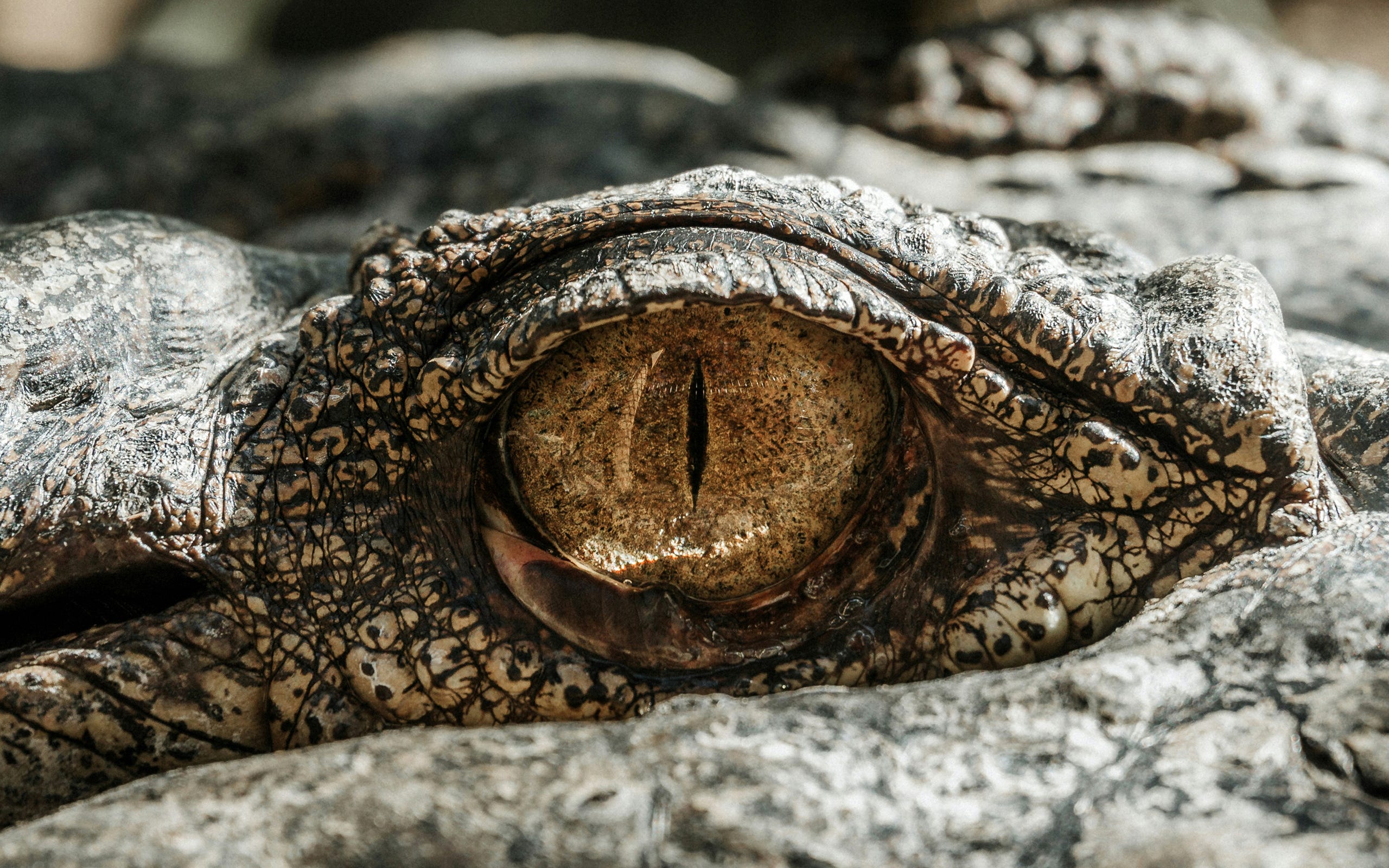
    Throughout history, the eye has captivated the minds of scientists, philosophers, and theologians alike with its intricate and remarkable nature. Its complexity and accuracy in processing visual information have led many to ponder its origins and development. While the theory of evolution provides a compelling explanation for the eye’s evolution, some argue that its sheer complexity suggests the possibility of divine intervention. In this essay, we will explore the concept of irreducible complexity and its role in the debate about the eye’s evolution. We will then examine the opposing viewpoint that attributing the eye’s evolution to divine intervention raises other equally challenging questions.

    The Eye: A Biological Marvel

    The human eye, a masterpiece of biological engineering, showcases an intricate assembly of components. The cornea and lens focus light, the retina captures images, and the optic nerve transmits these signals to the brain. Each part plays a distinct role, working harmoniously to enable vision. Remarkably, the eye processes light, discerns colors, and adjusts focus across varying distances with precision. This intricate system, capable of capturing and processing the world’s visual wonders, often sparks debate about its evolutionary origins, as its complexity and efficiency sometimes challenge the conventional understanding of natural development.

    Arguments for Divine Design

    The argument for divine intervention in the eye’s evolution centers around the concept of irreducible complexity, introduced by biochemist Michael Behe. This idea posits that certain biological systems, like the bacterial flagellum, are so complex and interdependent that they defy gradual evolutionary explanations. Behe suggests such complex systems could not have evolved through minor, incremental modifications.

    Extending this argument to the human eye, proponents of intelligent design highlight its intricate assembly: the lens, retina, optic nerve, and other components, all of which must function in unison for vision to occur. They argue that this complexity is beyond the scope of step-by-step evolutionary processes, implying the necessity of an intelligent designer, often conceptualized as God.

    Moreover, the aesthetic aspect of the eye’s design — its beauty and elegance — is sometimes cited as evidence of divine craftsmanship. For those who subscribe to this view, the eye is not just a biological entity but a work of art, reflecting a complexity and sophistication that surpasses the boundaries of random, natural processes. This perspective sees the eye as a tangible testament to the existence of a higher power, emphasizing its design as too intricate to have emerged solely from unguided evolutionary mechanisms.

    Counterargument: Divine Intervention on Trial

    While intriguing for some, the proposition of divine intervention in the eye’s evolution encounters significant scientific counterarguments. A primary concern is the necessity for empirical evidence or a testable hypothesis to substantiate claims of divine guidance. Science operates on the principles of observable, verifiable phenomena and empirical data. In the absence of such evidence, attributing the evolution of the eye to divine involvement remains within the realm of faith rather than scientific scrutiny.

    Furthermore, endorsing divine intervention in the case of the eye raises broader questions. What about other intricate biological structures if the eye’s complexity is attributed to divine action? This leads to the issue of selective divine intervention, compelling one to discern which aspects of life receive divine influence and which do not, a distinction that lacks clear criteria and scientific backing.

    Moreover, suggesting that the eye’s complexity requires divine explanation may inadvertently diminish the explanatory power of evolutionary theory. Evolution, as established by Charles Darwin and further developed by subsequent scientists, offers a robust framework for understanding the diversity and adaptation of life. Questioning its capacity to account for complex structures like the eye challenges the foundations of modern biology. Evolutionary theory, through mechanisms like natural selection and genetic variation, provides a well-supported explanation for the gradual development of complex biological systems, including the eye.

    Evolutionary Recipe for Sight

    While some argue for divine intervention, evolutionary biologists have proposed a detailed and gradual explanation for the eye’s development. Early light-sensitive cells, present in simple organisms, are believed to be the precursors to complex eyes. Over vast stretches of time, through natural selection, these simple light detectors evolved into more sophisticated structures. Favorable mutations and adaptations, offering survival advantages, led to the development of features like corneas, lenses, and retinas. This gradual process, spanning millions of years, resulted in the intricate and efficient eyes we see today.

    Finding Harmony

    The debate over the eye’s evolution and the role of a higher power is complex and multifaceted. While science currently provides a compelling narrative for the eye’s development, the human desire to understand the fundamental mysteries of life persists. Perhaps, as our scientific understanding deepens, we may find that the beauty and complexity of the eye are not incompatible with the biological processes shaping life on Earth. Additionally, the concept of a higher power can remain a source of faith and wonder for those who find meaning in it.

    The Take Away

    The question of the eye’s origins may not have a definitive answer that satisfies everyone. However, appreciating both the scientific explanation for its development and the sense of awe it inspires can be a beautiful balancing act. Science provides a framework for understanding the natural world, while faith offers ways to connect with something larger than ourselves. Nothing stops people from recognizing the value of both perspectives.

    Further Reading

    1. CompellingTruth.org – Irreducible complexity and divine intervention.
    2. Scienceline – Breaking down irreducible complexity.
    3. Wikipedia – Overview of irreducible complexity.
    4. PBS NOVA – Interview on evolution and intelligent design.
    5. National Association of Scholars – Evolution, neo-Darwinism, and divine intervention.
    6. Lehigh University – Michael Behe on irreducible complexity.
  • Unveiling the Missing Links

    Unveiling the Missing Links

    A common misconception about evolution is that it must proceed in discrete leaps, with one species abruptly “evolving into” another. This perspective stems from a flawed interpretation of evolutionary theory and the concept of “missing links.” In reality, evolution is an exquisitely gradual process, with one species slowly and incrementally transitioning into a new form over immense timescales. The fossil record doesn’t show clean breaks, but rather a continuous tapestry of incremental change between ancestral and descendent organisms.

    Any fossil that represents an intermediate form along this continuum could be considered a “missing link” — connecting the evolutionary threads between what came before and what came after. Far from being mere gaps to be filled, these transitional fossils provide invaluable evidence illuminating the pathways of evolutionary transformations. Even more compelling are the living organisms today that appear to be caught in the midst of a major transition, offering a breathtaking glimpse into the dynamic processes that so slowly reforge one species into another over eons.

    From Sea to Land: Hand-Fish Blazing the Trail

    Perhaps the most famous example of this is the terrestrial fish of the family Cyclopteridae, including the Hawaiian and Ecuadorian handfish. Using their reformed pectoral fins as limbs, these fish can spend considerable time out of the water, “walking” across land and even scaling rocky outcrops. Their labored forays onto dry terra firma may seem comical, but they represent an almost unfathomable evolutionary transition in action: the inching shift from a fully ocean-going mode of life to an amphibious existence straddling both marine and terrestrial realms.

    In these plucky handfish, we witness a potential early stage of a grand evolutionary transition that first occurred over 360 million years ago, when hardy fin-bearers first dragged themselves out of primordial seas to bask and perhaps forage on the uncharted shores. These unlikely colonists would give rise to the first tetrapods — four-limbed vertebrates that traded their fins for more robust legs and feet. All terrestrial vertebrates (including humans) arose from these ancient amphibious voyagers that metamorphosed from free-swimming fish into sturdy land explorers.

    Avian Mariners: Penguins Evolving Aquatic Mastery

    While the unpresuming hand fish may seem an extreme example, they highlight how major evolutionary shifts likely arise not in abrupt leaps but in a gradual and incremental coin-flipping back and forth — with some individuals in a population tentatively exploiting new ecological niches and opportunities while others remain committed to the ancestral state. Over time, this coin-flipping ultimately becomes irreversibly biased in one direction as environmental pressures lock in the genetic and morphological path forward.

    This principle is echoed throughout the living world today in creatures that appear suspended between the last vestiges of their ancestral form and the first inklings of a radically divergent future embodiment. Their existence provides insightful, real-time snapshots of the ever-unfolding drama of evolutionary transitions.

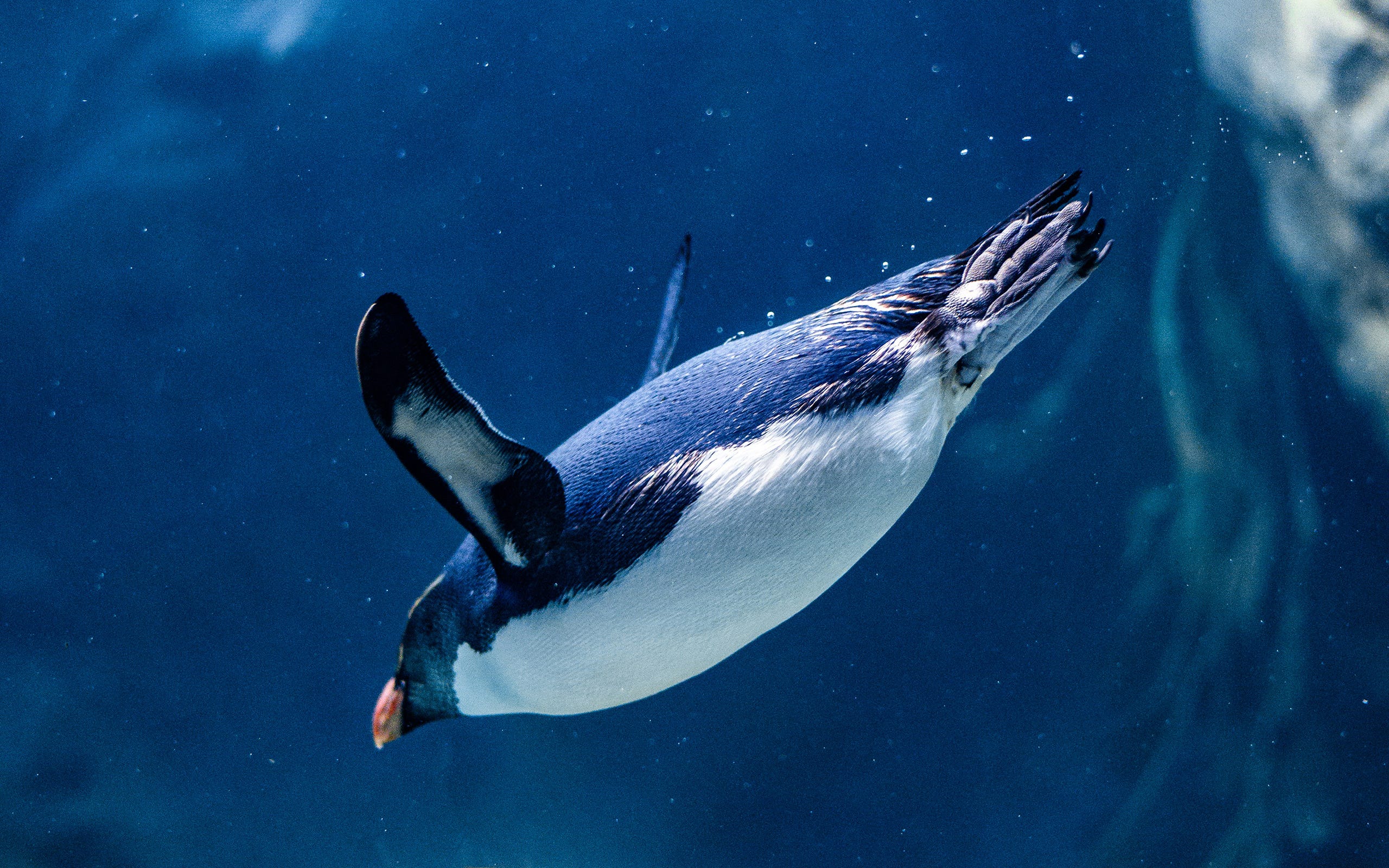
    Among birds, few lineages seem as evolutionarily unresolved as the penguins. The specialized marine adaptations of these “almost-fish” creatures are self-evident — their streamlined bodies, flipper-like wings, counter-shaded coloration, and other ocean-going specializations clearly echo their ancestral life as warm-blooded marine hunters. And yet, penguins remain steadfastly bipedal on land, still traveling about on their ancestral pair of avian limbs in the classically upright “dinosaur” posture of their long-extinct theropod dinosaur forebears.

    In the penguins, we glimpse an order of birds caught midway through the transition from aerial existence to marine, their antique adaptations for flight repurposed to aid an unexpectedly aquatic life — one that perhaps someday may fully sever their remaining ties to the land and an airborne legacy.

    Sea Cows and Whales: Drifting Towards an Aquatic Destiny

    The semi-aquatic lifestyles of marine iguanas and sea lions (to name but two examples) similarly capture arboreal and terrestrial vertebrates in the midst of testing the waters towards a more comprehensive oceanic future. Meanwhile, the opposite transition is embodied by amphibious fish and semi-terrestrial invertebrates like terrestrial crabs and certain arachnids — tentatively exploring a foothold in a terrestrial realm from which their ancestors washed ashore millions of years before.

    Among mammals, hippos (with their aquatic rhino-kin) are poster children for this same grand evolutionary theme. These behemoth “river horses” dwell in a semi-aquatic world, relegating their mammalian terrestrial legacy to wading about in bodies of water and grazing in the grassy shallows. Their barrel-shaped bodies, webbed feet, minimized legs, depressed nostrils, and other aquatic specializations have unmistakable analogs in the cetacean lineages (whales and dolphins) — evolutionary cousins that once shared a common amphibious proto-cetacean ancestor before taking the irreversible plunge into a permanent marine existence some 50 million years ago.

    Seeing these semi-aquatic mega-herbivores in repose makes one ponder whether natural selection may someday coax them down a path towards a more comprehensively hydro-dynamic future — perhaps gradually sundering them from their remaining terrestrial ties altogether to become the fully aquatic successors of their marine sirenian relatives, the manatees, and dugongs.

    Human and Chimp: The Ultimate Trans-Species

    There can be few finer bookends for the stunning malleability and transformative power of evolution than a juxtaposition of our own species with our famous evolutionary cousins, the chimpanzees. Looking at side-by-side representations of ourselves and these magnificent apes makes it abundantly clear that we share the unmistakable hallmarks of our recent divergence from a common ancestor only some 6–7 million years in the past.

    And yet, for all our apparent outward similarities, that profound evolutionary gulf becomes equally evident in the highly derived anatomical and cognitive adaptations that have come to utterly remake the human form — from our deftly re-sculpted hands and feet and extraneously reinforced obstetric channels to our massively expanded cranial architecture housing our swollen Brobdingnagian neural engines (our brains being 3–4 times the volume of those cradled in our chimpanzee cousins’ crania).

    In so many ways, a purposeful inspection of ourselves and our nearest shrunken shadows reveals a living trans-species: a chimera, clinging to the tattered remnants of our arboreal forebears, but with the bulk of our anatomical toolkit and neurocognitive constitution already dramatically reconstructed and transmogrified to suit not the arboreally frenetic existence of a forest ape, but the upright peregrinations and cerebrally baroque demands of a truly terrestrial, unshackled life. Little wonder Charles Darwin described us as “quintessential transitional creatures.”

    Into the Singularity: Humans in Metamorphosis?

    Even more radically, some biologists have theorized that humans today may represent a liminal state not just between our ape ancestors and our terrestrial posterity, but perhaps even an intermediate stage in the genesis of a separate lineage altogether: one whose rapidly metamorphic technological inventions and culture may one day definitively eclipse and supersede our purely biological origins and open a profound new chapter on an inconceivable evolutionary scale — an epoch of intelligence unbound, a post-Biological transition whose emergence we may be blinking forward into today.

    The Takeaway

    Whether one ventures to such speculative heights or remains firmly grounded, it is clear that the living world today teems with myriad organisms caught in various stages of transition — striking chords between what came before and what will follow. Far from being gaps or shortcomings, these “missing links” emblematize the breathtaking fluidity and dynamism inherent in the evolutionary process — fractal emanations of Nature’s eternal opus of mutation, transformation, and reinvention.