
Tag: Christian Theology

  • What Are Contextualist Bible Readers?

    What Are Contextualist Bible Readers?

    The Bible is a complex book that has been read and interpreted in many ways throughout history. One group of Bible readers is known as contextualists. These readers believe that understanding the context of the Bible is crucial for interpreting its meaning correctly. So, what type of Bible readers are contextualists?

    Who Are Contextualist Bible Readers?

    Contextualist Bible readers are people who believe that to understand the Bible properly, we need to consider the historical, cultural, and literary context in which it was written. They think that without this context, we might misunderstand what the Bible is really saying.

    These readers come from various backgrounds. They can be scholars, pastors, or everyday Christians who want to dig deeper into the Bible’s meaning. What unites them is their commitment to reading the Bible in its original context.

    While there’s no definitive statistic, it’s safe to say that contextualist Christians represent a growing and influential segment of Western Christianity.

    The Importance of Context in Bible Reading

    Contextualists argue that the Bible wasn’t written in a vacuum. It was written by real people, in real places, at specific times in history. These factors shaped how the Bible was written and what it meant to its original audience.

    For example, when Paul wrote letters to early Christian churches, he was addressing specific issues those churches were facing. Understanding those issues helps us better understand Paul’s advice and teachings.

    By focusing on context, contextualists aim to avoid misinterpreting the Bible. They believe that taking verses out of context can lead to wrong conclusions about what the Bible teaches.

    For instance, a verse that seems to support slavery when read alone might actually be criticizing slavery when understood in its historical context.

    How Contextualists Read the Bible

    Contextualists pay close attention to the historical setting of each part of the Bibl, asking questions like: When was this part of the Bible written? What was happening in the world at that time? What were the social and political conditions? Understanding these factors helps them grasp why certain things were written and what they meant to people at that time.

    Additionally, since the Bible was written in cultures very different from our own, contextualists try to understand these cultures to better interpret the text. They look at things like social customs and norms, religious practices of the time, and economic systems to help them understand references and practices that might seem strange to modern readers.

    Contextualists also consider the type of literature each part of the Bible represents. The Bible contains many different types of writing, including historical narratives, poetry, letters, and prophecy. Each type of literature has its own rules and conventions.

    Tools and Methods Used by Contextualists

    Contextualists often use various tools to help them understand the Bible’s context. They look at historical books and documents, archaeological findings, language studies (Hebrew, Greek, Aramaic), and commentaries written by scholars. They may spend a lot of time studying these resources to gain a deeper understanding of the Bible’s background.

    Contextualists often compare different Bible translations. They know that translation is not always straightforward, and different versions can highlight different aspects of the original text. This comparison helps them see the text from various angles and understand it better.

    Many contextualists consult with experts in various fields, such as historians, archaeologists, and linguists. These experts can provide valuable insights into the world of the Bible, helping contextualists grasp the nuances and deeper meanings of the text.

    Benefits of the Contextualist Approach

    By considering the context, readers often gain a richer, more nuanced understanding of the Bible. They can see connections and meanings that might not be obvious at first glance.

    The contextualist approach helps bridge the gap between the ancient world of the Bible and our modern world. It helps readers see how the Bible’s teachings can apply to their lives today.

    Contextualists believe their approach shows respect for the Bible as a historical document. They try to understand it on its own terms, rather than imposing modern ideas onto it.

    Challenges and Criticisms of Contextualism

    One challenge of the contextualist approach is that it requires a lot of time and effort. Not everyone has the resources or ability to do extensive historical research.

    Some critics argue that contextualists can become so focused on historical details that they miss the spiritual message of the text.

    Even among contextualists, there can be disagreements about how to interpret historical evidence. This can lead to different conclusions about what the Bible means.

    The Takeaway

    Contextualist Bible readers play an important role in how we understand and interpret the Bible today. Their approach surfaces a complex text rooted in history and culture. While this method has its challenges, it offers valuable insights that can improve our understanding of this important book.

    #BibleContext #BiblicalInterpretation #ScriptureStudy
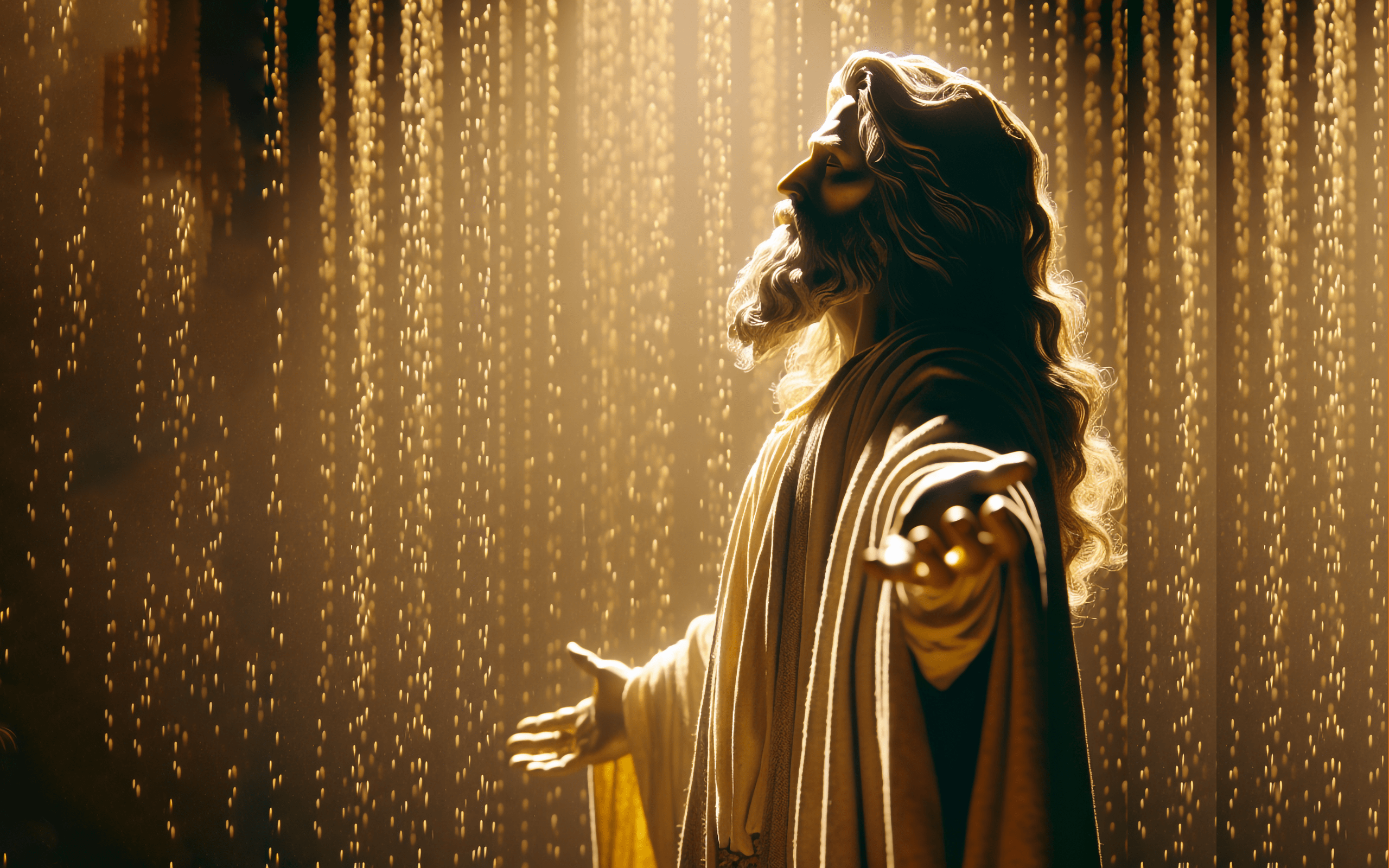
  • Jesus and the Golden Shower

    Jesus and the Golden Shower

    Ancient stories aren’t short on gods and heroes with extraordinary origins. A common narrative is the miraculous birth, where divine intervention plays a critical role. In Greek and Roman mythology, several gods and demigods were born through these mysterious ways.

    Take Hercules, for example, one of the most renowned heroes in Greek mythology. He was the son of Zeus, the king of the gods, and Alcmene, a mortal woman. Zeus disguised himself as Alcmene’s husband to conceive Hercules. Another notable example is Perseus, who was born to Danaë after Zeus visited her in the form of a golden shower. These stories, along with many others, set a precedent for miraculous births involving divine intervention.

    Jesus’ Birth: A Unique Yet Familiar Narrative

    The story of Jesus’ birth in Christian tradition replicates certain elements of these ancient myths while holding a unique significance for believers. According to Christian teachings, Jesus was born to the Virgin Mary, who conceived him through the Holy Spirit. Jesus’ nothing short of miraculous birth, occurring without a biological father, aligns with the theme of divine intervention found in many mythologies.

    For example, in Hindu mythology, Kunti, the mother of the Pandavas in the scripture, was granted a wish by the sage Durvasa, allowing her to conceive children by involving various gods without losing her virginity (every girl’s dream?). She used this wish to give birth to Karna, Yudhishthira, Bhima, and Arjuna.

    However, Christians believe Jesus’ birth is unique and holds special significance as it marks the incarnation of God in human form, which Christians view as a one-of-a-kind event.

    While Muslims agree with Christians on the uniqueness of Jesus’ birth and his status as the prophesied Messiah, they don’t buy his divinity.

    Sacrifice and Resurrection in Mythology

    Sacrifice and resurrection are abundant in ancient myths. Long before Jesus, many deities and heroes had undergone death and returned to life, symbolizing renewal and triumph over death for their followers. In Egyptian mythology, Osiris, the god of the afterlife, was murdered by his brother Set and later resurrected by his wife, Isis. According to believers, the resurrection of Osiris represented the cyclical nature of life and death, hope and continuity.

    Jesus’ crucifixion and resurrection are central to Christianity. Its followers see Jesus’ death as a sacrifice for humanity’s sins and his resurrection as a victory over death and the promise of eternal life. While the themes aren’t original, Christians view Jesus’ resurrection as a historical and unique event with profound theological implications.

    That being said, Gnostic Christians, who emerged in the early centuries of Christianity, held conflicting views about Jesus’ death and resurrection. While some Gnostics accepted what later became the orthodox Christian doctrine, others believed that Jesus ascended to heaven before the crucifixion and that Judas was crucified in his place, a view that was later adopted by Islam in the 7th century.

    Eating Flesh and Drinking Blood: The Eucharist

    One of the more controversial aspects of Christian practice is the Eucharist, also known as Communion. During this ritual, believers eat bread and drink wine, which symbolizes the body and blood of Jesus, based on his instructions at the Last Supper.

    There are no records of a ritual mimicking the awkward Communion; hence, it seems Christianity holds the copyright.

    The Utility of Belief

    Belief in God and religious narratives fulfill a utilitarian purpose, providing morals, thought, and meaning to life. From this perspective, belief in God is key to understanding the world, morality, and human existence.

    For many, belief in God provides comfort and a sense of connection to something greater than themselves. It can offer moral guidance and a foundation for community and shared values. The stories of divine births, sacrifices, and resurrections reinforce these beliefs by illustrating themes of hope, renewal, and moral integrity.

    However, it is also possible to derive meaning and morality from secular sources, such as human reason, empathy, and cultural traditions. To many, secular approaches provide a strong understanding of human existence and ethical living.

    At the end of the day, it is up to individuals which source they pick to base their understanding of reality on. However, one must bear in mind that the utility of belief says nothing about its validity.

    The Takeaway

    Among Abrahamic religions, what Christianity sells is arguably the toughest to buy. However, unlike many other religion critics, I can relate to belief in a higher power than oneself. However, wouldn’t this power be too intelligent to follow the borrowed narratives of divine births, sacrifices, and resurrections to guide their people with confusing texts that will be interpreted in many ways as well as obviously misinterpreted?

    By the way, If there has to be a higher power for our universe to make sense, why should there have to be only the one?

    #ComparativeReligion #MythologyVsChristianity #ReligiousPhilosophy