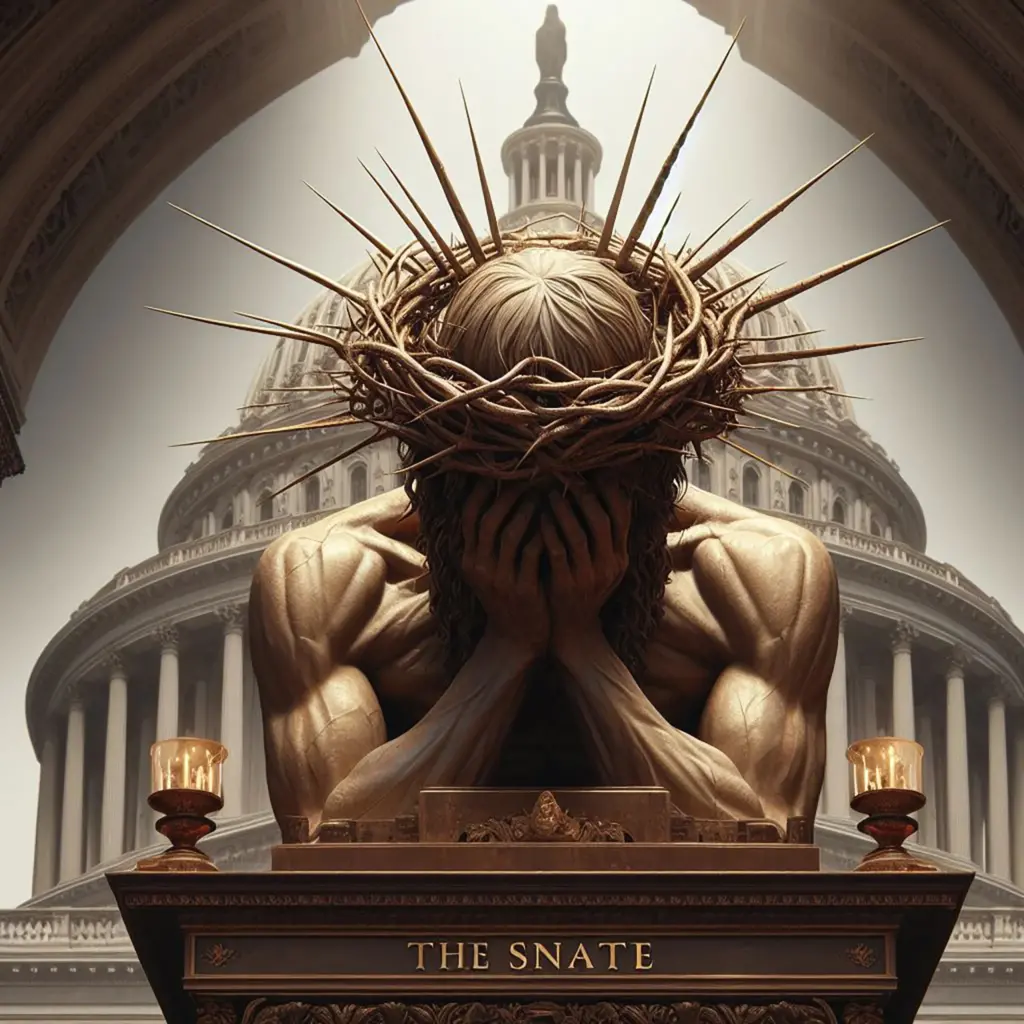
Tag: Church And State

  • Whether God Exists Is Irrelevant

    Whether God Exists Is Irrelevant

    In today’s increasingly polarized world, it seems that everyone has an opinion on everything – and they’re not afraid to share it. From social media to public forums, we’re constantly bombarded with declarations of faith, lack thereof, and everything in between. But when it comes to the existence of God, I propose a radical idea: let’s keep it to ourselves.

    The Privacy of Belief

    Belief in a god, or the lack of such belief, is fundamentally a personal and private matter. It’s a conclusion each individual reaches based on their experiences, education, cultural background, and inner reflections. This deeply personal nature of belief is precisely why it should remain private.

    When we bring our beliefs into the public sphere, particularly with the intent to convince others or shape policy, we risk crossing a line that can lead to conflict, misunderstanding, and even oppression. History is rife with examples of religious beliefs being used to justify discrimination, violence, and the suppression of human rights. Conversely, state-enforced atheism has led to its own set of atrocities and human rights violations.

    The Futility of God Debates

    Public discussions about the existence of God are often exercises in futility. These debates rarely change anyone’s mind and frequently devolve into circular arguments or ad hominem attacks. The reason for this is simple: belief or disbelief in God is not typically arrived at through logical argumentation alone. It’s a complex interplay of factors that are deeply personal and often emotional.

    Moreover, these debates can be divisive, creating unnecessary rifts in communities and even families. They can lead to stereotyping and prejudice, with people making unfounded assumptions about others based solely on their religious beliefs or lack thereof.

    The Real Issue: Secularism

    Instead of focusing on whether God exists or not, our public discourse should center on a more practical and impactful topic: secularism. Secularism, the principle of separating religious institutions from state institutions, is crucial for ensuring freedom of belief for all citizens, regardless of their personal convictions.

    Secularism protects both believers and non-believers. It ensures that no single religious view can dominate government policy or infringe upon the rights of those who believe differently. It allows for a diversity of beliefs to coexist peacefully within a society, without any one group feeling marginalized or persecuted.

    Interestingly, the principle of secularism finds support from both atheists and many believers in industrialized nations. This common ground is far more fertile for productive public discourse than debates about the existence of God.

    The Problem with Religious and Atheistic Declarations in Public Discourse

    Statements like “I am a Christian and I want change” or “I am an atheist and I want change” are problematic for several reasons. First, they imply that one’s religious beliefs (or lack thereof) are relevant to public policy decisions. This runs counter to the principle of secularism, which holds that public policy should be based on reason, evidence, and the common good, not religious doctrine or personal beliefs about the supernatural.

    Second, these statements can be divisive, potentially alienating those who don’t share the same beliefs. They can create an “us vs. them” mentality that hinders cooperative problem-solving and compromise.

    Third, such declarations often oversimplify complex issues. Political and social problems rarely have solutions that align neatly with any particular religious or non-religious worldview. By framing issues in terms of religious identity, we risk overlooking nuanced, practical solutions in favor of ideological purity.

    The Uninteresting Nature of God’s Existence

    In my personal experience, I’ve found that the existence of God is not a particularly interesting or productive topic of conversation. I don’t know the religious views of most of my friends and family, and frankly, I don’t need to. Our relationships are built on shared experiences, mutual respect, and common interests – not on our metaphysical beliefs.

    This is not to say that spirituality or philosophy are unimportant. For many people, these are crucial aspects of their lives and identities. However, the specific question of whether God exists or not is often less relevant to daily life and human relationships than we might think.

    The Waste of Time in Belief Debates

    Debates about the existence of God are usually a waste of time. People believe what they believe, and these beliefs are often deeply rooted in personal experience, emotion, and cultural context. Logical arguments, no matter how well-crafted, rarely change these deeply held beliefs.

    Moreover, these debates often detract from more pressing and actionable issues. Instead of arguing about the existence of a divine being, we could be discussing how to address climate change, reduce poverty, improve education, or advance human rights. These are areas where concrete action can make a real difference in people’s lives, regardless of their religious beliefs.

    The Takeaway

    In conclusion, while belief in God (or lack thereof) is an important aspect of many people’s lives, it should remain a private matter. Public discussions about God’s existence are often unproductive and potentially divisive. Instead, our public discourse should focus on the principle of secularism – the separation of church and state – which protects the freedom of belief for all citizens.

    By keeping our beliefs private and focusing on secular principles in public life, we can create a society that respects diversity of thought while working together on common goals. We can move beyond unproductive debates about the supernatural and focus on tangible ways to improve our world for believers and non-believers alike.

    In the end, what matters most is not what we believe about the divine, but how we treat each other and the world we share. Let’s focus on that.

    #Secularism #BeliefPrivacy #ReligiousTolerance
  • The Ten Commandments in Classrooms? Louisiana and the Paradox of Secularism

    The Ten Commandments in Classrooms? Louisiana and the Paradox of Secularism

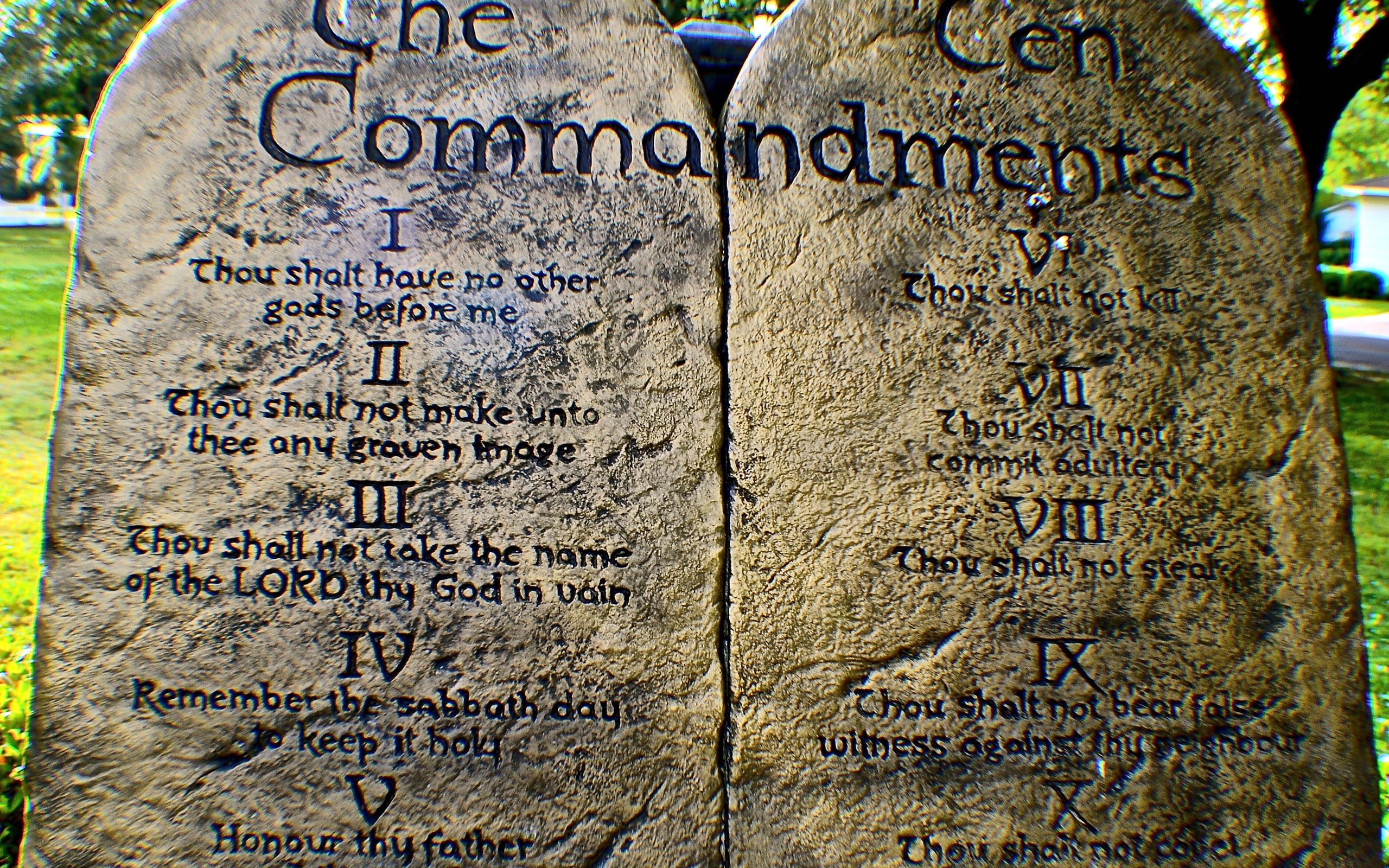
    The news hit me like a cold splash. Louisiana, a state I’d always associated with vibrant Mardi Gras celebrations and rich musical heritage, was mandating the Ten Commandments to be displayed in public schools. My initial reaction was one of disappointment, tinged with a touch of confusion. Here I was, reading about a state in a developed nation taking steps what one would expect from underdeveloped countries.

    I was born and raised in Turkey. Back when Erdogan rose to power in Turkey, in a state with a constitution that says Turkey is a secular republic, more than two deceased ago, anxieties flared about a potential shift towards an Iran-like theocracy. Ironically, despite Erdogan’s religious leanings, such a move – forcing religious texts into schools – feels unthinkable in modern Turkey. The backlash would be swift and fierce. University students, the very demographic Erdogan relies on, would be the first to erupt in protest. Secular Turks, who initially tolerated Erdogan, would likely abandon him. Interestingly, a significant portion of the protestors would likely be Muslims themselves, valuing their faith while fiercely guarding the secular foundation of the state.

    So, how can Louisiana, in a nation built on the idea of separation between church and state, allow this to happen? Does this not erode the very principles of religious freedom by singling out a specific set of beliefs? And what about the political ramifications? Does the governor truly believe this will resonate with the electorate?

    There are a few factors at play here, I suspect. Firstly, the United States has a complex relationship with religion. While the Constitution guarantees freedom of religion, it also enforces a separation between church and state. This creates a constant tension, with interpretations and legal battles often defining the boundaries.

    Secondly, Louisiana, and the Southern region in general, has a strong Christian identity. This doesn’t equate to everyone endorsing the display of the Ten Commandments in schools, but it creates a receptive environment for such a proposal, at least amongst certain segments of the population.

    Thirdly, the political landscape plays a role. The governor may be calculating that appealing to this religious base will secure votes. However, this is a gamble. Opponents of the mandate, both religious and secular, may mobilize against him. There’s also the potential for legal challenges, citing the Establishment Clause of the First Amendment, which prohibits the government from favoring one religion over another.

    Ultimately, the true impact of this decision remains to be seen. Will it be a symbolic gesture with limited consequences, or will it open the door for further religious intrusion in public spaces?

    The bigger question, however, lies with the Christian community itself. Don’t the people of Louisiana, steeped in their faith, understand the slippery slope this creates? Don’t they see how this undermines the very notion of religious freedom by turning a sacred text into a political tool?

    The hope lies in a unified response. Christians who value secularism should join forces with those of other faiths, or no faith at all, to oppose this move. Louisiana deserves better. It deserves a school system that fosters critical thinking and inclusivity, not one that prescribes a specific set of beliefs.

    Perhaps, by raising their voices, Louisianans can ensure that their classrooms remain bastions of knowledge, open to all, regardless of religious affiliation. The fight for secularism, it seems, is a constant battle, one that requires vigilance across cultures and continents.

    #ReligiousFreedom, #SeparationOfChurchAndState, #LouisianaPolitics

  • How American Evangelicals are Reshaping the US.

    How American Evangelicals are Reshaping the US.

    In the 21st century, Christianity has taken different paths on either side of the Atlantic, reflecting the complex relationship between religion, politics, and societal norms. While Europe is experiencing a decline in the public discussion of Christianity, the United States remains a stronghold where Christianity, especially the denomination of American Evangelicals, holds significant sway, permeating the political landscape and actively shaping policy debates.

    Throughout the European continent, there has been a noteworthy decline in religious presence and influence in public life, resulting in religious discourse being relegated to the private realm and confined to the personal beliefs of individuals. Christianity, historically a cornerstone of European identity, is now experiencing a lesser influence amidst the rapid pace of modernity and the shift away from traditional religious affiliations. The political arena, which used to be a stage for religious discourse, has now adopted a mostly secular framework, mirroring a broader societal shift away from traditional religious beliefs, changing how people perceive their interactions with religion and the relationship between religion and society.

    Conversely, the United States has observed the emergence of Evangelical Christianity as a formidable political force in recent years. The eagerness of Evangelical believers has translated into a potent political constituency, championing causes aligned with their doctrinal beliefs and challenging prevailing secular norms. The fusion of religion and politics has led to the intertwining of faith with governance to an extent unparalleled in many other Western democracies, sparking contentious debates about the boundaries between faith and governance and raising concerns about the encroachment of religious ideologies on democratic principles.

    As a result, questions have been raised about the role of religion in shaping public policy and the extent to which it should be allowed to influence the political process in the United States. While some argue that religion has a legitimate role to play in public life, others warn against the dangers of religious extremism and the erosion of democratic values.

    The role of Evangelical Christians in shaping public policy and discourse has become a topic of intense debate over time. While some argue that the movement’s inclination to prioritize doctrinal teachings over empirical evidence poses a challenge to the foundation of rational discourse and scientific inquiry, others contend that religious convictions are valid in shaping public policy.

    American Evangelicals’ advocacy of specific policies, often rooted in religious convictions rather than secular reasoning, has prompted broader discussions about the compatibility of religious faith with the principles of a pluralistic democracy. As a result, there are concerns that religious motivations on public policy could undermine the fundamental tenets of American democracy and threaten the rights and freedoms of citizens, irrespective of their religious affiliations.

    Furthermore, some Evangelical leaders have expressed the ambition to reshape the nation per their religious beliefs, reigniting debates about the separation of church and state, with critics expressing concern that such efforts could lead to the erosion of the secular nature of the state and the establishment of a theocracy.

    In light of these debates, it is increasingly important for Americans to reconsider the appropriate role of religious beliefs in shaping public policy and discourse and to ensure that the rights and freedoms of all citizens are protected, regardless of their religious affiliations or lack thereof.

    In a Nutshell

    The role of religion in governance, the boundaries between faith and reason, and the preservation of democratic values are complex dynamics that societies on both sides of the Atlantic are grappling with. As Christianity evolves in response to changing social landscapes, its interplay with politics continues to shape the contours of contemporary society, prompting reflection and debate on the nature of democracy, pluralism, and the common good.

    Even though Christianity has receded into the background in Europe, it remains a dynamic and influential force in the United States, highlighting the complex relationship between religion, culture, and politics. The conversation about the role of religion in public life is likely to persist as societies evolve, reflecting the ongoing negotiation between faith and secularism in the modern world. The relationship between religion and politics is a crucial aspect of contemporary culture, and the conversation around it will continue to influence the direction of democratic values and pluralism.


    Further Reading: Who Are American Evangelicals?

    American Evangelicals are a diverse group of Christians in the United States who share common religious beliefs, practices, and cultural values centered around the evangelical tradition. This tradition is marked by a strong emphasis on the authority of the Bible, the necessity of personal conversion or being “born again,” active evangelism, and the belief in Jesus Christ’s atonement for humanity’s sins. Despite this shared theological foundation, American Evangelicals are a heterogeneous group with varying views on politics, culture, and social issues. This essay explores the origins, beliefs, key characteristics, cultural impact, and political influence of American Evangelicals.

    Origins and Historical Context

    The term “evangelical” derives from the Greek word “euangelion,” meaning “good news” or “gospel.” Historically, evangelicalism has roots in the Protestant Reformation and emerged as a distinct movement in the 18th century with figures like John Wesley and George Whitefield. In the United States, evangelicalism gained prominence during the Great Awakenings—periods of religious revival in the 18th and 19th centuries. These revivals emphasized individual conversion, passionate preaching, and widespread evangelism.

    Core Beliefs and Practices

    American Evangelicals hold certain core beliefs and practices that distinguish them from other Christian groups:

    • Biblical Authority: Evangelicals regard the Bible as the ultimate authority in matters of faith and practice. They typically interpret it as the literal or inspired word of God.
    • Personal Conversion: A central tenet of evangelicalism is the belief in the need for personal conversion or being “born again.” This experience marks a turning point in one’s spiritual journey, leading to a personal relationship with Jesus Christ.
    • Evangelism: Evangelicals believe in sharing the Christian message and actively seeking to convert others. This missionary mindset has fueled a significant portion of evangelical outreach, both within the United States and globally.
    • Atonement through Christ: Evangelicals believe that Jesus Christ’s death and resurrection are central to human salvation. This belief underscores the importance of the cross and the redemptive power of Christ’s sacrifice.

    Cultural Impact and Diversity

    American Evangelicals are a diverse group, encompassing various denominations and theological perspectives. They include Baptists, Pentecostals, Methodists, Presbyterians, and non-denominational Christians, among others. This diversity leads to a wide range of worship styles, from traditional liturgies to more contemporary, music-driven services.

    Culturally, American Evangelicals have had a significant impact on the broader American landscape. They have established religious institutions, including churches, schools, and media networks. Their influence extends to music and entertainment, with Christian music and literature forming a vibrant industry.

    Political Influence and Controversies

    In recent decades, American Evangelicals have become increasingly involved in political and social issues, shaping the national conversation on topics like abortion, same-sex marriage, religious freedom, and education. This political engagement, often aligned with conservative values, has been both a source of strength and a point of controversy within the evangelical community.

    The rise of the Religious Right in the late 20th century signaled a growing alignment between evangelicalism and conservative politics. Figures like Jerry Falwell and Pat Robertson played pivotal roles in mobilizing evangelicals for political causes. However, this alignment has also generated criticism, with some arguing that the close relationship between religion and politics can compromise the spiritual focus of evangelicalism.

    In a Nutshell

    American Evangelicals represent a complex and multifaceted group within the broader context of American Christianity. While united by common religious beliefs and practices, they exhibit considerable diversity in theology, worship styles, and cultural engagement. Their influence on American society, culture, and politics is substantial, often shaping national debates on moral and social issues. As American society continues to evolve, so will the role and impact of American Evangelicals, ensuring their relevance in shaping the country’s religious and cultural landscape.