Tag: Comparative Religion

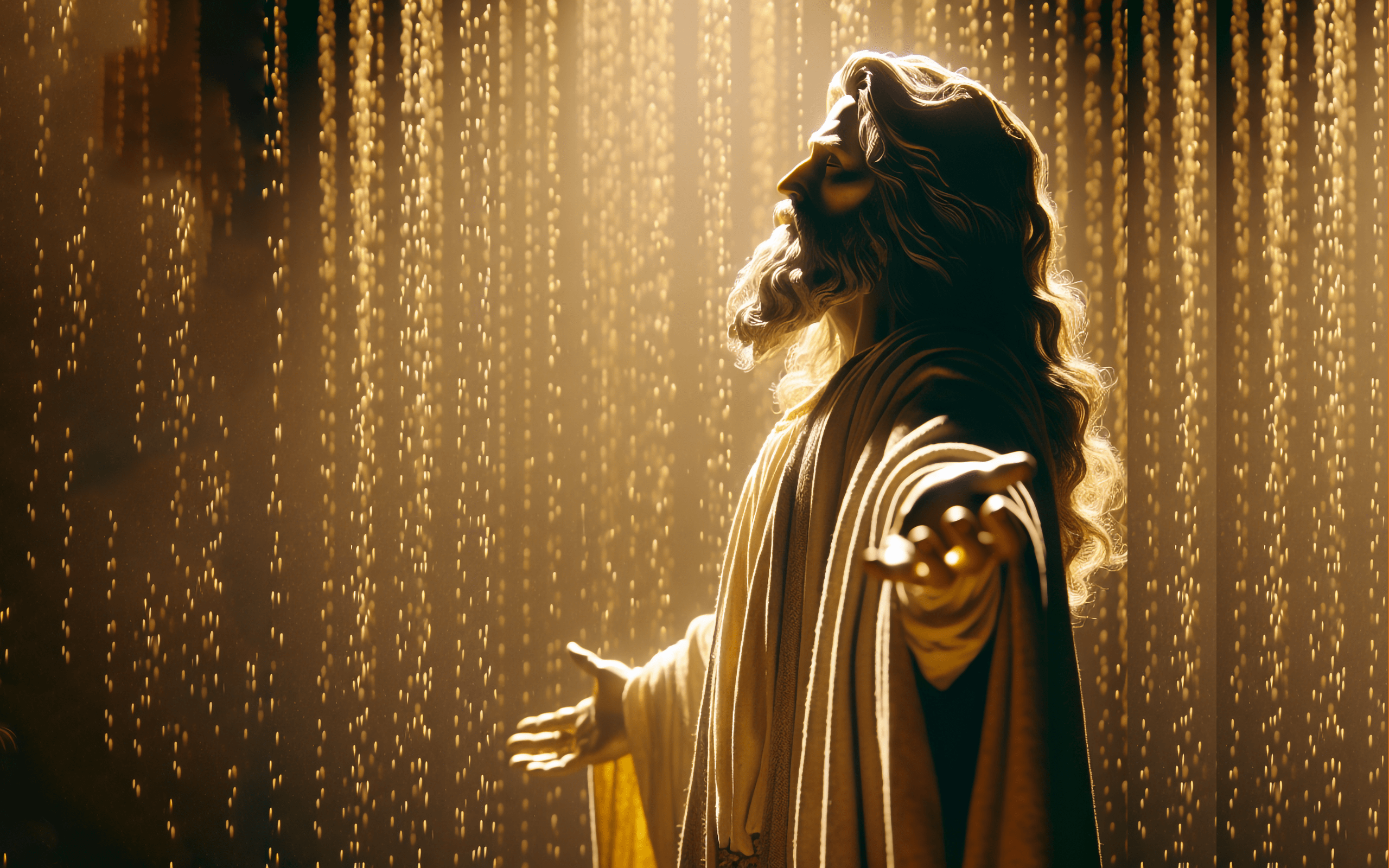
  • Jesus and the Golden Shower

    Jesus and the Golden Shower

    Ancient stories aren’t short on gods and heroes with extraordinary origins. A common narrative is the miraculous birth, where divine intervention plays a critical role. In Greek and Roman mythology, several gods and demigods were born through these mysterious ways.

    Take Hercules, for example, one of the most renowned heroes in Greek mythology. He was the son of Zeus, the king of the gods, and Alcmene, a mortal woman. Zeus disguised himself as Alcmene’s husband to conceive Hercules. Another notable example is Perseus, who was born to Danaë after Zeus visited her in the form of a golden shower. These stories, along with many others, set a precedent for miraculous births involving divine intervention.

    Jesus’ Birth: A Unique Yet Familiar Narrative

    The story of Jesus’ birth in Christian tradition replicates certain elements of these ancient myths while holding a unique significance for believers. According to Christian teachings, Jesus was born to the Virgin Mary, who conceived him through the Holy Spirit. Jesus’ nothing short of miraculous birth, occurring without a biological father, aligns with the theme of divine intervention found in many mythologies.

    For example, in Hindu mythology, Kunti, the mother of the Pandavas in the scripture, was granted a wish by the sage Durvasa, allowing her to conceive children by involving various gods without losing her virginity (every girl’s dream?). She used this wish to give birth to Karna, Yudhishthira, Bhima, and Arjuna.

    However, Christians believe Jesus’ birth is unique and holds special significance as it marks the incarnation of God in human form, which Christians view as a one-of-a-kind event.

    While Muslims agree with Christians on the uniqueness of Jesus’ birth and his status as the prophesied Messiah, they don’t buy his divinity.

    Sacrifice and Resurrection in Mythology

    Sacrifice and resurrection are abundant in ancient myths. Long before Jesus, many deities and heroes had undergone death and returned to life, symbolizing renewal and triumph over death for their followers. In Egyptian mythology, Osiris, the god of the afterlife, was murdered by his brother Set and later resurrected by his wife, Isis. According to believers, the resurrection of Osiris represented the cyclical nature of life and death, hope and continuity.

    Jesus’ crucifixion and resurrection are central to Christianity. Its followers see Jesus’ death as a sacrifice for humanity’s sins and his resurrection as a victory over death and the promise of eternal life. While the themes aren’t original, Christians view Jesus’ resurrection as a historical and unique event with profound theological implications.

    That being said, Gnostic Christians, who emerged in the early centuries of Christianity, held conflicting views about Jesus’ death and resurrection. While some Gnostics accepted what later became the orthodox Christian doctrine, others believed that Jesus ascended to heaven before the crucifixion and that Judas was crucified in his place, a view that was later adopted by Islam in the 7th century.

    Eating Flesh and Drinking Blood: The Eucharist

    One of the more controversial aspects of Christian practice is the Eucharist, also known as Communion. During this ritual, believers eat bread and drink wine, which symbolizes the body and blood of Jesus, based on his instructions at the Last Supper.

    There are no records of a ritual mimicking the awkward Communion; hence, it seems Christianity holds the copyright.

    The Utility of Belief

    Belief in God and religious narratives fulfill a utilitarian purpose, providing morals, thought, and meaning to life. From this perspective, belief in God is key to understanding the world, morality, and human existence.

    For many, belief in God provides comfort and a sense of connection to something greater than themselves. It can offer moral guidance and a foundation for community and shared values. The stories of divine births, sacrifices, and resurrections reinforce these beliefs by illustrating themes of hope, renewal, and moral integrity.

    However, it is also possible to derive meaning and morality from secular sources, such as human reason, empathy, and cultural traditions. To many, secular approaches provide a strong understanding of human existence and ethical living.

    At the end of the day, it is up to individuals which source they pick to base their understanding of reality on. However, one must bear in mind that the utility of belief says nothing about its validity.

    The Takeaway

    Among Abrahamic religions, what Christianity sells is arguably the toughest to buy. However, unlike many other religion critics, I can relate to belief in a higher power than oneself. However, wouldn’t this power be too intelligent to follow the borrowed narratives of divine births, sacrifices, and resurrections to guide their people with confusing texts that will be interpreted in many ways as well as obviously misinterpreted?

    By the way, If there has to be a higher power for our universe to make sense, why should there have to be only the one?

    #ComparativeReligion #MythologyVsChristianity #ReligiousPhilosophy

  • Beyond the Existence of Gods

    Beyond the Existence of Gods

    Throughout human history, the concept of a higher being has been a central theme in the tapestry of global cultures. Religions, with their rich traditions, narratives, and rituals, have provided frameworks for understanding the universe, morality, and the human condition. However, the discourse around faith often stagnates at the debate over the mere existence of a higher power. Instead, it is crucial to delve deeper into the distinct characteristics and claims of different religions. By doing so, adherents can present a more comprehensive case for why their depiction of God is the true one, fostering a more meaningful dialogue about faith.

    Moving Beyond Theism: A Comparative Approach

    Theism, the belief in the existence of a god or gods, is a foundational aspect of many religions. Yet, arguing for or against the existence of God can be an exercise in futility, as it often leads to an impasse. Instead, a more fruitful approach involves examining the unique elements of each religion’s conception of God. This comparative approach not only illuminates the diverse ways in which the divine is understood but also encourages adherents to articulate the distinctiveness of their faith traditions.

    The Nature of God: Attributes and Characteristics

    One way to differentiate between various religions is by examining the attributes and characteristics they ascribe to God. For example, in Christianity, God is often described as omnipotent, omniscient, and omnibenevolent. These attributes form the basis of the Christian understanding of God’s nature and relationship with humanity. In contrast, Hinduism presents a more complex picture with its concept of Brahman, an ultimate reality that manifests in myriad forms through various deities. Each deity embodies different aspects of the divine, reflecting a diverse and multifaceted view of God.

    Islam, on the other hand, emphasizes the oneness of God (Allah) and His attributes of mercy, justice, and sovereignty. The Quran articulates these attributes in a way that highlights both the transcendence and immanence of Allah. By focusing on these characteristics, Muslims can present a coherent and comprehensive understanding of God that distinguishes their faith from others.

    Revelation and Scripture: Sources of Divine Knowledge

    Another crucial aspect to consider is the nature of divine revelation and the scriptures that convey it. Different religions claim that their scriptures are the ultimate source of divine knowledge and guidance. For instance, Christians believe in the Bible as the inspired word of God, encompassing both the Old and New Testaments. The teachings of Jesus Christ, as recorded in the Gospels, are central to understanding the Christian faith.

    In Islam, the Quran is considered the literal word of God revealed to the Prophet Muhammad. It serves as the final and most complete revelation, superseding previous scriptures. The Quran’s linguistic beauty, depth, and coherence are often cited by Muslims as evidence of its divine origin.

    Similarly, Hinduism’s vast body of sacred texts, including the Vedas, Upanishads, and Bhagavad Gita, offers profound insights into the nature of the divine and the path to spiritual enlightenment. These texts are not just repositories of knowledge but are also considered to be imbued with divine presence.

    By examining these scriptures and the manner in which they were revealed, adherents can provide compelling reasons for the authenticity and superiority of their religious texts.

    The Role of Prophets and Founders

    Prophets and religious founders play a pivotal role in shaping the beliefs and practices of their respective religions. Christianity venerates Jesus Christ as the Son of God and the Savior of humanity. His life, death, and resurrection are seen as the fulfillment of God’s plan for salvation. The teachings and miracles of Jesus provide a direct connection to the divine and are central to Christian faith.

    In Islam, the Prophet Muhammad is regarded as the final messenger of God, whose life and teachings are meticulously documented in the Hadith. His exemplary character and the transformative impact of his message on Arabian society are often cited as evidence of his prophethood.

    Hinduism, with its more decentralized structure, recognizes a multitude of sages, saints, and avatars who have contributed to the spiritual wisdom of the faith. Figures like Krishna, Rama, and the Buddha (who is also revered in Buddhism) are seen as divine incarnations who have come to guide humanity.

    By studying the lives and teachings of these prophetic figures, adherents can argue for the unique authority and divine sanction of their religion.

    Ethical and Moral Teachings

    The ethical and moral teachings of a religion provide another avenue for demonstrating its truth and relevance. Christianity emphasizes love, forgiveness, and compassion, as exemplified by Jesus’ Sermon on the Mount. These principles have had a profound impact on Western moral and legal systems.

    Islam’s ethical framework, grounded in the Five Pillars, emphasizes worship, charity, fasting, and pilgrimage. Its comprehensive legal system, Sharia, offers guidance on all aspects of life, promoting justice, equity, and social harmony.

    Hinduism’s moral teachings, encapsulated in concepts like dharma (duty), karma (action and its consequences), and ahimsa (non-violence), provide a holistic approach to ethical living. The Bhagavad Gita, for instance, explores the moral dilemmas faced by individuals and offers timeless wisdom on righteous action.

    By highlighting the moral and ethical contributions of their faith, adherents can argue for its practical and spiritual benefits.

    Spiritual Experience and Transformation

    Finally, the transformative power of spiritual experiences and practices is a compelling argument for the truth of a religion. Christianity offers the experience of personal salvation and a relationship with God through prayer, worship, and the sacraments. Testimonies of conversion and miracles are often cited as evidence of God’s active presence in the world.

    Islam emphasizes the spiritual benefits of regular prayer, fasting during Ramadan, and the sense of community and solidarity fostered by these practices. The inner peace and spiritual growth experienced by Muslims are seen as signs of the truth of their faith.

    Hinduism offers a rich tapestry of spiritual practices, including yoga, meditation, and rituals, which lead to self-realization and union with the divine. The transformative experiences of saints and sages provide powerful testimony to the efficacy of these practices.

    Conclusion

    In essence, the focal point of religious discourse should shift from merely debating the existence of a higher being to a deeper exploration of the unique characteristics and claims of different religions. By encouraging adherents to articulate why their version of God is the true one, we can foster a more meaningful and enriching dialogue about faith. This approach not only respects the diversity of religious traditions but also enriches our understanding of the profound ways in which humans seek and experience the divine.

    #ReligiousDialogue #FaithExploration #ComparativeReligion