Tag: Culture

  • The Hijab: Tracing the Journey of a Complex Symbol

    The Hijab: Tracing the Journey of a Complex Symbol

    The history of hijab is a narrative that intertwines with the very essence of Islamic culture and identity. This iconic head covering, embraced by numerous Muslim women globally, is not merely a religious emblem but a historical artifact that transcends spiritual confines. The evolution of the hijab through ages and societies unveils a complex mosaic of cultural customs, societal standards, and religious convictions that have collectively influenced its current form and meaning.

    Embark with us on a journey through time, as we uncover the pre-Islamic antecedents of the hijab, its doctrinal establishment within the Quran, and its extraordinary capacity to mold itself to the variegated tapestries of cultures worldwide.

    Ancient Roots: The Pre-Islamic Origins of Veiling

    The history of hijab is a complex tapestry that intertwines with the cultural and social norms of ancient civilizations, long before the advent of Islam. The tradition of veiling, which encompasses the covering of the head and body, has its roots in societies that flourished in the Middle East, Asia, Africa, and Europe, with evidence dating back to the 4th millennium BCE.

    In the societal landscape of the pre-Islamic Arabian Peninsula, the hijab was more than a religious symbol; it was woven into the very fabric of daily life. It served as an indicator of social hierarchy, with veils of varying styles and materials denoting the distinctions between free women, slaves, and the elite. The hijab also played a role in communicating marital status, tribal connections, and provided a shield against the elements in a punishing desert climate.

    The history of hijab reveals that this practice was not solely the domain of women. Men of distinction and those holding religious office also embraced the veil, wearing it as a badge of honor and respectability. This shared custom highlights the veil’s broader cultural importance, transcending gender and emphasizing its entrenched role in the traditions of the region.
    The Quranic Guidance: Modesty and Continuity

    With the emergence of Islam in the 7th century CE, the history of hijab evolved to embody a religious mandate for Muslim women. The Quran, revered as the divine revelation by Muslims, delineated principles of modesty and attire applicable to both genders.

    An-Nur (The Light), a chapter within the Quran, specifically tackled the subject of the hijab, directing faithful women to drape their coverings across their chests and to reveal their beauty solely to their immediate family and servants. These injunctions were disclosed amidst the nascent Muslim society in Medina, establishing a code for modest apparel and conduct.

    The Quranic directives concerning the hijab did not signify a drastic shift from the pre-Islamic Arabian customs. Rather, they aimed to refine and affirm the entrenched societal ethos of modesty and respect. The Quran abstained from dictating a definitive style or type of veil, thus permitting interpretations and adjustments in harmony with regional traditions and inclinations.

    This methodology enabled a fluid transition from pre-Islamic customs to Islamic standards, acknowledging the significance of cultural persistence and heterogeneity. The Quranic teachings on the hijab found resonance among the Arab populace, as they were in accord with their enduring cultural legacy, now enriched with a spiritual dimension.
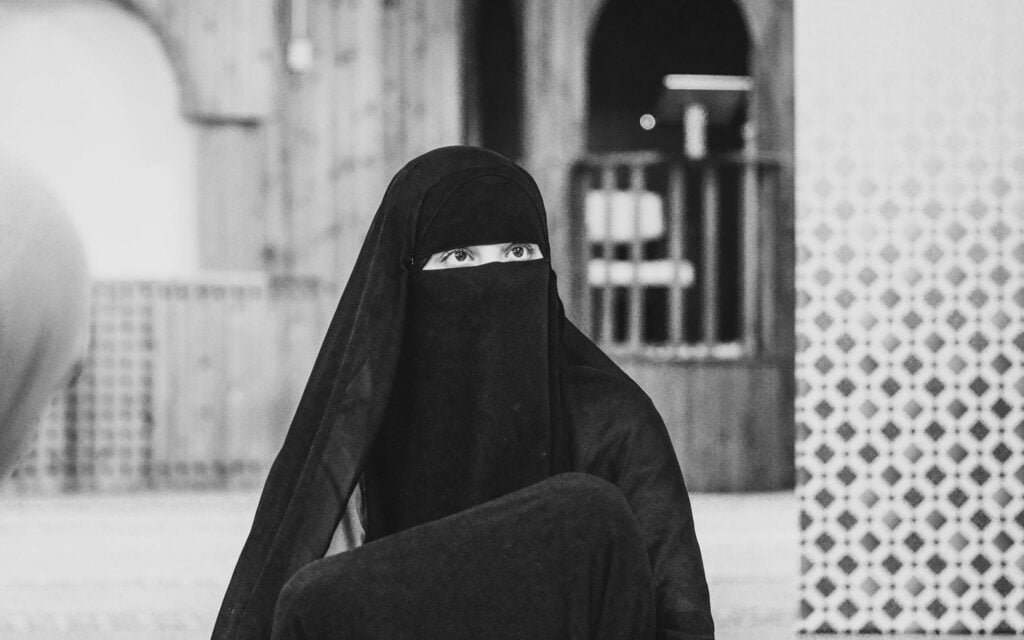
    History of Hijab
    Photo by Elin Tabitha on Unsplash

    Embracing Diversity: The Hijab’s Global Journey

    As Islam expanded from the Arabian Peninsula, the history of hijab unfolded into a spectrum of expressions, mirroring the myriad cultures it touched. The hijab manifested in forms ranging from the airy headscarves of arid deserts to the comprehensive burqas and chadors of cooler locales, with Muslim women globally adopting diverse styles and interpretations.

    This versatility enabled the hijab’s core values—modesty, honor, and devotion—to blend with different cultural aesthetics and practical needs. The variety in hijab styles stood as evidence of the faith’s flexibility to integrate into local customs while upholding its foundational tenets.

    In certain areas, the hijab interwove with cultural identity, surpassing its religious connotations to become an emblem of heritage and a bulwark against discrimination or subjugation. For numerous Muslim women, wearing the hijab signified not just a religious act but also an affirmation of their cultural lineage and a bold challenge to societal prejudices.

    On the flip side, the hijab sometimes sparked controversy, igniting discussions on women’s autonomy, secular values, and the apparent clash between religious practices and contemporary norms. These divergent views underscore the intricate interplay of faith, culture, and social-political factors that have influenced the ongoing dialogue about the hijab.

    Contemporary Discourse: Personal Choice and Evolving Narratives

    In the modern era, the history of hijab continues to be a significant aspect of identity for numerous Muslim women, though the reasons for its adoption are highly individualized. For some, it is an unwavering commitment to religious tenets and a conduit to their spirituality. For others, the hijab serves as a proud emblem of their cultural legacy, a stand against societal prejudices, or a declaration of personal empowerment and autonomy.

    Conversely, there are voices that critique the hijab as a relic of patriarchal norms, at odds with contemporary values of gender parity and personal liberty. Such varied viewpoints underscore the vibrant debate surrounding the hijab, its symbolism, and its role in today’s world.

    It is essential to acknowledge the hijab as a complex entity, influenced by a confluence of religious beliefs, cultural traditions, individual choices, and the dynamics of social and political environments. The history of hijab is characterized by a diverse array of practices, interpretations, and ongoing narratives

    In a Nutshell: History of Hijab

    The history of hijab is marked by a profound journey that reflects the intricate layers of cultural, religious, and personal significance it holds. Its roots extend into the depths of ancient customs that existed well before Islam, highlighting the enduring traditions that have shaped its progression.

    The Quran’s teachings on the hijab aimed to resonate with pre-Islamic Arab traditions, ensuring cultural continuity while infusing the practice with a spiritual essence. This strategy enabled a smooth transition, allowing the hijab to find relevance and acceptance across diverse cultures as Islam’s reach extended worldwide.

    Throughout its passage across various lands and times, the hijab has shown remarkable adaptability, adopting an array of styles and meanings. This flexibility has allowed the principles of modesty and devotion to meld seamlessly with different cultural expressions and practical needs, showcasing the religion’s capacity to assimilate into a multitude of traditions.

    In today’s society, the hijab remains a dynamic topic of conversation, with its interpretations and relevance continually evolving amid shifting social norms and individual viewpoints. While some may view it as a vestige of oppression, others celebrate it as a token of pride, identity, and autonomy.

    The extensive and intricate history of hijab defies oversimplified accounts, prompting a deeper appreciation for its complex nature. Understanding its varied beginnings, cultural evolutions, and the personal connotations it carries is vital for nurturing an empathetic and comprehensive discourse on this iconic emblem of Islamic heritage and belief.


    Sources

    https://www.britannica.com/topic/hijab

    https://www.eiu.edu/historia/Slininger2014.pdf

    https://en.wikipedia.org/wiki/Hijab


    Further Reading: The Meaning of Hijab

    The hijab, a head covering worn by Muslim women, is often shrouded in misconception. More than just a piece of cloth, it represents a complex tapestry woven from religious devotion, cultural identity, and personal choice. Understanding its history and significance requires us to delve deeper.

    Rooted in Tradition:

    The hijab’s story predates Islam. Ancient civilizations across the globe employed veiling practices, signifying social status, marital status, and protection from the elements. In pre-Islamic Arabia, the hijab served similar purposes, with variations in style reflecting social hierarchy. This established the practice of head covering as a cultural norm, a foundation upon which Islamic teachings would build.

    A Divine Directive:

    The emergence of Islam in the 7th century CE introduced a religious dimension to the hijab. The Quran, the holy book of Islam, emphasizes modesty in dress for both men and women. Specific verses within the Quran instruct women to cover their chests and maintain a certain level of decorum. These directives did not introduce a completely new concept, but rather refined existing customs and imbued them with religious significance.

    A Spectrum of Expressions:

    As Islam spread across the globe, the hijab adapted to diverse cultures. From the airy headscarves of desert regions to the all-encompassing burqas of colder climates, Muslim women adopted styles that resonated with their local traditions. This adaptability reflects the Quran’s flexible approach, allowing interpretations to coexist with regional customs as long as the core principles of modesty were upheld.

    Beyond the Veil:

    The hijab has transcended its religious roots, becoming a symbol of cultural identity for many Muslim women. In some regions, it serves as a marker of heritage and a shield against discrimination. For others, it’s a declaration of empowerment, a way to reclaim their narrative and challenge societal stereotypes.

    A Spark for Debate:

    The hijab also ignites controversy. Some view it as a symbol of patriarchal oppression, restricting women’s freedom. Others see it as a personal choice, a way to express their faith and values. This ongoing dialogue highlights the complex interplay of religion, culture, and social factors that shape the conversation surrounding the hijab.

    A Representation of Self:

    In today’s world, the reasons for wearing the hijab are as diverse as the women who wear it. For some, it’s a steadfast commitment to their faith. For others, it’s a cultural marker or a statement of personal empowerment. There is no single narrative, and appreciating the hijab requires acknowledging its multifaceted nature.

    The hijab’s journey is a testament to its rich history and evolving significance. It’s a call to move beyond simplistic narratives and embrace the complexity of this powerful symbol. By understanding its cultural roots, religious underpinnings, and personal interpretations, we can foster a more nuanced and respectful dialogue about the hijab and the women who wear it.

  • How Americans Arm Intruders

    How Americans Arm Intruders

    Home invasion is a profoundly disturbing event that can make individuals feel defenseless and insecure within their own residence. It is a crime that is gravely regarded worldwide, with various nations enacting laws that offer differing levels of response to this breach of private space.

    Join us in delving into the legal and cultural subtleties of how home intruders are addressed in the Netherlands and the United States. We will explore the divergent strategies adopted by these two nations, as well as the elements that influence these disparities.

    The Dutch Perspective on Home Invasion

    Home invasion is treated quite differently in the Netherlands compared to the United States. While in many parts of America, homeowners are permitted to use force, even deadly force, to defend their property, Dutch law takes a more restrained approach.

    In the Netherlands, the law discourages violence, emphasizing de-escalation and the protection of human life. When confronted with a home invasion, residents are expected to avoid physical confrontation if possible. They are encouraged to make noise or turn on lights to signal their presence, thereby giving the intruder a chance to flee without conflict.

    If the situation escalates and there’s an immediate threat to life, Dutch law does allow for self-defense, but it should only be used as a last resort. The core principle is that violence should be avoided whenever possible, reflecting a broader societal commitment to the sanctity of human life.

    Ultimately, the Dutch perspective on home intrusion underscores a preference for non-violence, recognizing that property can be replaced, but lives cannot.

    No Use of Any Force, No Castle Doctrine

    Dutch law prohibits using force against an intruder unless necessary to protect lives. Entering someone’s property uninvited does not justify using force, except for self-defense.

    Unlike some U.S. states, the Netherlands lacks a “castle doctrine” granting homeowners the right to protect their property with force. Dutch law prioritizes de-escalation and values life over property protection.

    The system aims to keep home intrusion a non-violent crime in the Netherlands, leading intruders to flee rather than defend themselves. As a result, Dutch intruders typically do not carry weapons to harm homeowners.

    Failing to Comply with the Law

    Should a Dutch resident not adhere to the law and assault an intruder in their home, the intruder has the right to file charges. Based on the incident’s gravity, the homeowner might face a penalty or potentially serve time in prison as well as the intruder.

    The American Perspective on Home Invasion

    Across the Atlantic, the United States adopts a distinct stance on home intrusions. The legislation varies by state, yet there are commonalities in the American approach.

    Castle Doctrine

    In numerous states, the “castle doctrine” allows homeowners to employ lethal force against an intruder in their home. This principle is based on the notion that one’s home is a castle, and one has the right to defend it by any means necessary.

    Stand Your Ground Laws

    “Stand your ground” laws in some states broaden the castle doctrine to apply beyond the home. Under these laws, individuals may use lethal force to protect themselves or others, with no legal duty to retreat from an encounter.

    Home Invasion

    Netherlands versus US on Home Invasion

    The differing legal responses to home intrusion in the Netherlands and the US can be attributed to various cultural, historical, and societal factors within each country.

    Gun Culture

    The US has a deeply ingrained gun culture with a strong focus on individual rights, especially the right to bear arms. This has influenced the development of home intrusion laws, resulting in a more assertive approach across most states.

    Non-Violence

    Conversely, Dutch culture values non-violence and emphasizes peaceful resolution of conflicts. Their legal system reflects this, favoring de-escalation and avoiding force.

    Homicide Rates

    There is a notable difference in homicide rates between the two nations. The Netherlands has a consistently lower rate than the US, which may affect its legal stance on valuing human life.

    Perceptions of Intuition

    The American legal system may seem more direct than the Dutch system, with some Americans dismissing the latter as overly lenient. In the US, the right of homeowners to use force, including lethal force, is seen as a deterrent to home intrusion.

    On the other hand, Dutch laws might appear to protect intruders more than homeowners. Yet, in reality, while the US system could lead to confrontations with armed intruders, the Dutch system strives to prevent violence altogether. Dutch intruders typically seek easy targets and tend to avoid conflict, especially if they detect the homeowner’s presence. The US system often conflates burglary with potential homicide, while the Dutch system maintains a clear distinction.

    In a Nutshell: Home Invasion

    Countries have different ways of dealing with home intruders, revealing much about their cultures and values. The US allows deadly force for protection, reflecting a culture of guns and self-defense. The Netherlands, on the other hand, values peace over property and avoids violence. These approaches impact societal behavior significantly. In the US, intruders may be more armed and violent, leading to dangerous situations, while in the Netherlands, intruders are less violent, creating safer environments.

  • The Paradox of Atheist Dogma: A Critical Reflection

    The Paradox of Atheist Dogma: A Critical Reflection

    Atheism and religion often stand as opposing paradigms, each with its own set of passionate advocates. Among atheists, there’s a growing movement that adopts a highly aggressive stance toward religion, a mode of thinking best described as “atheist dogma.” This brand of atheism is characterized by its absolute certainty about the invalidity of religious beliefs, leading to a rigid dismissal of all things associated with faith. Figures like Richard Dawkins, Ricky Gervais, and Sam Harris are notable proponents of this approach, often using sharp rhetoric and biting humor to challenge religious doctrines. Yet, as a non-religious person, I find that the aggressive tone of atheist dogma can be just as exclusionary and polarizing as the religious ideologies it critiques.

    Atheist dogma, with its unyielding dismissal of religion, fails to acknowledge the complex roles that faith-based groups play in society. Consider the history of the Civil Rights Movement in the United States. The movement was heavily influenced by religious leaders and congregations, with figures like Dr. Martin Luther King Jr., a Baptist minister, guiding the push for social justice and equality. His leadership and the support from African-American churches helped catalyze significant societal change. Atheist dogma often disregards these contributions, focusing instead on the negative impacts of religion, thus presenting an overly simplified view of the religious landscape.

    Another example of the positive impact of religion can be found in the role of faith-based organizations in humanitarian efforts worldwide. The Catholic Church, through its Caritas network, has been a significant force in providing disaster relief and humanitarian aid to countries across the globe. Despite its institutional controversies, the Church has shown that religious institutions can serve as a powerful force for good. Atheist dogma’s reductionist outlook tends to obscure these efforts, leading to a portrayal of religion that is devoid of nuance.

    A third illustration of the complexity of religious influence is the work of religious and environmental groups. Organizations like the Evangelical Environmental Network and Interfaith Power & Light engage in environmental advocacy and action, showing that religious beliefs can drive initiatives for the common good. By championing stewardship of the Earth, these groups contribute to the global fight against climate change. Yet, proponents of atheist dogma may overlook these positive aspects, opting for broad-stroke criticism that fails to account for the diversity within religious communities.

    The rigidity of atheist dogma is not just exclusionary—it risks creating its own echo chambers where dissenting views are unwelcome. This attitude mirrors the very dogmatic certainty that atheists often criticize in religious institutions. By focusing solely on the negative aspects of religion, proponents of atheist dogma miss the opportunity to engage in meaningful dialogue with believers who might share common goals, such as social justice, humanitarian work, or environmental stewardship.

    Ultimately, atheist dogma can be as divisive and unyielding as the religious dogma it opposes. To foster a more inclusive and understanding society, both atheists and religious believers need to move beyond rigid ideologies, embracing a broader perspective that recognizes the complexity and potential for good in both religious and secular approaches to life. This shift requires humility, open-mindedness, and a willingness to engage in conversations that transcend dogmatic boundaries, focusing instead on our shared humanity and common aspirations for a better world.

  • Should Celebrities Be Involved in Politics?

    Should Celebrities Be Involved in Politics?

    There have been recent escalations in the events between supporters of Donald Trump and Taylor Swift due to concerns that Swift may endorse Joe Biden for the 2024 presidential election. Trump allies are worried that her influence could sway the election and have declared a “holy war” against her, demanding celebrities shut up about politics.

    Taylor Swift is not the only celebrity to receive criticism for voicing political opinions. In recent years, there has been a growing number of Republicans online who believe that musicians and movie stars should focus on their jobs and stay out of politics.

    In the intricate contemporary culture, celebrities often stand out not just as entertainers but as pivotal influencers whose voices carry weight far beyond their immediate sphere. Their rise to prominence usually reflects their artistic achievements that resonate with a vast audience, transforming them into public figures whose opinions can influence public sentiment.

    Join us in examining the role of celebrities in political discourse within this framework.

    Artists as Voices of Society

    Throughout history, artists have served as the vanguard of societal evolution, employing their artistry to mirror societal norms and challenge prevailing paradigms. When these artists attain celebrity status, their platform expands, enhancing their expressions’ potential reach and impact. If we suppress the voices of artists in political conversations because we don’t like what they are saying, we risk silencing the very individuals who often harbor the most perceptive and stimulating viewpoints. Their art, which may have garnered them fame, is inherently linked to their identity, encompassing their political ideologies. To expect them to segregate their existence is to deny the comprehensive nature of their influence.

    Historical Precedents of Celebrities in Politics

    The tradition of artists engaging in political commentary is long-standing. Figures such as Pablo Picasso, with his painting “Guernica,” and Bob Dylan, through his protest songs, have demonstrated the power of art to comment on political strife and social injustice. Their work transcended artistic boundaries, becoming symbols of resistance and calls to action. The celebrity status they achieved did not diminish the value of their political commentary; rather, it amplified it.

    Celebrity Influence and Social Issues

    The influence wielded by celebrities can be a fulcrum for spotlighting critical issues. For example, the advocacy of Diana, Princess of Wales, for HIV and AIDS awareness during the HIV and AIDS Epidemic in the 1980s and 1990s exemplifies a public figure utilizing their prominence to challenge misconceptions and spark global dialogues about a pressing health crisis. In this capacity, celebrities can be perceived as conduits for important topics, using their visibility to focus attention on matters that necessitate urgent public engagement.

    Photo by Samuel Branch on Unsplash

    The Power of Celebrities in Politics

    The visibility that comes with celebrity can be a double-edged sword. On the one hand, it offers a platform that can be used to advocate for change and raise awareness. On the other hand, it subjects the individual to intense scrutiny and criticism. However, reaching a broad audience is an invaluable asset in the information age, where attention is scarce. Celebrities can direct this attention toward underrepresented issues, democratizing information flow and fostering a more inclusive public discourse.

    Expertise vs. Expression

    It is imperative to differentiate between celebrities voicing their perspectives and being regarded as experts. The latter is not a common occurrence, and rightly so, as expertise in any domain necessitates years of dedicated study and experience. Nonetheless, the right to articulate concerns, political or otherwise, is an intrinsic aspect of freedom of expression that extends to everyone, including celebrities. Their platforms do not negate their right to voice opinions on issues they consider important.

    The Role of Celebrities in Politics and Democracy

    In a democratic society, the participation of every individual in political discourse is not just a right but a responsibility. Celebrities, by virtue of their public presence, can engage with a broader audience, potentially inspiring civic participation and fostering a more politically aware populace. Their involvement in political matters can serve as a catalyst for others to educate themselves and become more active in the democratic process.

    Media Tactics and the Right to Speak

    The critique of celebrities partaking in political discourse often originates from a discomfort with the substance of their messages rather than the act of expression itself. Some media outlets may resort to strategies that aim to discredit the messenger, thereby deflecting focus from the message. This tactic is a form of intimidation and a strategic maneuver to suppress debate on the issues presented. These strategies attempt to mute dissenting opinions and preserve the status quo by questioning the legitimacy of celebrities’ voices.

    The Messenger vs. The Message

    Targeting the messenger instead of addressing the message is a tactic as old as discourse itself. It serves to undermine the credibility of the speaker and, by extension, the validity of their argument. However, the actual test of a message’s worth lies in its content, not in the identity of the one delivering it. Like any other member of society, celebrities should be judged on the merit of their arguments rather than their status.

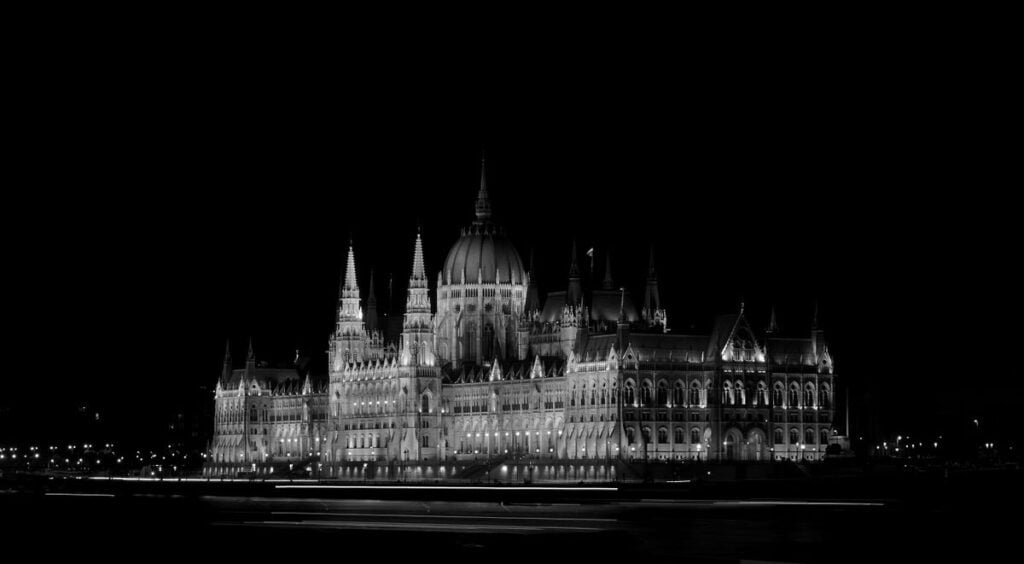
    Hungarian Parliament — Photo by Karim MANJRA on Unsplash

    In a Nutshell

    The intersection of celebrity and politics is neither a novel nor dismissible phenomenon. As artists and influencers, celebrities possess a distinctive capacity to draw public attention to significant matters. Their engagement in political discourse should be regarded not as an overreach but as an exercise of their rights and a reflection of their dedication to the societies that have propelled them to prominence.

    The true hallmark of a democratic society is its ability to entertain a diversity of voices, including those of its most visible members. With their extensive influence, celebrities play an essential role in this democratic dialogue, contributing to a more informed and engaged citizenry.

  • American Atheists Are Weaker Together

    American Atheists Are Weaker Together

    Many people over thirty can attest to the difficulty of making new friends outside of work, especially if you have moved to a place as an adult. Therefore, as an expat living in New York, I thought attending an event for atheists in the Upper West Side might be an excellent way to meet like-minded people. However, when I checked the schedule for the event, I suddenly got filled with guilt and confusion and eventually decided not to go. Only years later, I realized that the cause of my guilt that day was the fact that attending a meeting of atheists went against my secularist principles.

    The Rise of Evangelicals in the US

    Evangelicalism has been a force in American politics since at least the 19th century, but its direction and influence have fluctuated over time. The modern alignment of evangelicals with the Republican party can be traced back to the civil rights era, particularly following the Brown v. Board Supreme Court decision, which outlawed public school segregation. In response, white evangelical communities created private “segregation academies” as a form of opposition to desegregation, framed as an expression of religious freedom rather than a defense of racial segregation.

    Evangelicals’ political engagement became more pronounced in the 1980s, as they emerged as a key Republican voting bloc, especially during Ronald Reagan’s and George W. Bush’s presidencies.

    American evangelicals’ active political engagement and strong Republican partisanship are relatively new and have significantly impacted presidential elections. The federal government’s intervention in local autonomy and the perceived favoring of African Americans and Latinos over whites were among the factors that led white evangelical leaders to argue for a political shift toward the modern Republican Right.

    Moreover, the backlash against right-wing evangelicals is also reshaping American politics and faith. Some sociologists believe that the rising number of non-religious Americans is a reaction against right-wing evangelicals. The movement’s insertion of religion in public debate and uncompromising style of public discourse has alienated many non-adherents and members of the larger public.

    Evangelicalism’s influence extends well beyond its religious orbit, significantly influencing American politics and culture since the 1970s, culminating with the Reagan Revolution and the rise of the Religious Right. Politically, evangelicals are highly active in advancing anti-abortion, anti-same-sex marriage, and “family values” positions to restore the country to its perceived Christian roots. However, it’s important to note that not all evangelicals agree about politics, and within evangelicalism, there exist racial differences.

    Photo by Tyler Nix on Unsplash

    The Rise of Irreligion in the US

    Although atheism is often viewed with suspicion in the public sphere historically, it has nonetheless played a role in shaping the secular and liberal aspects of American culture, particularly since the mid-20th century.

    In response to the surge of Christian fundamentalism in the 1920s, atheists launched legal initiatives to defend civil liberties and contest the intertwining of church and state, resulting in the emergence of influential figures such as Madalyn Murray O’Hair, who founded American Atheists in 1963 and served as its president until 1986. O’Hair was a staunch advocate for atheism and the strict separation of church and state, famously challenging mandatory prayer and Bible reading in public schools through the landmark Murray v. Curlett lawsuit, which was consolidated with Abington School District v. Schempp (1963) and led to a Supreme Court ruling that deemed such practices unconstitutional.

    The political leanings of atheists and agnostics tend to skew towards the left, and their impact has been notably significant within the Democratic Party. American atheists and agnostics are generally more politically active than white evangelicals. For instance, in 2020, 18% of atheists and 16% of agnostics reported participating in a political march or rally, compared to just 5% of white evangelicals. Moreover, half of all atheists and 43% of agnostics made political donations, highlighting their engagement and influence in political matters.

    Photo by Timon Studler on Unsplash

    Evangelicals versus Secularism

    The frustration of American atheists is understandable given Evangelicals’ history of making political demands that conflict with the principle of secularism.

    For example, the advocacy for school prayer and Bible readings in public schools by evangelical groups reflects their desire to see their religious convictions reflected in the educational environment. This has been a contentious issue, as it directly challenges the secular principle of separating church and state enshrined in the U.S. Constitution. The Supreme Court has historically ruled against such practices, citing the Establishment Clause of the First Amendment, which prohibits the government from making any law respecting an establishment of religion.

    On the topic of abortion, evangelical Christians have been vocal in their opposition, advocating for legislation that would limit or outright ban the procedure. This stance is often perceived as an attempt to legislate morality based on religious beliefs, which conflicts with the secular framework of the nation. The debate over abortion rights continues to be a polarizing subject, with evangelicals playing a significant role in the political discourse surrounding it.

    Regarding LGBTQ+ rights, there has been significant resistance from evangelical organizations to laws that aim to protect these rights, including same-sex marriage and anti-discrimination statutes. Evangelicals often argue that such laws are contrary to their religious doctrines, which has led to a complex dialogue about the balance between religious freedom and civil rights.

    Some evangelicals’ push for the inclusion of creationism or intelligent design in public school science curricula is another example of the tension between religious beliefs and secular education. Critics argue that teaching creationism in science classes undermines the scientific method and conflates faith with empirical inquiry.

    Lastly, the efforts to maintain or erect religious symbols on public property have sparked debates about the role of religion in public spaces. While evangelicals assert that these symbols are part of the country’s heritage, opponents argue that their presence on government property violates the principle of secularism and the separation of church and state.

    These examples highlight the ongoing debate regarding the impact of religious beliefs on public policy and the degree to which they ought to inform a secular society’s laws and cultural norms. This includes monuments on public property, which may conflict with secularist ideals.

    These demands reflect a broader debate about the role of religion in public life and the extent to which religious beliefs should influence government policy and legislation. While evangelicals may downplay religious expression in certain secular collaborations, their political demands often emphasize the country’s “Christian heritage” and promote forms of ethnoreligious nationalism.

    Photo by Jed Villejo on Unsplash

    Atheism versus Secularism

    The personal conviction in the existence or non-existence of a deity is an intensely private matter. Asserting one’s atheism in the context of political advocacy is no more appropriate than invoking one’s Christianity for the same purpose. Public declarations of atheism, coupled with calls for changes to uphold secularism, can be misconstrued as an antagonistic stance against religion, providing fodder for populist politicians to manipulate the narrative. In the collective struggle for secularism, atheists are weaker together unless they side with secularist theists.

    Madalyn Murray O’Hair’s activism serves as a case in point. The question arises whether her intent was to challenge religious beliefs or to reinforce the separation of church and state. The cessation of mandatory prayer and Bible reading in public schools was not a concession to atheistic preferences but rather a reaffirmation of secular principles. The outcome represented a triumph for secularism, not atheism.

    It is imperative, particularly for Americans, to discern that just as some may exploit religious sentiments, others may leverage anti-religious sentiments for their ends. Political movements should thus operate within the framework of secularism, advocating for reforms that fortify secular values rather than pursuing an agenda aimed at a future devoid of religion. The focus should remain on preserving the secular fabric of society, ensuring that personal beliefs, whether religious or atheistic, do not infringe upon the neutral governance of a pluralistic nation.

    The challenge for American atheists is not to distance themselves from their beliefs but to find common ground with those who, while holding different metaphysical views, are committed to a secular state. This approach requires a nuanced understanding of secularism, which recognizes the value of religious freedom as much as it does the absence of religion in governmental affairs. It’s about advocating for a public sphere where religious beliefs do not dictate policy, but also where atheism is not positioned as the only rational outcome of a secular society.

    In navigating the complexities of American politics and society, atheists might find it more productive to focus on issues of mutual concern with secular theists. These issues can range from defending science education from religious encroachment to ensuring that laws are based on reason and evidence rather than scripture. By doing so, they can demonstrate that secularism does not equate to atheism but to a broader principle of keeping government and religious institutions separate for the benefit of all, regardless of personal belief.

    This strategy also involves engaging in broader coalitions that might include religious groups with a history of advocating for the separation of church and state. Such alliances can be powerful, as they showcase a united front against the imposition of any single belief system on the diverse tapestry of American society. In these coalitions, atheists can most effectively contribute to preserving and strengthening secular democracy.

    Moreover, atheists must be vigilant in their advocacy, ensuring that their efforts do not inadvertently mirror the exclusivity they criticize in religious fundamentalism. This means embracing a pluralistic approach to secular activism, one that welcomes diverse voices and perspectives, including those of religious minorities who often face the brunt of theocratic policies. By doing so, atheists can help build a more inclusive movement that better represents the varied landscape of American belief and unbelief.

    In a Nutshell

    While the instinct among atheists to gather and advocate for a secular society is understandable, their efforts might be more impactful if they adopt a strategy emphasizing inclusivity and coalition-building. By working alongside secular theists and other allies, atheists can help foster a society where secularism serves as a foundation for freedom and equality, not as a battleground for religious dominance. This approach not only aligns with the principles of a pluralistic society but also strengthens the cause of secularism itself, ensuring that it remains a safeguard for all Americans, believers and non-believers alike.