Tag: Evangelism

  • How Europe and America Betrayed My Childhood Dream

    How Europe and America Betrayed My Childhood Dream

    For most of my life, I existed in a bubble. Born and raised in Istanbul, Turkey, to a fiercely secular family, my world revolved around a strict separation of religion and state. My education followed suit, devoid of any religious instruction. My social circle mirrored this — friends and family held similar beliefs, and conversations rarely ventured into theological territory. This, I naively assumed, was the norm everywhere. Europe and America, bastions of modernity and freedom in my mind, surely functioned the same way.

    This unshakeable conviction led me down a path of constant frustration. Turkish society, with its visible pockets of conservatism and religious influence, often grated on me. The occasional call to prayer, the headscarves sported by some women, the conservative news channels my grandparents religiously watched — all felt like anathema to my secular ideals. I’d indulge in endless conversations with friends, lamenting the state of affairs, convinced that life would have been smoother, more progressive, had I been born elsewhere. Europe, with its supposed secular utopia, or the United States, the land of the free and the home of the… well, not exactly strict separation of church and state, but surely a more relaxed approach compared to Turkey, seemed like the greener pastures.

    Then, the internet happened. The vast expanse of information it offered opened my eyes to a world far more nuanced than the one I’d constructed in my head. Social media, for all its flaws, became a window into the lives of people from across the globe. And that’s when I encountered them — the stories of people raised in deeply religious households in America, the experiences of those who attended strict, faith-based schools in the UK. Their narratives shattered the illusion I’d meticulously built.

    Sarah, a friend I made online who lived in a small town in the American Midwest, painted a picture of a life governed by strong Evangelical beliefs. Her family’s Sundays revolved around church services, and her social circle was largely confined to those who shared their faith. Discussions about evolution in her science class were fraught with tension, and her wardrobe choices were constantly scrutinized. John, from London, recounted his experiences at a prestigious private school steeped in religious tradition. Daily prayers, mandatory chapel services, and a curriculum that heavily emphasized religious studies were the norm. Their stories were a stark contrast to my own sheltered existence.

    These encounters forced me to re-evaluate my perspective. Here I was, complaining about the occasional headscarf or call to prayer, while others were grappling with a far more pervasive influence of religion in their daily lives. My frustration with Turkish conservatism suddenly seemed trivial compared to the experiences of Sarah and John.

    This realization was a humbling one. It exposed the naivety of my earlier beliefs. Here’s the truth — secularism, in its purest form, isn’t the universal standard everywhere. While Turkey might have its pockets of conservatism, it also offers a significant degree of freedom from religious influence in daily life. My education, devoid of religious indoctrination, empowered me to think critically and form my own beliefs. My social circle, a beautiful tapestry of diverse viewpoints, fostered tolerance and understanding.

    This newfound appreciation for my own reality didn’t erase the challenges Turkey faces. Religious conservatism remains a potent force, and navigating its influence requires constant vigilance. But it did shift my focus. Instead of yearning for a mythical European or American utopia, I began to see the value in working towards a more progressive and inclusive Turkey, one that embraces secularism while respecting the right to personal faith.

    My journey has been one of self-discovery, and it’s far from over. But one thing is certain — the grass truly isn’t always greener on the other side. Perhaps the key lies not in seeking out greener pastures but in nurturing the garden we already have. In the case of Turkey, that means fostering a society where secularism and religious freedom can coexist peacefully, where open dialogue trumps blind prejudice, and where progress is driven by mutual respect and understanding. It’s a tall order, but one that seems far more attainable now than ever before.


    The Path Toward Secular Turkey

    Turkey has a long and complex history when it comes to the role of religion in the state and society. While the Ottoman Empire was an Islamic caliphate for over 600 years, the modern Republic of Turkey, established in 1923 under Mustafa Kemal Atatürk, embarked on an ambitious path of secularization and Westernization.

    The Ottoman Empire allowed different religious groups to maintain their own laws and institutions under the millet system. However, Islam was the official state religion and the Sultan was also the Caliph, the supreme religious and political ruler of the Sunni Islamic world. In the 19th century, as the Ottoman Empire waned, reformist movements like the Young Ottomans and Young Turks pushed for modernization and secularization of the empire.

    After World War I and the collapse of the Ottoman Empire, Mustafa Kemal Atatürk founded the Republic of Turkey in 1923 with the goal of creating a modern, secular nation-state. Atatürk introduced a series of sweeping reforms aimed at separating religion from the state and embracing Western values. Some key reforms included:

    1. Abolition of the Caliphate in 1924, severing ties between religion and the state.
    2. Elimination of religious courts and education. The secular law codes replaced Sharia law.
    3. Banning religious clothing like the fez and giving rights to women like the adoption of a civil code.
    4. Replacing the Arabic script with the Latin alphabet to distance Turkey from the Arab world.
    5. State control and vocal criticism of Islam conflicted with Kemalist secular ideals.

    These top-down reforms met resistance from conservative and religious segments of society. However, Atatürk successfully implemented them due to his strong political will and support from the military and urban elite. Secularism, or laiklik in Turkish, became a core principle of the modern Turkish state and identity.

    Over the following decades, Turkey maintained its secular character despite the periodic rise of political Islam. However, tensions remained between secular Kemalists and groups seeking more integration of Islam into public life. It has been an ongoing negotiation to balance Turkey’s Muslim identity with its secular ideals and Western aspirations.

    In recent years under the AK Party government, there has been a perceived backing away from Kemalist secularism as religion has re-entered the public sphere. However, Turkey still officially defines itself as a secular state, making its experience negotiating the boundaries of secularism and religion a fascinating modern saga.


  • Beyond the Bible Belt: Evangelicals vs. Everyone Else?

    Beyond the Bible Belt: Evangelicals vs. Everyone Else?

    In American culture, particularly in online dialogues, the phrase “religious people” often brings to mind Evangelicals, presenting a narrow and overly simplistic view of diverse religious beliefs. Yet the broader branches of Christianity, especially those guided by the Pope, approach the Bible with a symbolic interpretation. This approach promotes a harmonious relationship between religion and science, illustrating that faith and scientific understanding can coexist without conflict.

    Figurative Interpretation

    In the 21st century, many Christians in the Western world do not interpret the Bible literally but instead view it as figurative, appreciating its metaphorical and symbolic elements. This approach transcends denominational boundaries and encompasses a broad spectrum of Christian beliefs. In this symbolic interpretation, religious individuals do not find any inherent conflict between their faith and scientific discoveries. Rather, science is seen as a tool to explore the intricacies of God’s creation, providing insights into the mechanisms employed to bring the world into existence, complementing religious beliefs, and offering a deeper understanding of the universe’s wonders and the underlying divine order.

    Thunder behind the Christian Cross - Relationship Between Religion and Science
    Photo by Christian Lue on Unsplash

    Embracing the Relationship Between Religion and Science

    The Catholic Church is renowned for its rich intellectual tradition and has long championed the pursuit of knowledge. Although there is a common misconception that Christianity and scientific inquiry are at odds, the Catholic Church’s leadership, including the Pope, demonstrates that faith and science can coexist in harmony. Historically, Catholic institutions have been the cradle for significant scientific advancements, underscoring the Church’s deep-rooted commitment to exploring the natural world.

    From the Vatican Observatory’s focus on astronomical research to Pope Francis’s teachings on environmental stewardship, the Church’s actions genuinely recognize that science and religion are not in opposition. In his role as a spiritual leader, the Pope values scientific exploration as a means to uncover the intricacies of creation. This perspective suggests that scientific knowledge can complement religious faith by deepening the understanding of the divine order within the natural world, illustrating that a harmonious relationship between religion and science is not only possible but mutually enriching.

    Science as a Tool of Exploration

    Mainstream Christian denominations do not consider science as their enemy, but rather as a beneficial tool for exploration and discovery. The interpretation of religious texts symbolically allows for an interactive approach with scientific discoveries, perceiving them as a way to uncover the intricate details of God’s grand plan. The beauty and complexity of the universe, as revealed through scientific research, is viewed as evidence of divine craftsmanship.

    This viewpoint promotes an environment where individuals can wholeheartedly embrace their religious convictions while genuinely appreciating the insights provided by scientific knowledge. It encourages a nuanced understanding beyond the simplistic dichotomy of faith versus reason, recognizing that these realms can complement one another, leading to a more comprehensive understanding of the world and our place in it.

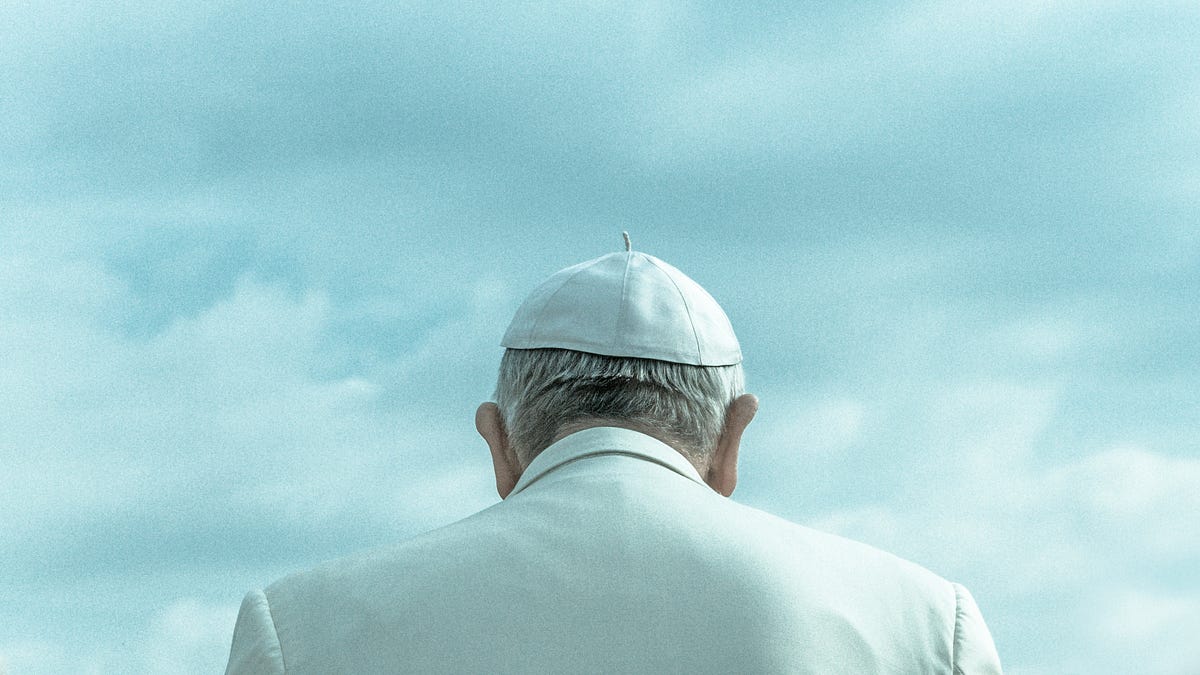
    Pope Francis from Behind - Relationship Between Religion and Science
    Photo by Coronel Gonorrea on Unsplash

    The Relationship Between Religion and Science per Fundamentalist Literalism

    In comparison to mainstream Christian denominations, fundamentalist Christians – often referred to as literalists – take a different approach to interpreting religious texts. They consider the Bible an absolute and literal truth, leaving little room for symbolic interpretation. This literalism can create a perceived conflict between science and faith, as scientific discoveries that challenge a literal interpretation of religious texts are seen as a threat to their beliefs.

    By taking a rigid stance on the literal truth of religious texts, fundamentalist literalists may find themselves at odds with scientific findings that contradict their understanding. This often leads to an adversarial relationship between Christianity and science, with each side viewed as incompatible with the other.

    Role of Education and Dialogue

    Education and dialogue are crucial in nurturing a more accurate understanding of the relationship between faith and science. By promoting a well-rounded education encompassing religious studies and scientific knowledge, individuals can develop a more nuanced perspective on the compatibility of these domains. Encouraging open and respectful dialogue between religious leaders, scientists, and the general public can help bridge the gap between faith and reason and promote mutual understanding and appreciation.

    Moreover, it is essential to highlight the contributions of religious individuals and institutions in advancing science throughout history. From the pioneering work of Gregor Mendel, a Catholic monk and the father of genetics, to the Big Bang theory proposed by Georges Lemaître, a Catholic priest and physicist, the interplay between faith and science has been a driving force behind many groundbreaking discoveries. Recognizing these historical examples can help dispel the myth of an inherent conflict between religion and science.

    Photo by Hal Gatewood on Unsplash

    Media’s Role

    The media has a significant impact on how people perceive the relationship between faith and science. Unfortunately, sensationalized headlines and oversimplified narratives often create the impression that there is an irreconcilable divide between religion and scientific inquiry. It is, therefore, essential for media outlets to provide balanced and nuanced coverage of this issue. They should highlight the diversity of perspectives within religious communities and showcase examples of harmonious coexistence between faith and science.

    By presenting a more comprehensive and accurate portrayal of the relationship between religion and science, the media can help combat stereotypes and promote a more informed understanding among the general public. This, in turn, can foster a climate of mutual respect and dialogue, where individuals from different backgrounds can engage in constructive conversations about the intersection of faith and reason.

    In a Nutshell: Relationship Between Religion and Science

    Recognizing the diverse perspectives within the broad spectrum of Christianity in America is crucial. The common portrayal often links religious individuals with Evangelicals, but a deeper examination reveals that mainstream denominations embrace a more nuanced relationship between faith and science. Their symbolic interpretation of sacred texts fosters a harmonious coexistence between religious beliefs and scientific exploration.

    From the Pope’s approach to the everyday believer’s outlook, science is considered a valuable means of investigating the marvels of creation, thus enriching their spiritual understanding. Mainstream Christian denominations demonstrate that faith and scientific knowledge can coexist and enhance each other. By acknowledging the harmony between faith and reason, they offer a more holistic view of the world, allowing believers to appreciate the beauty and complexity of creation through both spiritual and scientific perspectives.

    Promoting an accurate understanding of the relationship between religion and science requires education, dialogue, and responsible media coverage. We can transcend simplistic stereotypes by encouraging open and respectful discussions, emphasizing historical harmony between religion and science, and providing a balanced depiction of diverse beliefs. This approach helps cultivate a society where faith and science are seen as complementary, fostering a deeper appreciation for both the spiritual and scientific realms.