Tag: Faith

  • How Globalization Shakes Faith to the Core

    How Globalization Shakes Faith to the Core

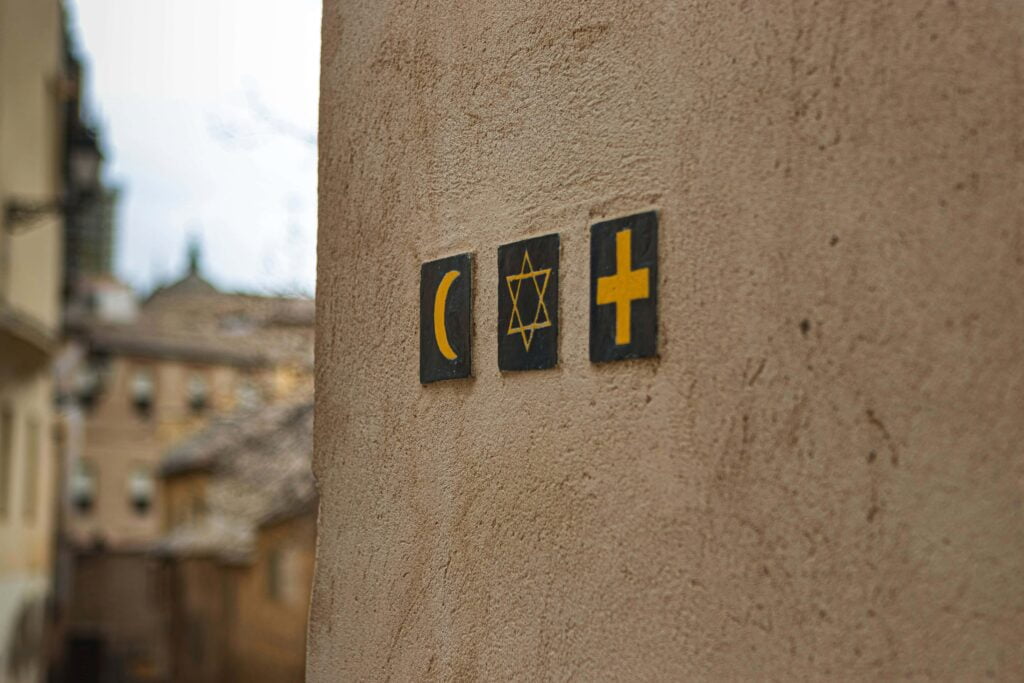
    Imagine growing up believing that the sun revolves around the Earth. For centuries, this was accepted as absolute truth by nearly everyone. It wasn’t until new ideas spread that people began to see that this truth was, in fact, a misunderstanding. Now, imagine the beliefs you hold about religion—the ones you were taught from childhood. Could they, too, be influenced by where you were born rather than being universal truths? Thanks to globalization, more people are beginning to ask this question.

    The Role of Geography in Shaping Beliefs

    When you were a child, your religion was likely presented to you as the one true path. It was part of your identity, your community, and your world. But if you had been born in a different country or even a different region, chances are your beliefs would have been different, too, thanks to the fact that faith is often closely tied to the culture and geography where it is practiced.

    For example, a child born in Saudi Arabia is likely to be raised as a Muslim, while a child born in India might be brought up as a Hindu. In the United States, a child might grow up as a Christian, while in Japan, they might be raised with Shinto and Buddhist practices. Each of these religions is rooted in the history and culture of its region. But does this mean that one is more true than the others? Or is it possible that what we believe is simply a matter of where we were born?

    Globalization: Bridging the Gaps

    Globalization, the process by which the world is becoming more interconnected through trade, communication, and travel, has had a fundamental impact on how we see the world—including how we view religion.

    In the past, people, more often than not, lived their entire lives without encountering someone of a different faith. Today, on the other hand, it’s common to interact with people from various religious backgrounds, whether in person or online, which has been an eye-opener to many.

    For instance, when someone from a predominantly Christian country befriends someone who is Muslim, they may start to see similarities and differences between their beliefs. They might realize that both religions share values like compassion, charity, and devotion despite having different practices and teachings, leading to the realization that no one religion has a monopoly on truth.

    The Concept of Religious Relativism

    This growing awareness has led to what some call religious relativism—the idea that one’s religion is not the absolute truth but rather one of many possible truths (or fallacies). For many, this is a liberating thought. It allows for the possibility that other religions might offer valuable insights and that one’s faith doesn’t have to be in conflict with others.

    But religious relativism can also be unsettling. It challenges the notion that one’s beliefs are unique or divinely chosen. It forces people to consider that if they had been born in a different part of the world, they might have been just as devoted to a completely different, potentially making individuals uncomfortable, especially if one’s religion has been a central part of their identity.

    The Impact on Faith and Identity

    As more people recognize the role that geography plays in shaping beliefs, they begin to question their faith. They wonder if they believe what they do simply because they were raised to do so rather than because it is the ultimate truth, pushing them into a period of doubt and reevaluation.

    Conversely, for some, this realization strengthens their faith, knowing that they have chosen to follow it despite the existence of other paths.

    The Global Conversation on Religion

    Globalization has also sparked a global conversation about religion. Social media, international travel, and the availability of information online mean that people from different faiths can engage in dialogue like never before.

    Furthermore, people coming from parts of the world where disbelief is seen as an illogical position have met people who were content with their non-religion.

    The Future of Religion in a Globalized World

    As the world continues to become more interconnected, it’s likely that the trend of questioning religion as an accident of geography will spread. Future generations will grow up with an even greater awareness of the diversity of beliefs around the world and the fact that there is no evidence to suggest one religion is supported by stronger evidence than the other.

    The Takeaway

    Globalization is helping people see that their religion, once taught as absolute truth in childhood, is more of an accident of geography, helping them realize there is no good reason to choose one religion over the other on a factual basis.

    Some see science as the true enemy of religion, overlooking the fact that globalization is an infinitely more formidable foe of faith.

  • Faith’s Hidden Dangers

    Faith’s Hidden Dangers

    Religion often teaches that faith—believing in something without tangible evidence—is a virtue. While this idea is intended to inspire so-called spiritual growth and trust, it has unintended consequences that profoundly impact society. 

    At the heart of many religious teachings is the notion that faith is a noble quality. Believing in something beyond the visible and the provable is often framed as a sign of one’s spiritual strength and commitment, potentially comforting and providing a sense of belonging to individuals, helping them go through life’s biggest uncertainties. However, this emphasis on faith without evidence also carries risks, particularly when it comes to critical thinking and susceptibility to exploitation.

    When faith is celebrated over evidence, it creates an environment where questioning and skepticism are viewed with suspicion or even hostility, discouraging individuals from challenging dubious claims or looking at alternative viewpoints. In a society where uncritical acceptance is encouraged, people also become more vulnerable to manipulation by those who exploit their trust. Whether through charismatic leaders, misleading advertisements, or deceptive political rhetoric, the absence of a demand for evidence makes it easier for false or harmful ideas to gain traction.

    In politics, for instance, leaders who make grand promises without concrete plans or evidence likely find it easier to garner support from those who are inclined to believe without scrutiny. Similarly, in business, companies making exaggerated claims about their products or services can take advantage of consumers who trust without verifying. In both cases, the lack of evidence-based thinking leads to personal and societal harm.

    Moreover, this inclination towards accepting without proof undermines critical thinking skills. When faith is prioritized over evidence, individuals become less inclined to question or critically analyze the information presented to them, killing intellectual curiosity and promoting a culture where challenging established beliefs or practices is discouraged. 

    The implications of this dynamic extend beyond individual experiences. A society that values faith over evidence creates an environment where misinformation and exploitation thrive. Without anything robust for evaluating claims and demanding evidence, harmful practices and falsehoods multiply, impacting everything from public health to social justice.

    The Takeaway

    Individuals who are empowered to think critically and demand evidence are better equipped to go through life and make choices grounded in reason rather than unexamined faith. Not selling belief without proof as a virtue safeguards against exploitation and also promotes a culture of intellectual integrity.

    #CriticalThinking, #FaithAndEvidence, #HistoricalLessons

  • Faith vs. Fact: Unveiling the Past

    Faith vs. Fact: Unveiling the Past

    The question of how we prove past events has lingered for centuries. It’s a question that ignites passionate debates, particularly when it comes to religious texts and historical figures. Recently, a comment sparked my curiosity: how do we know the events in the Bible actually happened?

    Belief vs. Knowledge: The Distinction Matters

    The answer isn’t as simple as flipping through a dusty book and declaring it truth. At its core, religion is built on faith — a belief system that doesn’t necessarily require concrete evidence. It’s a personal journey, a connection with something larger than ourselves. However, the Bible might not be the first port of call for those seeking historical knowledge.

    Let’s take the figure of Jesus as an example. Imagine a world where irrefutable proof of his existence surfaced. Imagine archaeological discoveries like an ossuary (bone box) inscribed with Jesus’ name alongside other first-century Judaean inscriptions or historical documents beyond the Bible that undeniably confirmed Jesus’ life and teachings. In such a scenario, religion as we know it might transform. We might shift from believing in Jesus to knowing about him, a monumental shift from faith to fact.

    But that’s not our reality. While a cornerstone of Christianity, the Bible isn’t universally accepted as historical documentation. The lack of irrefutable evidence doesn’t automatically disprove the Bible, but it does highlight the difference between faith and verifiable knowledge.

    Absence of Evidence vs. Evidence of Absence

    Here’s where things get interesting. The absence of evidence isn’t evidence of absence. Just because something isn’t explicitly documented doesn’t mean it didn’t happen. Ancient history is full of stories and figures whose existence is debated. Take Queen Nefertiti of Egypt, for example. Despite her captivating image on busts and reliefs, there’s no definitive information about her later life and final resting place. This absence of evidence fuels ongoing archaeological quests to uncover her tomb.

    However, when it comes to historical figures like Julius Caesar, the story changes. Caesar’s existence is corroborated by multiple sources beyond Roman records. Archaeological finds like the Theatre of Pompey, which Caesar commissioned, along with inscriptions from other nations like Gaul, and the sheer volume of information from Roman historians like Suetonius and Plutarch paint a clearer picture.

    This brings us to the crucial distinction between faith and knowledge. Knowledge demands evidence, a trail of breadcrumbs leading us back in time. Faith, on the other hand, doesn’t require the same level of verification. In some ways, faith thrives in the presence of unknowns. It allows us to fill the gaps with personal conviction.

    The Challenge of Religious Texts: Unveiling the Lens

    Now, some might argue that religious texts themselves can be considered evidence. But here’s the thing — these texts are often written long after the events they describe by people with a specific agenda. For instance, the Gospels in the New Testament were written decades after Jesus’ death, and scholars believe they were shaped by the early Christian communities’ evolving beliefs. Similarly, the Quran, the holy book of Islam, is believed to be a compilation of revelations delivered to Prophet Muhammad over 23 years. While these texts hold immense religious significance, their historical accuracy can be debated. They can be filtered through cultural lenses and personal interpretations, blurring the line between history and belief.

    So, how do we navigate the murky waters of the past? For historical events, the answer lies in a multi-pronged approach.

    Unveiling the Past: A Multi-Faceted Approach

    We scour archaeological sites, like the ongoing excavations at Pompeii that offer a glimpse into everyday life in a Roman city frozen in time. We decipher ancient languages, such as the Rosetta Stone’s inscription in three languages, allowing scholars to unlock the secrets of hieroglyphics. We piece together artifacts, like the scattered fragments of the Dead Sea Scrolls that shed light on Jewish life and beliefs during the Second Temple period. And we compare records from different cultures, like the clay tablets detailing trade agreements between Mesopotamia and neighboring civilizations, offering a more comprehensive picture of the ancient world. The more sources corroborate an event, the stronger the historical foundation becomes.

    But what about events outside the realm of traditional history? Religious experiences, for instance, are deeply personal and often defy easy categorization. Here, the concept of “evidence” takes a backseat. Individual testimonies and the transformative power of faith hold more weight. The conversion of St. Augustine, a prominent philosopher who turned to Christianity after a religious experience, is a powerful testament to the transformative nature of faith, even in the absence of traditional historical evidence.

    Beyond Proof: The Power of the Pursuit

    History is more than a collection of documented facts. It’s a tapestry woven from personal narratives, cultural shifts, and the ever-evolving understanding of the past.

    Perhaps the beauty lies in the pursuit itself. The journey to uncover the truth, whether through faith or historical inquiry, is a powerful human endeavor. It allows us to connect with those who came before us, understand our place in the grand scheme of things, and grapple with the mysteries that continue to shape our world.

    Think about the Rosetta Stone again. Before its discovery, deciphering hieroglyphics was a frustrating puzzle. The ability to finally read these ancient Egyptian texts opened a window into their civilization, their beliefs, and their daily lives. It wasn’t just about facts and dates; it was about understanding an entire culture.

    Similarly, the ongoing debate about the historicity of King Arthur and the Knights of the Round Table isn’t just about proving or disproving a single figure. It’s about delving into the medieval world, the concept of chivalry, and the power of storytelling.

    The Takeaway

    The quest to understand the past, particularly when it involves figures and events from religious texts, presents a complex interplay between faith and fact. Faith, rooted in personal belief and spiritual conviction, often exists independently of empirical evidence. It’s said to provide a profound sense of connection and meaning that does not rely on historical verification. In contrast, pursuing historical knowledge seeks tangible evidence to construct a verifiable past narrative.

    The distinction between belief and knowledge is crucial. While faith thrives in the absence of concrete evidence, allowing individuals to interpret and fill gaps with personal conviction, historical inquiry demands a rigorous analysis of archaeological finds, written records, and corroborative sources. This meticulous process can unveil a clearer picture of past events and figures, although it often leaves certain mysteries unsolved.

    While religious texts may be deeply significant to billions of people, they must be examined through a critical lens when assessed as historical documents. Their creation, influenced by the contexts and intentions of their authors, can blur the line between sacred stories and historical facts. Yet, these texts hold immense cultural and religious value, shaping the beliefs and practices of countless communities.

    Ultimately, the pursuit of understanding the past — whether through the lens of faith or the rigor of historical inquiry — is a fundamental human endeavor. It allows us to connect with our ancestors, comprehend the evolution of cultures and beliefs, and navigate the mysteries that continue to shape our world.

  • Faith is Personal, Not Public Property

    Faith is Personal, Not Public Property

    In our world, buzzing with a multitude of beliefs and ideologies, faith often ignites passionate debates and sharp divides. Yet, at its heart, faith is a deeply personal and intrinsic part of one’s life, going beyond the limits of public discourse. It’s a journey of self-discovery, a private quest to answer spiritual and existential questions and a testament to the inviolable freedom of thought and belief. Keeping faith personal is more than just good manners; it’s an acknowledgment of its profound and intimate nature.

    The Sanctity of Personal Belief

    Faith is a deeply personal and sacred part of one’s identity and often culture, intricately woven into who they are. It serves as a wellspring of meaning, purpose, and comfort, guiding us through life’s complexities and shaping our worldview. Reducing faith to mere casual conversation or subjecting it to public scrutiny strips it of its sanctity and diminishes its profound impact on the human experience.

    Moreover, faith is intensely subjective and multifaceted, with countless interpretations and expressions. It is a nuanced and ever-evolving journey, shaped by personal experiences, cultural influences, and individual beliefs. Attempting to dissect or analyze someone’s faith from an external perspective often leads to misunderstandings, oversimplifications, and unintentional offense.

    Respecting Personal Boundaries

    Imagine faith as a cherished family heirloom — something deeply personal and irreplaceable. Keeping it personal doesn’t mean locking it away in a vault. It’s about respecting its value and recognizing its inherent privacy. Just like you wouldn’t barge into someone’s most intimate moments, extend that same courtesy to their faith.

    By respecting the personal space around faith, we build a bridge of understanding. People feel comfortable exploring and nurturing their beliefs without the fear of judgmental eyes or unwanted advice. This creates a welcoming environment, a mosaic of diverse beliefs thriving side-by-side in harmony. It’s tolerance in action, paving the way for a more inclusive society.

    Avoiding Assumptions and Stereotypes

    Publicly dissecting or debating someone’s faith can unintentionally lead to assumptions, stereotypes, and generalizations. Faith is a deeply nuanced and multifaceted concept, rich with countless interpretations and expressions. Trying to understand or analyze another’s faith from an outside perspective often results in oversimplifications, misunderstandings, and even unintentional offense.

    By keeping faith personal, we avoid the pitfalls of making sweeping assumptions or perpetuating harmful stereotypes. We recognize that each individual’s faith journey is unique, shaped by personal experiences, cultural influences, and individual interpretations. This understanding fosters empathy, compassion, and a willingness to embrace the complexities and nuances of belief systems, rather than reducing them to narrow and potentially damaging generalizations.

    Fostering Meaningful Connections

    While faith may be personal, it does not necessarily preclude meaningful connections and shared experiences. By respecting the personal nature of faith, we create an environment where individuals feel safe to share their beliefs and spiritual journeys on their own terms, fostering deeper connections and understanding.

    When faith is shared voluntarily and with mutual respect, it can serve as a powerful catalyst for meaningful dialogue, personal growth, and the exploration of shared values and experiences. However, this sharing should be a organic and consensual process, free from coercion or pressure, allowing individuals to connect on a deeper level and gain insight into the rich tapestry of human spirituality.

    In a Nutshell

    In a world where everyone’s always debating and discussing things, it’s essential to remember that faith is really personal. It’s a deeply intimate part of someone’s life and it deserves respect and privacy. By keeping faith personal, we show that we respect individual beliefs, and it helps us understand and tolerate each other better. It also lets us form real connections and share experiences in a natural way.

    At the end of the day, faith is a journey of self-discovery and a way to show that everyone has the right to their own thoughts and beliefs. Letting people take this journey in their own time and on their own terms doesn’t just respect personal beliefs, it also makes for a kinder, more inclusive, and more peaceful society


    Further Reading: The Evolution of Faith

    The Roots of Faith in Ancient Societies Faith and religious belief systems have been a fundamental part of human civilization since the dawn of humanity. The earliest evidence of religious practices dates back tens of thousands of years, with ancient burial sites and cave paintings suggesting a belief in an afterlife and spiritual realms. As societies developed and grew more complex, so too did their belief systems, often centered around the natural world and the cycles of life, death, and rebirth.

    The Rise of Organized Religions

    As civilizations advanced and writing systems emerged, organized religions began to take shape. The ancient Egyptians, Mesopotamians, Greeks, and Romans all developed intricate belief systems with pantheons of gods, creation myths, and complex rituals. These religions were deeply intertwined with the social, political, and cultural fabric of their societies, influencing everything from architecture to laws and customs.

    The Abrahamic Faiths: Judaism, Christianity, and Islam

    The birth of the Abrahamic religions – Judaism, Christianity, and Islam – marked a significant turning point in the history of faith. These monotheistic religions emerged from the Middle East and spread across vast regions, shaping the course of human history and influencing countless cultures.

    Judaism, one of the oldest monotheistic faiths, traces its roots back to the covenant between God and Abraham, as described in the Hebrew Bible. Christianity, which grew out of Judaism, centered around the life and teachings of Jesus Christ and the belief in his divinity and resurrection. Islam, the youngest of the Abrahamic faiths, was founded in the 7th century CE by the Prophet Muhammad and is based on the teachings of the Quran.

    The Spread and Impact of World Religions

    As trade routes and empires expanded, world religions like Buddhism, Hinduism, Taoism, and Confucianism also spread across continents, shaping cultures and societies along the way.

    Buddhism, originating in ancient India, emphasized the path to enlightenment and the cessation of suffering through practices like meditation and non-violence. Hinduism, another ancient Indian faith, encompassed a rich tapestry of beliefs, deities, and philosophical concepts.

    In East Asia, Taoism and Confucianism emerged as influential belief systems, shaping the worldviews and social structures of societies in China and beyond.

    The Role of Faith in Society and Culture

    Throughout history, faith has played a central role in shaping societies, cultures, and worldviews. Religions have influenced everything from art and architecture to laws and social norms, often serving as the foundation for moral and ethical codes.

    Faith has also been a source of conflict, with religious differences and power struggles leading to wars, persecution, and oppression. However, it has also been a driving force for social justice, inspiring movements for equality, human rights, and peaceful coexistence.

    The Modern Landscape of Faith

    In the modern era, faith continues to evolve and adapt to changing social and cultural landscapes. While some traditional religions maintain their influence, new religious movements and spiritual practices have also emerged, reflecting the diversity of human experiences and beliefs.

    The rise of secular philosophies and the separation of church and state in many nations have also reshaped the role of faith in public life, challenging the traditional authority of religious institutions and sparking debates around the boundaries between faith and governance.

    Conclusion: The Enduring Significance of Faith

    Despite the challenges and changes brought about by modernity, faith remains a fundamental aspect of human experience for billions worldwide. Its history is a testament to the enduring human quest for meaning, purpose, and connection to something greater than oneself. As societies continue to evolve, the role and expression of faith will undoubtedly continue to adapt, reflecting the ever-changing tapestry of human civilization.

  • The Rise and Shine of Homo Sapiens

    The Rise and Shine of Homo Sapiens

    The story of human evolution is a complex and intricate history that spans millions of years. Each thread in this tapestry reveals our deep connection to the diverse animal kingdom. Although modern humans may consider themselves separate from nature, the truth is far more fascinating and profound. We are an integral part of the great ape family tree. The rise of Homo sapiens roots are intertwined with other primates in a dance of shared ancestors and paths of evolution.

    A shared ancestor from deep prehistory is at the heart of our genetic connection. This ancient primate roamed the earth millions of years ago and eventually evolved into the great apes we know today. Through countless generations, chimpanzees, bonobos, gorillas, and orangutans emerged as our closest living relatives, bound to us by an unbreakable bond of shared origin. This connection cements humanity’s place in the grand narrative of life’s evolution on Earth.

    The rise of Homo sapiens has been illuminated by the advancements in genetic science, revealing astonishing discoveries about our biological connections with our closest ape relatives. It has been uncovered that a staggering 98.8% of our DNA is similar to that of chimpanzees, underscoring them as our closest biological kin. While the similarity with gorillas and orangutans may be slightly more subdued, the shared genetic material among all great apes and humans reverberates through millions of years of evolutionary history, resonating deeply within every living cell. This intricate molecular dance of genes underscores our unity not only within the great ape family but also within the entire constellation of life. The genetic code of every living organism, written in a shared language of nucleic acid letters, has been assembled in distinctive variations throughout epochs, echoing the profound narrative of the rise of Homo sapiens.

    The evidence of our primate lineage is not limited to the encrypted anthems of DNA. Many observable physical similarities between humans and great apes reveal our evolutionary kinship in body, bone, and sinew. Our shared body plan includes the absence of tails, the presence of dexterous opposable thumbs, the configuration of forward-facing eyes, and many other foundational design motifs that echo through our physiology. Our corporeal architectures sing an ancient shared melody that transcends the ages, from the articulated scaffolding of our skeletons to the intricate ballet of muscle systems knitting together in coordinated mechanisms of motion. Every detail speaks to the common ancestor that lived untold epochs past, an evolutionary forebear that passed its cartilage and calcium cassette to all that came after.

    Although we share a profound biological connection with our great ape cousins, tracing the branching paths of evolution shows that our species, The rise of Homo sapiens, started from a singular divergent path. This path led to the development of a unique constellation of traits and capabilities, sculpted by natural selection over millions of years, that set us apart from other apes. The most notable of these traits is the gift of our advanced cognitive faculties. We possess an unparalleled capacity for abstract reasoning, symbolic pragmatic thinking, and stunningly intricate problem conceptualization and problem-solving abilities. Our human mind is like a finely stoked crucible, an eternal forge of unquenchable creativity, curiosity, and higher consciousness. This cognitive prowess is what allowed our prehistoric ancestors to unravel nature’s secrets and unlock the path to an unprecedented dominion over the planetary realm. It is the spark that ignited our ability to accumulate knowledge, ponder humanity’s cosmic place, contemplate the implications of existence itself, and dream ambitiously of the future’s boundless possibilities.

    Flowing from this untapped spring of abstract brilliance came another trait that firmly distinguishes humanity’s evolutionary trajectory – the mastery of articulate language. Transcending crude gestures and bestial cries, our species wove an intricately structured tapestry of symbolic communication, assembling basic building blocks into intonations, words, and syntax capable of conveying and archiving ideas of immense complexity. Over millennia of cultural evolution, the linguistic artistry of the human mind birthed a lush profusion of languages, dialects, and creative literary and mythological canons. This aptitude for sophisticated communication laid the bedrock for transmitting knowledge across generations, the incremental refinement of technologies, and the eventual flowering of philosophy, art, and civilization’s cultural monuments, which towered as triumphs of our species’ unique skills.

    Undoubtedly, the rise of Homo sapiens marks a remarkable achievement in human culture. This vibrant masterpiece embodies the traits distinguishing our species within the primate family tree. While our primate relatives have exhibited basic social behaviors, rudimentary tool use, and hints of higher intelligence, the unparalleled mastery of cognitive, creative, and cultural domains by Homo sapiens has led to an astonishing richness emerging from the initial sparks of sentience. Across tens of millennia, our ancestors ignited a profusion of cultural artifacts—ranging from the discovery of fire and utilization of natural forces to exquisite artworks adorning cave walls and constructing monuments rivaling nature’s grandest wonders. This ability for cultural enrichment conveyed through an expansive web of languages and symbolic traditions, gave birth to the earliest complex societies, facilitated technological innovations that reshaped the material world, and laid the groundwork for the grand structures of civilization itself—from the inception of cities to global trade routes to the lofty institutions of law, religion, and government that endure today as testaments to our species’ supreme accomplishments.

    Contemplating the vast evolutionary saga that gave birth to the human race from ancient arboreal apes over millions of years, a profound truth emerges: despite our modernity and technology, humans are an integral branch of the great ape family tree. We are united by ancestral ties to our closest cousins and a genetic kinship that dates back to the molecular genesis of life itself. This realization highlights our dual nature as both an extraordinary singularity in evolution, transcending our lineage through cognitive revolutions that led to civilization’s rise, and as beings deeply connected to nature’s biodiversity and the evolutionary play that created us.

    In a Nutshell: The Rise of Homo Sapiens

    This profound duality of belonging within the natural order while also standing apart from it consecrates humanity’s unique relationship with the cosmos. By honoring our roots entwined with other great ape species while exploring the frontiers of our sapience and civilization’s potential, we elevate ourselves as a species capable of reverence for our origins and the audacious dream of circumnavigating the stars to seed the universe anew with life’s sacred experience. Such is the noble vision that can inspire us to safeguard our planetary home and ensure the enduring journey of our evolutionary progeny through an ever-expanding universe of possibility.


    Sources

    Shared Ancestry

    Genetic Connections

    Physical Similarities

    The Rise of Homo Sapiens

    Mastery of Language

    Human Culture

  • Is God Necessary? Does Belief in God Matter?

    Is God Necessary? Does Belief in God Matter?

    Throughout history, the role of religion has been pivotal in helping individuals find meaning, solace, and resilience amidst life’s formidable challenges. Whether coping with the loss of a loved one or contemplating the vast mysteries of the cosmos, belief in a transcendent power, cosmic force, or divine entity provides insights into profound metaphysical enigmas. These mysteries—our origins, purpose, and the potential of an afterlife—have intrigued humankind across diverse cultures and eras. The deep-seated conviction in a wise, benevolent deity orchestrating a universal master plan offers a profound sense of safety, balance, and inner tranquility. For many, the role of religion is an unwavering pillar of fortitude, guiding them through distress, bereavement, and solitude. Beyond personal solace, religious and spiritual doctrines shape moral philosophies, ethical behaviors, and collective rituals that have left an indelible mark on civilizations.

    We invite you to explore the complex ways in which faith and spirituality affect our lives, both on a personal and communal level.

    Need for God – The Role of Religion

    For those grappling with life’s hardships and emotional upheaval, solace and purpose can often be found in believing in a higher power, serving them as a crucial pillar of inner strength, resilience, and tranquility. Fundamentally, faith in a supreme, transcendent entity or entities beyond our tangible world provides answers to profound metaphysical questions that have intrigued humanity for ages, such as “Why are we here?”, “What is our purpose?” and “What happens after we die?”. Seeking these answers solely through logic can cause significant anxiety, uncertainty, and existential fear. Yet, the deep assurance and belief that our lives are part of an elaborate cosmic plan orchestrated by an omniscient, benevolent deity can bring solace, dispel doubts, and foster a state of calm composure.

    Moreover, the conviction that an omniscient, all-loving, everlasting divine presence perpetually guides and observes us at every turn, even amidst adversity and calamity, can endow believers with a steadfast source of comfort, emotional fortitude, and resilience through the most trying times.

    Be it the anguish of profound loss, the physical and emotional distress of a terminal condition, or the intense solitude and seclusion that may ensue, the belief in a compassionate higher power’s constant companionship can render the harshest of ordeals less intimidating and imbue them with more profound significance. This spiritual connection instills the assurance that we are never truly isolated, even at our lowest points, and that a blissful afterlife in a superior realm is forthcoming, where reunions with our lost loved ones and ultimate solace are promised. For numerous individuals, this conviction is an invaluable emotional anchor and a wellspring of fortitude that enables them to withstand life’s sternest challenges and press ahead.

    Role of Religion
    Photo by Noah Holm

    The Role of Religion Is More Than Personal

    At its most profound and commendable, a spiritual belief system founded on faith and veneration of the divine not only offers solace in times of emotional distress but also imparts a profound sense of purpose and metaphysical importance to its adherents. These belief systems forge ethos and values, establishing a moral philosophical framework that guides ethical behavior and virtuous conduct in harmony with the tenets of the faith. They unite adherents in communities connected by common traditions, shared objectives, and hallowed practices. Dedication to religious principles promotes discipline, selflessness, and reverence for what is holy according to divine intent. These factors contribute to the significant cultural, ethical, and existential role that religious and spiritual belief systems, with their diverse practices, have played in numerous civilizations across history.

    Yet, the moral frameworks, philosophies, origin narratives, and rituals of many major world religions are often hotly debated and seen as problematic, archaic, and at odds with their professed values of universal love, peace, and ethical conduct. Historically, religious teachings and their interpreters have fostered ideological bigotry, stifled free thought and expression, curtailed individual liberties, and even incited violence, prejudice, animosity, and injustice toward those regarded as heretics or outsiders. Scientifically, assertions regarding the origins of Earth, the cosmos, and human nature contradict empirical evidence and established facts of evolutionary biology. Narratives, parables, and moral tales, initially devised as thought experiments to convey ethical teachings, have been misinterpreted and warped into literal historical or scientific facts, demanding acceptance without question or amendment.

    In a Nutshell

    Ultimately, the personal conviction in a higher metaphysical power and secular spirituality can serve as a remarkable source of emotional support and meaning during times of significant adversity. However, one does not need to fully adhere to speculative mythologies, strict superstitions, unproven claims of absolute truth, or outdated cultural mandates of traditional organized religions to find such sustenance.