Tag: History

  • Hitler, Nazism and Religion

    Hitler, Nazism and Religion

    A Historical Analysis

    The relationship between Hitler, Nazism and religion is one of the most controversial and debated topics in history. Some argue that Hitler was an atheist and that Nazism was an atheistic regime, while others claim that Hitler was a Christian and that religious institutions influenced Nazism. However, both of these claims are oversimplified and misleading. The reality is much more complex and nuanced, taking into account Hitler’s religious beliefs, the nature of Nazism as a regime, and the role of religion during the Nazi era.

    Hitler’s Religious Views

    Hitler’s religious views have not been easy to pin down, as they were often contradictory, ambiguous, and opportunistic (surprise, surprise). He was born and raised as a Catholic, and he never officially renounced his membership in the Catholic Church. However, he also expressed disdain and hostility towards Christianity, especially its doctrines of equality, compassion, and pacifism, which he saw as weak and incompatible with his vision of a superior race. He also rejected the authority of the Pope and the clergy and sought to undermine and control the Catholic Church in Germany.

    Conversely, Hitler professed belief in God and claimed to act according to God’s will, often invoking divine providence in his rhetoric to position himself as a champion of Christianity against Germany’s foes like Communism and Judaism. Additionally, he showed appreciation for elements of Germanic paganism, occultism, and mysticism, viewing them as wellsprings of inspiration and strength for his racial ideology.

    Therefore, it is inaccurate to label Hitler as either an atheist or a Christian. He was neither but a religious opportunist who used and manipulated religion for his own political and personal ends, just like many other politicians of his caliber. He did not adhere to any consistent or coherent religious system but cherry-picked elements from various sources that suited his agenda.

    Nazism as a Regime

    Nazism, or National Socialism, was the political ideology and movement that ruled Germany from 1933 to 1945 under Hitler’s dictatorship. It was based on the principles of racial supremacy, totalitarianism, nationalism, militarism, and anti-Semitism, aiming to create a “pure” and “superior” German race and to eliminate or subjugate those deemed “inferior” or “undesirable,” such as Jews, Slavs, Roma, homosexuals, communists, and others.

    Nazism was not an atheistic regime, as it did not officially deny or prohibit the existence of God or religion. That being said, it was also not a religious regime, as it did not promote or endorse any specific religion or faith. Rather, it was a regime that maintained a separation of religion and state but sought to subordinate religion to its political goals. It did not respect or tolerate religious diversity or freedom but rather controlled and manipulated religion for its own purposes.

    Nazism maintained a complicated and often contradictory stance towards religion, particularly Christianity. It sought to harness and manipulate the religious feelings and customs of the German populace, predominantly Protestant. Additionally, it aimed to align with certain religious authorities and bodies, including the German Christians, a pro-Nazi group within the Protestant Church, and the Reichskonkordat, an agreement with the Vatican that offered certain privileges and safeguards to the Catholic Church in return for its allegiance and quiescence.

    On the other hand, Nazism also tried to undermine and suppress the influence and autonomy of religion, especially those that opposed or challenged its ideology and policies, such as the Confessing Church, a resistance movement within the Protestant Church, and the Catholic Centre Party, a political party that the Nazis dissolved. It also persecuted and killed many religious people, especially those who belonged to minority or non-Christian faiths, such as Jews, Jehovah’s Witnesses, and Freemasons.
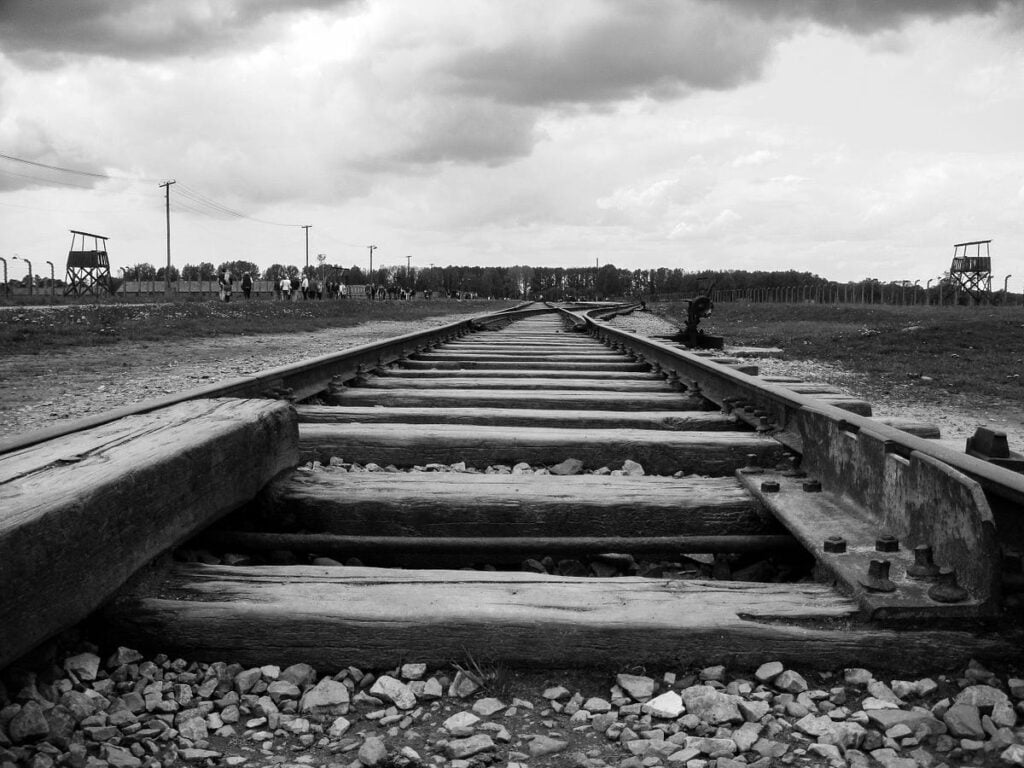
    Auschwitz Extermination Camp — Photo by Mateus Campos Felipe on Unsplash

    Nazism and Religion the Third Reich

    The role of religion during the Nazi era is a subject of historical debate and scrutiny, as it raises questions about the responsibility and complicity of religious institutions and individuals in the crimes and atrocities committed by the Nazi regime. While some religious people and groups actively resisted and opposed Nazism, such as Dietrich Bonhoeffer, a Lutheran pastor and theologian who was executed for his involvement in a plot to assassinate Hitler, and the White Rose, a student group that distributed anti-Nazi leaflets and was executed for treason, many others remained silent, passive, or even supportive of Nazism, either out of fear, ignorance, or agreement.

    The Catholic Church has faced scrutiny for its actions during the Nazi era, particularly for not taking a stronger stand against Hitler’s regime and the atrocities committed. A focal point of this criticism is the relationship between Hitler and Pope Pius XII, who led the Church from 1939 to 1958. As a cardinal and the Vatican’s Secretary of State, he met with Hitler in 1934 and was involved in the signing of the Reichskonkordat in 1933, which some interpret as an act of conciliation towards the Nazis. Moreover, Pope Pius XII is noted for his silence during the Holocaust, despite being informed about the mass extermination of Jews and others, and he neither condemned nor excommunicated Hitler or any other high-ranking Nazi official.

    However, the role of the Catholic Church during the Nazi era was not entirely negative or shameful, as it also involved some acts of resistance and humanitarianism. The Pope did issue some encyclicals and speeches that criticized some aspects of Nazism, such as racism, totalitarianism, and war, and called for peace and justice. He also supported and encouraged some Catholic clergy and laypeople who helped and hid Jews and other persecuted people, such as Hugh O’Flaherty, an Irish priest who saved thousands of Jews and Allied soldiers in Rome, and Edith Stein, a Jewish convert to Catholicism who became a nun and was killed in Auschwitz. The Pope also intervened and prevented the deportation of Jews from Rome and other parts of Italy and helped some Jews escape to other countries.

    Therefore, the role of religion during the Nazi era is not a simple or clear-cut one, but rather a complex and nuanced one, involving both complicity and resistance, both silence and action, both collaboration and opposition. It is a role that requires careful and critical examination and honestand humble reflection.

    In a Nutshell: Hitler and Religion

    The topic of Hitler, Nazism, and religion is fraught with misconceptions, myths, and controversies and challenges us to confront the dark and tragic chapters of our history, making it hard to learn from the mistakes and failures of our past. It remains a topic that invites us to question and rethink our assumptions and beliefs about religion, politics, and morality and to seek a deeper and better understanding of the complex and diverse human nature and society.

  • The Biggest Flaw in American Democracy

    The Biggest Flaw in American Democracy

    Democracy is a crucial pillar of political legitimacy in the modern world, with its various forms offering distinct characteristics and implications for governance. The presidential and parliamentary systems, prevalent in the United States and countries like the United Kingdom, the Republic of Ireland, Germany, and the Netherlands, respectively, represent two key paradigms of democratic governance. The contrast between the presidential system vs parliamentary system reveals the diversity of democratic processes and their impact on governance efficacy and democratic ethos.

    Presidential System and Its Fixed Mandate

    A fixed term marks the presidential system in the United States for the head of state and government, the President, who is elected every four years. This system grants significant executive power to the President, independent of the legislature. This separation of powers is designed to prevent the concentration of power and ensure checks and balances, but it can also lead to a democratic deficit. In the presidential system, once the President is elected, they do not necessarily need continuous consent from the governed to remain in office, barring an impeachable offense.

    This separation of powers in the presidential system vs parliamentary system leads to unique governance dynamics. While the checks and balances in the presidential system aim to safeguard against abuse of power, the President’s fixed mandate can mean governance without necessarily reflecting the current will of the people. The President’s authority to direct policies, issue pardons, and influence the government’s direction continues unabated, potentially leading to a governance style that is ‘for the office’ rather than ‘for the people.’

    Parliamentary System and Its Continuous Mandate

    In contrast, the parliamentary system operates on a different principle. The head of government, the Prime Minister, must maintain the legislature’s confidence, which is directly representative of the electorate. In countries like the United Kingdom, the Republic of Ireland, Germany, and the Netherlands, the parliamentary system ensures that the government aligns with the constituents’ will. The Prime Minister’s tenure is contingent upon the support of the majority, reflecting a continuous democratic process. Unlike the presidential system, this system allows for immediate rectification of unpopular leadership.

    The parliamentary system’s focus on continuous consent underscores a key difference between the presidential system vs parliamentary system. In parliamentary democracies, if the Prime Minister loses the legislature’s confidence, it can trigger a motion of no confidence, potentially leading to their removal and even the dissolution of the government. This flexibility creates a more dynamic form of democracy, with governance remaining responsive to the electorate’s changing sentiments.

    Why the Difference? A Historical Perspective

    The distinctions between the presidential system vs parliamentary system have historical roots. The United States’ founding fathers envisioned a democracy where a leader, directly elected by the people, would replace the monarchy. This foundational idea underpinned the creation of the presidential system, emphasizing a separation of powers to avoid concentrated authority.

    Conversely, the parliamentary system evolved over time in Europe, particularly in the United Kingdom. The role of the Prime Minister began as a spokesperson for the cabinet but eventually became the head of the executive branch, with the monarch assuming a ceremonial role. This evolution allowed the parliamentary system to develop a continuous mandate model, requiring the head of government to maintain legislative support, reflecting the electorate’s will.

    The Quest for a More Perfect Democracy

    Comparing the presidential system vs parliamentary system reveals a broader quest for a more perfect democracy. The presidential system’s stability and separation of powers contrast with the parliamentary system’s flexibility and responsiveness. While each system has its merits and flaws, the ultimate goal is to ensure governance that reflects the people’s will.

    The debate between the presidential system vs parliamentary system is ongoing, as each has unique advantages and challenges. Ultimately, the ideal democratic system balances stability with adaptability, ensuring that governance is by the people, for the people, and responsive to their evolving aspirations. The different structures of these systems remind us that democracy is a complex and ever-evolving process.

  • Christianity’s Violent Past

    Christianity’s Violent Past


    Christianity’s violent past in Europe is marked by a series of conflicts, violence, and societal upheavals. Across centuries, pivotal episodes such as the Sack of Jerusalem in 1099, the Albigensian Crusade from 1209 to 1229, the Reconquista spanning the 8th to the 15th centuries, and the Baltic Crusades extending from the 12th to the 16th centuries exemplify the intricate interplay between religious fervor, geopolitical ambitions, and cultural transformations.

    Join us in exploring the four key events that resulted in the loss of millions of lives due to wars, battles, massacres, forced conversions, and other violent actions associated with the Christianization of Europe.

    Christianity’s Violent Past I: The Sack of Jerusalem (1099)

    The Sack of Jerusalem in 1099 is one of the most notable events of the First Crusade. The purpose of the Sack of Jerusalem was primarily to capture the holy city of Jerusalem from Muslim control and to establish Christian rule over the sacred sites. The Crusaders were motivated by religious fervor and the promise of indulgences, which were granted by the Pope to those who participated in the Crusade. The capture of Jerusalem was seen as a pivotal religious victory that would allow Christians to reclaim the Holy Land and provide safe passage for pilgrims.

    The aftermath of the city’s capture was marked by the massacre of its Muslim and Jewish inhabitants. Historical accounts suggest that the number of those killed ranged from 3,000 to 70,000, although the exact figures are debated among historians. The Crusaders’ actions had a lasting impact on the religious and ethnic composition of the region.

    The siege and subsequent sack of Jerusalem were driven by a combination of religious fervor and the geopolitical ambitions of the Crusaders. The event was a pivotal moment in the history of the Crusades and a turning point that shaped the medieval Near East. The Crusaders’ establishment of the Kingdom of Jerusalem introduced a new Christian state in a predominantly Muslim region, setting the stage for further conflicts and subsequent Crusades.

    Christianity's Violent Past:
    Photo by Myriam Zilles on Unsplash

    Christianity’s Violent Past: The Albigensian Crusade (1209–1229)

    The Albigensian Crusade, also known as the Cathar Crusade, was initiated by Pope Innocent III in 1209 to eliminate Catharism in Languedoc, modern-day southern France. The Cathars were a Christian sect whose beliefs diverged significantly from the Catholic Church, particularly with their dualist view that the material world was evil, conflicting with the Catholic doctrine of the Incarnation of Christ and the sacraments, leading to their condemnation as heretics.

    The Crusade quickly took on a political dimension, prosecuted primarily by the French crown. It aimed not only to suppress the Cathar heresy but also to extend the influence of the French monarchy over the region of Languedoc, which had a distinct culture and language. The conflict resulted in the massacre of at least 200,000 to possibly 1 million Cathars, leading some scholars to consider it to be an act of genocide.

    The Albigensian Crusade significantly reduced practicing Cathars and realignment of the County of Toulouse with the French crown. The distinct regional culture of Languedoc vanished as a result of the Crusade. The Cathars, who originated from an anti-materialist reform movement within the Bogomil churches of the Balkans, called for a return to the Christian message of perfection, poverty, and preaching.

    The Crusade set a precedent for the persecution of heretic Christians, setting a clear demonstration of the lengths to which the Catholic Church and its secular allies would go to maintain religious and political authority in medieval Europe.

    Christianity's Violent Past:
    Photo by Myriam Zilles on Unsplash

    Christianity’s Violent Past: The Reconquista (8th-15th centuries)

    The Reconquista was a complex, centuries-long process that saw Christian kingdoms in the Iberian Peninsula striving to reclaim territories from Muslim rule. It began in the 8th century and culminated in the 15th century, significantly transforming the region’s religious, political, and social landscape.

    The Christianization of the peninsula was not only a religious mission to restore Christian rule over previously Visigothic lands but also a strategic move by the Christian monarchs to consolidate their power and extend their kingdoms. This period was characterized by a series of military campaigns and conquests, including the notable Battle of Covadonga, the fall of Toledo, the decisive Battle of Las Navas de Tolosa, and the conquest of Seville, which marked the end of Muslim rule in the heartland of al-Andalus. The Reconquista reached its conclusion with the fall of Granada in 1492, which led to Christian rulers’ complete control of the Iberian Peninsula.

    Throughout this era, the demographic composition of the region underwent significant changes. The Muslim population decreased through conversions, expulsions, and emigration, transforming the once-diverse religious landscape into a predominantly Catholic society. Historians estimate that up to 7 million Muslims died at the hands of Crusaders, setting the stage for the Spanish Inquisition and the eventual emergence of Spain as a unified nation under Catholic monarchs. The Reconquista remains a defining period in Spain and Portugal’s history, shaping the peninsula’s cultural and religious identity.

    Christianity's Violent Past:
    Photo by Alessandro Bellone on Unsplash

    Christianity’s Violent Past: The Baltic Crusades (12th-16th centuries)

    The Baltic Crusades, also known as the Northern Crusades, were a series of military campaigns conducted by Christian military orders and kingdoms primarily against the pagan peoples around the southern and eastern shores of the Baltic Sea. These crusades aimed to convert these populations to Christianity and establish regional dominance.

    The Teutonic Knights, a military order, played a significant role in these campaigns, particularly from the mid-13th century onwards. They established a militarized state in Prussia and sought to convert the local pagan population. However, the religious motive was often a pretext for acquiring land and wealth, as the crusades provided opportunities for territorial expansion and material gain, such as land, furs, amber, and slaves.

    The campaigns began with the Wendish Crusade in 1147 and continued with various efforts to subjugate and convert the indigenous populations of the Baltic region, including the Prussians, Livonians, Estonians, and Lithuanians. These efforts often involved violent confrontations, forced baptisms, and the establishment of Christian institutions. Over time, the indigenous pagan practices were replaced by Christianity, leading to significant cultural and religious changes in the region.

    The Baltic Crusades also had economic and political dimensions, as German merchants and nobles sought to expand their influence along trading routes in the Baltic frontier. The crusades continued this pattern of conflict, now inspired and prescribed by the Pope and undertaken by Papal knights and armed monks. The result was a profound transformation of the Baltic region regarding its religious landscape and political alignments.

    In a Nutshell

    Looking back at the history of Christianity spreading in Europe, it’s clear that calling it a peaceful religion is far from accurate. The four key events discussed — the Sack of Jerusalem, the Albigensian Crusade, the Reconquista, and the Baltic Crusades — offer stark reminders of the violence, bloodshed, and societal upheaval that accompanied the spread of Christianity.

    From the massacre of Muslim and Jewish inhabitants in Jerusalem to the suppression and annihilation of Cathar communities in southern France, and from the centuries-long military campaigns to reclaim territories in the Iberian Peninsula to the violent subjugation of pagan peoples in the Baltic region, Christianity’s historical footprint is stained with the blood of millions.

    These stories tell us that history hasn’t always been quite peaceful, and Christianity has been methodically used to justify violence and force people to change their beliefs. Looking at these stories, we need to face the fact that Christianity has a past of hurting others and is not any better than other Abrahamic religions.


    Sources

    Christianity in Europe – Wikipedia
    Christianity is the largest religion in Europe. Christianity has been practiced in Europe since the first century, and…en.wikipedia.org

    Northern Crusades – Wikipedia
    The Northern Crusades or Baltic Crusades were Christianization campaigns undertaken by Catholic Christian military…en.wikipedia.org

    https://en.wikipedia.org/wiki/Northern_CrusadesSiege of Jerusalem (70 CE) – Wikipedia
    The siege of Jerusalem of 70 CE was the decisive event of the First Jewish-Roman War (66-73 CE), in which the Roman…en.wikipedia.org

    Albigensian Crusade – Wikipedia
    The Albigensian Crusade (French: Croisade des albigeois) or Cathar Crusade (1209-1229) was a military and ideological…en.wikipedia.org

    Log College Press
    Log College Press aims to collect and reprint the writings of and about American Presbyterians from the 18th and 19th…caleb-cangelosi-437x.squarespace.com

    How Christianity came to Medieval Europe – Medievalists.net
    Nearly all the lands of Europe converted to Christianity during the Middle Ages. In this short guide, we take a look at…www.medievalists.net

    Christianity in the Making of Europe
    Christianity provided some of the most important cultural orientations for Europe. However, given the diverse forms of…link.springer.com

    The Siege of Jerusalem in 70 CE
    The Siege of Jerusalem in 70 CE was the high watermark in the First Jewish-Roman War (66-73 CE) regarding the tension…www.worldhistory.org

    Black Death
    The Black Death was a plague pandemic that devastated medieval Europe from 1347 to 1352. The Black Death killed an…www.worldhistory.org

    Albigensian Crusade
    The Albigensian Crusade (aka Cathars’ Crusade, 1209-1229 CE), was the first crusade to specifically target heretic…www.worldhistory.org

    Wikiwand – Albigensian Crusade
    The Albigensian Crusade or Cathar Crusade (1209-1229) was a 20-year military campaign. Pope Innocent III started it to…www.wikiwand.com

    Reconquista | Definition, History, Significance, & Facts
    Reconquista, in medieval Spain and Portugal, a series of campaigns by Christian states to recapture territory from the…www.britannica.com

    Siege of Jerusalem | Facts & Summary
    Siege of Jerusalem, Roman blockade of the city in 70 CE, during the First Jewish Revolt. After a long period of…shorturl.at

    Reconquista
    The Reconquista (a Spanish and Portuguese word for “Reconquest”) was a period of 750 years in which several Christian…www.newworldencyclopedia.org

    How Christianity came to Medieval Europe – Medievalists.net
    Nearly all the lands of Europe converted to Christianity during the Middle Ages. In this short guide, we take a look at…www.medievalists.net

    What Was the Reconquista and Why Did It Last so Long?
    1492 is a year that rings throughout history. Across the world, people remember Columbus, his reaching of the Americas…www.historyhit.com

  • Evolution of God – God’s Identity Crisis

    Evolution of God – God’s Identity Crisis

    The concept of God in Judaism has seen a remarkable evolution throughout history, mirroring humanity’s shifting cultural and philosophical contexts. Initially embracing polytheism, Judaism featured multiple deities overseeing life’s various aspects. This perspective evolved into the groundbreaking notion of a singular, transcendent, all-encompassing God: Yahweh. This marked the onset of a profound transformation in comprehending Yahweh’s nature and role, an evolution that would continue to unfold over time.

    Early Identity of Yahweh

    Yahweh, the God of the Israelites, epitomized the evolution of God beyond the physical, existing outside the limits of human understanding or portrayal. Temporal or spatial dimensions did not confine this infinite and unbounded presence. The second commandment underscored this transcendence, forbidding the crafting of idols or likenesses. This ban, termed aniconism, solidified as a fundamental tenet of Jewish theology, setting it apart from polytheistic faiths that revered corporeal depictions of their deities.

    You shall not make for yourself an image in the form of anything in heaven above or on the earth beneath or in the waters below. You shall not bow down to them or worship them; for I, the Lord your God, am a jealous God, punishing the children for the sin of the parents to the third and fourth generation of those who hate me, but showing love to a thousand generations of those who love me and keep my commandments.

    Exodus 20:4-6 in Contemprary English

    The Evolution of God: From Tangible Idols to a Transcendent Deity

    The portrayal of Yahweh in Judaism signifies a pivotal moment in the evolution of God, transitioning from physical forms to a purely spiritual existence. Unlike the corporeal gods of adjacent cultures, Yahweh’s spiritual essence underscored his omnipresence throughout the cosmos and his intangibility, eluding the confines of human perception.

    This paradigm shift heralded a philosophical as well as religious evolution of God. The commandment against idolatry wasn’t merely a directive but a proclamation of God’s progression from tangible to intangible, from seen to unseen. It denoted an intellectual advancement, a move from rudimentary animism to a more sophisticated, abstract conception of the divine.

    The evolution of God into an unseen, transcendent entity defied conventional worldviews, prompting a reevaluation of the boundaries of knowledge and the acknowledgment of a reality beyond the physical. It laid the groundwork for a new theological era that would profoundly influence Jewish thought and extend its impact on the broader philosophical and religious discourse for generations.

    This concept of a transcendent, evolving God was adopted by Christianity, born from the Jewish tradition. The early Christians, predominantly Jewish converts, adhered to the Jewish edict against idolatry. Depicting Jesus or Mary visually was inconceivable, as it would contradict the advanced understanding of God’s non-physical nature—a conviction deeply embedded in their Jewish heritage.

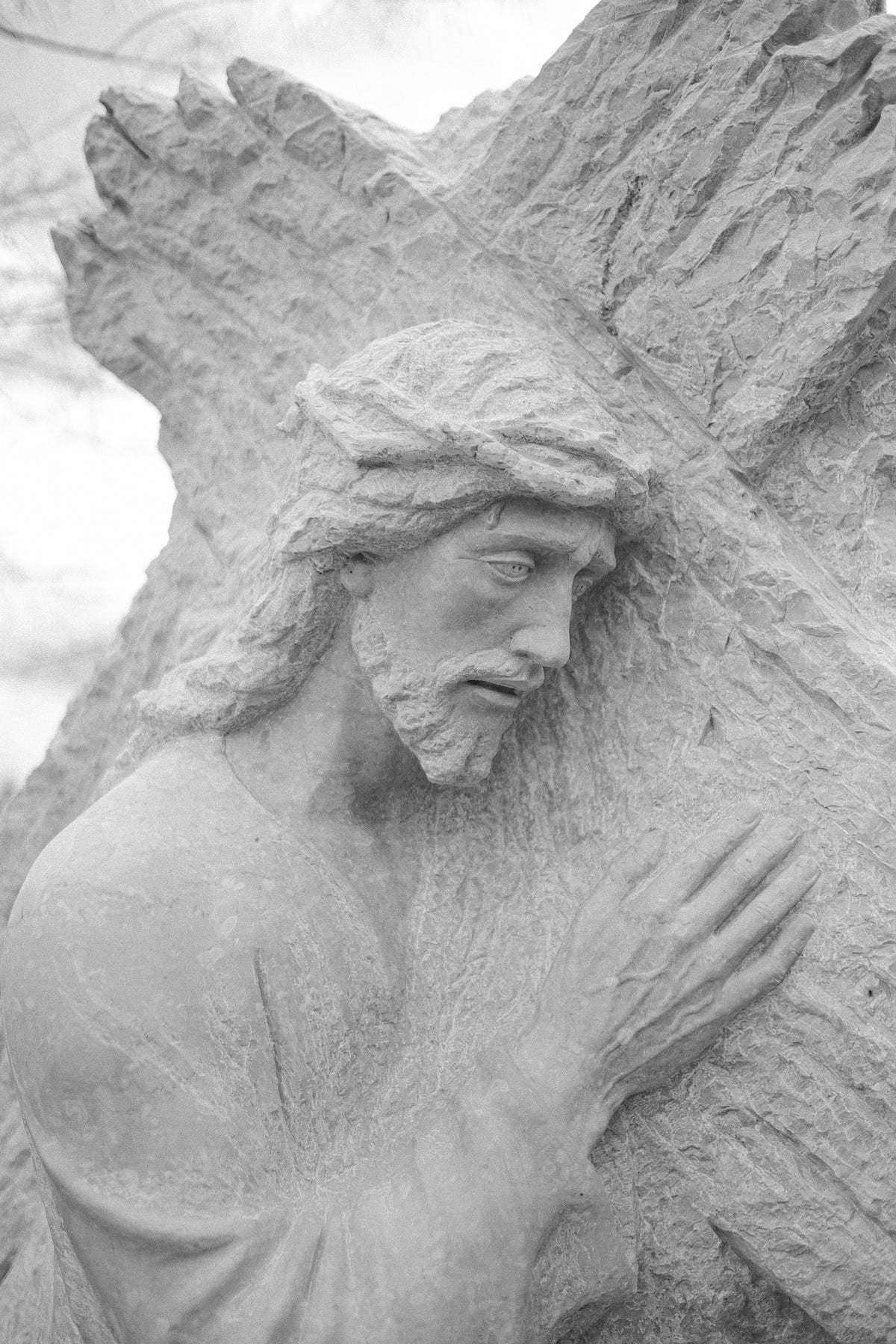
    Photo by Wesley Tingey on Unsplash

    The Evolution of God: Embracing the Human Form

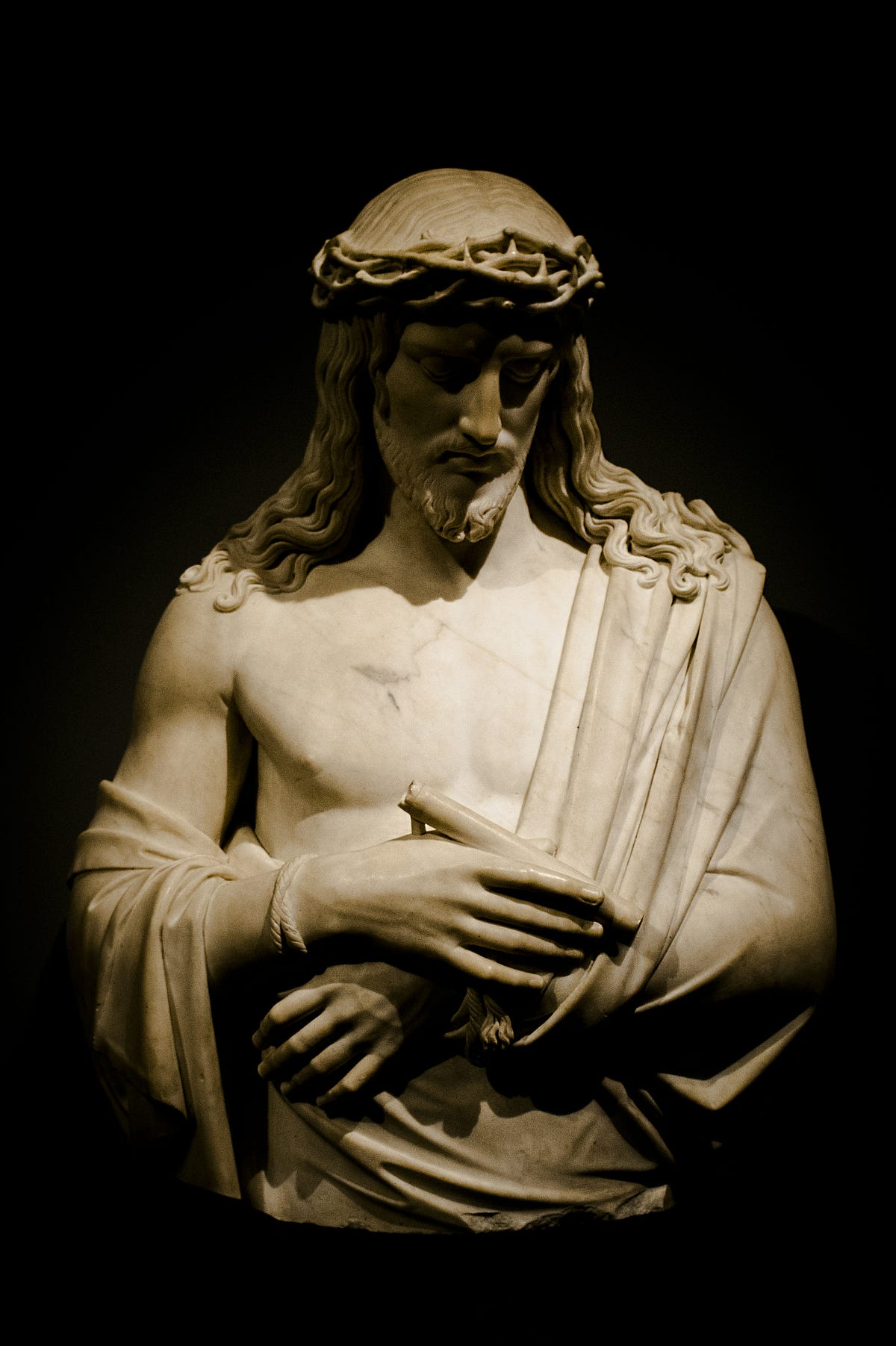
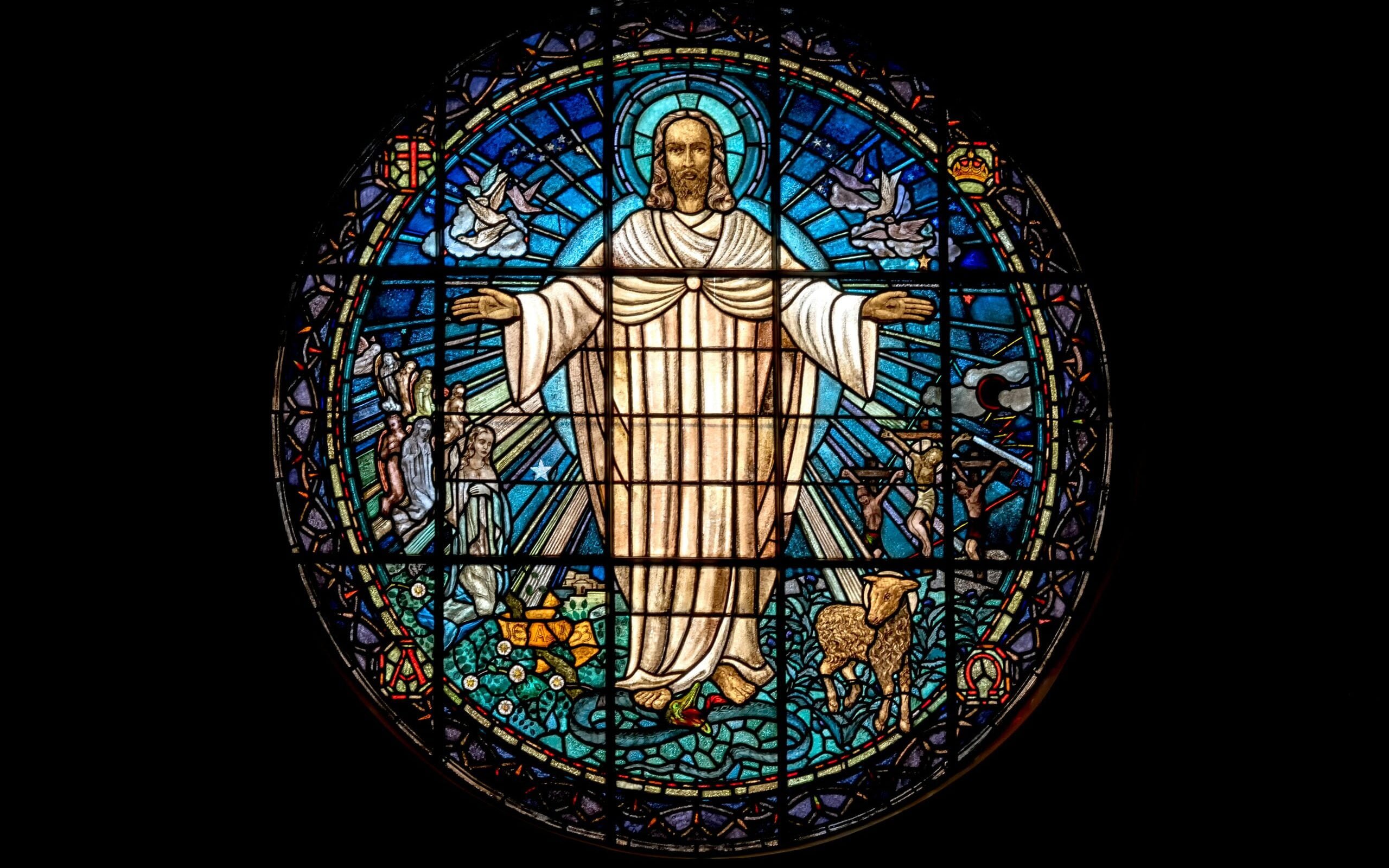
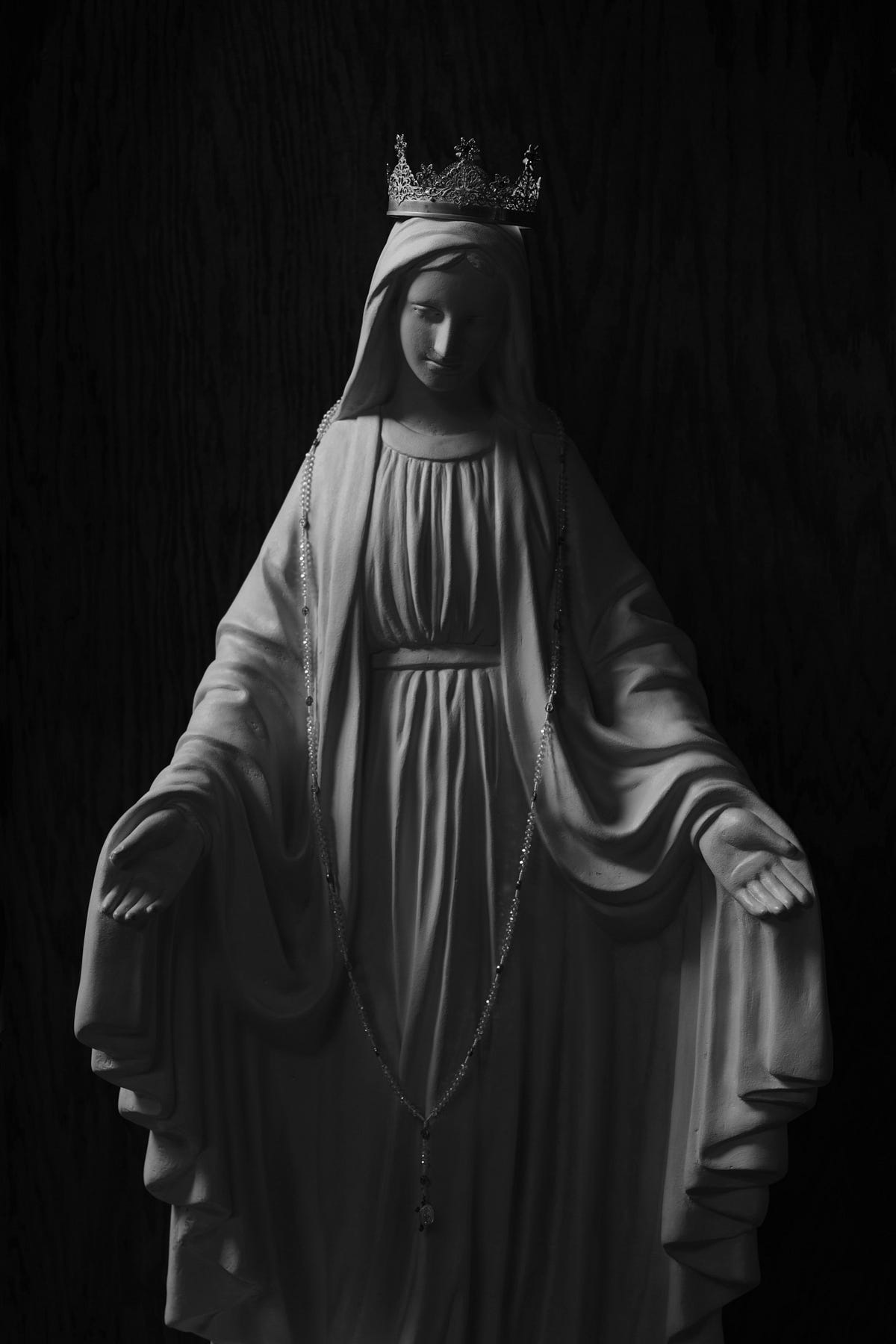
    As Christianity embarked on its transformative journey from the Middle East to the European continent, it was met with a cultural and philosophical environment vastly distinct from its origins. The European emphasis on physical representation and artistic expression subtly yet profoundly influenced the Christian portrayal of the divine. During these formative years in Europe, the once transcendent and intangible God of Judaism and early Christianity began a remarkable evolution, gradually adopting a more human visage as Christians endeavored to craft images of Jesus, Mary, and the saints.

    This metamorphosis in the perception of God signified a notable divergence from the Jewish tradition, which had resolutely upheld God’s incorporeal and ineffable nature. The advent of Christian iconography initially met with skepticism and resistance but eventually found its place within the heart of Christian worship. The visual depictions of Jesus, Mary, and the saints emerged as concrete manifestations of faith, serving as focal points for devotion and channels for prayerful meditation.

    The rise of Christian iconography marked a critical juncture in the religion’s evolution, reflecting the adaptability of faith and its ability to assimilate into diverse cultural and philosophical landscapes. The shift from aniconic to iconic representations of the divine sparked theological debates and ecclesiastical conflicts, yet it also underscored the dynamic nature of religious expression and the profound influence of visual art in conveying spiritual enthusiasm and conviction.

    The transformation within Christian iconography can be attributed to a confluence of factors. With its receptivity to visual representations of the divine, the European cultural context contrasted sharply with Judaism’s aniconic stance. The Greco-Roman tradition, with its rich tapestry of gods and heroes, immortalized in art, provided a fertile ground for early Christians to adapt and reinterpret existing artistic conventions to depict their sacred narratives.

    Furthermore, the dissemination of Christianity to a predominantly non-Jewish populace called for a more approachable and relatable mode of worship. While profound, the abstract and incomprehensible God of Judaism was less accessible to the masses, who found a spiritual connection through more concrete and familiar forms. Introducing images of Jesus, Mary, and the saints offered tangible touchstones for the faithful, enabling a deeper, more personal engagement with the divine.

    The evolution of God’s portrayal into a human-like figure, often rendered as a venerable, bearded man, mirrored the cultural and artistic norms of the era, bridging the gap between the celestial and the terrestrial. This anthropomorphic representation not only made the divine more understandable to the layperson but also facilitated Christianity’s acceptance within the Roman Empire, harmonizing with the prevailing Greco-Roman iconographic traditions.

    In this way, the evolution of God in Christian thought and art reflects a profound transformation—a journey from the untouchable to the touchable, from the mysterious to the known, and from the purely spiritual to the incarnate. It is a testament to the enduring human desire to connect with the divine in terms that resonate with our own experience and understanding.

    Photo by Josh Applegate on Unsplash

    In a Nutshell

    The concept of God has undergone a profound transformation throughout history, mirroring the evolving nature of human spirituality and the intricate interplay between faith and cultural contexts. In the early traditions of Judaism and the nascent stages of Christianity, God was perceived as a transcendent entity — utterly incomprehensible, shrouded in enigma, and existing beyond the grasp of human understanding. Such a portrayal underscored the sheer magnitude of the divine, a being whose essence was veiled in profound mystery, emphasizing the chasm between the mortal and the sacred.

    As Christianity matured, the depiction of God evolved to become more tangible and personified. The incarnation of God in the figure of Jesus Christ marked a pivotal shift from the abstract to the concrete. An embodied god offered a more intimate and approachable form of divine interaction, allowing worshippers to foster a personal connection with the deity through the human-like representation of Christ.

    Each conceptualization of God — whether transcendent or embodied — served as a conduit for the divine, providing distinct perspectives for engaging with the spiritual realm. The transcendent God invited awe and reverence, a reminder of the divine’s boundless nature. In contrast, the embodied God extended an invitation for a closer, more empathetic relationship, reflecting the yearning for a personal connection with the divine.

    Ultimately, these diverse representations of God reflect humanity’s continuous quest to comprehend the ineffable, to bridge the gap between the earthly and the ethereal, and to find meaning in the presence of the ultimate enigma, which is divine.