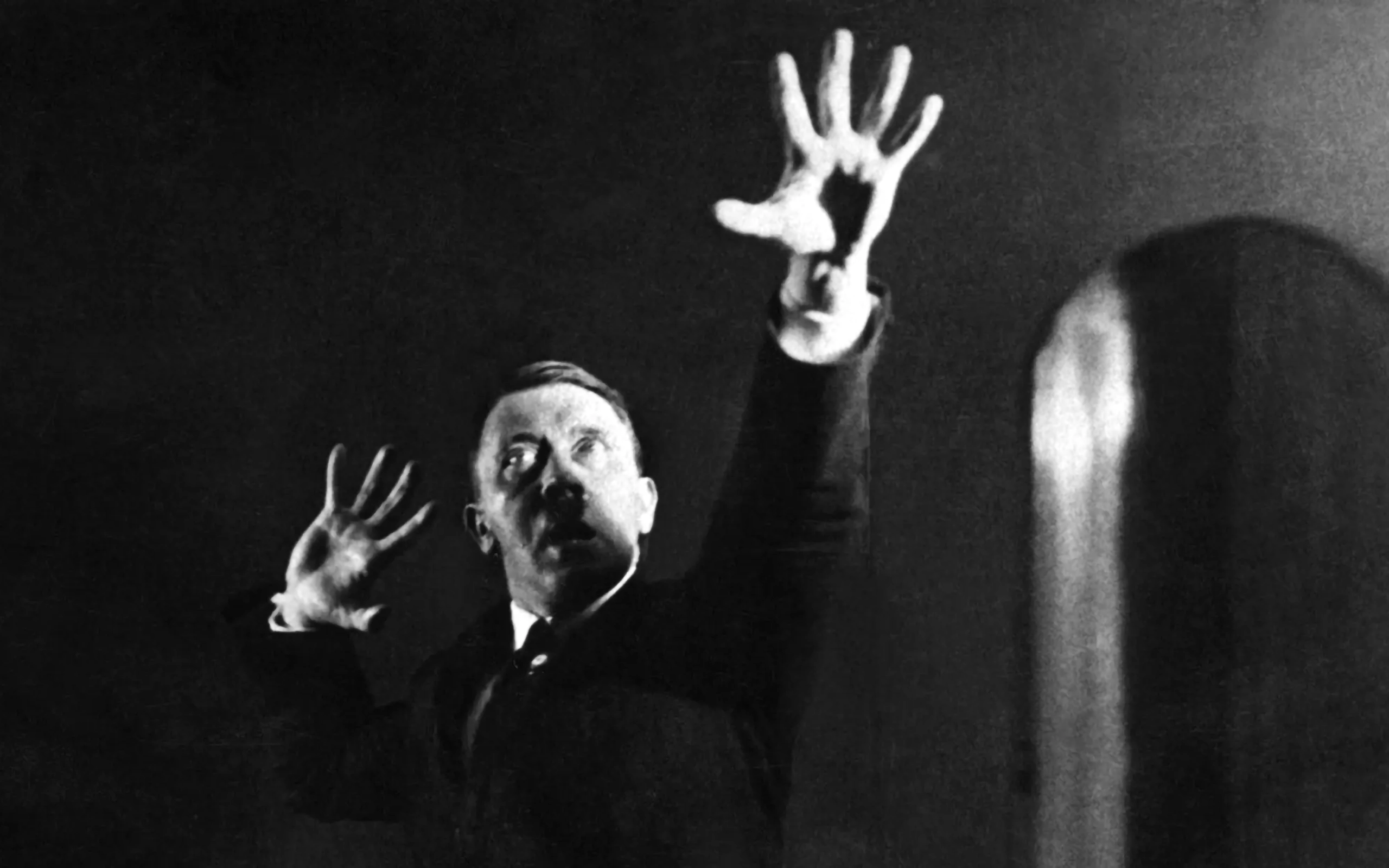
Tag: Hitler

  • Hitler: The Nazi Messiah

    Hitler: The Nazi Messiah

    The figure of Adolf Hitler is shrouded in a mix of myth, horror, and mystery. One aspect of his life that continues to spark debate is his religious beliefs. Was Hitler a devout Christian, or did he merely use religion as a political tool to further his aims? By delving into historical records, speeches, and personal writings, we can attempt to unravel the complexities of Hitler’s relationship with Christianity and religion during his reign.

    The Early Years: Hitler’s Religious Background

    Adolf Hitler was born in 1889 in Austria, a predominantly Catholic region. He was baptized and raised in the Roman Catholic Church, attending church services regularly as a child. His parents, particularly his mother, were devout Catholics. However, as he grew older, Hitler’s relationship with the church and religion began to change.

    During his youth, Hitler’s experiences and interactions with religion were likely influenced by the socio-political climate of the time. The late 19th and early 20th centuries saw significant tension between the Catholic Church and secular authorities, which may have shaped Hitler’s views on religion.

    Hitler’s Public Stance on Christianity

    In his rise to power, Hitler often publicly identified as a Christian and made numerous references to God and divine providence in his speeches. He portrayed himself as a defender of Christian values and often spoke about the need to protect Germany from atheism and secularism. However, many historians argue that these statements were more about political strategy than genuine belief.

    Hitler’s references to Christianity were often intertwined with nationalism. He depicted Jesus not as a traditional religious figure, but as an Aryan fighter against Jewish influence. This reinterpretation of Christian doctrine served to align his anti-Semitic views with a form of twisted religious justification.

    Private Beliefs and Actions

    Despite his public proclamations of faith, there is substantial evidence suggesting that Hitler’s private beliefs were far more complex and contradictory. In his book Mein Kampf and other writings, Hitler rarely delves deeply into personal religious convictions, focusing instead on political ideology and racial theories.

    Several close associates and confidants of Hitler have documented his disdain for traditional Christianity. Joseph Goebbels, Heinrich Himmler, and other high-ranking Nazi officials noted that Hitler was skeptical of organized religion and often spoke derisively about it in private. These accounts paint a picture of a man who saw religion as a means to an end, rather than a core personal belief.

    The Nazi Regime and Religion

    The Nazi regime’s relationship with Christianity was multifaceted and often contradictory. On one hand, the Nazis sought to co-opt and manipulate Christian institutions to serve their purposes. They established the German Christian Movement, which attempted to align Protestant churches with Nazi ideology, promoting a version of Christianity stripped of its Jewish roots.

    On the other hand, the regime was highly suspicious of any religious institutions that could challenge its authority. Many clergy members who spoke out against Nazi policies were persecuted, imprisoned, or executed. The regime’s ultimate goal appeared to be the creation of a state-controlled religion that would replace traditional Christianity.

    The Role of Religion in Nazi Propaganda

    Religion played a significant role in Nazi propaganda. By invoking Christian imagery and language, the regime sought to garner support from the German populace, many of whom were devout Christians. Nazi propaganda often depicted Hitler as a messianic figure, chosen by divine providence to lead Germany to greatness.

    This manipulation of religious sentiment was a powerful tool in the regime’s arsenal. It allowed the Nazis to present their policies as not only politically necessary but also morally justified. The conflation of nationalism and religion helped to create a sense of unity and purpose among the German people.

    Hitler’s Anti-Semitism and Religion

    Hitler’s virulent anti-Semitism is perhaps the most well-documented aspect of his ideology. While his hatred for Jews was rooted in a complex mix of racial theories and socio-political grievances, it also had a pseudo-religious dimension. Hitler often framed his anti-Semitism in terms of a cosmic struggle between good and evil, casting Jews as the embodiment of all that was corrupt and degenerate.

    This pseudo-religious framing allowed Hitler to present his anti-Semitic policies as part of a divine mission. By portraying the extermination of Jews as a moral imperative, he sought to justify the atrocities committed under his regime.

    The Legacy of Hitler’s Religious Views

    The question of Hitler’s true religious beliefs continues to be a subject of debate among historians. Some argue that he was a devout Christian who believed in a form of Christianity distorted by his own ideological views. Others contend that he was fundamentally secular, using religion cynically to manipulate the masses.

    What is clear is that Hitler’s relationship with religion was complex and multifaceted. It was shaped by his upbringing, the socio-political climate of his time, and his own ideological ambitions. Whether or not he was a true believer, he understood the power of religion as a tool for control and manipulation.

    The Takeaway

    In the end, the question of whether Hitler was a devout Christian or not may be less important than understanding how he used religion to further his goals. His ability to manipulate religious sentiment for political gain was a key component of his rise to power and the implementation of his policies.

    By examining Hitler’s relationship with religion, we gain a deeper understanding of the ways in which faith can be co-opted and corrupted by those in power. It serves as a reminder of the importance of vigilance in protecting the integrity of religious institutions and the dangers of allowing ideology to distort fundamental beliefs.

    In exploring the complexities of Hitler’s faith, we are reminded of the broader lessons of history and the enduring importance of critical thinking in the face of propaganda and manipulation. The story of Hitler and religion is not just about one man’s beliefs, but about the broader dynamics of power, ideology, and the human capacity for both faith and deception.

    #WWIIHistory, #ReligiousPolitics, #HistoricalTruth

  • Hitler Is Irrelevant. Here Is Why.

    Hitler Is Irrelevant. Here Is Why.

    Throughout history, figures like Adolf Hitler have surfaced, and the unfortunate reality is that such individuals may appear again. Instead of focusing solely on why Hitler became the person he was, it is crucial to understand why he garnered substantial support among Germans during his time. This essay explores the socio-political and economic conditions in post-World War I Germany that facilitated Hitler’s rise to power and examines the factors that made his ideology appealing to many Germans.

    The Aftermath of World War I

    World War I left Germany in a state of turmoil. The war’s end saw the abdication of Kaiser Wilhelm II and the establishment of the Weimar Republic, a democratic government that was met with significant opposition and resentment from various factions within Germany. The Treaty of Versailles, signed in 1919, imposed punitive reparations on Germany, stripping it of territory, reducing its military capability, and demanding exorbitant financial reparations. These conditions plunged Germany into economic hardship and political instability.

    The harsh terms of the Treaty of Versailles created a sense of humiliation and betrayal among the German populace. Many Germans felt that their country had been unfairly treated and blamed the Weimar Republic for accepting the treaty’s terms. The treaty’s economic impact was devastating, leading to hyperinflation, unemployment, and widespread poverty. In this environment of despair and disillusionment, Adolf Hitler found fertile ground for his message.

    Hitler’s Emergence and Propaganda

    Adolf Hitler, initially an obscure figure with a distinctive mustache and a penchant for fiery oratory, began to rise in prominence within the National Socialist German Workers’ Party (NSDAP). Despite his initial lack of political influence, Hitler’s ability to articulate the frustrations and grievances of the German people made him a compelling figure. He directed blame towards various groups, particularly revolutionists and Jewish Germans, whom he scapegoated for Germany’s defeat in World War I and the subsequent hardships imposed by the Treaty of Versailles.

    Hitler’s propaganda was effective in creating a narrative of betrayal and victimhood. He portrayed himself and the NSDAP as the saviors of Germany, promising to restore its former glory and rectify the injustices inflicted by the treaty. His speeches were emotionally charged and appealed to the nationalistic and patriotic sentiments of many Germans who were desperate for change.

    The Political Landscape

    In the early 1930s, Germany’s political landscape was characterized by fragmentation and instability. The Weimar Republic was weakened by infighting among political parties and frequent changes in government. In this volatile environment, Hitler’s NSDAP began to gain traction. In the 1932 elections, the NSDAP became the largest party in the Reichstag (German parliament), although it did not hold an outright majority.

    Hitler’s appointment as Chancellor in January 1933 was a result of political maneuvering and the belief among conservative politicians that they could control him. However, Hitler quickly consolidated power. Through the Reichstag Fire Decree and the Enabling Act, he dismantled democratic institutions and established a totalitarian regime. Hitler’s ability to manipulate political processes and present himself as a strong leader capable of restoring order and national pride resonated with many Germans.

    Economic Recovery and National Pride

    One of the key factors that solidified Hitler’s support was his ability to deliver on promises of economic recovery. Through large-scale public works projects, rearmament, and policies aimed at achieving full employment, the Nazi regime managed to revive the German economy. The perceived economic success bolstered Hitler’s image as a competent and effective leader.

    Additionally, Hitler’s foreign policy successes, such as the remilitarization of the Rhineland and the annexation of Austria, were seen as defiance of the Treaty of Versailles and the restoration of German pride. These actions were popular among many Germans who felt humiliated by the treaty and yearned for a return to national greatness.

    The Role of Ideology and Anti-Semitism

    Hitler’s ideology, centered on notions of racial purity and Aryan superiority, also played a significant role in his rise to power. The NSDAP’s anti-Semitic propaganda portrayed Jews as the root cause of Germany’s problems, further fueling hatred and division. This scapegoating provided a convenient explanation for the complex socio-economic issues facing Germany and allowed Hitler to rally support by targeting a common enemy.

    The widespread acceptance of anti-Semitic beliefs in German society was not solely a product of Nazi propaganda; it drew on pre-existing prejudices and stereotypes. By tapping into these sentiments, Hitler was able to create a unifying and simplistic narrative that resonated with many Germans.

    The Takeaway

    The rise of Adolf Hitler and the support he garnered among Germans is a stark reminder of the dangers of demagoguery and the appeal of extremist ideologies during times of crisis. Understanding the complex factors that contributed to Hitler’s rise is essential for preventing similar occurrences in the future.

    Economic hardship, political instability, and a sense of national humiliation created an environment in which radical solutions and authoritarian figures became appealing. Hitler’s ability to exploit these conditions through effective propaganda and political maneuvering allowed him to consolidate power and lead Germany into one of the darkest periods in human history.

    By studying the past and recognizing the underlying issues that make certain ideologies attractive, we can work towards creating a more just and equitable society. This involves addressing economic inequality, fostering political stability, and promoting tolerance and understanding. Only by learning from history can we hope to prevent the rise of future tyrants and the recurrence of such atrocities.

    #History #WWI #NaziGermany