Tag: LGBTQ

  • How the West Fueled Homophobia in the Ottoman Empire

    How the West Fueled Homophobia in the Ottoman Empire

    The narrative of LGBTQ+ rights often paints a picture of a relentless march towards progress, with the West at the forefront. However, history holds a more nuanced truth, particularly when examining the Ottoman Empire. In the 18th century, the empire stood as a surprising outlier, having decriminalized homosexuality. This period of tolerance, however, was tragically cut short due to mounting pressure from Western powers, particularly France and the UK, fueling homophobia in the Ottoman Empire.

    A Society of Relative Acceptance

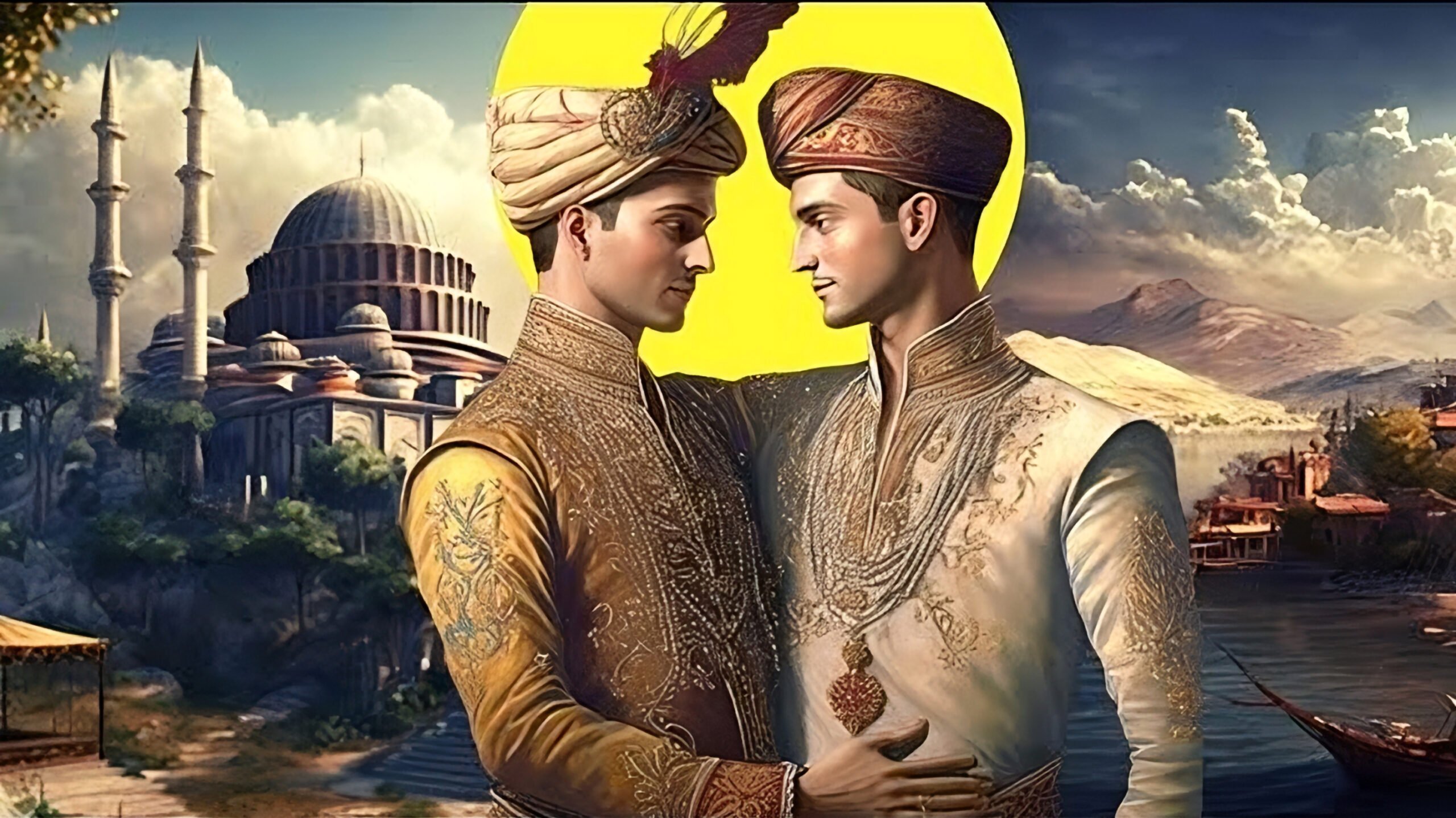
    Ottoman society, though not entirely devoid of prejudice, exhibited a remarkable degree of tolerance towards homosexuality compared to its European counterparts. Same-sex relationships were not explicitly outlawed, and certain social circles even embraced expressions of same-sex desire. This acceptance stemmed from a confluence of factors. First, Islamic jurisprudence, while outlining specific punishments for certain sexual acts, did not explicitly criminalize homosexuality itself. Second, the concept of privacy within the Ottoman household limited state intervention in personal matters. Finally, the Ottomans incorporated elements of Byzantine and Roman legal traditions, which, while not condoning homosexuality, did not treat it as a capital offense.

    The Rise of the “Other”

    This relative tolerance began to erode in the 18th century with increased interaction between the Ottomans and Western Europe. According to Dr. Michael Erdman, the Head of Middle Eastern and Central Asian Collections at the British Library, France and Britain, amidst growing colonial ambitions, viewed the Ottoman Empire with a mixture of fascination and disdain. They were captivated by the Ottomans’ cultural richness but also repelled by aspects that deviated from their own rigid social norms. Homosexuality, a subject of intense social stigma and legal persecution in Europe, became a particular point of contention.

    The Weaponization of Morality

    France and Britain, seeking to exert influence over the Ottomans, weaponized their own moral codes. They painted the Ottomans’ tolerance as a sign of societal decay and degeneracy. Diplomatic channels buzzed with pronouncements about the “unnatural practices” flourishing in the East. Travelogues penned by European visitors brimmed with exaggerated accounts of Ottoman vice, often focusing on homosexuality. These narratives served a dual purpose: demonizing the Ottomans and presenting Western Europe, particularly France and Britain, as bastions of morality.

    The Corrosive Effect

    The relentless pressure from Western powers had a corrosive effect on Ottoman society. While the empire initially resisted these external pressures, cracks began to appear. The intellectual elite, increasingly exposed to European ideas, began to internalize Western homophobia. Ottoman legal scholars, wrestling with the legitimacy of their own traditions in the face of sustained European critique, started to reinterpret Islamic law in a more restrictive manner. This shift, however, was not uniform. Popular attitudes towards homosexuality remained more nuanced, with pockets of tolerance persisting.

    A Legacy of Intolerance

    The late 19th century witnessed a dramatic shift. The Ottoman Empire, weakened by internal strife and external pressures, bowed to Western influence. Homosexuality was criminalized in the late 18th or early 19th century, mirroring the legal codes of France and Britain. This decision not only reflected a shift in legal interpretation but also served as a symbolic gesture of appeasement towards the West. The legacy of this decision continues to resonate today. Turkey, the successor state to the Ottoman Empire, has yet to fully decriminalize homosexuality, and societal attitudes remain marked by a strain of homophobia introduced from abroad.

    Unveiling the Hypocrisy

    The pressure exerted by France and Britain exposes a fundamental hypocrisy. French and Brits, while often directly or indirectly associating Islam with homophobia, France and Britain themselves were rife with prejudice and persecution. The public shaming and legal punishments meted out to those suspected of same-sex relations in Europe and its colonies stand in stark contrast to the relative tolerance exhibited by the Ottomans.

    The Takeaway

    The story of the Ottoman Empire challenges the simplistic narrative of Western progress on LGBTQ+ rights. It compels us to acknowledge the complex interplay of cultures and the weaponization of morality for geopolitical gain. Re-examining this history allows us to move beyond self-congratulatory narratives and fosters a more nuanced understanding of the ongoing struggle for LGBTQ+ rights globally. It is a call to recognize the progress made but also a reminder of the vigilance required to prevent the erosion of hard-won freedoms, both within and beyond our borders.

    Further Reading

  • Homosexuality in the Ottoman Empire

    Homosexuality in the Ottoman Empire

    Homosexuality in the Ottoman Empire, which reigned as the seat of the Islamic caliphate for over six centuries, presents a compelling case study that thoroughly challenges widespread assumptions about religion, sexuality, and the origins of homophobia. Conventional narratives often simplistically depict Islamic societies and legal systems as being inherently and immutably oppressive towards homosexuality and LGBTQ+ individuals. However, a deeper examination of the tenure of the Ottoman Empire reveals a far more nuanced and paradoxical history regarding its stance on homosexuality over time.

    Legal Framework and Sharia Law

    The framework of the Ottoman legal system was based on the founding principles of Sharia law, derived from the Quran and the traditions (Sunnah) of the Prophet Muhammad. While the Quran relates the narrative of Sodom and Gomorrah to express moral disapproval of homosexual acts, it does not explicitly prohibit or prescribe any worldly criminal punishments for homosexuality itself. Instead, the Quran emphasizes virtues of compassion and mercy and ultimately leaves the final judgment of human souls to the divine wisdom of God alone. This spiritual ambiguity was reflected in the relatively flexible interpretation of Sharia by Ottoman jurists and rulers over the centuries.

    Decriminalization and Progressive Legal Changes

    Remarkably, by the 18th century, the Ottoman legal system had effectively decriminalized homosexuality in a very progressive move for the era. In 1750, Sultan Mustafa III formally abolished the death penalty for sodomy, making the Islamic Ottoman Empire one of the earliest sovereign states in the world to decriminalize homosexual acts between consenting individuals. This stood in stark contrast to most of Christian Europe, where harsh criminalization and persecution of homosexuality were brutally enforced.

    Cultural Acceptance and Celebration

    Homosexuality in the Ottoman Empire was not just a matter of legal codes; it was widely tolerated and even celebrated within certain urbane circles of the Ottoman elite and intelligentsia, particularly during the empire’s golden age. Influenced by the rich cultures of Persia and Hellenic Greece, Ottoman royalty and aristocrats commonly engaged in homosexual relationships and actively patronized entertainers like male and female dancers, prostitutes, and artists, regardless of gender.

    Shift Towards Conservatism

    However, this paradigm of relative openness and tolerance surrounding sexuality began to erode as the once-mighty Ottoman Empire faced increasing military, economic, and cultural pressure from emergent European powers during the 19th and 20th centuries. In desperate attempts to reform, modernize, and appease the West through movements like Tanzimat and the Young Turks, the Ottoman elite gradually adopted the prevalent European attitudes, which had become steeped in restrictive, binary views of gender/sexuality and new pseudo-scientific notions that pathologized homosexuality as a criminal perversion or deviance.

    European Influence and Colonial Subjugation

    Under direct military occupation and colonial subjugation by European empires like Britain and France, who imposed conservative Victorian-era moral codes, the Ottomans found themselves persecuted for homosexuality and criminalized for “sodomy” and other gender/sexual transgressions. Despite its own history and Sharia traditions, the dying Ottoman Empire had little choice but to appease its Western occupiers and adopt European laws, customs, and value systems that insisted on the marginalization of LGBTQ+ identities and communities.

    The Paradoxical Arc of History

    The paradoxical arc of this history, including the rise and fall of homosexuality in the Ottoman Empire, forcibly dismantles the stubborn myth that religious and indigenous societies are innately regressive on gender/sexuality, while modern secular societies are inherently enlightened and tolerant. The Ottoman Empire, a global Islamic power, initially embraced a multitude of gender identities and sexual expressions as part of its vibrant cosmopolitan makeup, only to be coerced into adopting institutionalized homophobia and repressive binaries by the European Christian cultures that today claim progressive liberal values.

    Legacy and Contemporary Relevance

    The legacy of the Ottoman Empire’s complex journey serves as a crucial case study and a reminder that matters of sexuality, gender, identity, faith, and the sociopolitical forces surrounding them are kaleidoscopically intertwined, defying sweeping overgeneralizations or assumptions of any essentialist ideological paradigm. It compels us to confront the complex realities of how attitudes towards LGBTQ+ rights have evolved and shifted across eras, geographies, cultures, and faith traditions in nonlinear trajectories that continue to unfold today.

    The Takeaway

    As the global struggle for LGBTQ+ equality and pluralistic coexistence persists, embracing the full depth of diverse perspectives, such as those offered by the Ottoman experience, is vital to dismantling entrenched false assumptions across all cultures, ideologies, and belief systems. By analyzing outlier narratives that transcend convenient stereotypes and binaries, we can forge more authentic discourses and strategies to make lasting progressive impacts on some of humanity’s oldest existential debates surrounding identity, morality, and justice.

  • LGBT Is Already Too Crowded, Let Alone LGBTQIAAP2SGNC+

    LGBT Is Already Too Crowded, Let Alone LGBTQIAAP2SGNC+


    When Chastity confided in the Grammy Award-winning singer and Oscar-winning actress, Cher, about her sexual orientation as a lesbian, her mother’s reaction was to eject her from their home. Despite Cher reaching out the following day to apologize, Chastity chose not to return home, embarking on a profound journey of self-discovery. On her new path, it didn’t take long for her to realize that she didn’t quite fit the mold of other lesbian women she was acquainted with; she simply didn’t resonate with their experiences. Ultimately, she came to the understanding that she wasn’t a lesbian after all, yet she was sexually and romantically attracted to women.

    Join us as we delve into the nuances of sexual orientation and identity, understanding their intricacies and why it’s crucial to differentiate between them.

    A Brief History

    The evolution of sexual orientation and identity is a complex historical process with many contributing factors.

    Early sexologists like Richard von Krafft-Ebing and Havelock Ellis laid the groundwork for understanding sexual orientation in the late 19th and early 20th centuries. Their research and writings explored human sexuality, providing a foundation for later discussions.

    The term “sexual identity” gained prominence with the rise of LGBT+ activism, which emphasized the importance of self-identification and self-expression in defining one’s sexuality. Activists and scholars in the LGBT+ community, including those involved in the Stonewall riots of 1969, played a significant role in shaping our understanding of sexual identity as an integral part of individual identity.

    Photo by Alexander Grey on Unsplash

    Understanding LGBTQIAAP2SGNC+

    The acronym LGBT, which stands for Lesbian, Gay, Bisexual, and Transgender, has expanded over the years to be more inclusive of the diverse range of sexual orientations and gender identities. The extended version, LGBTQIAAP2SGNC+, includes Queer or Questioning, Intersex, Asexual, Allies, Pansexual, Two-Spirit, and Gender Non-Conforming, among others, reflecting a growing acknowledgment of the spectrum of human sexuality and gender identity, emphasizing the importance of representation and visibility for all individuals, irrespective of how they identify.

    To keep a complex and confusing topic simple, let’s talk about LGB as sexual orientation and T as sexual identity in isolation today.

    Sexual orientation refers to an individual’s enduring pattern of emotional, romantic, and sexual attraction to others. It encompasses a person’s feelings of attraction towards people of the same gender (homosexuality), different genders (heterosexuality), both genders (bisexuality), or neither gender (asexuality).

    On the other hand, sexual identity is subjective and evolves over generations. It refers to an individual’s personal understanding and recognition of their own sexual orientation, attraction, and preferences. It encompasses the complex and multifaceted aspects of who a person is romantically, emotionally, and sexually drawn to. Sexual identity is a profoundly social, cultural, personal, and intrinsic aspect of a person’s self-concept and can encompass a broad spectrum of experiences and feelings.

    Photo by Alexander Grey

    The Nuances

    The main difference between sexual orientation and sexual identity is that while the former describes who a person is attracted to and is often categorized into labels such as gay, lesbian, straight, bisexual, and pansexual, the latter is about how individuals label themselves and identify within their understanding of their attractions and desires.

    Sounds complicated? Well, because it is.

    What makes sexual identity complicated is the fact that there is no universal definition of what it takes to be a woman or a man. For example, in the societies most of us are brought up in, we are fed with the information that men don’t wear leggings, high heels, wigs, or makeup. For most people who identify as male, wearing any of these is unthinkable, mainly because it doesn’t fit their idea of how a well-dressed male looks.

    On the other hand, leggings used to be associated with military attire, while there was a time when men wore high heels and wigs to look taller and hide sexually transmitted diseases that caused hair loss. Additionally, make-up for men used to be very common in various cultures historically.

    In the 21st century, it’s more likely than not that a man identifying as gay or a woman identifying as heterosexual may not be attracted to a male who wears leggings, high heels, wigs, and makeup. However, in different cultures and historical periods, a gay man or a heterosexual woman could still be attracted to individuals wearing all of the aforementioned items.

    Photo by Christian Buehner

    Importance of Separating LGB and T

    Although commonly referred to as the LGBT+ community, it’s crucial to acknowledge the diverse range of identities and experiences within it. While lesbian, gay, and bisexual (LGB) individuals may share commonalities in sexual orientation, transgender people may face unique challenges related to gender identity, leading to differences in perspectives and experiences that prevent a cohesive sense of community among all members.

    Transgender individuals often endure distinct and often more arduous experiences compared to LGB individuals. From navigating gender dysphoria to facing discrimination in healthcare, employment, and everyday interactions, the transgender community faces multifaceted challenges that may not fully resonate with LGB individuals who do not experience gender incongruence.

    Furthermore, within the broader LGBT+ community, there exists a troubling phenomenon where some LGB individuals exhibit bigotry towards transgender individuals. This intolerance can manifest in various forms, from exclusionary attitudes to outright discrimination, particularly in conservative or less accepting environments.

    The experiences of transgender individuals can be as unfamiliar to LBG people as to any other demographic. For instance, while acceptance of trans individuals may face more significant hurdles in certain regions of the United States, the understanding of gender incongruence seems to be clearer among Turkish communities. In Turkey, where I originate from, progress has been made since 1987 to enable trans individuals to marry individuals of the opposite sex and to adopt children. Nevertheless, Turkey still struggles with accepting same-sex relationships, a prejudice influenced by Europe during the Westernization movement.

    Moreover, it’s essential to recognize the intricacies of sexual orientation and gender identity. While LGB and T are often discussed in tandem, they are not mutually exclusive categories. In other words, transgender individuals are not exclusively attracted to individuals of the opposite sex, further emphasizing the complexity within the LGBT.

    Photo by Emiliano Vittoriosi

    In a Nutshell

    Despite aiming for inclusivity, the extensive acronym LGBTQIAAP2SGNC+ can be confusing even for people considered members of the LGBT+ community. Its length and complexity make it difficult to recall, potentially excluding those it intends to include. Moreover, the broad scope of the acronym may overshadow the distinct needs and challenges faced by specific groups within it. For example, the unique legal, medical, and social issues experienced by transgender individuals differ significantly from those encountered by lesbians, gays, or bisexuals, some of whom may hold prejudices toward TQIAAP2SGNC+ individuals.