Tag: Middle East

  • A Brief History of Israel

    A Brief History of Israel

    The creation of Israel in 1948 was a watershed moment in modern history, embodying a complex interplay of religious aspirations, geopolitical strategies, and post-war realities. To understand this multifaceted event, it’s essential to delve into its origins, which are deeply rooted in both religious beliefs and the geopolitical strategies of Western powers, particularly Britain. This blog explores the foundational aspects of Israel’s establishment, the role of religious motivations, and the contemporary implications of this historical process.

    The Balfour Declaration and Britain’s Role

    The journey to the establishment of Israel can be traced back to World War I, a period marked by significant geopolitical maneuvering. Britain, seeking to undermine the Ottoman Empire’s control over the Middle East, sought alliances that would help it achieve this goal. One of the pivotal documents of this era was the Balfour Declaration of 1917. In this declaration, the British government expressed its support for the establishment of “a national home for the Jewish people” in Palestine. This was not merely a political maneuver but was also influenced by Britain’s religious and cultural milieu.

    Britain’s promise to the Arabs during World War I, encapsulated in the McMahon-Hussein Correspondence, assured them of independence in return for their revolt against the Ottoman Empire. However, these assurances were complicated by conflicting agreements, such as the Sykes-Picot Agreement, which secretly divided Ottoman lands between Britain and France. After the war, the League of Nations granted Britain the Mandate for Palestine, officially sanctioning its control over the region and its commitment to the Balfour Declaration.

    Migration and Settlement

    Following the Balfour Declaration, Jewish migration to Palestine increased significantly. This migration was driven by both religious aspiration and the dire need for a safe haven, especially in the context of rising anti-Semitism in Europe. The interwar period saw waves of Jewish immigrants settling in Palestine, purchasing land, and establishing communities. This influx was met with resistance from the Arab population, leading to growing tensions and conflicts.

    The Holocaust, which resulted in the genocide of six million Jews, accelerated the urgency for a Jewish homeland. The end of World War II saw a significant shift in international opinion, with growing support for the establishment of Israel. The United States and other Western countries played crucial roles in this process, recognizing the moral imperative to provide a refuge for the survivors of the Holocaust.

    Founding of Israel and the Biblical Prophecies

    The establishment of Israel in 1948, following the United Nations partition plan of 1947, was seen by many Christians, particularly Evangelicals, as a fulfillment of biblical prophecy. The notion that the return of the Jews to the Holy Land was a necessary precondition for the Second Coming of Christ is a deeply held belief among many Evangelicals in the United States. This belief continues to influence American foreign policy and public opinion regarding Israel.

    For Evangelical Christians, the creation of Israel is not merely a political event but a divine mandate. This perspective is rooted in a literal interpretation of the Bible, wherein prophecies about the gathering of Jews in their ancient homeland are seen as unfolding in real-time. This viewpoint contrasts sharply with more liberal Christian denominations, which often interpret biblical prophecies figuratively and focus on the moral and ethical teachings of Christianity rather than its eschatological aspects.

    Contrasting Views and Contemporary Implications

    The establishment of Israel has been a source of deep contention in the Middle East and beyond. For many Muslims, the creation of Israel on what they consider historically and religiously significant land represents a profound injustice. The displacement of Palestinian Arabs and the subsequent Arab-Israeli conflicts have left a lasting legacy of bitterness and hostility.

    The analogy of an independent Wyoming for Native Americans, with its implications of displacement and autonomy, can serve to highlight the complex emotions and political realities involved. Just as many Americans would likely resist the creation of a separate state for Native Americans within the US, so too have Palestinians and other Arabs opposed the establishment and expansion of Israel.

    This context is often exploited by extremist groups, who frame the West’s support for Israel as part of a broader war against Islam. While this framing is simplistic and ignores the nuances of international politics, it is not entirely without merit. The historical involvement of Western powers in the Middle East, driven by a mix of religious zeal and strategic interests, has undeniably contributed to the current state of affairs.

    Toward a Contemporary Solution

    Despite the historical grievances and ongoing conflicts, it is crucial to focus on finding a solution that acknowledges the contemporary realities. The state of Israel exists and is a thriving nation with a complex, multicultural society. Similarly, the Palestinian people have legitimate aspirations for statehood, dignity, and autonomy. Any viable solution must address the needs and rights of both populations.

    A two-state solution, which envisions an independent State of Palestine alongside the State of Israel, remains one of the most widely discussed and internationally supported frameworks for peace. This solution aims to reconcile the national aspirations of both Jews and Palestinians, providing security, sovereignty, and mutual recognition. However, the implementation of such a solution requires significant compromises and goodwill from both sides, as well as robust support from the international community.

    The Takeaway

    The establishment of Israel was a complex historical process driven by a combination of religious motivations, geopolitical strategies, and the tragic realities of the 20th century. While the role of Britain and other Western countries was pivotal, the ongoing support and influence of Evangelical Christians in the United States continue to shape the dynamics of the region.

    Understanding the historical context and the diverse perspectives involved is essential for anyone seeking to comprehend the current state of affairs in the Middle East. Acknowledging the deeply rooted grievances and working toward a fair and just solution is the only path to lasting peace. It is imperative to move beyond historical animosities and focus on building a future where both Israelis and Palestinians can coexist in peace and security.

    In the end, the goal should not be to dwell on past injustices but to find a path forward that respects the rights and aspirations of all people involved. Only through dialogue, empathy, and a commitment to justice can a sustainable and peaceful resolution be achieved.

  • Christians, Colonialism, and the Bloodshed of History

    Christians, Colonialism, and the Bloodshed of History


    It is often overlooked how the Christian faith, when wielded as a tool of empire, has been a harbinger of immense suffering. From the early missionaries who spread their beliefs with the sword to the more modern colonial administrators who justified their actions through a veneer of religious duty, millions of lives have been taken in the name of Christianity.

    The Slaughter in the Americas

    The Christian colonizers in the Americas didn’t just bring their faith; they brought devastation. Entire civilizations were decimated through disease, warfare, and forced conversion. The Aztecs, the Mayans, and countless other indigenous groups faced not just physical annihilation but also cultural eradication. The Catholic Church’s role in these conquests, often through its missionaries, is a dark chapter in history, one where the pursuit of spiritual dominion was often synonymous with the destruction of human lives and cultures.

    World Wars and the Church’s Role

    The fact that Christian nations sparked the World Wars serves as a golden piece of evidence for “Christian violence.” Both World War I and II resulted in immense loss of life, with the historical alignment of the Church with different empires and political agendas exacerbating the chaos. The death toll reached tens of millions, serving as a stark reminder of the catastrophic outcomes that can result from the misuse of ideology and faith.

    The Middle East: A Region Exhausted by Foreign Interference

    The modern history of the Middle East is a complex tapestry of empires, wars, and external interference. From the Ottoman Empire’s decline, influenced heavily by European powers, to the imposition of artificial borders post-World War I, the region has been a playground for geopolitical maneuvers. The West’s interventions, often justified under the guise of spreading democracy or combating extremism, have drained the life out of the Middle East, leaving behind a trail of chaos, suffering, and unrest.

    The Iraq Invasion: A Catastrophic Lie

    One of the most egregious examples of modern Christian interference in the Middle East is the 2003 invasion of Iraq. The justification for this invasion was the alleged existence of weapons of mass destruction (WMDs) under Saddam Hussein’s regime, claims that were later proven to be unfounded. This invasion, spearheaded by the United States and supported by several Christian-majority nations, led to the death of approximately 250,000 Iraqis.

    The consequences of the Iraq invasion were devastating and far-reaching. The dismantling of the Iraqi state infrastructure, combined with the sectarian violence that ensued, plunged the country into chaos. The power vacuum created by the invasion facilitated the rise of extremist groups like ISIS, leading to further bloodshed and instability in the region. The Iraqi people, who bore the brunt of this ill-conceived war, continue to suffer from its aftermath, with ongoing violence and humanitarian crises.

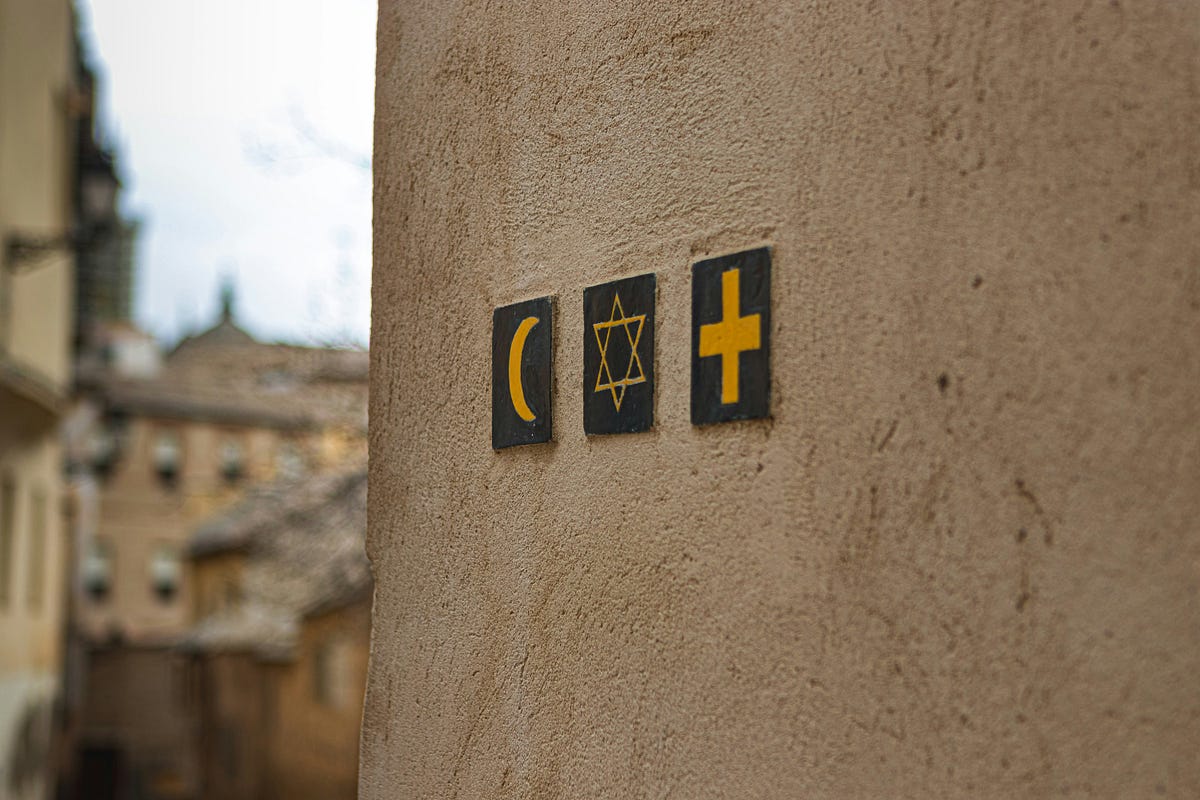
    Photo by Alicia Quan on Unsplash

    Jews and Muslims in Spain

    In Spain, both Jews and Muslims were subject to horrific persecution under the Christian monarchs. The Alhambra Decree in 1492 expelled the Jews, and the Reconquista, which culminated in 1492, saw the forced conversion or expulsion of Muslims. These actions were not merely political but deeply rooted in a religious fervor that sought to purify the nation of its non-Christian elements, leading to centuries of cultural and intellectual loss.

    The Holocaust: A Christian Atrocity

    The Holocaust is one of the darkest chapters in human history, where six million Jews were systematically exterminated. The Christian world, particularly in Europe, bore a heavy responsibility for this genocide. The Nazis, who orchestrated the genocide, were heavily influenced by Christian anti-Semitic ideology. The gas chambers and crematoria were the ultimate manifestation of a long-standing hatred that had been nurtured within Christian societies.

    Islam and the Misleading Binary

    In contemporary discourse, the division of people into Christians, Muslims, and Jews often oversimplifies and misrepresents the complexities of belief systems and their followers. While it is true that terrorist organizations exploit Islam for their agendas, it is equally important to recognize that the roots of conflict are often deeply embedded in historical grievances and foreign interventions.

    Colonial Legacy and Modern Conflict

    The Arab world’s issues with Western countries are not new. They are rooted in a history of colonialism and subsequent interventions that have left scars on the social and political fabric of the region. The US, despite its secular and democratic ideals, has often been viewed with suspicion and mistrust. This mistrust is not just a relic of the past but a living reality, shaped by decades of policies that have alternately supported and undermined regional stability.

    Secular Nations’ Skepticism Towards the US

    Even secularists in Turkey and Iran, despite their complex relationships with the US, often exhibit a profound skepticism towards American policies. This distrust is compounded by a history of alliances that have shifted with geopolitical tides, leaving a legacy of betrayal and conflict. The American Federal Government’s track record in the Middle East has been inconsistent at best, making it difficult for many in the region to place their faith in American promises or support.

    The Takeaway

    It is crucial to move beyond simplistic narratives that divide the world into good and evil based on religious identities. The history of Christianity is rife with both profound contributions to human civilization and equally profound atrocities. The same can be said for Islam and Judaism. Understanding this complexity is essential for fostering a more nuanced and empathetic world, one that recognizes the shared humanity across all cultures and faiths.


    Further Reading

    https://en.wikipedia.org/wiki/Christianity_and_colonialism

    https://www.encyclopedia.com/history/encyclopedias-almanacs-transcripts-and-maps/christianity-and-colonial-expansion-americas

    https://academic.oup.com/book/5147/chapter/147757780

    https://www.britannica.com/event/Iraq-War

  • The Bridge Between Christianity and Islam

    The Bridge Between Christianity and Islam


    Christianity and Islam are two of the most influential religions in the world, each with a rich history and deep-rooted traditions that have shaped societies and influenced the course of human history. With over 2 billion Christians and 1.8 billion Muslims globally, these religions form a significant bridge impacting the cultural, social, and spiritual lives of billions. The bridge between Christianity and Islam is reflected in their holy scriptures—the Bible and the Quran—and extends to their practices, rituals, and beliefs, highlighting both similarities and distinctions that render each faith unique.

    Despite their differences, both religions share a common belief in the existence of one God, the importance of prayer and charity, the value of family and community, and the pursuit of peace and justice. By exploring the common ground between Christianity and Islam, we can better understand and appreciate these two religions and foster greater respect and cooperation among their followers.

    Bridge Between Christianity and Islam I: Shared Monotheistic Roots

    Christianity and Islam are two major religions that share a fundamental belief in the oneness of God. Both faiths consider God to be the sole creator and sustainer of the universe. This monotheistic principle is a cornerstone that unites the followers of both religions, and it is expressed in their daily prayers and religious rituals.

    In addition to this belief, Christianity and Islam share a reverence for a lineage of prophets. These prophets, including Abraham, Moses, Elijah, Elisha, Jonah, Zechariah, John the Baptist, Aaron, David, Solomon, Job, Joseph, Adam, Noah, Lot, Ishmael, Isaac, Jacob, and Jesus, are considered essential figures in the history of both religions who are seen as messengers of God who had a pivotal role in guiding humanity and who left behind teachings that are still relevant today.

    While there are differences in how these religions interpret and follow the teachings of these prophets, the shared belief in their importance underscores the deep similarities between Christianity and Islam. These similarities offer a path for peaceful coexistence and mutual understanding between the followers of these two faiths.

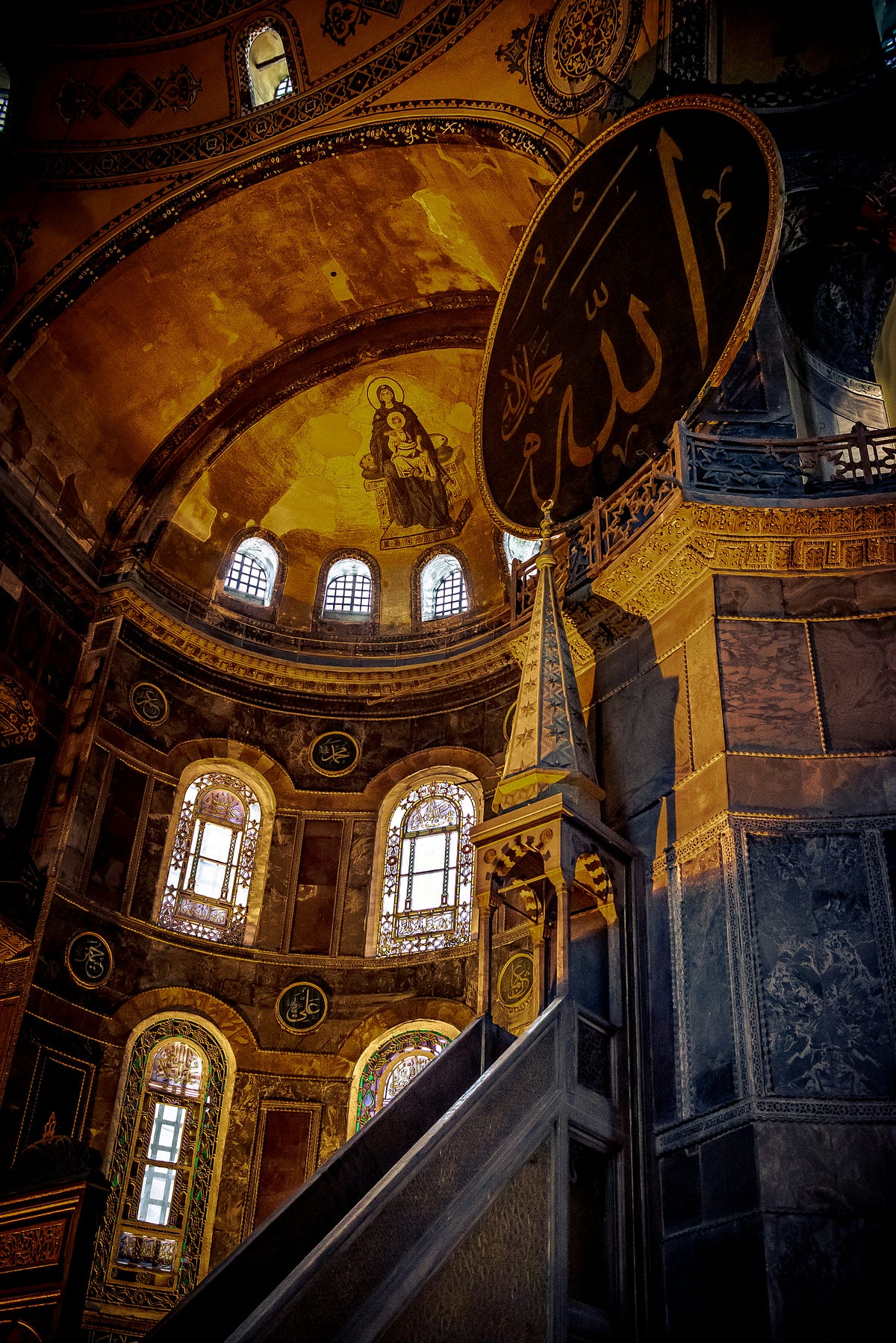
    Photo by Noah Holm on Unsplash

    Bridge Between Christianity and Islam II: Sacred Texts and Teachings

    The Bible and the Quran are two of the most important religious texts in the world, serving as the foundational scriptures for Christians and Muslims, respectively. These texts are revered by believers as sacred and are considered to contain the divine word of God.

    For Christians, the Bible provides a comprehensive guide to faith and morality, covering everything from the world’s creation to the life and teachings of Jesus Christ. It is divided into two main parts: the Old Testament, which tells the story of God’s relationship with the Jewish people, and the New Testament, which focuses on the life and teachings of Jesus and the early Christian church. The Bible provides moral guidance, spiritual insights, and a framework for living a life pleasing to God. It emphasizes the importance of love, compassion, forgiveness, and humility while stressing the need for righteousness and obedience to God’s commands.

    For Muslims, the Quran is the final and most complete revelation of God’s message to humanity, as conveyed by the Prophet Muhammad. It contains 114 chapters, or suras, organized according to length rather than chronology. The Quran covers a wide range of topics, including the oneness of God, the nature of humanity, and the importance of good deeds and virtuous behavior. Like the Bible, it emphasizes compassion, justice, and the importance of community, reflecting a shared moral ethos. Muslims believe that the Quran is the literal word of God and that its teachings are meant to guide all aspects of life, from personal conduct to social and political affairs.

    While Muslims accept the four gospels of the New Testament for the most part, they reject the prophethood of Apostle Paul and the doctrines installed by the Roman Catholic Church in later centuries, such as the Trinity and Original Sin.

    Bridge Between Christianity and Islam III: Angels, Afterlife, and Accountability

    Christianity and Islam both share a belief in the existence of angels, namely Gabriel, Michael, Raphael, Azrael and the fallen angel Satan. These celestial beings are believed to serve God’s will and carry out His commands. Both religions also hold the conviction that after death, our souls will go to an afterlife where they will find their eternal destiny.

    In Christianity, this is often referred to as heaven or hell, while in Islam it is referred to as paradise or hellfire. Additionally, both religions teach the concept of the Day of Judgment, where individuals will be held accountable for their actions during their life on earth. On this day, God will judge each person according to their deeds and they will be rewarded or punished accordingly. This belief is a fundamental part of both religions and serves as a reminder of the importance of leading a righteous and moral life.

    Photo by Imad Alassiry on Unsplash

    Bridge Between Christianity and Islam IV: The Legacy of Abraham

    Abraham, also known as Ibrahim in Islam, is a central figure in Christianity and Islam. He is considered the father of many nations and is revered for his unwavering faith in God. In Christianity, Abraham is known as the Israelites’ patriarch and is considered one of the most important figures in the Old Testament.

    In Islam, on the other hand, he is considered to be a prophet and is revered for his submission to God’s will and his willingness to sacrifice his son for God. Abraham’s legacy is a testament to the shared heritage and mutual respect that can be found between Christians and Muslims, as his story is a reminder of the importance of faith, devotion, and obedience to God in both religions.

    Challenges and Misconceptions

    Christianity and Islam share many similarities, including core beliefs, values, and practices. Despite these commonalities, there is often a perception of tension and conflict between the two religions, especially in regions such as the Middle East, where their histories have been intertwined for centuries. These tensions can be attributed to various factors, such as political and economic conflicts, cultural differences, and misunderstandings about each other’s beliefs and practices.

    However, it’s important to recognize and appreciate the similarities between Christianity and Islam and cultivate greater understanding and respect for each other’s differences. By doing so, we can create a more peaceful and unified world where people of different faiths and no faith can coexist and work together towards common goals.

    Mutual Respect and Reverence

    One of the most notable aspects of the relationship between Islam and Christianity is the mutual respect between the two religions. Despite their differences in beliefs, Muslims hold the Bible in high regard, considering it to be a divine revelation alongside the Quran. Additionally, Jesus Christ is revered as a significant prophet, and Muslims recognize him as the Messiah.

    This respect is further emphasized by the frequent references to Jesus and his mother, Mary, in the Quran, underscoring the significance of Jesus in Islamic beliefs and serve as a reminder of the shared religious heritage between Islam and Christianity.

    Moreover, throughout history, there have been periods of collaboration and peaceful coexistence between Christians and Muslims. Islamic scholars played a crucial role in preserving and translating ancient knowledge during the Middle Ages, contributing to the European Renaissance and the Scientific Revolution. This exchange of intellectual ideas and knowledge is a testament to the benefits of interfaith dialogue and cooperation between different religions.

    Contemporary Dialogue

    Recently, the ecumenical movement has been working to establish greater collaboration and communication between Christianity and Islam by implementing interfaith initiatives that promote dialogue and mutual understanding. These efforts are between the two religions, and they seek to build bridges that can help foster a deeper level of understanding and respect.

    The ultimate goal of these initiatives is to highlight the shared values and common beliefs that can serve to unite us all as human beings, regardless of our faiths or cultural backgrounds. By working together in this way, we can create a more harmonious and peaceful world grounded in mutual respect and understanding.

    Customarily, many Turkish Muslims light candles in Orthodox Churches in Istanbul — Photo by Nicola Fioravanti on Unsplash

    In a Nutshell

    Christianity and Islam, two of the world’s largest religions, have distinct differences in practice and theology. However, they share a profound common ground that is often overlooked. Both religions believe in one God, who is merciful, compassionate, and just. Both encourage their followers to love and serve others, to practice self-control and discipline, and to seek forgiveness for their sins.

    Despite their differences, Christianity and Islam share many fundamental values that can be used to build bridges between their followers. Mutual respect, understanding, and willingness to learn from one another’s perspectives can help create a more harmonious and respectful world. By recognizing and celebrating their shared heritage, adherents of both faiths can work together to overcome fear and suspicion and promote peace and cooperation.

    Afterword

    I don’t endorse Christianity or Islam. However, I also don’t believe it is up to us to decide if the world would be a better place without either of these religions. Regardless of where one stands, the ideas and solutions one supports must satisfy two criteria: keep religion out of politics and aim for peaceful coexistence of us all.

    Sources

    Log College Press
    Log College Press aims to collect and reprint the writings of and about American Presbyterians from the 18th and 19th…caleb-cangelosi-437x.squarespace.com

    Shared Prophets of Christianity & Islam | Synonym
    Hemera Technologies/PhotoObjects.net/Getty Images Christianity and Islam have several prophets in common and consider…classroom.synonym.com

    List of people in both the Bible and the Quran – Wikipedia
    From Wikipedia, the free encyclopedia The Bible and Quran have many characters in common, many of which are mentioned…en.wikipedia.org

    The Greatest Prophets between Christianity and Islam: 13-Prophet Moses
    Moses is the prophet most mentioned by name in the Bible and the Qur’an and the one, along with Abraham, most revered…islamforchristians.com

    Jesus: A Foundation for Dialogue Between Muslims and Christians | Yaqeen Institute for Islamic…
    Jesus is at the center of Christianity and is considered a prophet in Islam. Common ground between Muslims & Christians…yaqeeninstitute.org

    What Christianity and Islam have in common
    This commonality is too often lost in the turmoil of antagonistic voices who push politics of fear.www.tennessean.com

    Hierarchy and significance of angels in various religions
    angel, Primarily in Western religions, any of numerous benevolent spiritual beings who mediate between heaven and…www.britannica.com

    What are the Similarities Between Christianity and Islam?
    Christianity and Islam are the two largest religions in the world and share many similarities and differences. Read on…www.twinkl.com

    Belief in Angels
    The true reality of angels, their abilities, tasks, names and numbers.www.islamreligion.com