Tag: Prophet Muhammad

  • Drawn to Controversy: Why Images of Muhammad Are a No-Go

    Drawn to Controversy: Why Images of Muhammad Are a No-Go

    Drawing or depicting the Prophet Muhammad is forbidden in many Islamic traditions. This has been a subject of debate and discussion for centuries. To better understand this ban we must check its historical and cultural roots.

    The Origins of the Ban

    The prohibition against drawing the Prophet Muhammad originates from the early days of Islam. During this period, the primary religious competition for Islam, as well as for Judaism and Christianity, was polytheism, which often involved the worship of images or statues. The core idea behind banning depictions of Muhammad was to prevent any practices associated with idolatry, which was prevalent among polytheists.

    The Prophet Muhammad and his followers sought to distinguish Islam from these idolatrous practices clearly. They emphasized the worship of God alone, avoiding any form of image or idol that could divert attention from this pure worship. Consequently, early Islamic teachings discouraged creating images of any kind, including those of the Prophet.

    Historical Context

    During the early Islamic period, there was a strong focus on avoiding anything that might lead to the worship of images, which was not just about religious purity but also about protecting the new Muslim community from the practices of their previous polytheistic traditions. The fear was that depicting the Prophet could lead to his veneration in a way that might distract from the worship of the Abrahamic God, who didn’t have a form within human imagination.

    In the centuries that followed, Islamic art and culture developed strongly with an emphasis on aniconism—the avoidance of images of sentient beings. Instead, Islamic art flourished through complex patterns, calligraphy, and geometric designs through which artists expressed spiritual ideas and beauty without the risk of idolatry.

    The Development of the Ban

    Over time, the prohibition against depicting the Prophet Muhammad became more firmly established. Islamic scholars and leaders interpreted the ban as a way to preserve the Prophet’s sanctity.

    In some Islamic traditions, the ban is seen as a way to protect the Prophet’s dignity and ensure that any representation is not disrespectful or inaccurate. For example, in Sunni Islam, which represents the majority of Muslims, the ban is more strictly observed. In contrast, Shia Islam has historically been somewhat more lenient, but the ban still remains significant.

    The Prophet’s dignity and sanctity actually have nothing to do with the spirit of the ban’s reason.

    The Takeaway

    In recent years, cartoons and images of the Prophet Muhammad have sparked controversy and violence, causing reactions from Muslims worldwide that did not make sense.

    The ban on depicting the Prophet Muhammad applies to Muslims. As a historical and political figure, non-Muslims have every right to represent Muhammad through images. The idea that people who draw images of Muhammad deserve death is an interpretation pulled from somewhere that doesn’t see much sunlight.

    Is anyone afraid that Muslims will not be able to resist building idols of Muhammad to worship if they see his depictions around?
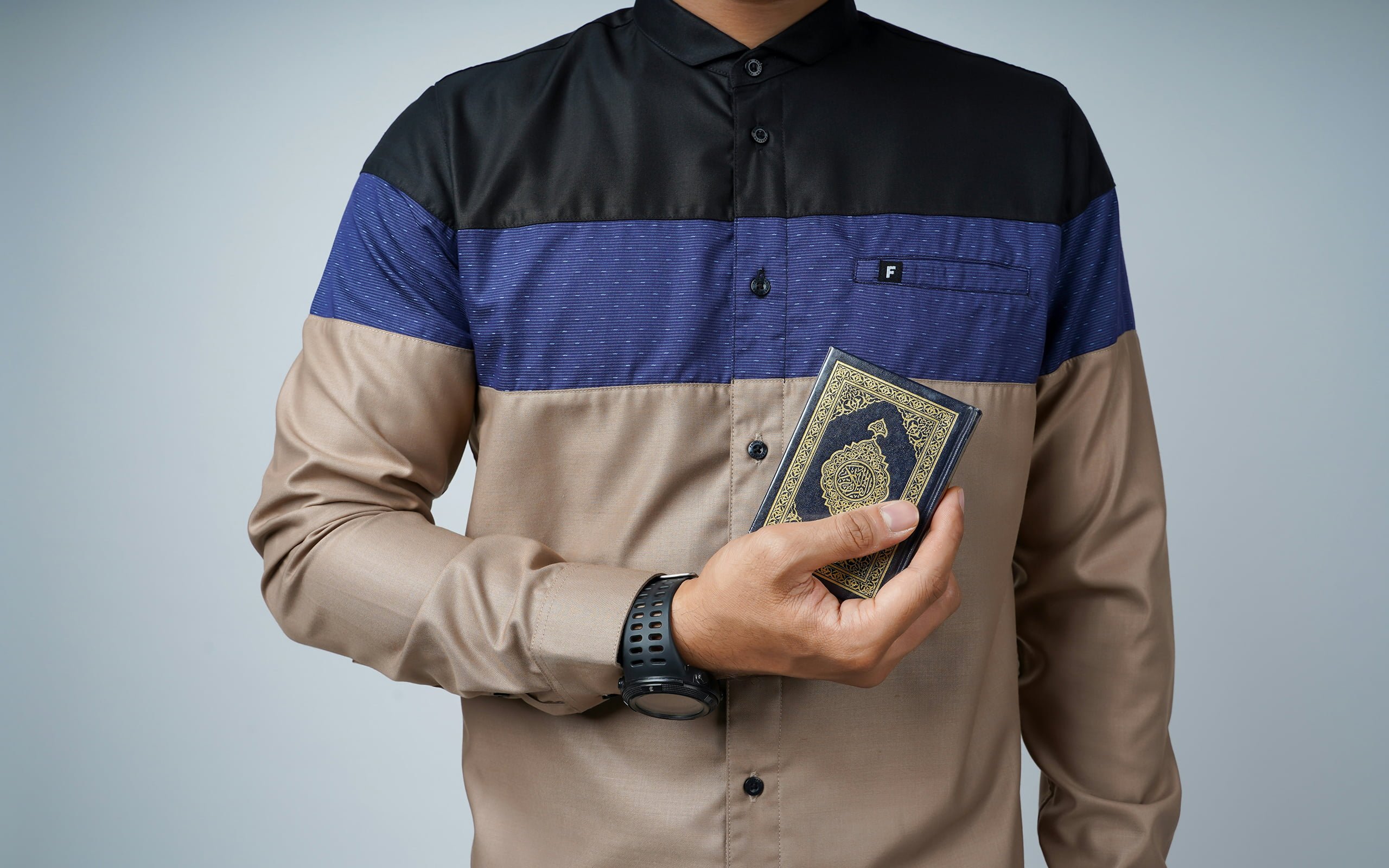

  • Depicting the Prophet Muhammad in Islamic Law Will Surprise You

    Depicting the Prophet Muhammad in Islamic Law Will Surprise You

    In the wake of the Charlie Hebdo attack, discussions about whether Islam bans images of the Prophet Muhammad have become heated and widespread. Some Muslims assert a strict prohibition, while others, both Muslim and non-Muslim, argue for a more nuanced interpretation.

    Complex Islamic Jurisprudence

    Many debates have centered on verses from the Quran and sayings of the Prophet (Hadith), yet neither provides a definitive answer. To truly understand the issue, one must delve into Islamic law, which reveals a more complex picture.

    Early Islamic Legal Opinions

    Ibn Qudama (d. 1223), a notable Sunni theologian, discussed the legality of images in his medieval law book. He argued that images are not inherently prohibited; their permissibility depends on what they depict and their context. This early source suggests that a blanket ban on images is not supported by Islamic law.

    A century later, Ibn Taymiyya (d. 1328), influential in today’s Wahhabi and Salafi movements, issued legal opinions warning against using images for seeking intercession or favors from God. However, even his conservative views did not explicitly ban images, focusing instead on their misuse in religious practices.

    Modern Interpretations and Reforms

    Moving forward, Muhammad ‘Abduh (d. 1905), a reformist jurist in Egypt, argued that images and paintings preserve Islamic cultural heritage and knowledge. He emphasized that as long as images are not used in idolatry, depicting people, plants, and trees is not forbidden. His stance highlighted the educational and cultural benefits of images, rejecting a blanket prohibition.

    Impact of Mass Media

    The 19th century saw the rise of mass media, which brought new anxieties about images. This led to legal controls over prophetic representations, such as a 1926 fatwa from al-Azhar University banning a Turkish film about Muhammad. In contrast, Moustapha Akkad’s 1976 film “The Message,” which never shows Muhammad on screen, received mixed responses from different Sunni clerical bodies, showing the diversity of opinion within Sunni Islam.

    Contemporary Debates

    In the late 20th century, legal opinions on images of Muhammad became more varied. In 2000, Taha Jaber al-Alwani, a respected scholar, argued that there are no firm prohibitions on images in Islam and praised the depiction of Muhammad in the Supreme Court of the United States. However, post-9/11 geopolitics and events like the Danish cartoons of 2005 intensified debates, with some Saudi scholars declaring images of prophets disrespectful and caricatures blasphemous.

    Sectarian Differences

    Today, legal opinions on images of Muhammad vary, often along sectarian lines. Salafi scholars maintain a strict prohibition, while Shi’i scholars like Ayatollah al-Sistani accept respectful depictions. This divergence reflects broader sectarian differences but also highlights that views on images have evolved with contemporary circumstances.

    The Takeaway

    The notion of an absolute ban on images of the Prophet Muhammad is a recent development, influenced by modern media and geopolitical events. Historical and contemporary Islamic jurisprudence shows a more nuanced and complex landscape, where the legality of images depends on context, usage, and evolving interpretations within the Muslim world.

    Notes

    If you live in the West and are not a Muslim, you might not be concerned about whether Islam bans depictions of the Prophet Muhammad. However, understanding this issue is important as it reflects the recent retrogress in Islam.

    Many might find it surprising that Islam was once considered a religion of tolerance toward other faiths. The laws it introduced for women were progressive for their time. It modernized Sharia law, did not expect non-Muslims to obey it, decriminalized homosexuality, and acknowledged and respected other cultures. All this was happening while Europe was enduring the Dark Ages and slaughtering the masses into Christianity.

    IslamicArt #ProphetMuhammad #ReligiousImagery