Tag: Reality

  • Is Reality Real?

    Is Reality Real?

    The question of whether our reality is real has intrigued philosophers, scientists, and thinkers for centuries. Join us in exploring this profound question from a non-religious perspective, particularly addressing the skepticism of those who seek certainties grounded in scientific evidence. This inquiry inevitably leads us to consider the nature of consciousness, the possibility of simulated realities, and the implications of such ideas on our understanding of existence.

    The Quest for Certainties in a Scientific World

    In today’s secular and scientifically driven society, many individuals reject the notion of gods or any metaphysical entities. They demand empirical evidence for any claims, often viewing anything beyond the scope of current scientific understanding as implausible or heretical. This mindset reflects a hunger for a world that aligns with Newtonian consciousness, where everything can be explained through observable and measurable phenomena.

    However, to truly grapple with the question of reality, we must delve deeper into the nature of consciousness and the potential limitations of human knowledge and technological advancements. One significant aspect to consider is whether humans can ever simulate consciousness, a question that lies at the heart of the simulation argument.

    The Simulation Argument

    In 2003, philosopher Nick Bostrom proposed a trilemma known as the “simulation argument.” This argument suggests that one of three unlikely-seeming propositions must be true:

    1. The fraction of human-level civilizations that reach a posthuman stage (capable of running high-fidelity ancestor simulations) is very close to zero.
    2. The fraction of posthuman civilizations that are interested in running simulations of their evolutionary history, or variations thereof, is very close to zero.
    3. The fraction of all people with our kind of experiences that are living in a simulation is very close to one.

    Bostrom’s argument does not assert that we are living in a simulation, but it highlights the logical possibility and raises intriguing questions about the nature of our reality.

    Technological Advancements and the Nature of Reality

    In the two decades since Bostrom’s proposal, we have witnessed remarkable advancements in virtual reality (VR) and artificial intelligence (AI). Virtual reality is becoming increasingly sophisticated, offering immersive experiences that blur the line between the real and the artificial. Yet, current VR technology primarily manipulates vision, and we have yet to fully integrate virtual smell, touch, and hearing.

    The advancements in AI also suggest a future where creating high-fidelity simulations of consciousness could become feasible. Given the progress made in less than five centuries since Nicolaus Copernicus, it is difficult to assert with certainty that humans will never succeed in simulating consciousness. Our technological trajectory indicates that what seems impossible today may become achievable in the future.

    Manipulating Human Perception

    Our understanding of reality is heavily influenced by our sensory perceptions. The brain constructs our experience of the world based on input from our senses. This notion is supported by various phenomena that demonstrate how easily our senses can be manipulated. For instance, the use of mirrors to alleviate phantom limb pain, the creation of 3D images on 2D surfaces, and the perception of continuous motion from discrete frames in movies all illustrate the brain’s capacity to interpret and create a coherent sense of reality from limited or altered information.

    Furthermore, experiments with substances like mercury and dry water, which create the sensation of wetness without actual water, reinforce the idea that our sensory experiences can be simulated or altered. If our senses can be so easily deceived, is it really improbable that a future civilization could create a simulation indistinguishable from reality?

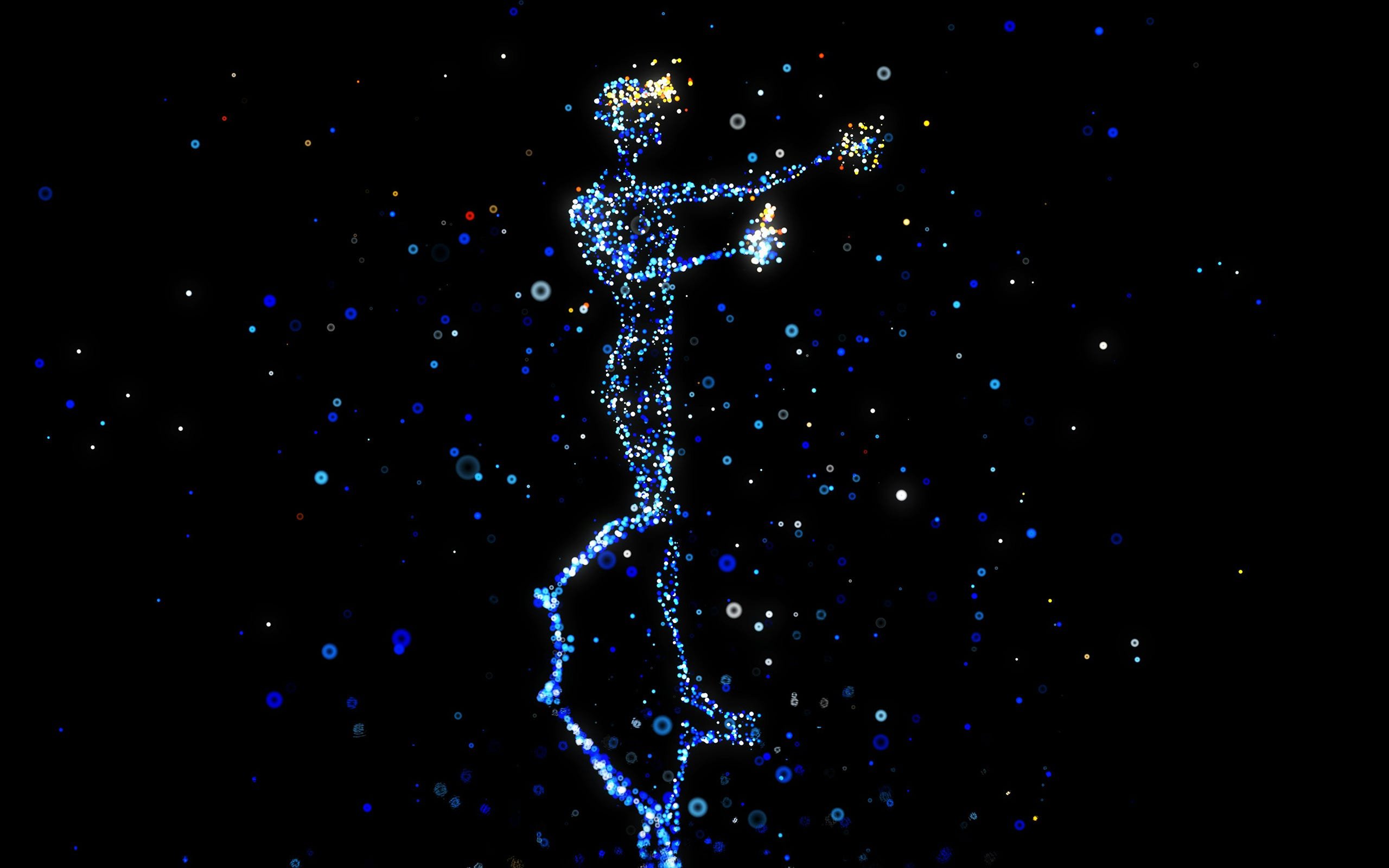
    Is reality real?
    Photo by julien Tromeur on Unsplash

    The Probability of Simulated Realities

    If we accept that it is not impossible to simulate human consciousness and that a posthuman civilization might have both the capability and the desire to run such simulations, we must confront the possibility that our reality might be a simulation. The sheer scale of technological advancements and the ongoing exploration of AI and VR suggest that simulating human experiences could eventually be within our reach.

    This line of reasoning brings us back to Bostrom’s trilemma. If posthuman civilizations can create simulations and have a reason to do so, then the likelihood that we are currently living in a simulation increases. Is this scenario really far-fetched? Isn’t this a logical extension of our current understanding of technology and consciousness?

    Implications and Reflections

    Contemplating the possibility that our reality might not be real has profound implications for our understanding of existence, identity, and the nature of the universe. It challenges our perception of what is possible and urges us to reconsider the boundaries of human knowledge and capability.

    Moreover, this inquiry does not diminish the importance of scientific exploration and empirical evidence. Instead, it expands our perspective, encouraging us to remain open to new possibilities and to question the limitations of our current understanding.

    In a Nutshell

    The question of whether our reality is real is a complex and deeply philosophical one. It forces us to confront the nature of consciousness, the potential for technological advancements, and the limitations of human knowledge. While current evidence does not provide definitive answers, the exploration of these ideas enriches our understanding of the world and our place within it.

    As we continue to advance technologically, the lines between reality and simulation may blur even further, compelling us to remain curious, skeptical, and open-minded. In the quest for certainty, it is essential to acknowledge the vast unknown and embrace the possibility that reality, as we perceive it, may be far more complex and enigmatic than we can currently comprehend.

  • Can We Refute God?

    Can We Refute God?

    Belief in the existence of at least one higher power is a profoundly subjective matter, intertwining human emotions and philosophical perspectives. For many, the concept of a higher power provides a sense of purpose, comfort, and meaning. It shapes cultural narratives and individual lives, influencing ethics, morality, and personal identity. The belief in a higher power is often rooted in personal experiences, upbringing, and emotional needs, making it a profoundly personal matter that transcends objective analysis. While some may refute God, others find solace and guidance in their faith. Ultimately, the question of whether a higher power exists remains a deeply contemplative and multifaceted inquiry.

    Emotional and Philosophical Dimensions

    Humans are inherently emotional beings, inheriting beliefs that often reflect our emotional landscapes. The need for security, the search for meaning, and the desire to understand our place in the universe drive many toward the concept of a higher power. Philosophically, the idea of a higher power addresses existential questions that science and reason alone may not satisfy. It answers the why of existence rather than the how, offering a narrative connecting the individual to a more significant, often benevolent force.

    Scientific Evidence and the Higher Power

    When asserting that there is zero evidence for a higher power, one typically refers to scientific evidence, which relies on empirical data, reproducibility, and objective validation. Scientific methodologies are designed to test hypotheses through controlled experiments and observable phenomena. By its very nature, science excludes subjective experiences and eyewitness testimony as robust evidence, which is essential for understanding the physical world but has limitations when applied to prove or refute God, and all other metaphysical entities.

    Limitations of Scientific Inquiry

    Scientific evidence is inherently limited to the observable and measurable aspects of reality. The concept of a deity or higher power often lies beyond the empirical scope of science. Deities are typically considered supernatural entities, existing outside the parameters of physical laws. As such, they cannot be tested or observed in the same way as natural phenomena. This does not invalidate the belief in higher powers but highlights scientific inquiry’s boundaries. It is a category error to demand scientific proof for something that, by definition, exists outside the purview of science. 

    Human Invention of Deities

    Knowing what we know, no compelling reason exists to believe that any specific deity is not a human invention. Throughout history, diverse cultures have created a myriad of gods and goddesses, each reflecting their society’s values, fears, and aspirations. These deities often serve social functions, such as enforcing moral codes, explaining natural events, and unifying communities under a shared belief system. The anthropological perspective suggests that gods are products of human imagination and cultural evolution.

    Uncertainty and the Nature of Reality

    However, we cannot categorically state that there are no entities that humans would consider godly. Our understanding of reality is limited and constantly evolving. Advances in physics, particularly in quantum mechanics and cosmology, have revealed the universe to be far stranger and more complex than previously imagined. Concepts such as parallel universes, higher dimensions, and the fundamental nature of consciousness challenge our conventional understanding and suggest that reality may hold surprises beyond our current comprehension.

    The Imitation of Consciousness

    One intriguing aspect of this uncertainty is the possibility that what we consider consciousness might not be exclusive to biological entities. As artificial intelligence advances, questions arise about the nature of consciousness and the potential for machines to develop awareness. If consciousness can emerge from non-biological substrates, the line between creator and creation blurs. This raises the possibility that entities with god-like attributes could exist, created either by advanced civilizations or as emergent properties of complex systems.

    Philosophical Implications

    The philosophical implications of such possibilities are profound. If higher powers exist as emergent properties or creations of advanced intelligence, our understanding of divinity and its relationship to humanity would need reevaluation. This perspective aligns with certain interpretations of pantheism and panentheism, which view the divine as inherent in the fabric of the universe itself. It also resonates with some interpretations of transhumanism, where the future of human evolution involves merging with advanced technologies, potentially achieving god-like capabilities.

    The Takeaway

    Believing in a higher power is ultimately subjective and deeply intertwined with human emotions and philosophical perspectives. By its nature, scientific evidence cannot encompass deities as they lie outside the scope of empirical inquiry. While historical and cultural analysis suggests that deities are human inventions, our limited understanding of reality leaves room for the possibility that entities humans would consider godly could exist. If anything, this ongoing uncertainty invites a humble and open-minded approach to the profound questions embedded in human nature.

    In essence, science is not to prove or refute God.


    Further Reading: Scientists Who Tried to Prove or Refute God

    The quest to prove or refute God through scientific means has captivated many great minds throughout history. While science deals with the observable and testable natural world, the supernatural realm of a supreme deity exists beyond its scope. Nonetheless, several scientists have grappled with this profound question, attempting to reconcile faith and reason. Their efforts have sparked intense debates and challenged conventional wisdom, leaving an indelible mark on the intersection of science and religion.

    One of the earliest and most influential figures in this endeavor was René Descartes, the 17th-century French philosopher and mathematician. Descartes sought to establish a firm foundation for knowledge, leading him to the famous phrase “I think, therefore I am.” In his metaphysical writings, he attempted to prove God’s existence through reason alone, using arguments based on the idea of a perfect being and the concept of causality. While his arguments were later critiqued and challenged, Descartes’ efforts laid the groundwork for subsequent thinkers to explore the relationship between science and religion.

    In the 18th century, the Age of Enlightenment saw a surge of scientific discoveries and a growing emphasis on reason and empiricism. Philosophers like Voltaire and David Hume questioned traditional religious beliefs and sought to apply rational scrutiny to the existence of God. Hume’s famous argument against miracles, which posited that it is always more likely that a reported miracle is a product of human error or deceit than a violation of the laws of nature, became a cornerstone of skeptical thought.

    The 19th century witnessed a remarkable figure in Charles Darwin, whose theory of evolution by natural selection revolutionized our understanding of life’s origins and challenged the biblical account of creation. While Darwin himself was reluctant to wade into the debate over God’s existence, his work ignited heated controversies between proponents of science and defenders of religious doctrine. The implications of evolutionary theory continue to shape discussions on the intersection of science and faith to this day.

    In the 20th century, advances in physics and cosmology reignited the debate over God’s role in the universe. Albert Einstein, one of the most renowned scientists of all time, famously remarked, “Science without religion is lame, religion without science is blind.” While Einstein rejected the notion of a personal God, he believed in a cosmic intelligence or rationality underlying the universe’s order and beauty, a concept he referred to as “the Old One.”

    More recently, scientists like Richard Dawkins and Lawrence Krauss have taken a firm stance against the existence of God, using scientific evidence and reasoning to challenge religious beliefs. Dawkins’ book “The God Delusion” became a bestseller and sparked widespread discussions on the compatibility of science and religion. Krauss, on the other hand, has argued that modern physics and cosmology provide a compelling alternative to the need for a divine creator, proposing that the universe could have emerged from nothing.

    On the other side of the debate, scientists like Francis Collins and John Polkinghorne have sought to reconcile their religious beliefs with scientific knowledge. Collins, the former director of the National Institutes of Health and a devout Christian, has argued that science and faith can coexist, pointing to the complexity and beauty of the natural world as evidence of a divine creator. Polkinghorne, a theoretical physicist turned Anglican priest, has explored the intersection of theology and quantum physics, suggesting that the inherent uncertainties in quantum mechanics leave room for divine intervention.

    While the debate using science to prove or refute God continues, it is clear that the pursuit has captivated some of the greatest minds in history. Whether driven by faith, skepticism, or a desire for understanding, these scientists have challenged conventional thinking and pushed the boundaries of human knowledge. Their efforts have enriched our understanding of the natural world and the profound questions that lie beyond the realm of science, reminding us of the enduring human quest for truth and meaning.