Tag: Science

  • Resurrecting Dinosaurs for Dummies

    Resurrecting Dinosaurs for Dummies

    The quest to resurrect dinosaurs has long captivated the human imagination. These magnificent creatures that once dominated the Earth have been extinct for millions of years, leaving behind only fossils as evidence of their existence. However, with modern advances in genetics and biotechnology, researchers have begun exploring the tantalizing possibility of resurrecting dinosaurs through the power of DNA. Join us as we delve into this quest for resurrecting dinosaurs, examining its feasibility, challenges, and the profound ethical implications accompanying such an endeavor.

    The Challenges of Extracting Dinosaur DNA for Resurrecting Dinosaurs

    One primary obstacle in resurrecting dinosaurs is extracting their DNA from fossils. Contrary to popular belief perpetuated by works of fiction, our fossilized remains are not actual dinosaur bones but mineralized casts that have replaced the original organic material over tens of millions of years. DNA, being an extremely fragile molecule, degrades rapidly under environmental conditions such as heat, moisture, and exposure to bacteria and chemical reactions.

    It is estimated that DNA can only survive for a few thousand years under optimal conditions, making it nearly impossible to retrieve intact strands from fossils that are tens of millions of years old and have been subjected to the harsh elements of time and geological processes, posing a significant hurdle for resurrecting dinosaurs through ancient DNA extraction.
    Despite the challenges of extracting ancient DNA, scientists have found a promising avenue for resurrecting dinosaurs by studying modern birds. Birds are the closest living relatives of a group of dinosaurs known as theropods, sharing many genetic similarities and anatomical features. Theropods, which included the famous Tyrannosaurus rex and Velociraptor, were a diverse group of bipedal, mostly carnivorous dinosaurs characterized by their three-toed feet, hollow bones, and the presence of feathers or feather-like structures.

    Over millions of years of evolution, theropods diversified and gave rise to the first true birds, which today represent the most widespread and diverse group of vertebrates, with over 10,000 species. By comparing the DNA of birds and reptiles, researchers can identify the genetic markers responsible for the unique traits of dinosaurs, such as feathers, scales, teeth, and tails, providing valuable insights into their evolutionary history and the genetic underpinnings of their distinctive features, which could aid in resurrecting dinosaurs.

    Unlocking the Genetic Potential: Reverse Engineering Birds for Resurrecting Dinosaurs

    Through innovative genetic engineering techniques, scientists have successfully manipulated the DNA of chicken embryos to activate or suppress specific genes, resulting in the development of traits reminiscent of their dinosaur ancestors. These groundbreaking experiments have produced chickens with teeth, elongated snouts reminiscent of dinosaur muzzles, and even scales instead of feathers, demonstrating the remarkable genetic potential that lies dormant within modern birds and offering a potential pathway for resurrecting dinosaurs.

    One of the pioneering studies in this field involved inhibiting the gene responsible for suppressing the development of teeth in chickens. By blocking the activity of this gene, researchers were able to create chicken embryos that developed tooth-like structures, a trait that was present in their dinosaur ancestors but lost over the course of avian evolution. Another remarkable achievement was activating a gene called ectodysplasin A (EDA), which is known to regulate the development of feathers in birds. By introducing a mutated version of this gene into chicken embryos, researchers could suppress the formation of feathers and instead induce the growth of scales, a characteristic more closely associated with their reptilian ancestors.

    These experiments not only demonstrate the potential to create dinosaur-like organisms through genetic manipulation but also provide valuable insights into the evolutionary processes that shaped the transition from dinosaurs to modern birds and could potentially lead to resurrecting dinosaurs themselves.

    Ethical and Practical Considerations of Resurrecting Dinosaurs

    While the prospect of resurrecting dinosaur-like creatures through reverse engineering is undoubtedly captivating from a scientific perspective, it raises significant ethical and practical concerns regarding resurrecting dinosaurs that cannot be ignored. Creating and maintaining such organisms in a controlled environment would require substantial resources, expertise, and infrastructure, not to mention the potential risks of introducing novel species into the ecosystem.

    One of the primary ethical considerations revolves around the morality of manipulating life forms for scientific curiosity and the potential consequences of such actions in resurrecting dinosaurs. Critics argue that altering the genetic makeup of organisms to create novel species could have unforeseen and potentially catastrophic impacts on the delicate balance of ecosystems. Additionally, there are concerns about the welfare and ethical treatment of these genetically modified organisms, which may exhibit behaviors and traits that are difficult to accommodate in captive environments when resurrecting dinosaurs.

    From a practical standpoint, the creation and maintenance of dinosaur-like creatures to resurrect dinosaurs would require significant financial and technological resources. Specialized facilities would need to be constructed to house and study these organisms, with strict biosafety protocols in place to mitigate potential risks. Furthermore, the long-term viability and sustainability of such endeavors in resurrecting dinosaurs remain uncertain, as the genetic modifications introduced may have unintended consequences on these organisms’ overall health and reproductive capabilities.

    In a Nutshell

    The quest for dinosaur DNA and the possibility of resurrecting these ancient creatures through genetic techniques is a complex and multifaceted endeavor at the intersection of paleontology, genetics, and biotechnology. While extracting DNA from fossils may be an insurmountable challenge, the study of modern birds offers a promising avenue for exploring the genetic legacy of dinosaurs and potentially resurrecting dinosaurs themselves one day.

    Through reverse engineering and genetic manipulation, scientists have demonstrated the potential to create dinosaur-like organisms, providing valuable insights into the evolutionary processes that shaped the transition from dinosaurs to modern avian species. However, as researchers continue to push the boundaries of what is scientifically possible in resurrecting dinosaurs, it is crucial to approach these endeavors with caution, responsibility, and a deep respect for the natural world we seek to understand. The ethical and practical implications of resurrecting dinosaur-like creatures must be carefully considered, weighing the potential scientific benefits against the risks and consequences of altering the delicate balance of life on our planet by resurrecting dinosaurs from their long extinction.

    Ultimately, the pursuit of resurrecting dinosaurs serves as a testament to the boundless curiosity and ingenuity of the human mind, reminding us of our innate desire to unravel the mysteries of the past and unlock the secrets of life itself. Whether we succeed in bringing these ancient giants back to life through advanced biotechnology or not, the journey itself in attempting to resurrect dinosaurs promises to yield invaluable insights into the fundamental processes that have shaped the diversity of life on Earth, inspiring awe and wonder in generations to come.


    Sources

    Challenges of Extracting Dinosaur DNA:

    The Evolutionary Link: Birds as Living Dinosaur Descendants:

    Unlocking the Genetic Potential: Reverse Engineering Birds:

    Ethical and Practical Considerations:

    Additional Resources:

  • Fine-Tuned Universe, Best Argument Against Atheism?

    Fine-Tuned Universe, Best Argument Against Atheism?

    Scientists frequently express amazement at the seemingly fine-tuned universe, where the exact values of physical constants and laws appear precisely calibrated to sustain life. This extraordinary precision is vital; even minor variations in these constants might lead to a barren universe devoid of stars, planets, and the chemical processes necessary for life.

    The intricate equilibrium of our universe prompts deep inquiries into the genesis and framework of the cosmos, compelling scientists to demystify the enigma of its precise orchestration. The improbability of such ideal conditions emerging by chance evokes wonder and inquisitiveness, propelling the quest for fundamental principles or insights that might illuminate this fine-tuning.

    Embark with us on a journey to decipher the puzzle of the fine-tuned universe through both scientific and theological lenses.

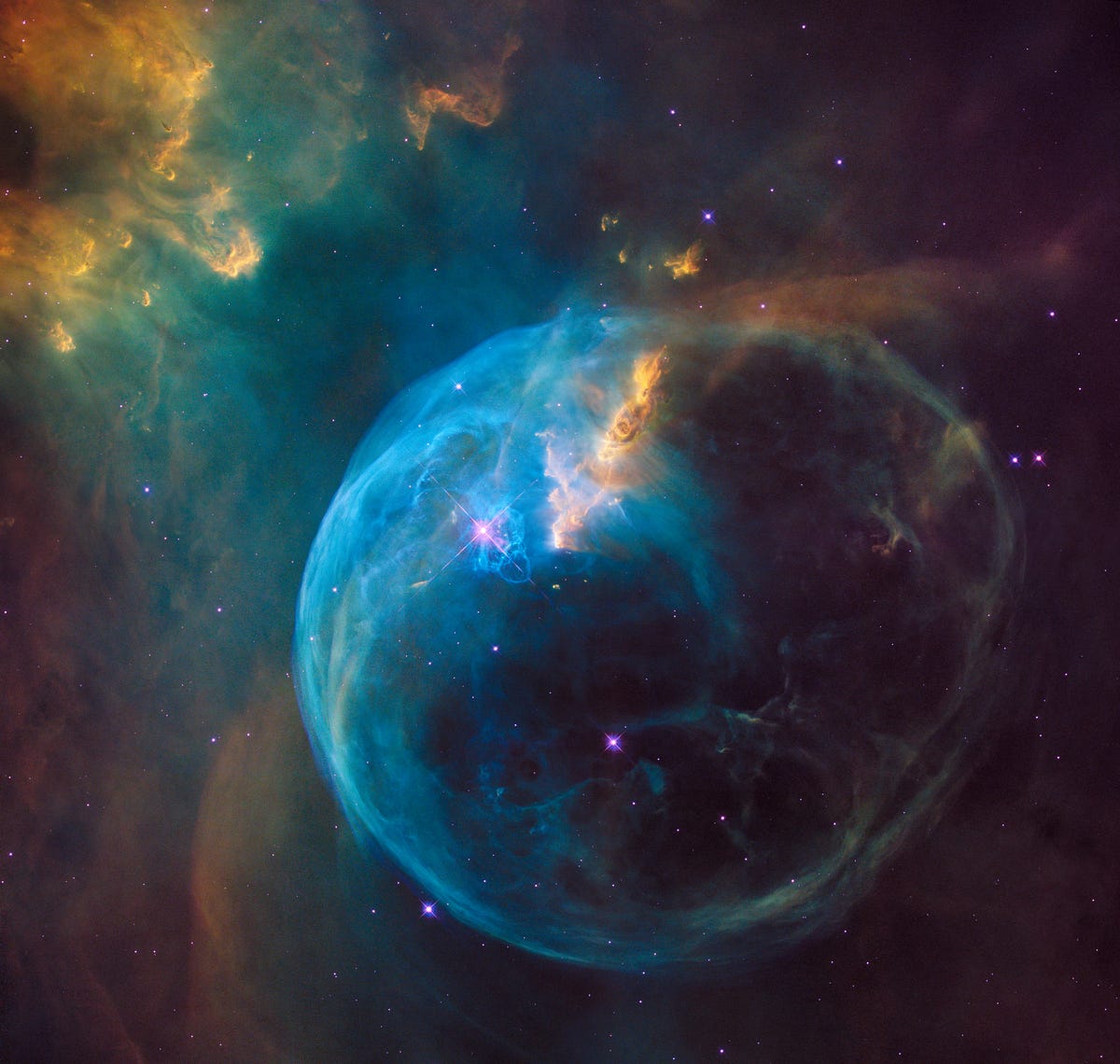
    Photo by NASA on Unsplash

    The Multiverse: A Universe of Possibilities

    The immensity of the cosmos has always fascinated humanity, prompting us to ponder the beginnings and framework of the universe, as well as our place in it. The multiverse hypothesis, emerging from diverse physics and cosmology disciplines, introduces a profound and intriguing concept: our universe is not the only one, but merely a part of a potentially boundless ensemble of universes.

    At the core of the multiverse hypothesis lies the enigmatic domain of quantum mechanics. The many-worlds interpretation, a controversial yet fascinating view on quantum events, suggests that all possible outcomes of a quantum occurrence do happen. This implies that every choice, every quantum-level random event, causes the universe to split into separate realities. Each reality holds a distinct version of existence, possibly including every imaginable variation of physical laws and constants. Such a vast collection of alternatives could explain the variety within our universe, hinting at countless different realities beyond our own.

    An exciting aspect of multiverse theory stems from inflationary cosmology, which suggests that the early universe experienced a rapid expansion known as inflation. If this inflation occurred unevenly across space, different areas might have stopped inflating at various times. These areas could have developed into isolated “bubble universes,” each with its own physical laws and constants. Inflation, therefore, might have produced a vast, potentially infinite collection of universes, making the observed diversity a matter of statistical probability.

    String theory, which aims to reconcile nature’s fundamental forces, introduces another layer to the multiverse concept by proposing that fundamental particles are not point-like but rather tiny, vibrating strings. The way these strings vibrate determines the properties of the particles they represent. String theory allows for many possible configurations, each of which could result in a different set of physical laws and constants, suggesting that each configuration might correspond to a separate universe within the multiverse, offering a theoretical foundation for the existence of multiple physical realities.

    The multiverse concept provides a fertile context for the anthropic principle, which posits that our universe is observable because if it were fundamentally different, we wouldn’t exist to observe it. Given a vast multiverse with diverse physical laws and constants, it’s unsurprising that at least one universe would have the right conditions for life as we know it, negating the need for a “designer” to fine-tune the universe for our existence. This offers an alternative explanation for the precise alignment of physical constants that enable life.

    Furthermore, the multiverse theory could address the fine-tuned universe problem, which arises from the observation that many physical constants in our universe appear precisely calibrated for the existence of stars, planets, and life. The odds of these constants randomly aligning to support life seem incredibly slim. However, in a multiverse with countless universes and varying constants, the statistical likelihood that at least one universe would have the exact conditions for life makes our universe seem less like a perplexing outlier and more like a natural outcome within an immense cosmic landscape.

    Although the multiverse hypothesis extends beyond the scope of directly observable science, its potential to explain the complexity and variety of the universe is clear. It challenges us to reconsider our place in the cosmos, moving from the concept of a single universe to a vast array of possibilities. With technological advancements and a deeper understanding of the cosmos, exploring the multiverse’s mysteries is a fascinating and persistent endeavor.

    God Hypothesis

    The God hypothesis proposes the existence of a divine creator or supreme being as the fundamental reason for the universe’s origin, structure, and purpose, encompassing its laws, complexity, and life.

    The fine-tuned universe issue, which underscores the apparently unlikely calibration of physical constants necessary for life, leads to diverse interpretations. Unlike scientific methods, the God hypothesis provides an explanation based on faith and the notion of a divine architect.

    At the heart of the God hypothesis lies the concept of purposeful design. The complex and life-sustaining characteristics of the universe are seen as the handiwork of a creator who intentionally shaped the cosmos with particular conditions in mind. The unlikely values of physical constants, the laws governing physics, and the initial conditions leading to our universe’s birth are viewed not as coincidental or statistically necessary but as deliberate choices by a designer imbued with intent and significance, indicating a purposeful creation rather than a random event.

    Proponents of the God hypothesis often regard it as a straightforward and explanatory model. It provides a singular response to the question of why the universe is conducive to life, avoiding the need for speculative and presently unobservable notions such as the multiverse, which suggests an extensive collection of invisible universes. For these individuals, invoking a divine creator offers a lucid and all-encompassing rationale that aligns with their beliefs and perception of existence.

    The God hypothesis extends beyond empirical science into philosophical and theological domains, addressing questions of the universe’s origin, purpose, and meaning through religious and metaphysical lenses. This contrasts with scientific inquiry grounded in evidence and testable theories within the natural world. Advocates of the God hypothesis may suggest that science’s inherent limitations prompt the need for supernatural or metaphysical explanations to account for the universe’s complexity and apparent fine-tuning.

    There are epistemological distinctions between the God hypothesis and scientific hypotheses. The God hypothesis exists outside the scope of methodological naturalism, the principle that underpins scientific investigation by seeking natural causes for observed phenomena. Based on faith and metaphysical contemplation, the God hypothesis is separate from scientific hypotheses, which are contingent upon empirical evidence and the possibility of testing.

    In summary, the God hypothesis presents a unique viewpoint on the fine-tuned universe issue. Although it does not conform to the principles of scientific investigation, it appeals to those who seek meaning and explanation in the idea of a divine creator. Acknowledging the essential distinctions between this perspective and scientific explanations is vital for appreciating the varied methods humans employ to confront the enigmas of the universe and our existence in it.

    Photo by John Fowler on Unsplash

    It Is Not a Black-and-White World

    Some believe we are presented with only two options: either a deity created the universe and life on Earth through supernatural means, or no deity exists at all, which is a false dichotomy.

    A prominent concept that helps us understand the universe’s apparent fine-tuning is the Non-Overlapping Magisteria (NOMA), introduced by Stephen Jay Gould.

    This concept posits that science and religion explore separate domains of knowledge, known as “magisteria.” Science investigates the empirical universe, building theories based on observable evidence and repeatable experiments. Religion, conversely, addresses profound ethical, existential, and metaphysical questions, often beyond the physical world. From this standpoint, the multiverse theory, which examines the universe’s structure and mechanics, does not inherently conflict with or disprove the existence of a deity, as they pertain to entirely separate realms.

    However, alternative viewpoints question this strict division. Certain theistic beliefs harmonize the concept of the multiverse with the existence of a divine creator by suggesting that God is the originator of the multiverse itself. This implies that God did not just create our particular universe but also the laws and constants that govern the myriad of universes within the multiverse. Thus, the multiverse is seen as an extension of a larger divine scheme rather than a contradiction.

    Additionally, the significance of metaphysical and theological interpretations must be recognized. These interpretations provide a unique layer of comprehension that often goes beyond scientific explanations. From this vantage point, the existence of God does not depend solely on deciphering the universe’s physical complexities. Rather, it is an act of faith anchored in profound philosophical and theological structures that search for meaning outside the physical domain. Even if the multiverse offers a scientific rationale for the fine-tuned universe, it does not necessarily invalidate these beliefs based on faith.

    It’s also crucial to acknowledge the limitations of scientific explanations. While the multiverse theory may account for the fine-tuning observed in our universe, it could lead to more profound existential inquiries. Questions like why the multiverse exists or why the laws of physics vary across universes may elude scientific explanation and require interpretations that could be theological in nature.

    The connection between the multiverse and the divine largely depends on one’s concept of God. Various religions and philosophical doctrines offer widely differing perspectives on the divine. To some, God is deeply integrated into the universe’s fabric, with its intricate design reflecting God’s active involvement. To others, God represents a more abstract, deistic force external to the universe and does not intervene in its dynamics. The multiverse concept could profoundly challenge certain views of God but may not affect other beliefs.

    Photo by Casey Horner on Unsplash

    In a Nutshell: Fine-Tuned Universe

    The interaction between the Multiverse and Divine hypotheses provides a complex framework for reflection, transcending the dichotomy of solely scientific or theological explanations for the universe. It uncovers the intricacies involved in harmonizing the expansive theories of the multiverse with the intimate, belief-based notions of a divine creator. The Non-Overlapping Magisteria (NOMA) principle proposes a harmonious existence between science and religion, each addressing distinct aspects of human comprehension. However, conversations often blend these realms, pushing the limits of our knowledge and beliefs.

    Certain theological views incorporate the multiverse as an aspect of divine creation, portraying a God not confined by our universe but rather as the designer of a vast multiverse, with each universe serving as evidence of divine limitless imagination, thus broadening the traditional understanding of God to one capable of creating endless possibilities. In contrast, some argue that the precise and purposeful design of the universe suggests a God intricately involved in creation’s details, indicating a universe intentionally formed for life. These differing perspectives underscore the variety within theological discourse, showing the diverse interpretations of the divine across various belief systems.

    As science progresses and pushes the limits of our knowledge, it may help us grasp the intricacies of the universe’s fine-tuning. Yet, the profound existential queries about purpose and significance might always remain within the sphere of individual belief and philosophical contemplation. Whether viewed through the prism of science, faith, or a combination thereof, delving into the origins and framework of the universe continues to be a deeply significant pursuit, driving us to search for insights that extend beyond what we can see, into the domains of the theoretical and the spiritual.

  • 50 Shades of Humanity

    50 Shades of Humanity

    The complex nature of race in society is both fascinating and perplexing because it lacks a solid biological foundation. We’ve created arbitrary divisions based on physical appearance while ignoring the minuscule genetic differences between us, which calls for a shift in perspective. Race as a social construct must be recognized over and above any biological classification.

    Labeling someone as “white” doesn’t guarantee a stronger genetic link to others labeled the same, compared to people of different racial categories. Our DNA is a complex mosaic, reflecting a rich tapestry of ancestries. Fitting people into distinct racial boxes oversimplifies the beautiful complexity of human diversity. Race as a social construct often leads to misunderstandings and problems rather than providing valuable insights into our shared humanity.

    The concept of race persists in our interconnected world, though its dynamic is changing. As people from diverse backgrounds marry and build families, the once clear-cut racial boundaries are blurring. Imagine it like an artist’s palette – blending different colors creates new and unique shades. These changes suggest a future where traditional racial classifications hold less weight, highlighting the fluidity and interconnectedness of human identities.

    The focus on race in the United States is somewhat paradoxical, considering the country’s diverse and mixed heritage. Celebrating our origins and the unique cultural contributions we bring to the world is vital. However, emphasizing race as a primary identifier may be outdated. Instead, we should embrace the richness and complexity of our identities.

    Race as a Social Construct - A black and white raised fist.
    Photo by visuals on Unsplash

    Honoring one’s heritage and family history is definitely commendable. It connects us to our unique stories and ancestral roots. However, it’s worth considering the concept of pride based solely on genetics and geographic lineage, like skin color. True pride should stem from our accomplishments, actions, and inner character, not the circumstances of our birth. It’s about the values we hold, the contributions we make, and the paths we forge through our choices and actions.

    Science reveals our incredible similarity as humans, with 99.9% shared DNA. The tiny variations that influence our appearance represent a minuscule portion of our genetic makeup. This reinforces the concept of race as primarily a social and historical construct, not a biological one. These slight differences are too insignificant to justify traditional racial classifications. Our shared humanity holds much greater weight than superficial physical variations.

    The idea of changing one’s “race” through science is more science fiction than reality. Despite genetic advancements, altering racial traits sparks complex ethical and scientific debates. This highlights the limited scientific basis of race. The ethical concerns surrounding such hypothetical modifications emphasize the need to view race as a social construct, not a biological one. Our focus should be on the richness and diversity of human experiences, not altering insignificant characteristics.

    As the world becomes more interconnected, progress brings people from diverse backgrounds closer. This global interaction leads to a beautiful amalgamation of cultures and identities.

    Race as a Social Construct -  Leaves in different colors
    Photo by visuals on Unsplash

    As we navigate our identities in this expansive, interconnected world, it’s vital to embrace the precious elements of our cultures and discard outdated concepts of race.

    Race, as a social construct, has limited our understanding of humanity. We should aim to cultivate a global community where the core of our humanity surpasses labels, honoring both our collective and individual identities beyond the limitations of racial classification. Concentrating on our common experiences and the wealth of cultural diversity, we can lay the groundwork for a society that acknowledges each person simply as a human being, bonded by our distinct and shared traits.

  • Richard Dawkins: A Rational Voice in a World Divided by Ideology

    Richard Dawkins: A Rational Voice in a World Divided by Ideology

    Richard Dawkins stands as a beacon of rationality in a world often torn apart by ideological strife and conflicting philosophies. His contributions to science, particularly through his seminal work “The Selfish Gene,” have sparked admiration and controversy. Richard Dawkins consistently championed secularism and scientific reasoning as an evolutionary biologist, ethologist, and author, earning him acclaim and criticism.

    The Pursuit of Fairness

    Fairness is a concept that resonates deeply with human nature, influencing our societal structures, policies, and personal convictions. The belief in the equitable application of principles has shaped our collective consciousness. For example, the notion that human breeding should be exempt from scientific scrutiny is held by many as a standard of fairness, aiming to eliminate discrimination.

    This quest for equity is also reflected in our cultural narratives, where stories of heroines overcoming formidable male adversaries have gained popularity, symbolizing the triumph of justice.

    The Immutable Laws of Nature According

    Richard Dawkins invites us to examine our beliefs critically, warning against the blind pursuit of fairness that might lead us to neglect the immutable laws of nature. He argues that human breeding is a biological reality like any other species. While fairness and compassion are noble pursuits, they should not overshadow the fundamental principles that govern the natural world.

    Richard Dawkins suggests that acknowledging biological realities is not an endorsement of racism but rather a recognition of the complexities of human existence.

    Gender Identity and Fairness

    The debate over gender identity has thrust Richard Dawkins into the limelight once more. His hesitance to fully endorse the view that “trans women are women in every respect” has sparked debate. Richard Dawkins’ stance is rooted in his commitment to rationality and factual analysis.

    While he supports the right of individuals to self-identify, Richard Dawkins also acknowledges the biological basis of sex, which plays a crucial role in our physiology. He advocates for a balanced approach that honors both personal identity and biological facts.

    In a Nutshell

    Richard Dawkins remains a polarizing figure, unafraid to question mainstream views and stimulate intellectual debate. His focus on the realities of nature, even when they conflict with our ideals of fairness, underscores the importance of maintaining intellectual integrity over conforming to popular opinion.

    Though sometimes seen as controversial, Richard Dawkins’ perspectives provide valuable insights into addressing complex societal issues. A more inclusive and rational society can be achieved by taking a nuanced approach that honors our desire for fairness and the fundamental principles of nature.

  • Beyond the Bible Belt: Evangelicals vs. Everyone Else?

    Beyond the Bible Belt: Evangelicals vs. Everyone Else?

    In American culture, particularly in online dialogues, the phrase “religious people” often brings to mind Evangelicals, presenting a narrow and overly simplistic view of diverse religious beliefs. Yet the broader branches of Christianity, especially those guided by the Pope, approach the Bible with a symbolic interpretation. This approach promotes a harmonious relationship between religion and science, illustrating that faith and scientific understanding can coexist without conflict.

    Figurative Interpretation

    In the 21st century, many Christians in the Western world do not interpret the Bible literally but instead view it as figurative, appreciating its metaphorical and symbolic elements. This approach transcends denominational boundaries and encompasses a broad spectrum of Christian beliefs. In this symbolic interpretation, religious individuals do not find any inherent conflict between their faith and scientific discoveries. Rather, science is seen as a tool to explore the intricacies of God’s creation, providing insights into the mechanisms employed to bring the world into existence, complementing religious beliefs, and offering a deeper understanding of the universe’s wonders and the underlying divine order.

    Thunder behind the Christian Cross - Relationship Between Religion and Science
    Photo by Christian Lue on Unsplash

    Embracing the Relationship Between Religion and Science

    The Catholic Church is renowned for its rich intellectual tradition and has long championed the pursuit of knowledge. Although there is a common misconception that Christianity and scientific inquiry are at odds, the Catholic Church’s leadership, including the Pope, demonstrates that faith and science can coexist in harmony. Historically, Catholic institutions have been the cradle for significant scientific advancements, underscoring the Church’s deep-rooted commitment to exploring the natural world.

    From the Vatican Observatory’s focus on astronomical research to Pope Francis’s teachings on environmental stewardship, the Church’s actions genuinely recognize that science and religion are not in opposition. In his role as a spiritual leader, the Pope values scientific exploration as a means to uncover the intricacies of creation. This perspective suggests that scientific knowledge can complement religious faith by deepening the understanding of the divine order within the natural world, illustrating that a harmonious relationship between religion and science is not only possible but mutually enriching.

    Science as a Tool of Exploration

    Mainstream Christian denominations do not consider science as their enemy, but rather as a beneficial tool for exploration and discovery. The interpretation of religious texts symbolically allows for an interactive approach with scientific discoveries, perceiving them as a way to uncover the intricate details of God’s grand plan. The beauty and complexity of the universe, as revealed through scientific research, is viewed as evidence of divine craftsmanship.

    This viewpoint promotes an environment where individuals can wholeheartedly embrace their religious convictions while genuinely appreciating the insights provided by scientific knowledge. It encourages a nuanced understanding beyond the simplistic dichotomy of faith versus reason, recognizing that these realms can complement one another, leading to a more comprehensive understanding of the world and our place in it.

    Pope Francis from Behind - Relationship Between Religion and Science
    Photo by Coronel Gonorrea on Unsplash

    The Relationship Between Religion and Science per Fundamentalist Literalism

    In comparison to mainstream Christian denominations, fundamentalist Christians – often referred to as literalists – take a different approach to interpreting religious texts. They consider the Bible an absolute and literal truth, leaving little room for symbolic interpretation. This literalism can create a perceived conflict between science and faith, as scientific discoveries that challenge a literal interpretation of religious texts are seen as a threat to their beliefs.

    By taking a rigid stance on the literal truth of religious texts, fundamentalist literalists may find themselves at odds with scientific findings that contradict their understanding. This often leads to an adversarial relationship between Christianity and science, with each side viewed as incompatible with the other.

    Role of Education and Dialogue

    Education and dialogue are crucial in nurturing a more accurate understanding of the relationship between faith and science. By promoting a well-rounded education encompassing religious studies and scientific knowledge, individuals can develop a more nuanced perspective on the compatibility of these domains. Encouraging open and respectful dialogue between religious leaders, scientists, and the general public can help bridge the gap between faith and reason and promote mutual understanding and appreciation.

    Moreover, it is essential to highlight the contributions of religious individuals and institutions in advancing science throughout history. From the pioneering work of Gregor Mendel, a Catholic monk and the father of genetics, to the Big Bang theory proposed by Georges Lemaître, a Catholic priest and physicist, the interplay between faith and science has been a driving force behind many groundbreaking discoveries. Recognizing these historical examples can help dispel the myth of an inherent conflict between religion and science.

    Photo by Hal Gatewood on Unsplash

    Media’s Role

    The media has a significant impact on how people perceive the relationship between faith and science. Unfortunately, sensationalized headlines and oversimplified narratives often create the impression that there is an irreconcilable divide between religion and scientific inquiry. It is, therefore, essential for media outlets to provide balanced and nuanced coverage of this issue. They should highlight the diversity of perspectives within religious communities and showcase examples of harmonious coexistence between faith and science.

    By presenting a more comprehensive and accurate portrayal of the relationship between religion and science, the media can help combat stereotypes and promote a more informed understanding among the general public. This, in turn, can foster a climate of mutual respect and dialogue, where individuals from different backgrounds can engage in constructive conversations about the intersection of faith and reason.

    In a Nutshell: Relationship Between Religion and Science

    Recognizing the diverse perspectives within the broad spectrum of Christianity in America is crucial. The common portrayal often links religious individuals with Evangelicals, but a deeper examination reveals that mainstream denominations embrace a more nuanced relationship between faith and science. Their symbolic interpretation of sacred texts fosters a harmonious coexistence between religious beliefs and scientific exploration.

    From the Pope’s approach to the everyday believer’s outlook, science is considered a valuable means of investigating the marvels of creation, thus enriching their spiritual understanding. Mainstream Christian denominations demonstrate that faith and scientific knowledge can coexist and enhance each other. By acknowledging the harmony between faith and reason, they offer a more holistic view of the world, allowing believers to appreciate the beauty and complexity of creation through both spiritual and scientific perspectives.

    Promoting an accurate understanding of the relationship between religion and science requires education, dialogue, and responsible media coverage. We can transcend simplistic stereotypes by encouraging open and respectful discussions, emphasizing historical harmony between religion and science, and providing a balanced depiction of diverse beliefs. This approach helps cultivate a society where faith and science are seen as complementary, fostering a deeper appreciation for both the spiritual and scientific realms.