Tag: Turkey

  • Turkey Is Wrong Even If Greece Is In Misconduct

    Turkey Is Wrong Even If Greece Is In Misconduct

    The other day, a Greek nationalist commented on one of my posts detailing all sorts of unkind things about Turkey and Turks. But don’t worry. Every country has its own share of idiots, so enough Turkish nationalists treat Greek people online the same way in the war of keyboards. So, I’d like to briefly discuss the hottest military issue between Greece and Turkey and then explain why I don’t like the nationalism of any nation.

    In the Mediterranean, several Greek islands lie close to Turkey, and some of these islands are not covered under the treaty between Greece and Turkey regarding demilitarization. Turkey’s concern about the militarization of these nearby islands is understandable, as Greece would likely react similarly if a Turkish island close to its mainland were armed.

    For years, Turkey has argued that its demands align with the spirit of the treaty that the countries already have and that its requests are justified. Greece, on the other hand, maintains that its actions comply with international law and that the treaty does not explicitly cover these particular islands. This ongoing dispute often fuels nationalist rhetoric and provocations from politicians on both sides, escalating tensions and leading to periodic military crises.

    For the sake of discussion, let’s assume Turkey’s position is entirely correct. If the militarization of these islands does indeed pose a significant threat to Turkey’s security, then this situation reflects a failure in Turkey’s strategy, regardless of the validity of Turkey’s claims. Turkish leaders have not only failed the country but have also left its people at risk for decades.

    If the militarization of these islands is as critical a threat as Turkey claims, the sensible approach would be to seek ways to resolve the issue rather than allowing the threat to continue. For instance, Turkey could use the demilitarization of the islands as a bargaining chip in financial and military negotiations with Greece. Alternatively, Turkey could consider offering to demilitarize certain Turkish territories as part of a reciprocal agreement.

    In a fair world, under the assumption that Turkey’s claims were entirely justified, Greece should address the issue without needing external concessions. However, when faced with a choice between obtaining a solution through concessions that may seem unfair or maintaining a rigid stance while allowing the threat to persist, the more pragmatic option is the former, even if it involves making compromises simply because that is the beneficial option for the nation.

    The nationalism of any nation has been problematic because it often thrives on the existence of a common enemy and focuses on being “right” rather than pursuing what is genuinely beneficial for the nation. It often prioritizes the desire to be right over practical solutions, leading to unrealistic demands that the opposing party would obviously find politically impossible to meet. International politics, is not just about insisting on one’s own perspective but about finding actionable solutions that safeguard national interests and resolve conflicts effectively.

    Personal Note

    In principle, as a Turkish citizen, I don’t write opinion pieces that criticize Greece or portray it in a negative light, as I don’t believe I am the right unbiased source people are looking for. Additionally, I don’t know why, it feels rude, even though I have critiqued other countries freely.

  • Returning Home: A Journey Through Changing Turkey

    Returning Home: A Journey Through Changing Turkey

    When I stepped off the plane in Istanbul after nearly two decades abroad, I braced myself for what I imagined would be an unrecognizable Turkey. The country I left behind seemed a distant memory, replaced in my mind by news headlines of President Erdogan’s long rule and fears of creeping Islamization. But as I soon discovered, the reality on the ground was far more nuanced and surprising than I could have anticipated.

    The Resilience of Secularism

    The first thing that struck me was what hadn’t changed. Despite Erdogan’s leadership since 2002 and his party’s religious roots, the secular foundation laid by Mustafa Kemal Atatürk nearly a century ago remains remarkably resilient. Yes, there are more visible signs of religiosity in public life – more women wearing headscarves, more religious programming on television – but these surface-level changes belie a deeper commitment to secularism that persists across much of Turkish society.

    Progress in Women’s Rights

    One of the most positive changes I noticed was the decreased discrimination against women who choose to wear the turban (headscarf). In the past, these women often faced significant barriers in education and employment. Now, while challenges certainly remain, there’s a greater acceptance of personal religious expression that doesn’t come at the expense of participation in public life. This shift represents a maturation of Turkish secularism, one that allows for greater individual freedom while maintaining the separation of religion and state.

    The Balance of Power

    Of course, it would be naive to suggest that Erdogan’s government hasn’t tilted the scales in favor of religious organizations. There’s no denying the increased funding and support for Islamic institutions and initiatives. However, what struck me was the vigor with which the opposition continues to defend the principles of secularism. Far from being a settled issue, the role of religion in public life remains a hotly debated topic, with passionate advocates on all sides.

    Turkey vs. America: An Unexpected Comparison

    Perhaps the most unexpected realization came when I compared my observations in Turkey to what I knew of the United States. In many ways, Turkey seemed more secular than America, a notion that would have seemed absurd to me years ago. While religion certainly plays a role in Turkish politics, it doesn’t dominate the discourse to the same degree as in the U.S. Contentious issues like abortion and prostitution, which often become religious flashpoints in American politics, remain legal and are rarely central to political debates in Turkey.

    Turkish Islamists and American Evangelicals: Similarities and Differences
    The parallels between Turkish Islamists and American Evangelicals are fascinating and, at times, disconcerting. Both groups wield significant political influence and share conservative social values. I was surprised to learn that many Islamist parents in Turkey even use translated American Evangelical texts to educate their children on religious matters. This cross-pollination of ideas speaks to the increasingly global nature of religious movements in the 21st century.

    Science and Religion: An Unexpected Alliance

    However, one crucial difference stands out: the relationship with science. While both groups may have their disagreements with certain scientific theories (evolutionary biology being the prime example), Turkish Islamists generally hold science and scientists in high regard. This became particularly evident during the COVID-19 pandemic. When it was announced that one of the lead scientists behind the BioNTech-Pfizer vaccine was of Turkish descent, there was a palpable sense of pride across the political and religious spectrum.

    Reconciling Faith and Fact

    This respect for scientific achievement extends to other areas as well. Unlike some of their American counterparts, Turkish creationists don’t insist on a literal six-day creation story. Instead, they interpret the “days” mentioned in religious texts as vast eras, aligning more closely with scientific understanding of Earth’s 4.5-billion-year history. While this may seem like a small concession, it represents a significant difference in approach – one that allows for a coexistence of religious belief and scientific fact.

    Atatürk’s Vision: Still Relevant Today

    The words of Mustafa Kemal Atatürk, the founder of modern Turkey, echo in my mind as I reflect on these observations: “In human life, you will find players of religion until the knowledge and proficiency in religion will be cleansed from all superstitions, and will be purified and perfected by the enlightenment of real science.”

    This sentiment seems to capture the ongoing evolution of Turkish society – a gradual reconciliation of religious tradition with modern scientific understanding. It’s a process that’s far from complete, but the progress is undeniable.

    The Meaning Behind the Changes

    So what does all of this mean for Turkey and its place in the world?

    First and foremost, it highlights the complexity of secularism in practice. Turkey’s experience shows that secularism isn’t a fixed state but a continuum. There are conservative secularists, liberal secularists, nationalist secularists, and even what we might call “soft secularist” Islamists. This diversity of perspectives creates a dynamic tension that, while sometimes contentious, also fosters ongoing dialogue and prevents any one group from completely dominating the narrative.

    A Global Perspective

    Secondly, Turkey’s journey offers an interesting counterpoint to developments in other parts of the world. While many Western countries grapple with rising religious fundamentalism and science skepticism, Turkey seems to be charting a different course. The general acceptance of scientific consensus on issues like the age of the Earth, even among religious conservatives, stands in stark contrast to the heated debates over these topics in countries like the United States.

    Challenges and Resilience

    That’s not to say Turkey is a secular utopia – far from it. The country still faces significant challenges in balancing religious freedom with secular governance. Erdogan’s government has been criticized for favoring religious institutions and eroding some of the traditional safeguards of secularism. However, the resilience of secular principles in the face of these pressures is noteworthy.

    Beyond Simplistic Narratives

    Perhaps most importantly, Turkey’s experience highlights the danger of oversimplification when it comes to understanding the relationship between religion and politics in any society. The easy narrative of Turkey becoming “Islamized” under Erdogan misses the nuanced reality on the ground. Yes, religion plays a more visible role in public life than it did two decades ago, but this hasn’t translated into the wholesale dismantling of secular institutions that many feared.

    Personal Reflections

    As I readjust to life in Turkey, I’m struck by how much my own perceptions have been challenged. The country I returned to is neither the fiercely secular republic I left behind nor the Islamic state I feared it might become. Instead, it’s a nation still very much in the process of defining its identity, grappling with the complex interplay of tradition and modernity, religion and secularism.

    Turkey as a Global Case Study

    In many ways, Turkey serves as a microcosm for broader global debates about the role of religion in society. Its struggles and successes offer valuable lessons for other nations facing similar challenges. The Turkish model of secularism, while imperfect, demonstrates that it’s possible to create space for religious expression within a broadly secular framework.

    Looking to the Future

    As I settle back into life here, I’m filled with a mix of hope and uncertainty about Turkey’s future. The path forward is far from clear, but the ongoing vitality of debate around these issues gives me reason for optimism. Turkey’s experiment in balancing religious tradition with secular governance continues to evolve, and the world would do well to pay attention to the lessons it has to offer.

    The Takeaway

    In the end, my return to Turkey has been a journey of rediscovery – not just of a changed nation, but of the complex realities that lie beneath the surface of any society. It’s a reminder that the most interesting truths are often found in the gray areas, in the spaces between the black-and-white narratives we too often rely on to make sense of the world.

    As Turkey continues to navigate its unique path between East and West, tradition and modernity, religion and secularism, it offers a fascinating case study in the ongoing global conversation about the role of faith in public life. Whatever the future holds, one thing is certain: Turkey’s journey is far from over, and its story is one that will continue to surprise, challenge, and inspire for years to come.

    #TurkishSecularism #ReligionAndPolitics #CulturalEvolution

  • The Surprising Secular Resilience of Turkey: A Returning Expat’s Perspective

    The Surprising Secular Resilience of Turkey: A Returning Expat’s Perspective

    When I boarded the plane to return to Turkey after nearly two decades abroad, I braced myself for what I imagined would be a dramatically transformed nation. The Turkey I left behind in the early 2000s was a secular republic with a strong Kemalist tradition, but the intervening years had seen the rise and entrenchment of Recep Tayyip Erdogan’s Justice and Development Party (AKP). As an expat watching from afar, I had absorbed the narrative of Turkey’s increasing Islamization, expecting to find a country where secular traditions had been eroded and religious conservatism reigned supreme.

    What I discovered upon my return was far more nuanced and, in many ways, surprisingly reassuring. Yes, Turkey has changed under Erdogan’s long rule, but not always in the ways I had anticipated. The reality I encountered challenged my preconceptions and offered a fascinating contrast to the religious and political dynamics I had observed in my years living in the United States.

    Social Progress Amidst Religious Influence

    One of the first things I noticed was a positive change in social attitudes. The discrimination against women wearing headscarves, once a contentious issue in Turkey’s public sphere, had largely disappeared. This shift represented progress towards individual freedom of expression, rather than the wholesale Islamization I had feared. It was a reminder that secularism, at its best, should protect religious expression as much as it guards against religious imposition.

    Of course, the influence of religion in Turkish society and politics has indeed grown in certain areas. There’s no denying the government’s favoritism toward religious organizations or the proliferation of religious programming on television. However, what struck me most was not these changes, but the resilience of Turkey’s secular traditions in the face of them.

    The Surprising Strength of Turkish Secularism

    The opposition in Turkey vigorously defends secularism, keeping it at the forefront of political discourse. This stands in stark contrast to the United States, where I was surprised to find that religion plays a much more central role in politics than in contemporary Turkey. While living in America, I had become accustomed to political debates that often revolved around religious values and identity. In Turkey, unless Erdogan makes a particularly controversial statement, religion rarely takes center stage in political discussions.

    This observation led me to a startling realization: in many respects, the United States appears less secular than Turkey. Take, for example, the issues of prostitution and abortion. Both remain legal in Turkey and, more importantly, they’re not constant topics of heated debate as they are in the US. The relative absence of these discussions from Turkish political discourse speaks volumes about the country’s secular foundations.

    Turkish Islamists and American Evangelicals

    The parallels between Turkish Islamists and American Evangelicals are striking and deserve exploration. Both groups wield significant influence in their respective countries’ politics and social spheres. Interestingly, many Turkish Islamists even use translated books from American Evangelical authors to teach their children. However, there’s a crucial difference that sets them apart: the Turkish attitude towards science.

    Science and Religion: An Unexpected Harmony

    In Turkey, there’s a high regard for science and scientists that spans across ideological lines, including among Islamists. This respect for scientific achievement was evident in the pride many Turks, including conservative Muslims, took in the BioNTech-Pfizer COVID-19 vaccine. The fact that one of the lead scientists behind its development was a Turkish-German was a source of national pride that transcended religious boundaries.

    This scientific reverence does have its limits, particularly when it comes to evolutionary biology. While Turkish universities still teach evolution, it has been removed from high school curricula. However, even here, the approach of Turkish Islamists differs significantly from that of many American creationists. Turkish conservatives generally accept the scientific consensus on the age of the Earth (4.5 billion years) and interpret the Quranic creation story as occurring over six eras rather than literal days. There’s a noticeable absence of young-Earth creationism or debates about the literal truth of religious myths like Noah’s flood.

    The Spectrum of Turkish Secularism

    This willingness to reconcile religious belief with scientific understanding reflects a more flexible approach to faith that I found refreshing. It’s an attitude that seems to echo the words of Mustafa Kemal Atatürk, the founder of modern Turkey, who said: “In human life, you will find players of religion until the knowledge and proficiency in religion will be cleansed from all superstitions, and will be purified and perfected by the enlightenment of real science.”

    So what does all this mean for Turkey’s place on the spectrum of secularism? It’s a complex question without a simple answer. Turkey today is home to a diverse range of ideological positions: conservative secularists, liberal secularists, nationalist secularists, and even what might be called “secularist Islamists” – those who maintain strong religious beliefs but support the separation of religion and state.

    Rethinking Secularism: Turkey and the US

    Is Turkey very secular by global standards? Perhaps not. The influence of religion on politics and society is undeniably stronger than in many Western European nations. However, the current situation in the United States – with its intense religious rhetoric in politics, debates over teaching evolution, and challenges to abortion rights – makes Turkey appear remarkably secular by comparison.

    This unexpected contrast has led me to reflect on the nature of secularism itself. Often, we think of secularism as a linear progression: societies move from religious to secular as they modernize. But Turkey’s example suggests a more complex reality. Here is a country that has experienced a religious revival in its politics yet maintains a strong secular tradition. It’s a place where scientific achievement is celebrated alongside religious belief, and where the debate between secularism and religion remains vigorous but doesn’t dominate every aspect of political life.

    Lessons Learned: The Danger of Oversimplification

    My experience returning to Turkey has taught me the danger of oversimplification when it comes to understanding the relationship between religion and politics in any society. The narrative of Turkey’s Islamization under Erdogan, while not entirely unfounded, fails to capture the nuanced reality on the ground. It overlooks the resilience of secular institutions and traditions, the complex attitudes of Turkish Muslims towards science and modernity, and the ongoing negotiation between religious and secular forces in Turkish society.

    Moreover, my time in Turkey has prompted me to reconsider my perceptions of secularism in the United States. I’ve come to realize that the absence of an official state religion doesn’t necessarily equate to a truly secular political culture. The prominence of religious rhetoric and religiously motivated policies in American politics stands in stark contrast to the more subdued role of religion in Turkish political discourse, despite Turkey’s official embrace of Islam.

    The Takeaway

    This comparative perspective offers valuable insights into the diverse ways societies can negotiate the relationship between religion and the state. It challenges us to move beyond simplistic categorizations of “secular” and “religious” nations and to consider instead the specific historical, cultural, and political factors that shape each country’s approach to these issues.

    As I continue to readjust to life in Turkey, I find myself constantly reassessing my assumptions and expectations. The country I’ve returned to is neither the secular bastion I left two decades ago nor the Islamist state I feared I might find. Instead, it’s a dynamic and complex society grappling with questions of identity, modernity, and the proper role of religion in public life.

    In many ways, Turkey serves as a fascinating case study in the ongoing global conversation about secularism, democracy, and religious freedom. Its experience demonstrates that these concepts are not fixed or universal but are constantly being redefined and renegotiated within specific cultural contexts.

    As we look to the future, both Turkey and the United States face challenges in balancing religious freedom with secular governance. By comparing and contrasting their experiences, we can gain valuable insights into the complexities of this balancing act and perhaps find new ways to foster societies that respect both religious belief and secular principles.

    In the end, my return to Turkey has been a journey of discovery, challenging my preconceptions and offering new perspectives on the interplay of religion, politics, and society. It’s a reminder that the world is often more complex and surprising than we expect – and that there’s always value in reassessing our assumptions and looking at familiar issues from new angles.

    #TurkishSecularism #ReligionAndPolitics #ComparativePolitics
  • Life in  Istanbul: Surviving Istanbul’s Unwritten Rules

    Life in Istanbul: Surviving Istanbul’s Unwritten Rules

    Life in Istanbul, a city bridging continents, encompasses a rich mosaic of cultures and social strata, where the coexistence of extreme wealth and poverty paints a diverse portrait of human experience. Yet, amidst these contrasts, Istanbul stands as one of Europe’s safest cities, a testament to its resilient social fabric.

    Life in Istanbul: The Paradox of Proximity

    Many metropolises worldwide have become a symbol of wealth inequality, where the rich live in exclusive neighborhoods, and the poor live in the city’s outskirts, far from the affluent areas. However, Istanbul stands out, as it has managed to break this pattern. In this bustling city, grand palaces and humble homes coexist, where people lead vastly different lives but share the same streets, air, and city spirit.

    Despite the differences in lifestyles, the residents of Istanbul have learned to coexist peacefully, creating a sense of community and mutual understanding that is rare in a metropolis of this size, making Istanbul a unique blend of cultures and traditions, making Istanbul a melting pot of diversity.

    Of course, this proximity can sometimes lead to tensions, but the people of Istanbul have learned to embrace their differences and work towards a common goal of unity and harmony, making Istanbul a truly special city where diversity is celebrated and inclusivity is the norm.

    Safety amid Inequality

    The safety of Istanbul is a miracle of sorts, especially when viewed through the lens of income inequality. Despite its economic disparities, the city has managed to maintain a remarkable level of safety and order thanks to a complex interplay of cultural norms, community policing, and perhaps a shared understanding that harmonious coexistence benefits all.

    While Istanbul is a bustling metropolis, with all the usual precautions that come with any big city, there are certain areas that one might wish to avoid after dark. However, it’s also worth noting that the watchful eye of a neighbor can be a more effective deterrent than any security system.

    In fact, the city’s culture of community policing is one of the key pillars of its safety. Neighborhoods are tightly knit, and residents look out for one another, often forming informal watch groups. This sense of community and shared responsibility is reinforced by the police force, which works closely with residents to maintain safety and order. Overall, Istanbul’s safety is a testament to the power of cultural norms and community cohesion to overcome the challenges of economic inequality and ensure a harmonious coexistence for all.

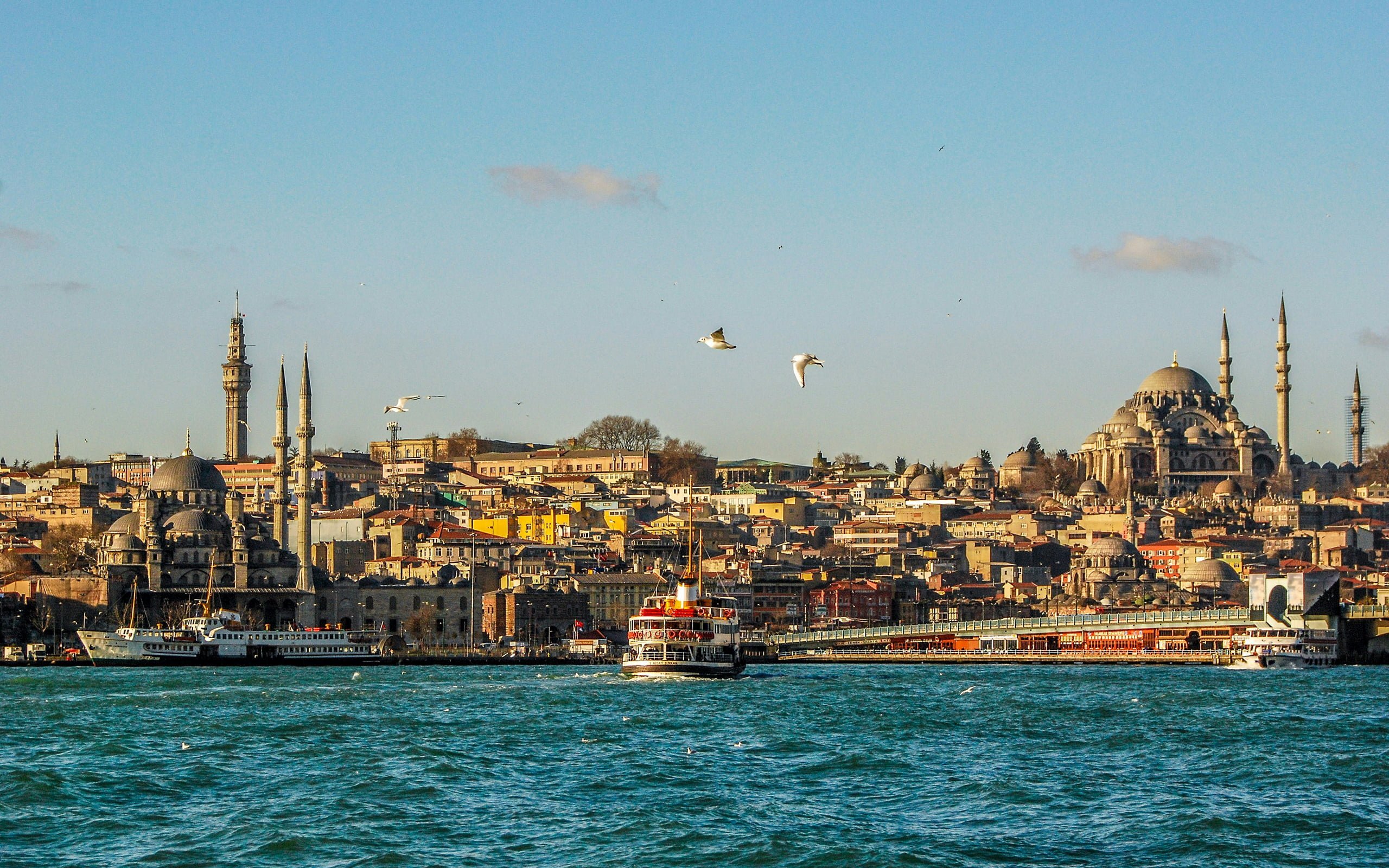
    Bosphorus — Photo by Mert Kahveci on Unsplash

    Life in Istanbul: Understanding Turkish Conservatism

    Outsiders often misunderstand Turkish conservatism, which is far from being a monolith but rather a spectrum of beliefs and practices that can be both traditional and progressive.

    In Istanbul, conservatism manifests in a culture of discretion. The rule of thumb is that you can do anything as long as it is consensual, and you make sure that you don’t openly discuss every aspect of your life. It is a conservatism that respects privacy and personal choice, one that is less about imposing beliefs and more about living and letting live.

    For example, homosexuality was decriminalized as early as the 19th century by the palace, and today, Istanbul has a lively gay scene; however, for most people, being openly gay is not on the table.

    The Istanbulite Bubble

    Like residents of any large city, Istanbulites have mastered the art of creating personal spaces within the urban sprawl. They build bubbles filled with familiar faces and shared values, carving out a sense of home in a city constantly in flux. These bubbles are not isolating but rather a means of finding stability and comfort. For those within them, the rest of the country and the world may seem distant, but it is a distance born of contentment rather than ignorance.

    Life in Istanbul: Navigating the Urban Landscape

    Like any big city, life in Istanbul is governed by unspoken rules. For both women and men, the secret to a harmonious life lies in mastering the art of maneuvering through the city’s bustling environment. It involves discerning when to participate and when to withdraw when to voice opinions, and when to stay quiet. It revolves around showing respect – respect towards the city, its unique pace, and its inhabitants, who, despite their diverse backgrounds, are all Istanbul residents at their core.

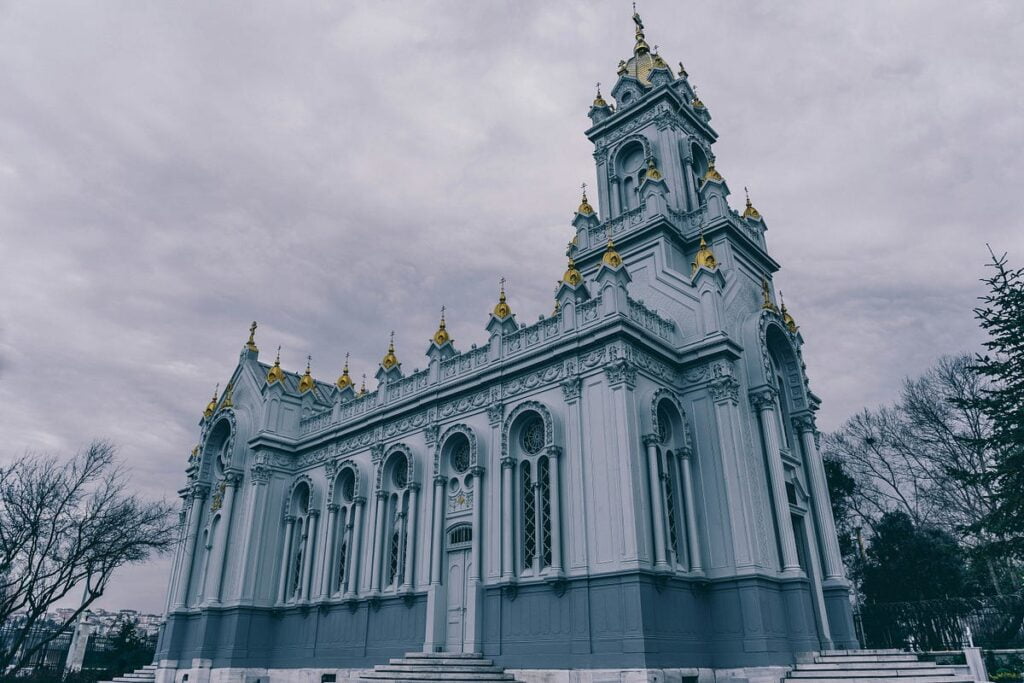
    Sveti Stefan Church in Istanbul — Photo by Mert Kahveci on Unsplash

    In a Nutshell

    Istanbul’s tale is one of coexistence and resilience. It is a city where life’s contradictions are prominently showcased, yet they do not separate but instead enhance the shared experience. The safety and unity in Istanbul are not coincidental but rather the outcomes of a society that prioritizes community over discord and diversity over segregation. In this city, the underprivileged and the affluent may reside in close proximity, but they have more in common than just a location – they share the essence of Istanbul, which is as timeless as the Bosphorus itself.

  • Turkey—Islam Relationship Is Not What You Think

    Turkey—Islam Relationship Is Not What You Think

    Turkey, a country at the crossroads of East and West, has long been a melting pot of cultures, traditions, and religions, contributing to its complex relationship with religion, particularly Islam, the religion of the vast majority at birth due to state policies. However, beneath the surface of these official records, the religious landscape of Turkey is far more nuanced and diverse than it might appear.

    Statistical Overview of Religious Affiliation

    The Turkish state records the religion of individuals at birth based on their parents’ faith, leading to an official figure that categorizes virtually the whole population as Muslim. However, this surface-level statistic, which makes no difference in anyone’s life, masks the country’s complex tapestry of belief and non-belief. Almost no one is concerned about the accuracy of this data, and most people who are incorrectly registered believe that it is none of the state’s business that they believe or disbelieve, leaving the registration as is.

    However, according to the Turkish Statistical Institute, although a significant portion of the population is registered as Muslim, there is a growing trend of religious reidentification among the younger generations, which the Pew Research Center agrees.

    A comprehensive study conducted by the Pew Research Center reveals that the percentage of individuals identifying as atheists or deists is rising at approximately 6%, a notable increase from previous decades, signaling a gradual but significant shift in religious attitudes.

    The Spectrum of Belief Within Islam

    Turkey is not just another Muslim-majority country. Delving deeper into the beliefs of Turks who identify as Muslim, it becomes evident that there is a broad spectrum of religious practice and interpretation. A national survey found that while a majority of Muslims in Turkey express belief in core Islamic tenets, there is considerable variation in the observance of traditional practices. For instance, the percentage of Muslims who regularly perform the five daily prayers along with Mosque attendance is significantly lower than might be expected, suggesting a more personalized approach to religious practice.

    Moreover, the same survey indicates that a significant number of Muslims in Turkey do not see adherence to traditional practices such as fasting during Ramadan or regular mosque attendance as essential to their faith, highlighting a broader trend towards a more individualized form of Islam, which prioritizes personal belief and moral values over strict ritual observance.

    Secularism, Atheism, and the Public Sphere

    The distinction between secularism and atheism is crucial in the Turkish context. While secularism advocates for the separation of religion from public life, it does not inherently reject the presence of religious beliefs within society. This nuanced understanding of secularism allows for diverse religious expressions and beliefs, including those that may not fit neatly into traditional categories. It’s a perspective that acknowledges the complexity of faith in the modern world, where ancient scriptures may not directly address the challenges of contemporary life.

    Statistical data support this trend, with more Turks supporting secular values, including the separation of religion and state. A survey by the Education and Science Workers Union (Eğitim-Sen) found that a majority of respondents favored maintaining Turkey’s secular education system, reflecting a broader societal preference for keeping religious beliefs out of public institutions.

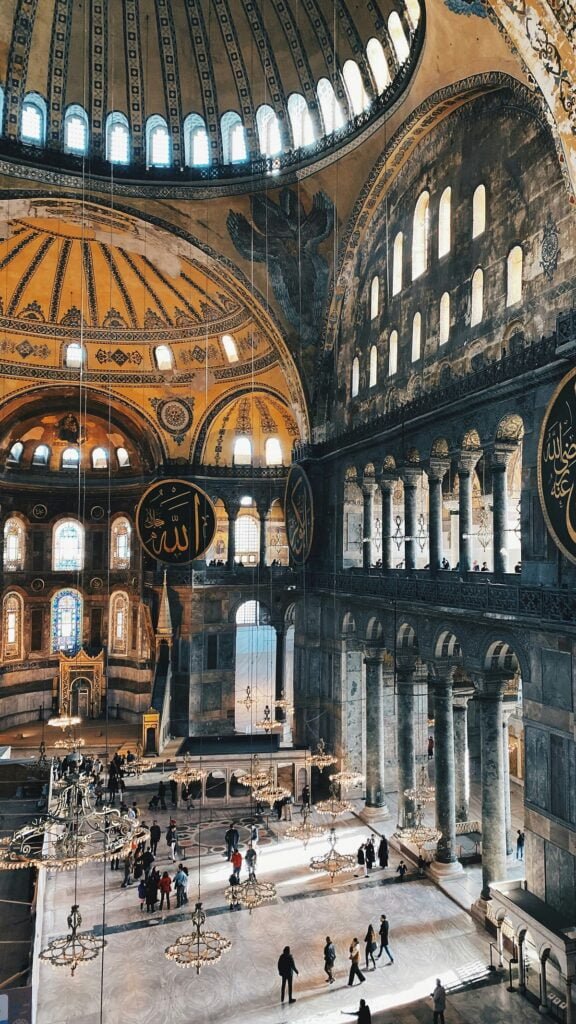
    View into the Hagia Sophia from the upper floor — Photo by Linus Mimietz on Unsplash

    Atheism Has No Place in Politics

    While there are numerous openly atheist Turkish thinkers, journalists, writers, and artists, some of whom are considered national treasures, atheism in Turkish politics is unheard of. This may have several reasons, but the biggest is perhaps that secularist atheists would see discussing atheism publicly and advocating for political changes as contradictory to secular values. Additionally, they may believe that being openly atheist would make them appear biased and hinder their ability to advocate for secularism since the main message of Turkish secularists is that atheism and secularism are unrelated.

    On the other hand, populist populations would likely aim to make any attempts by an openly atheist politician to enforce secularist principles seem like a war against Islam.

    Ultimately, thanks to the fact that Muslim secularist politicians aim to keep religion personal and private, separate from politics. As a result, Muslim secularists and atheist secularists are largely indistinguishable, and atheist secularists believe they do not have to advocate for secularism on their own since secularism is to protect everyone.

    Given the current statistical trends, it is plausible to project that the number of individuals identifying as atheists, deists, or non-traditional Muslims will continue to grow. This reflects a global trend of religious disaffiliation, particularly among younger generations who often prioritize personal experience and scientific understanding over traditional religious authority. My personal view is that more and more Turks leave organized religion altogether and identify themselves as deists.

    Turkish Deism

    Deism is a philosophical and religious viewpoint that posits the existence of a supreme being or creator, often referred to as “God,” based on reason and observation of the natural world rather than on revelation or religious scripture. Deists typically believe that this supreme being created the universe and set it in motion but does not intervene in its affairs through miracles or divine revelation. Instead, deists argue that the natural world operates according to rational laws established by this creator.

    Deism emerged during the Enlightenment period in Europe in the 17th and 18th centuries and was influential among many intellectuals, including thinkers like Voltaire, Thomas Paine, and Thomas Jefferson.

    It is not surprising that the Turkish flavor of deism is unconventional. Individuals who identify themselves as deists in Turkey typically believe in a creator who may or may not intervene in the day-to-day workings of the universe, allowing prayer as a final option. Moreover, Turkish deists often think that humans are put to the test in this world. Any action that harms others or any inaction that contradicts common decency is considered a ‘sin.’

    In a Nutshell

    As depicted through statistical data, Turkey’s evolving religious landscape illustrates a complex interplay of traditional beliefs, secular values, and a growing inclination towards personal spirituality, suggesting a future in which Turkey’s religious identity will be increasingly characterized by diversity, pluralism, and individual choice, challenging conventional narratives and paving the way for a more inclusive understanding of faith in the modern world.