Category: Christianity

Explore a critical perspective on Christianity, examining its beliefs, practices, and history with a discerning eye. This category delves into theological debates, historical controversies, and the complex interactions between Christianity and society. Investigate issues such as religious conflict, church scandals, interpretations of scripture, and the impact of Christianity on social and cultural dynamics. Uncover various critiques of Christian doctrine, church authority, and religious practices while exploring differing viewpoints within and outside the faith. Gain a nuanced understanding of Christianity through a critical lens, challenging conventional narratives and fostering open dialogue about religion and its role in the modern world.

  • Literalism vs. Contextualism: Unpacking Biblical Interpretation

    Literalism vs. Contextualism: Unpacking Biblical Interpretation

    The Bible is one of the most significant and extensively read books throughout history. Revered by billions as the divine word, a moral compass, and the cornerstone of their beliefs, it is nonetheless a complex and debated text. Comprising various genres, authors, and viewpoints, it spans millennia of history and cultural development. The Bible is not a single, cohesive document; rather, it is a compilation of varied and sometimes conflicting texts, mirroring the human and historical circumstances of their creation. Consequently, Biblical interpretation is not an easy or direct task but an intricate and demanding endeavor that necessitates thoughtful and analytical engagement.

    When studying the Bible, a primary question is whether its content should be interpreted literally, figuratively, or through a combination of both. This inquiry profoundly affects our comprehension and application of biblical teachings and narratives in contemporary life. For instance, reconciling the Genesis creation narrative with scientific theories of evolution and geological data presents a challenge. Additionally, addressing the seeming discrepancies and variances within and across the biblical texts is essential. It is also crucial to consider the ethical and moral dilemmas posed by biblical laws and stories, including issues of slavery, violence, gender roles, and sexuality. Understanding the historical and cultural contexts of the Bible’s authors and their original audience is vital to accurately translating and applying the Bible’s messages to modern-day circumstances and environments.

    Join us as we delve into several questions, including whether one should take the Bible seriously. We will scrutinize the arguments and viewpoints of various biblical interpretation approaches, such as literalism, historical-critical, and contextual, assessing their merits and demerits.

    Literalism in Biblical Interpretation

    Literalism, a prevalent approach to understanding the Bible, asserts that the sacred text should be read and comprehended according to its plain and straightforward meaning. Advocates of literalism view the Bible as the inerrant and infallible word of God, where every word and detail holds historical and scientific accuracy. They maintain that the Bible is clear and consistent and admits only one correct interpretation for each passage. Typically, literalists adopt a conservative and traditional stance on ethical and moral issues, guided by biblical laws and commands.

    Arguments in Favor of Literalism:

    • Literalism upholds the Bible’s authority and inspiration, affirming that it is God’s word, devoid of falsehood or error. By doing so, it maintains the integrity and unity of the entire text, avoiding selective acceptance or figurative interpretations.
    • Literalism provides a clear and objective standard for understanding and applying the Bible. It avoids the ambiguity that arises from subjective reasoning or personal experience, which can lead to diverse interpretations.
    • Literalists assume that biblical writers communicated directly and transparently. Acknowledging historical and cultural contexts, they take the text at face value, avoiding modern assumptions or foreign perspectives.

    Challenges and Criticisms to Literalism

    • Literalism overlooks the literary and rhetorical aspects of biblical writings. For instance, it fails to recognize the poetic and symbolic nature found in Psalms, Proverbs, and Revelation, as well as the use of metaphors, similes, hyperbole, and irony throughout the text.
    • Literalism clashes with scientific evidence and historical facts that challenge biblical accounts. The creation story, the flood, the exodus, and miracles often conflict with empirical knowledge. Additionally, discrepancies within and between biblical books pose interpretive challenges.
    • By imposing an inflexible framework, literalism may not always address diverse contexts and situations. It neglects the dynamic nature of the biblical tradition, which evolves through ongoing dialogue between God and humanity.

    Historical-Critical Approach to Biblical Interpretation

    The historical-critical approach to understanding the Bible views it as a historical and human document, subject to rigorous methods and tools of analysis. Unlike literalism, which emphasizes the text’s plain meaning, historical-critical scholars recognize the Bible’s complexity and multifaceted nature. Let’s delve into the arguments for and against this approach:

    Arguments in Favor of Historical-Critical Interpretation

    • Historical-critical scholars acknowledge that biblical writers and their audiences lived in specific historical and cultural contexts. They recognize that these ancient authors reflected their own times, experiences, and understandings in their writings. By doing so, historical-critical interpretation avoids imposing modern assumptions on the text.
    • This approach uncovers the layers beneath the biblical surface. Scholars reveal the theological developments, debates, and implicit meanings within and between biblical texts by examining historical and literary contexts. It sheds light on the creative ways biblical writers engaged with their challenges.
    • Historical-critical interpretation allows us to distinguish between essential and incidental elements in the Bible. It bridges the timeless and the timely, enabling us to apply biblical teachings and stories to our contemporary contexts. Embracing diverse perspectives encourages dialogue and enriches our understanding of the biblical tradition.

    Challenges and Criticisms to Historical-Critical Interpretation

    • Critics argue that historical-critical analysis diminishes the Bible’s divine authority. By emphasizing its human origins, this approach denies supernatural guidance and involvement. It challenges the traditional view of the Bible as the infallible word of God.
    • Historical-critical scholarship dissects the Bible into parts, focusing on differences rather than similarities. Consequently, it offers multiple interpretations and conclusions, leaving readers with uncertainty. Some find this lack of definitive answers unsettling.
    • While historical-critical analysis enriches our understanding, it can alienate biblical writings from the faith and life of religious communities. Those who view the Bible as sacred and divine may struggle with this scholarly detachment.

    Contextual Biblical Interpretation: Bridging Divine and Human Perspectives

    The contextual approach to biblical interpretation emphasizes understanding the Bible in relation to both its historical context and the contemporary reader’s situation. Contextual scholars recognize that the Bible is not solely divine or solely human; it embodies both aspects. Let’s explore the arguments for and against this approach:

    Arguments in Favor of Contextual Interpretation:

    • Contextual interpretation affirms that the Bible is both God’s word and a human response to God. It recognizes that God speaks through the biblical writings, and humans engage with them. By preserving the integrity and unity of the Bible, contextual interpretation avoids extremes like literalism or historical-critical analysis.
    • Contextual interpretation allows us to relate biblical teachings and stories to our own contexts and challenges. It encourages dialogue and diversity by inviting engagement from various perspectives. Appreciating the richness and complexity of the biblical tradition becomes possible through this lens.
    • Contextual scholars acknowledge that biblical writers and their audiences lived in specific historical and cultural contexts. They recognize that these ancient authors reflected their own times, experiences, and understandings in their writings. Contextual interpretation appreciates biblical texts’ historical and cultural diversity by considering different genres, sources, traditions, and perspectives.
    • Contextual interpretation delves into historical and literary contexts, revealing theological developments and debates within biblical communities. It exposes implicit meanings and creative ways biblical writers engaged with their challenges.

    Challenges and Criticisms to Contextual Interpretation:

    • Critics argue that contextual interpretation weakens the Bible’s divine authority. By acknowledging its human origins and imperfections, this approach challenges the traditional view of the Bible as solely God’s word.
    • Contextual scholars bring their own biases and assumptions to the interpretation process. This subjectivity can lead to multiple conflicting interpretations and leave readers without clear guidance.
    • Contextual interpretation may detach biblical writings from their original purpose and message. Ancient authors may not have anticipated reading and applying their texts in diverse contexts.

    In a Nutshell

    The issue of taking the Bible seriously transcends a simple yes or no answer; it’s about the manner and reasons for doing so. Rather than outright acceptance or dismissal, it involves an active engagement with the text. Understanding the Bible is not about pinpointing a single correct interpretation but recognizing its essential role in grasping Western history and society.

    The Debate Between Bible Literalists vs Contextualists

    For centuries, there has been an ongoing debate within Christianity over how to interpret the Bible. On one side are the literalists, who believe the Bible should be taken completely literally, word-for-word. On the other side are the contextualists, who believe the Bible should be interpreted within its historical and cultural context. This debate has shaped Christian theology and doctrine throughout history.

    Early Literalism

    The early Christians were generally literalists when it came to interpreting the Bible. They took the stories and teachings at face value, ascribing to them a literal and historical truth. This literalist view was the dominant perspective throughout the first several centuries of Christianity.

    However, even in these early years, there were hints of contextualism. Some Church Fathers like Origen argued for allegorical interpretations of certain passages, looking for deeper symbolic meanings beneath the literal text. But by and large, literalism held sway.

    Medieval Scholasticism and the Growth of Contextualism

    During the Middle Ages, the literalist view was still prevalent, but the rise of scholasticism and a revived interest in Greek philosophy led to more widespread use of contextual analysis. Scholars like Thomas Aquinas incorporated Aristotelian methods of analysis and questioned whether the Bible always meant exactly what it said in a literal sense.

    This scholastic method opened the door for more allegorical and symbolic interpretations of scripture. The four-fold method became popular, which looked at literal, allegorical, moral, and anagogical meanings behind biblical passages. Contextualism was on the rise, even if it was still a minority view.

    The Protestant Reformation and Literalism’s Resurgence

    In the 16th century, the Protestant Reformation brought a resurgence of literalism. Protestant scholars like Martin Luther and John Calvin rejected many of the allegorical interpretations of the Catholic Church. They argued for a more literal, historical reading of scripture, free from non-biblical traditions.

    This literalist bent was amplified by the growing use of the historical-grammatical method of interpretation, which stressed looking at the original languages, contexts, and grammatical structures to understand the author’s literal intent. The Protestant principle of sola scriptura (by scripture alone) reinforced this literalist trend.

    19th Century Debates and the Emergence of Modern Contextualism

    In the 19th century, new developments like the Higher Criticism movement, which analyzed the Bible’s historical origins and authorship, combined with growing scientific discoveries, posed challenges to biblical literalism. This led to a flourishing of contextualist approaches.

    Liberal theologians and scholars argued that the Bible had to be understood within its ancient contexts and that its stories and teachings should not always be taken as literal historical facts. On the other side, fundamentalists like those behind the Niagara Bible Conference clung strongly to biblical inerrancy and literalism as a backlash against modernist thinking.

    This literal vs. contextual debate raged throughout the 19th and into the 20th centuries, shaping Christian doctrinal disputes over issues like creationism vs evolution and inspiring the “fundamentalist-modernist” controversies.

    20th Century and Beyond – A Diversity of Views

    In the 20th and 21st centuries, this historical debate has continued in various forms across Christian denominations and traditions. Most mainstream Christian institutions have adopted some level of contextual interpretation, while still maintaining core literal beliefs about Christ’s divinity, the resurrection, etc.

    Within these churches, a diversity of views exists, with some being more literalist and others more contextualist when it comes to specific teachings and biblical books. Literalism remains very strong in certain evangelical, fundamentalist, and conservative churches. Meanwhile, liberal and progressive churches tend to interpret scripture through a more contextualist lens.

    At the scholarly level, there is also a wide range of approaches drawing from literalism, contextualism, and other methods like reader-response criticism and postmodern interpretation. The historical debate continues unabated, shaping how each new generation of Christians understands the Bible.


  • Hitler, Nazism and Religion

    Hitler, Nazism and Religion

    A Historical Analysis

    The relationship between Hitler, Nazism and religion is one of the most controversial and debated topics in history. Some argue that Hitler was an atheist and that Nazism was an atheistic regime, while others claim that Hitler was a Christian and that religious institutions influenced Nazism. However, both of these claims are oversimplified and misleading. The reality is much more complex and nuanced, taking into account Hitler’s religious beliefs, the nature of Nazism as a regime, and the role of religion during the Nazi era.

    Hitler’s Religious Views

    Hitler’s religious views have not been easy to pin down, as they were often contradictory, ambiguous, and opportunistic (surprise, surprise). He was born and raised as a Catholic, and he never officially renounced his membership in the Catholic Church. However, he also expressed disdain and hostility towards Christianity, especially its doctrines of equality, compassion, and pacifism, which he saw as weak and incompatible with his vision of a superior race. He also rejected the authority of the Pope and the clergy and sought to undermine and control the Catholic Church in Germany.

    Conversely, Hitler professed belief in God and claimed to act according to God’s will, often invoking divine providence in his rhetoric to position himself as a champion of Christianity against Germany’s foes like Communism and Judaism. Additionally, he showed appreciation for elements of Germanic paganism, occultism, and mysticism, viewing them as wellsprings of inspiration and strength for his racial ideology.

    Therefore, it is inaccurate to label Hitler as either an atheist or a Christian. He was neither but a religious opportunist who used and manipulated religion for his own political and personal ends, just like many other politicians of his caliber. He did not adhere to any consistent or coherent religious system but cherry-picked elements from various sources that suited his agenda.

    Nazism as a Regime

    Nazism, or National Socialism, was the political ideology and movement that ruled Germany from 1933 to 1945 under Hitler’s dictatorship. It was based on the principles of racial supremacy, totalitarianism, nationalism, militarism, and anti-Semitism, aiming to create a “pure” and “superior” German race and to eliminate or subjugate those deemed “inferior” or “undesirable,” such as Jews, Slavs, Roma, homosexuals, communists, and others.

    Nazism was not an atheistic regime, as it did not officially deny or prohibit the existence of God or religion. That being said, it was also not a religious regime, as it did not promote or endorse any specific religion or faith. Rather, it was a regime that maintained a separation of religion and state but sought to subordinate religion to its political goals. It did not respect or tolerate religious diversity or freedom but rather controlled and manipulated religion for its own purposes.

    Nazism maintained a complicated and often contradictory stance towards religion, particularly Christianity. It sought to harness and manipulate the religious feelings and customs of the German populace, predominantly Protestant. Additionally, it aimed to align with certain religious authorities and bodies, including the German Christians, a pro-Nazi group within the Protestant Church, and the Reichskonkordat, an agreement with the Vatican that offered certain privileges and safeguards to the Catholic Church in return for its allegiance and quiescence.

    On the other hand, Nazism also tried to undermine and suppress the influence and autonomy of religion, especially those that opposed or challenged its ideology and policies, such as the Confessing Church, a resistance movement within the Protestant Church, and the Catholic Centre Party, a political party that the Nazis dissolved. It also persecuted and killed many religious people, especially those who belonged to minority or non-Christian faiths, such as Jews, Jehovah’s Witnesses, and Freemasons.

    Auschwitz Extermination Camp — Photo by Mateus Campos Felipe on Unsplash

    Nazism and Religion the Third Reich

    The role of religion during the Nazi era is a subject of historical debate and scrutiny, as it raises questions about the responsibility and complicity of religious institutions and individuals in the crimes and atrocities committed by the Nazi regime. While some religious people and groups actively resisted and opposed Nazism, such as Dietrich Bonhoeffer, a Lutheran pastor and theologian who was executed for his involvement in a plot to assassinate Hitler, and the White Rose, a student group that distributed anti-Nazi leaflets and was executed for treason, many others remained silent, passive, or even supportive of Nazism, either out of fear, ignorance, or agreement.

    The Catholic Church has faced scrutiny for its actions during the Nazi era, particularly for not taking a stronger stand against Hitler’s regime and the atrocities committed. A focal point of this criticism is the relationship between Hitler and Pope Pius XII, who led the Church from 1939 to 1958. As a cardinal and the Vatican’s Secretary of State, he met with Hitler in 1934 and was involved in the signing of the Reichskonkordat in 1933, which some interpret as an act of conciliation towards the Nazis. Moreover, Pope Pius XII is noted for his silence during the Holocaust, despite being informed about the mass extermination of Jews and others, and he neither condemned nor excommunicated Hitler or any other high-ranking Nazi official.

    However, the role of the Catholic Church during the Nazi era was not entirely negative or shameful, as it also involved some acts of resistance and humanitarianism. The Pope did issue some encyclicals and speeches that criticized some aspects of Nazism, such as racism, totalitarianism, and war, and called for peace and justice. He also supported and encouraged some Catholic clergy and laypeople who helped and hid Jews and other persecuted people, such as Hugh O’Flaherty, an Irish priest who saved thousands of Jews and Allied soldiers in Rome, and Edith Stein, a Jewish convert to Catholicism who became a nun and was killed in Auschwitz. The Pope also intervened and prevented the deportation of Jews from Rome and other parts of Italy and helped some Jews escape to other countries.

    Therefore, the role of religion during the Nazi era is not a simple or clear-cut one, but rather a complex and nuanced one, involving both complicity and resistance, both silence and action, both collaboration and opposition. It is a role that requires careful and critical examination and honestand humble reflection.

    In a Nutshell: Hitler and Religion

    The topic of Hitler, Nazism, and religion is fraught with misconceptions, myths, and controversies and challenges us to confront the dark and tragic chapters of our history, making it hard to learn from the mistakes and failures of our past. It remains a topic that invites us to question and rethink our assumptions and beliefs about religion, politics, and morality and to seek a deeper and better understanding of the complex and diverse human nature and society.

  • The Bridge Between Christianity and Islam

    The Bridge Between Christianity and Islam


    Christianity and Islam are two of the most influential religions in the world, each with a rich history and deep-rooted traditions that have shaped societies and influenced the course of human history. With over 2 billion Christians and 1.8 billion Muslims globally, these religions form a significant bridge impacting the cultural, social, and spiritual lives of billions. The bridge between Christianity and Islam is reflected in their holy scriptures—the Bible and the Quran—and extends to their practices, rituals, and beliefs, highlighting both similarities and distinctions that render each faith unique.

    Despite their differences, both religions share a common belief in the existence of one God, the importance of prayer and charity, the value of family and community, and the pursuit of peace and justice. By exploring the common ground between Christianity and Islam, we can better understand and appreciate these two religions and foster greater respect and cooperation among their followers.

    Bridge Between Christianity and Islam I: Shared Monotheistic Roots

    Christianity and Islam are two major religions that share a fundamental belief in the oneness of God. Both faiths consider God to be the sole creator and sustainer of the universe. This monotheistic principle is a cornerstone that unites the followers of both religions, and it is expressed in their daily prayers and religious rituals.

    In addition to this belief, Christianity and Islam share a reverence for a lineage of prophets. These prophets, including Abraham, Moses, Elijah, Elisha, Jonah, Zechariah, John the Baptist, Aaron, David, Solomon, Job, Joseph, Adam, Noah, Lot, Ishmael, Isaac, Jacob, and Jesus, are considered essential figures in the history of both religions who are seen as messengers of God who had a pivotal role in guiding humanity and who left behind teachings that are still relevant today.

    While there are differences in how these religions interpret and follow the teachings of these prophets, the shared belief in their importance underscores the deep similarities between Christianity and Islam. These similarities offer a path for peaceful coexistence and mutual understanding between the followers of these two faiths.

    Photo by Noah Holm on Unsplash

    Bridge Between Christianity and Islam II: Sacred Texts and Teachings

    The Bible and the Quran are two of the most important religious texts in the world, serving as the foundational scriptures for Christians and Muslims, respectively. These texts are revered by believers as sacred and are considered to contain the divine word of God.

    For Christians, the Bible provides a comprehensive guide to faith and morality, covering everything from the world’s creation to the life and teachings of Jesus Christ. It is divided into two main parts: the Old Testament, which tells the story of God’s relationship with the Jewish people, and the New Testament, which focuses on the life and teachings of Jesus and the early Christian church. The Bible provides moral guidance, spiritual insights, and a framework for living a life pleasing to God. It emphasizes the importance of love, compassion, forgiveness, and humility while stressing the need for righteousness and obedience to God’s commands.

    For Muslims, the Quran is the final and most complete revelation of God’s message to humanity, as conveyed by the Prophet Muhammad. It contains 114 chapters, or suras, organized according to length rather than chronology. The Quran covers a wide range of topics, including the oneness of God, the nature of humanity, and the importance of good deeds and virtuous behavior. Like the Bible, it emphasizes compassion, justice, and the importance of community, reflecting a shared moral ethos. Muslims believe that the Quran is the literal word of God and that its teachings are meant to guide all aspects of life, from personal conduct to social and political affairs.

    While Muslims accept the four gospels of the New Testament for the most part, they reject the prophethood of Apostle Paul and the doctrines installed by the Roman Catholic Church in later centuries, such as the Trinity and Original Sin.

    Bridge Between Christianity and Islam III: Angels, Afterlife, and Accountability

    Christianity and Islam both share a belief in the existence of angels, namely Gabriel, Michael, Raphael, Azrael and the fallen angel Satan. These celestial beings are believed to serve God’s will and carry out His commands. Both religions also hold the conviction that after death, our souls will go to an afterlife where they will find their eternal destiny.

    In Christianity, this is often referred to as heaven or hell, while in Islam it is referred to as paradise or hellfire. Additionally, both religions teach the concept of the Day of Judgment, where individuals will be held accountable for their actions during their life on earth. On this day, God will judge each person according to their deeds and they will be rewarded or punished accordingly. This belief is a fundamental part of both religions and serves as a reminder of the importance of leading a righteous and moral life.

    Photo by Imad Alassiry on Unsplash

    Bridge Between Christianity and Islam IV: The Legacy of Abraham

    Abraham, also known as Ibrahim in Islam, is a central figure in Christianity and Islam. He is considered the father of many nations and is revered for his unwavering faith in God. In Christianity, Abraham is known as the Israelites’ patriarch and is considered one of the most important figures in the Old Testament.

    In Islam, on the other hand, he is considered to be a prophet and is revered for his submission to God’s will and his willingness to sacrifice his son for God. Abraham’s legacy is a testament to the shared heritage and mutual respect that can be found between Christians and Muslims, as his story is a reminder of the importance of faith, devotion, and obedience to God in both religions.

    Challenges and Misconceptions

    Christianity and Islam share many similarities, including core beliefs, values, and practices. Despite these commonalities, there is often a perception of tension and conflict between the two religions, especially in regions such as the Middle East, where their histories have been intertwined for centuries. These tensions can be attributed to various factors, such as political and economic conflicts, cultural differences, and misunderstandings about each other’s beliefs and practices.

    However, it’s important to recognize and appreciate the similarities between Christianity and Islam and cultivate greater understanding and respect for each other’s differences. By doing so, we can create a more peaceful and unified world where people of different faiths and no faith can coexist and work together towards common goals.

    Mutual Respect and Reverence

    One of the most notable aspects of the relationship between Islam and Christianity is the mutual respect between the two religions. Despite their differences in beliefs, Muslims hold the Bible in high regard, considering it to be a divine revelation alongside the Quran. Additionally, Jesus Christ is revered as a significant prophet, and Muslims recognize him as the Messiah.

    This respect is further emphasized by the frequent references to Jesus and his mother, Mary, in the Quran, underscoring the significance of Jesus in Islamic beliefs and serve as a reminder of the shared religious heritage between Islam and Christianity.

    Moreover, throughout history, there have been periods of collaboration and peaceful coexistence between Christians and Muslims. Islamic scholars played a crucial role in preserving and translating ancient knowledge during the Middle Ages, contributing to the European Renaissance and the Scientific Revolution. This exchange of intellectual ideas and knowledge is a testament to the benefits of interfaith dialogue and cooperation between different religions.

    Contemporary Dialogue

    Recently, the ecumenical movement has been working to establish greater collaboration and communication between Christianity and Islam by implementing interfaith initiatives that promote dialogue and mutual understanding. These efforts are between the two religions, and they seek to build bridges that can help foster a deeper level of understanding and respect.

    The ultimate goal of these initiatives is to highlight the shared values and common beliefs that can serve to unite us all as human beings, regardless of our faiths or cultural backgrounds. By working together in this way, we can create a more harmonious and peaceful world grounded in mutual respect and understanding.

    Customarily, many Turkish Muslims light candles in Orthodox Churches in Istanbul — Photo by Nicola Fioravanti on Unsplash

    In a Nutshell

    Christianity and Islam, two of the world’s largest religions, have distinct differences in practice and theology. However, they share a profound common ground that is often overlooked. Both religions believe in one God, who is merciful, compassionate, and just. Both encourage their followers to love and serve others, to practice self-control and discipline, and to seek forgiveness for their sins.

    Despite their differences, Christianity and Islam share many fundamental values that can be used to build bridges between their followers. Mutual respect, understanding, and willingness to learn from one another’s perspectives can help create a more harmonious and respectful world. By recognizing and celebrating their shared heritage, adherents of both faiths can work together to overcome fear and suspicion and promote peace and cooperation.

    Afterword

    I don’t endorse Christianity or Islam. However, I also don’t believe it is up to us to decide if the world would be a better place without either of these religions. Regardless of where one stands, the ideas and solutions one supports must satisfy two criteria: keep religion out of politics and aim for peaceful coexistence of us all.

    Sources

    Log College Press
    Log College Press aims to collect and reprint the writings of and about American Presbyterians from the 18th and 19th…caleb-cangelosi-437x.squarespace.com

    Shared Prophets of Christianity & Islam | Synonym
    Hemera Technologies/PhotoObjects.net/Getty Images Christianity and Islam have several prophets in common and consider…classroom.synonym.com

    List of people in both the Bible and the Quran – Wikipedia
    From Wikipedia, the free encyclopedia The Bible and Quran have many characters in common, many of which are mentioned…en.wikipedia.org

    The Greatest Prophets between Christianity and Islam: 13-Prophet Moses
    Moses is the prophet most mentioned by name in the Bible and the Qur’an and the one, along with Abraham, most revered…islamforchristians.com

    Jesus: A Foundation for Dialogue Between Muslims and Christians | Yaqeen Institute for Islamic…
    Jesus is at the center of Christianity and is considered a prophet in Islam. Common ground between Muslims & Christians…yaqeeninstitute.org

    What Christianity and Islam have in common
    This commonality is too often lost in the turmoil of antagonistic voices who push politics of fear.www.tennessean.com

    Hierarchy and significance of angels in various religions
    angel, Primarily in Western religions, any of numerous benevolent spiritual beings who mediate between heaven and…www.britannica.com

    What are the Similarities Between Christianity and Islam?
    Christianity and Islam are the two largest religions in the world and share many similarities and differences. Read on…www.twinkl.com

    Belief in Angels
    The true reality of angels, their abilities, tasks, names and numbers.www.islamreligion.com

  • Christianity’s Violent Past

    Christianity’s Violent Past


    Christianity’s violent past in Europe is marked by a series of conflicts, violence, and societal upheavals. Across centuries, pivotal episodes such as the Sack of Jerusalem in 1099, the Albigensian Crusade from 1209 to 1229, the Reconquista spanning the 8th to the 15th centuries, and the Baltic Crusades extending from the 12th to the 16th centuries exemplify the intricate interplay between religious fervor, geopolitical ambitions, and cultural transformations.

    Join us in exploring the four key events that resulted in the loss of millions of lives due to wars, battles, massacres, forced conversions, and other violent actions associated with the Christianization of Europe.

    Christianity’s Violent Past I: The Sack of Jerusalem (1099)

    The Sack of Jerusalem in 1099 is one of the most notable events of the First Crusade. The purpose of the Sack of Jerusalem was primarily to capture the holy city of Jerusalem from Muslim control and to establish Christian rule over the sacred sites. The Crusaders were motivated by religious fervor and the promise of indulgences, which were granted by the Pope to those who participated in the Crusade. The capture of Jerusalem was seen as a pivotal religious victory that would allow Christians to reclaim the Holy Land and provide safe passage for pilgrims.

    The aftermath of the city’s capture was marked by the massacre of its Muslim and Jewish inhabitants. Historical accounts suggest that the number of those killed ranged from 3,000 to 70,000, although the exact figures are debated among historians. The Crusaders’ actions had a lasting impact on the religious and ethnic composition of the region.

    The siege and subsequent sack of Jerusalem were driven by a combination of religious fervor and the geopolitical ambitions of the Crusaders. The event was a pivotal moment in the history of the Crusades and a turning point that shaped the medieval Near East. The Crusaders’ establishment of the Kingdom of Jerusalem introduced a new Christian state in a predominantly Muslim region, setting the stage for further conflicts and subsequent Crusades.

    Christianity's Violent Past:
    Photo by Myriam Zilles on Unsplash

    Christianity’s Violent Past: The Albigensian Crusade (1209–1229)

    The Albigensian Crusade, also known as the Cathar Crusade, was initiated by Pope Innocent III in 1209 to eliminate Catharism in Languedoc, modern-day southern France. The Cathars were a Christian sect whose beliefs diverged significantly from the Catholic Church, particularly with their dualist view that the material world was evil, conflicting with the Catholic doctrine of the Incarnation of Christ and the sacraments, leading to their condemnation as heretics.

    The Crusade quickly took on a political dimension, prosecuted primarily by the French crown. It aimed not only to suppress the Cathar heresy but also to extend the influence of the French monarchy over the region of Languedoc, which had a distinct culture and language. The conflict resulted in the massacre of at least 200,000 to possibly 1 million Cathars, leading some scholars to consider it to be an act of genocide.

    The Albigensian Crusade significantly reduced practicing Cathars and realignment of the County of Toulouse with the French crown. The distinct regional culture of Languedoc vanished as a result of the Crusade. The Cathars, who originated from an anti-materialist reform movement within the Bogomil churches of the Balkans, called for a return to the Christian message of perfection, poverty, and preaching.

    The Crusade set a precedent for the persecution of heretic Christians, setting a clear demonstration of the lengths to which the Catholic Church and its secular allies would go to maintain religious and political authority in medieval Europe.

    Christianity's Violent Past:
    Photo by Myriam Zilles on Unsplash

    Christianity’s Violent Past: The Reconquista (8th-15th centuries)

    The Reconquista was a complex, centuries-long process that saw Christian kingdoms in the Iberian Peninsula striving to reclaim territories from Muslim rule. It began in the 8th century and culminated in the 15th century, significantly transforming the region’s religious, political, and social landscape.

    The Christianization of the peninsula was not only a religious mission to restore Christian rule over previously Visigothic lands but also a strategic move by the Christian monarchs to consolidate their power and extend their kingdoms. This period was characterized by a series of military campaigns and conquests, including the notable Battle of Covadonga, the fall of Toledo, the decisive Battle of Las Navas de Tolosa, and the conquest of Seville, which marked the end of Muslim rule in the heartland of al-Andalus. The Reconquista reached its conclusion with the fall of Granada in 1492, which led to Christian rulers’ complete control of the Iberian Peninsula.

    Throughout this era, the demographic composition of the region underwent significant changes. The Muslim population decreased through conversions, expulsions, and emigration, transforming the once-diverse religious landscape into a predominantly Catholic society. Historians estimate that up to 7 million Muslims died at the hands of Crusaders, setting the stage for the Spanish Inquisition and the eventual emergence of Spain as a unified nation under Catholic monarchs. The Reconquista remains a defining period in Spain and Portugal’s history, shaping the peninsula’s cultural and religious identity.

    Christianity's Violent Past:
    Photo by Alessandro Bellone on Unsplash

    Christianity’s Violent Past: The Baltic Crusades (12th-16th centuries)

    The Baltic Crusades, also known as the Northern Crusades, were a series of military campaigns conducted by Christian military orders and kingdoms primarily against the pagan peoples around the southern and eastern shores of the Baltic Sea. These crusades aimed to convert these populations to Christianity and establish regional dominance.

    The Teutonic Knights, a military order, played a significant role in these campaigns, particularly from the mid-13th century onwards. They established a militarized state in Prussia and sought to convert the local pagan population. However, the religious motive was often a pretext for acquiring land and wealth, as the crusades provided opportunities for territorial expansion and material gain, such as land, furs, amber, and slaves.

    The campaigns began with the Wendish Crusade in 1147 and continued with various efforts to subjugate and convert the indigenous populations of the Baltic region, including the Prussians, Livonians, Estonians, and Lithuanians. These efforts often involved violent confrontations, forced baptisms, and the establishment of Christian institutions. Over time, the indigenous pagan practices were replaced by Christianity, leading to significant cultural and religious changes in the region.

    The Baltic Crusades also had economic and political dimensions, as German merchants and nobles sought to expand their influence along trading routes in the Baltic frontier. The crusades continued this pattern of conflict, now inspired and prescribed by the Pope and undertaken by Papal knights and armed monks. The result was a profound transformation of the Baltic region regarding its religious landscape and political alignments.

    In a Nutshell

    Looking back at the history of Christianity spreading in Europe, it’s clear that calling it a peaceful religion is far from accurate. The four key events discussed — the Sack of Jerusalem, the Albigensian Crusade, the Reconquista, and the Baltic Crusades — offer stark reminders of the violence, bloodshed, and societal upheaval that accompanied the spread of Christianity.

    From the massacre of Muslim and Jewish inhabitants in Jerusalem to the suppression and annihilation of Cathar communities in southern France, and from the centuries-long military campaigns to reclaim territories in the Iberian Peninsula to the violent subjugation of pagan peoples in the Baltic region, Christianity’s historical footprint is stained with the blood of millions.

    These stories tell us that history hasn’t always been quite peaceful, and Christianity has been methodically used to justify violence and force people to change their beliefs. Looking at these stories, we need to face the fact that Christianity has a past of hurting others and is not any better than other Abrahamic religions.


    Sources

    Christianity in Europe – Wikipedia
    Christianity is the largest religion in Europe. Christianity has been practiced in Europe since the first century, and…en.wikipedia.org

    Northern Crusades – Wikipedia
    The Northern Crusades or Baltic Crusades were Christianization campaigns undertaken by Catholic Christian military…en.wikipedia.org

    https://en.wikipedia.org/wiki/Northern_CrusadesSiege of Jerusalem (70 CE) – Wikipedia
    The siege of Jerusalem of 70 CE was the decisive event of the First Jewish-Roman War (66-73 CE), in which the Roman…en.wikipedia.org

    Albigensian Crusade – Wikipedia
    The Albigensian Crusade (French: Croisade des albigeois) or Cathar Crusade (1209-1229) was a military and ideological…en.wikipedia.org

    Log College Press
    Log College Press aims to collect and reprint the writings of and about American Presbyterians from the 18th and 19th…caleb-cangelosi-437x.squarespace.com

    How Christianity came to Medieval Europe – Medievalists.net
    Nearly all the lands of Europe converted to Christianity during the Middle Ages. In this short guide, we take a look at…www.medievalists.net

    Christianity in the Making of Europe
    Christianity provided some of the most important cultural orientations for Europe. However, given the diverse forms of…link.springer.com

    The Siege of Jerusalem in 70 CE
    The Siege of Jerusalem in 70 CE was the high watermark in the First Jewish-Roman War (66-73 CE) regarding the tension…www.worldhistory.org

    Black Death
    The Black Death was a plague pandemic that devastated medieval Europe from 1347 to 1352. The Black Death killed an…www.worldhistory.org

    Albigensian Crusade
    The Albigensian Crusade (aka Cathars’ Crusade, 1209-1229 CE), was the first crusade to specifically target heretic…www.worldhistory.org

    Wikiwand – Albigensian Crusade
    The Albigensian Crusade or Cathar Crusade (1209-1229) was a 20-year military campaign. Pope Innocent III started it to…www.wikiwand.com

    Reconquista | Definition, History, Significance, & Facts
    Reconquista, in medieval Spain and Portugal, a series of campaigns by Christian states to recapture territory from the…www.britannica.com

    Siege of Jerusalem | Facts & Summary
    Siege of Jerusalem, Roman blockade of the city in 70 CE, during the First Jewish Revolt. After a long period of…shorturl.at

    Reconquista
    The Reconquista (a Spanish and Portuguese word for “Reconquest”) was a period of 750 years in which several Christian…www.newworldencyclopedia.org

    How Christianity came to Medieval Europe – Medievalists.net
    Nearly all the lands of Europe converted to Christianity during the Middle Ages. In this short guide, we take a look at…www.medievalists.net

    What Was the Reconquista and Why Did It Last so Long?
    1492 is a year that rings throughout history. Across the world, people remember Columbus, his reaching of the Americas…www.historyhit.com

  • Evolution of God – God’s Identity Crisis

    Evolution of God – God’s Identity Crisis

    The concept of God in Judaism has seen a remarkable evolution throughout history, mirroring humanity’s shifting cultural and philosophical contexts. Initially embracing polytheism, Judaism featured multiple deities overseeing life’s various aspects. This perspective evolved into the groundbreaking notion of a singular, transcendent, all-encompassing God: Yahweh. This marked the onset of a profound transformation in comprehending Yahweh’s nature and role, an evolution that would continue to unfold over time.

    Early Identity of Yahweh

    Yahweh, the God of the Israelites, epitomized the evolution of God beyond the physical, existing outside the limits of human understanding or portrayal. Temporal or spatial dimensions did not confine this infinite and unbounded presence. The second commandment underscored this transcendence, forbidding the crafting of idols or likenesses. This ban, termed aniconism, solidified as a fundamental tenet of Jewish theology, setting it apart from polytheistic faiths that revered corporeal depictions of their deities.

    You shall not make for yourself an image in the form of anything in heaven above or on the earth beneath or in the waters below. You shall not bow down to them or worship them; for I, the Lord your God, am a jealous God, punishing the children for the sin of the parents to the third and fourth generation of those who hate me, but showing love to a thousand generations of those who love me and keep my commandments.

    Exodus 20:4-6 in Contemprary English

    The Evolution of God: From Tangible Idols to a Transcendent Deity

    The portrayal of Yahweh in Judaism signifies a pivotal moment in the evolution of God, transitioning from physical forms to a purely spiritual existence. Unlike the corporeal gods of adjacent cultures, Yahweh’s spiritual essence underscored his omnipresence throughout the cosmos and his intangibility, eluding the confines of human perception.

    This paradigm shift heralded a philosophical as well as religious evolution of God. The commandment against idolatry wasn’t merely a directive but a proclamation of God’s progression from tangible to intangible, from seen to unseen. It denoted an intellectual advancement, a move from rudimentary animism to a more sophisticated, abstract conception of the divine.

    The evolution of God into an unseen, transcendent entity defied conventional worldviews, prompting a reevaluation of the boundaries of knowledge and the acknowledgment of a reality beyond the physical. It laid the groundwork for a new theological era that would profoundly influence Jewish thought and extend its impact on the broader philosophical and religious discourse for generations.

    This concept of a transcendent, evolving God was adopted by Christianity, born from the Jewish tradition. The early Christians, predominantly Jewish converts, adhered to the Jewish edict against idolatry. Depicting Jesus or Mary visually was inconceivable, as it would contradict the advanced understanding of God’s non-physical nature—a conviction deeply embedded in their Jewish heritage.

    Photo by Wesley Tingey on Unsplash

    The Evolution of God: Embracing the Human Form

    As Christianity embarked on its transformative journey from the Middle East to the European continent, it was met with a cultural and philosophical environment vastly distinct from its origins. The European emphasis on physical representation and artistic expression subtly yet profoundly influenced the Christian portrayal of the divine. During these formative years in Europe, the once transcendent and intangible God of Judaism and early Christianity began a remarkable evolution, gradually adopting a more human visage as Christians endeavored to craft images of Jesus, Mary, and the saints.

    This metamorphosis in the perception of God signified a notable divergence from the Jewish tradition, which had resolutely upheld God’s incorporeal and ineffable nature. The advent of Christian iconography initially met with skepticism and resistance but eventually found its place within the heart of Christian worship. The visual depictions of Jesus, Mary, and the saints emerged as concrete manifestations of faith, serving as focal points for devotion and channels for prayerful meditation.

    The rise of Christian iconography marked a critical juncture in the religion’s evolution, reflecting the adaptability of faith and its ability to assimilate into diverse cultural and philosophical landscapes. The shift from aniconic to iconic representations of the divine sparked theological debates and ecclesiastical conflicts, yet it also underscored the dynamic nature of religious expression and the profound influence of visual art in conveying spiritual enthusiasm and conviction.

    The transformation within Christian iconography can be attributed to a confluence of factors. With its receptivity to visual representations of the divine, the European cultural context contrasted sharply with Judaism’s aniconic stance. The Greco-Roman tradition, with its rich tapestry of gods and heroes, immortalized in art, provided a fertile ground for early Christians to adapt and reinterpret existing artistic conventions to depict their sacred narratives.

    Furthermore, the dissemination of Christianity to a predominantly non-Jewish populace called for a more approachable and relatable mode of worship. While profound, the abstract and incomprehensible God of Judaism was less accessible to the masses, who found a spiritual connection through more concrete and familiar forms. Introducing images of Jesus, Mary, and the saints offered tangible touchstones for the faithful, enabling a deeper, more personal engagement with the divine.

    The evolution of God’s portrayal into a human-like figure, often rendered as a venerable, bearded man, mirrored the cultural and artistic norms of the era, bridging the gap between the celestial and the terrestrial. This anthropomorphic representation not only made the divine more understandable to the layperson but also facilitated Christianity’s acceptance within the Roman Empire, harmonizing with the prevailing Greco-Roman iconographic traditions.

    In this way, the evolution of God in Christian thought and art reflects a profound transformation—a journey from the untouchable to the touchable, from the mysterious to the known, and from the purely spiritual to the incarnate. It is a testament to the enduring human desire to connect with the divine in terms that resonate with our own experience and understanding.

    Photo by Josh Applegate on Unsplash

    In a Nutshell

    The concept of God has undergone a profound transformation throughout history, mirroring the evolving nature of human spirituality and the intricate interplay between faith and cultural contexts. In the early traditions of Judaism and the nascent stages of Christianity, God was perceived as a transcendent entity — utterly incomprehensible, shrouded in enigma, and existing beyond the grasp of human understanding. Such a portrayal underscored the sheer magnitude of the divine, a being whose essence was veiled in profound mystery, emphasizing the chasm between the mortal and the sacred.

    As Christianity matured, the depiction of God evolved to become more tangible and personified. The incarnation of God in the figure of Jesus Christ marked a pivotal shift from the abstract to the concrete. An embodied god offered a more intimate and approachable form of divine interaction, allowing worshippers to foster a personal connection with the deity through the human-like representation of Christ.

    Each conceptualization of God — whether transcendent or embodied — served as a conduit for the divine, providing distinct perspectives for engaging with the spiritual realm. The transcendent God invited awe and reverence, a reminder of the divine’s boundless nature. In contrast, the embodied God extended an invitation for a closer, more empathetic relationship, reflecting the yearning for a personal connection with the divine.

    Ultimately, these diverse representations of God reflect humanity’s continuous quest to comprehend the ineffable, to bridge the gap between the earthly and the ethereal, and to find meaning in the presence of the ultimate enigma, which is divine.

  • Bloody Christianization of the Americas

    Bloody Christianization of the Americas

    The Spanish colonization and Christianization of the Americas mark a crucial chapter in world history, characterized by profound cultural exchanges, the birth of new societies, and the tragic unfolding of violence against indigenous populations.

    Join us in exploring the violent actions carried out by Spanish Christians during its colonization efforts, including conquests and massacres, the encomienda system, forced conversions, the Spanish Inquisition, and the repression of indigenous resistance.

    Conquest and Massacres

    Driven by the quest for gold and glory and the expansion of Spanish territory, the Spanish conquistadors led a series of military expeditions in the Americas during the 16th century. The most notable figures among them were Hernán Cortés and Francisco Pizarro.

    In 1519, Cortés initiated the conquest of the Aztec Empire, which was located in present-day Mexico. His military campaign was marked by brutal battles, strategic alliances with discontented indigenous groups, and the exploitation of Aztec superstitions. After months of warfare, Cortés managed to capture Tenochtitlán, the Aztec capital, in 1521, resulting in the death of thousands of Aztecs and the destruction of their cities and cultures. The fall of Tenochtitlán is considered one of the most significant events in the Americas’ history and often associated with the end of the Aztec civilization.

    Similarly, Pizarro conquered the Inca Empire in South America by capturing its emperor, Atahualpa, in 1532. This conquest was also marked by massacres of indigenous populations and the destruction of their cultural heritage. The Spanish forces were superior in military technology and tactics, which gave them an upper hand over the indigenous populations. The fall of the Inca Empire, like the Aztec Empire, had a significant impact on the history of the Americas. It marked the end of an ancient civilization and the beginning of Spanish colonial rule in South America.

    Encomienda System

    Following the Spanish conquests in the Americas, the Spanish Crown implemented a socio-economic policy known as the encomienda system to protect and Christianize the indigenous populations encountered by the Spanish conquistadors. It was purportedly established to create a framework where the Spanish settlers, or encomenderos, would be responsible for the indigenous peoples’ welfare, protection, and spiritual guidance. In return, the indigenous communities were expected to offer tribute through labor, goods, or both.

    However, the theoretical intentions behind the encomienda system starkly contrasted with its practical application. In reality, it effectively granted Spanish colonizers the legal right to demand labor and tribute from the indigenous populations. This exploitation was not limited to agricultural labor; indigenous peoples were also compelled to work in silver mines and plantations, often under exceedingly harsh and inhumane conditions. The labor was grueling, with extended hours and minimal rest, leading to severe physical and psychological distress among the indigenous workers.

    The encomienda system facilitated widespread abuse, as encomenderos wielded significant power over the indigenous peoples. Reports of brutality, forced labor, and other forms of violence were rampant. The indigenous populations found themselves in a vicious cycle of exploitation, with little recourse to justice or relief from their oppressors. The Spanish Crown’s attempts to reform the system and mitigate abuses, such as the New Laws of 1542, were often met with resistance from the colonizers and were inadequately enforced.

    Moreover, the introduction of the encomienda system had catastrophic effects on the demographic landscape of the indigenous populations. The forced labor regime, combined with the disruption of indigenous societies, contributed significantly to the decline of indigenous populations, which was already dropping due to the introduction of European diseases such as smallpox, measles, and influenza.

    Christianization of the Americas: Forced Conversions

    The Spanish Crown, in a bid to extend its dominion not only territorially but also spiritually, embarked on a rigorous campaign of forced conversion of the indigenous populations in the Americas. This campaign was fervently supported by the Catholic Church, which saw the New World as fertile ground for the expansion of Christendom. The Crown and the Church’s joint efforts were rooted in a belief in the superiority of Christianity, coupled with a desire to civilize what they perceived as the ‘heathen’ indigenous peoples.

    Missionaries, often members of mendicant orders such as the Franciscans, Dominicans, and later, the Jesuits, were dispatched to the New World to carry out this monumental task of conversion. These missionaries, though sometimes genuinely motivated by a desire to save indigenous souls, were frequently accompanied by armed Spanish soldiers. This combination of spiritual and military force underscored the dual nature of the Spanish conquest as both a physical and spiritual endeavor.

    The process of conversion was aggressive and uncompromising. Indigenous spiritual practices, which were deeply intertwined with social and cultural identities, were labeled as pagan, barbaric, and even demonic. Efforts to Christianize the indigenous populations often involved the destruction of sacred sites, idols, and texts, which were integral to indigenous religions and worldviews. This not only represented a loss of spiritual autonomy for the indigenous peoples but also a deliberate erasure of their cultural heritage.

    Resistance to conversion was met with severe repercussions. Indigenous individuals or communities that resisted the imposition of Christianity faced violence, torture, or even death. Such punitive measures were not merely acts of punishment but served as stark warnings to others about the consequences of defiance. The colonizers rationalized this harsh approach to forced conversion as a necessary evil, justified by the ultimate goal of saving indigenous souls.

    Beyond the spiritual conquest, the policy of forced conversion served as a potent tool for social and political control. By dismantling indigenous belief systems and forcibly integrating indigenous peoples into the Christian fold, the Spanish aimed to undermine indigenous social structures and incorporate them into colonial society as subservient members. This was not just about saving souls but about facilitating more accessible governance and exploitation of the indigenous populations. Conversion to Christianity was seen as a step towards ‘civilizing’ the indigenous peoples, making them more amenable to Spanish laws, customs, and economic demands.

    Spanish Inquisition

    The Spanish Inquisition, instituted in 1478 by the Catholic Monarchs Ferdinand II of Aragon and Isabella I of Castile, was initially conceived as a mechanism to unify their kingdoms under a single religious doctrine. The Inquisition’s primary aim was to identify and eliminate heresy among the Christian population, focusing mainly on the conversos (Jews who had converted to Christianity) and Moriscos (Muslims who had converted to Christianity), suspected of secretly practicing their former religions. However, the scope of the Inquisition broadened significantly with Spain’s expansion into the New World. By the late 15th and early 16th centuries, as Spain established its colonial empire in the Americas, the Inquisition’s repressive arm extended across the Atlantic, marking the beginning of a sinister chapter in the history of the Spanish colonies.

    In the Americas, the Inquisition’s mission adapted to the new social and religious landscape, yet its primary objective remained to maintain Catholic orthodoxy. This mission now included the vast indigenous populations encountered by the Spanish conquistadors, African slaves brought over to work in the mines and plantations, and even Spanish settlers themselves. The Inquisition was vigilant in rooting out any deviations from Catholic doctrine, viewing the diverse religious practices and beliefs of these groups as a threat to the spiritual and social order of the colonies.

    Indigenous peoples, with their rich tapestry of spiritual traditions, became targets for conversion and indoctrination. The Inquisition monitored the newly converted indigenous Christians with suspicion, ready to punish any relapse into pre-Christian beliefs and practices. African slaves, too, were scrutinized for their adherence to African religious traditions, which were often clandestinely practiced alongside or syncretized with Christian beliefs. Spanish colonists were not immune to the Inquisition’s reach; those suspected of heresy, blasphemy, or secretly practicing Judaism or Islam faced the prospect of investigation and punishment.

    The methods employed by the Inquisition in the Americas were as severe as those used in Spain. Accusations of heresy could lead to arrest and imprisonment, often without clear evidence or the right to a fair defense. Torture was sanctioned as a means to extract confessions from the accused, employing barbaric techniques that inflicted severe pain and suffering. Executions, particularly by burning at the stake, were public spectacles designed to instill fear in the population and deter any deviation from Catholic orthodoxy. Forced conversions were imposed on those who practiced or were suspected of adhering to non-Christian beliefs under the threat of severe penalties.

    The presence of the Inquisition in the Americas contributed significantly to an atmosphere of fear, repression, and paranoia. It served as a powerful tool for the Spanish Crown and the Catholic Church to enforce religious and ideological conformity, ensuring that the colonial territories remained firmly under their control. The Inquisition’s activities in the Americas were not only a means of spiritual domination but also facilitated the social and political subjugation of diverse populations, embedding a legacy of trauma and division.

    The Inquisition’s reach into the Americas is a testament to the extreme measures taken by the Spanish Crown and the Catholic Church to maintain their hegemony. It exemplifies the dark side of the colonial enterprise, where the quest for religious uniformity justified the use of torture, terror, and violence. The impact of the Inquisition’s actions in the Americas left deep scars on the societies it touched, echoes of which can still be felt in the cultural and religious landscapes of the region today.

    Repression of Indigenous Resistance

    The Spanish colonization and subsequent Christianization of the Americas was marked by profound resistance from indigenous populations, whose responses to Spanish rule varied widely across different regions and periods. Despite the devastating impact of military conquest, disease, and socio-economic disruption, indigenous communities employed a range of strategies to resist Spanish domination. These acts of resistance included armed uprisings, the clandestine practice of traditional religions, the preservation of cultural practices and languages, and strategic accommodations with Spanish authorities to safeguard aspects of their autonomy.

    Armed rebellions were among the most direct forms of resistance, as indigenous groups sought to expel the Spanish through military force. The Spanish oppressive policies, including forced labor systems like the encomienda and mita, the imposition of Christianity, and the usurpation of indigenous lands often sparked these uprisings. The rebels utilized their knowledge of local terrains in guerrilla warfare against the better-armed Spanish forces, although they were frequently at a technological disadvantage.

    One of the most significant and successful indigenous uprisings against Spanish colonial rule was the Pueblo Revolt of 1680. Led by a religious leader named Popé, the Pueblo peoples of present-day New Mexico coordinated a widespread rebellion that succeeded in expelling Spanish settlers and authorities from the region. The revolt was fueled by grievances over Spanish attempts to eradicate indigenous religions, the imposition of forced labor, and the appropriation of resources. The Pueblo people managed to reclaim their autonomy for over a decade, reestablishing their religious practices and governance structures.

    However, the Spanish response to such acts of resistance was often swift and merciless. In the years following the Pueblo Revolt, Spanish authorities launched military campaigns to retake control of the region. These campaigns were marked by extreme violence, including massacres of indigenous communities, the destruction of sacred sites, and the forced relocation of populations. The Spanish sought not only to reassert their dominance but also to send a clear message intended to deter future rebellions. Despite their eventual success in quelling the Pueblo Revolt, the Spanish were forced to adopt a more conciliatory approach, granting certain concessions to indigenous communities, such as greater religious tolerance and the abolition of some of the most burdensome labor demands.

    Beyond armed rebellion, indigenous resistance also took more subtle forms, such as preserving cultural practices and beliefs in the face of efforts to impose Spanish culture and Christianity. Indigenous peoples often adapted to Spanish rule by incorporating elements of their traditional practices into Catholic rituals, a process known as syncretism. This allowed them to maintain a connection to their ancestral beliefs while outwardly conforming to Spanish demands. Similarly, indigenous languages and oral traditions were crucial in preserving cultural identities and histories, often in secret and against Spanish prohibitions.

    The resistance of indigenous populations to Spanish Christianization of the Americas was multifaceted, encompassing violent and non-violent strategies that reflect the diverse ways indigenous communities sought to defend their autonomy, culture, and way of life against overwhelming odds. The legacy of this resistance is evident in the survival and revitalization of indigenous cultures and languages across the Americas despite centuries of colonial oppression and marginalization.

    Conclusion

    The Spanish colonization and Christianization of the Americas is a story of contrasts, marked by the clash of civilizations, the melding of cultures, and the undeniable progress of establishing new societies. However, it is also a story marred by the violence inflicted upon indigenous populations. The conquests and massacres, the encomienda system, forced conversions, the Spanish Inquisition and the repression of indigenous resistance illustrates the dark side of this historical epoch, leading to the decimation of indigenous populations and having lasting impacts on the Americas’ social and cultural, and demographic landscapes.

  • What happened on April 3, AD 33, in Jerusalem?

    What happened on April 3, AD 33, in Jerusalem?

    Resurrection embodies the concept of returning to life after death, revered, celebrated, and deeply ingrained in humanity’s spiritual and cultural awareness. The resurrection of Jesus Christ, detailed in the New Testament, stands as a significant event that has influenced history and emerged as a potent symbol of the world’s predominant religion.

    Join us as we explore what might have occurred in Jerusalem 2000 years ago and consider how such an event would be interpreted today.

    Resurrection in the Morgue, AD 1969

    In the heart of the 1960s, a decade marked by transformation and upheaval, a family in a quiet town faced their own personal revolution. It began with an innocent mistake: a young girl, full of life and curiosity, accidentally consumed a considerable amount of antiepileptic drugs belonging to her uncle. The medication, potent and unforgiving, swiftly coursed through her veins, ushering her into a dangerous slumber.

    Frantic and fraught with fear, her family rushed her to the nearest hospital, their hearts heavy with dread. The medical team sprang into action, a flurry of white coats and urgent voices, but despite their efforts, the girl’s vital signs waned. In a solemn declaration, she was pronounced dead, her body transported to the cold stillness of the hospital’s morgue.

    The morgue, where stories are thought to end, became the unexpected setting for this tale’s dramatic turn. As the chief physician conducted his final, sad duty, a routine procedure to confirm death, something extraordinary happened. The sharp pierce to the sole of the girl’s foot, meant to be a silent confirmation of her passing, instead provoked a startling response — a twitch, a gasp, a sign of life.

    This miraculous moment, a reaction in the realm of the deceased, ignited a cascade of questions. Was this a case of medical resurrection, a return from the clutches of death? Or had the girl never truly crossed that final threshold? The incident challenged the definitions of life and death, blurring the lines between the two.

    Once shrouded in grief, the family found themselves enveloped in a bewildering joy. Their daughter, whom they had mourned, was with them once more, breathing, moving, alive. The hospital, a place of healing, had become a sanctuary of hope, a witness to a phenomenon that defied explanation.

    As we reflect on this story, we are compelled to consider the implications of such an event in the context of historical and religious narratives of resurrection. The tale of Jesus Christ, who was said to have risen from the dead, has long been a source of faith and inspiration. Yet, in the light of modern sensibilities and scientific understanding, we are inclined to seek logical explanations over mystical ones.

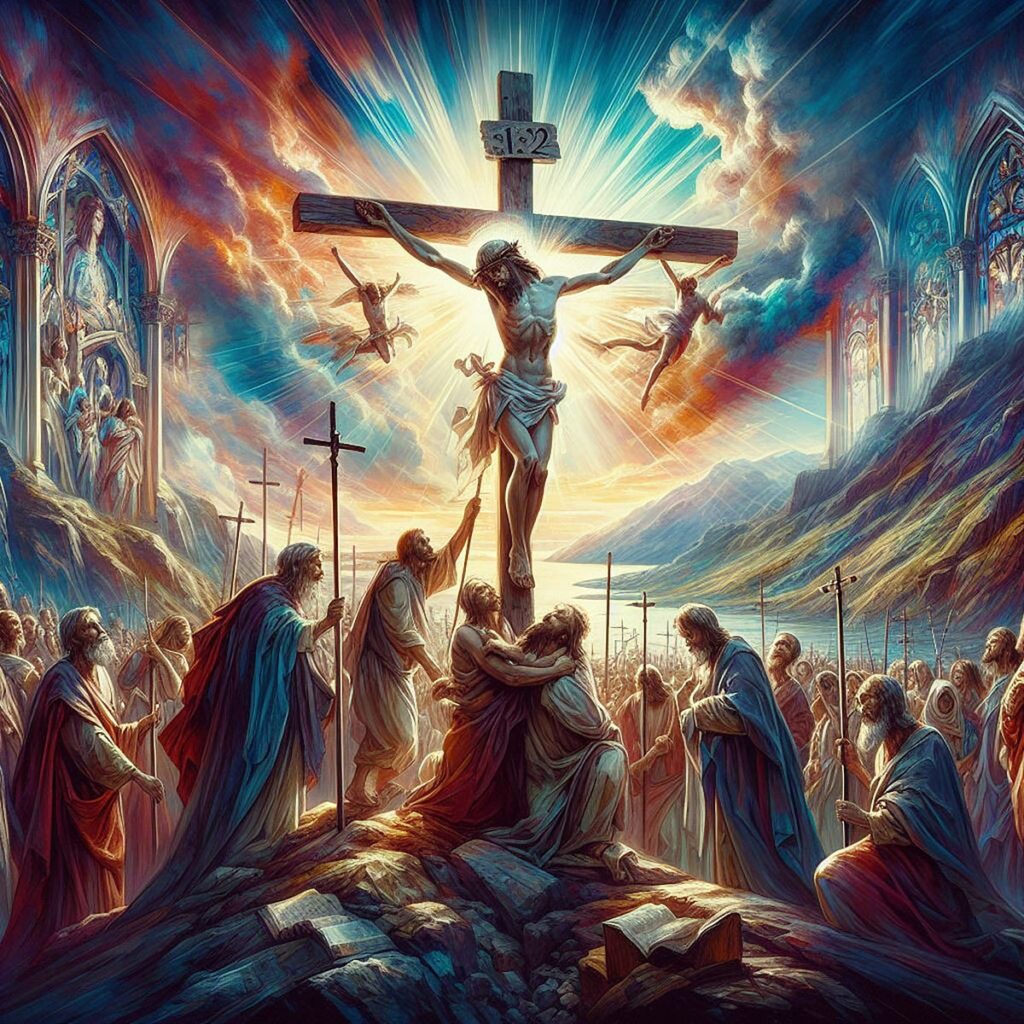
    Resurrection of Jesus Christ - On Cross

    The resurrection of Jesus Christ in Jerusalem, AD 33

    In the bustling city of Jerusalem, amidst the tension of political unrest and religious fervor, a man named Jesus emerged as a beacon of hope and wisdom. His teachings stirred hearts and challenged conventions, drawing crowds wherever he went.

    But as whispers of rebellion grew louder, so did the fears of the ruling authorities. Betrayed by one of his own disciples, Jesus was arrested and subjected to a mock trial. Despite the unjust accusations, he bore his suffering with quiet strength, staying true to his message of love and forgiveness.

    Carrying a heavy wooden cross, Jesus was led through the dusty streets to Golgotha, where he would face the ultimate sacrifice. Nailed to the cross, he endured unbearable pain, yet his words were merciful: “Father, forgive them, for they know not what they do.”

    As darkness descended upon the land, Jesus breathed his last, his body taken down and placed in a tomb. But the story did not end there.

    Three days later, his tomb was found empty, and rumors began to spread like wildfire. Grief-stricken Mary Magdalene, a follower of Jesus, encountered a figure she thought to be the gardener, only to realize it was her beloved teacher, risen from the dead.

    Jesus brought hope to the hopeless through his resurrection and light to the darkest of nights. His crucifixion became the ultimate symbol of redemption, offering salvation to all who would believe.

    In the contemporary era, dominated by scientific inquiry and technological advancement, the ancient resurrection stories are often viewed through skepticism. The modern mind, shaped by empirical evidence and rational thought, tends to question the veracity of such accounts. This skepticism is not just confined to religious narratives but extends to any claim of resurrection or return from death.

    When confronted with modern-day occurrences that echo these ancient tales, such as the incident of the girl in the morgue, our first instinct is to turn to medical science for answers. We probe for explanations rooted in physiology and biology, seeking to understand how a seemingly lifeless body could exhibit signs of life. The possibility of a medical misdiagnosis or a misunderstanding of the body’s responses in critical conditions is often considered before any thoughts of a miracle.

    This rational approach also influences how we view historical accounts of resurrection. Suppose irrefutable evidence were to emerge that Jesus was seen alive after his crucifixion. In that case, the contemporary mind might speculate that he had been wrongfully pronounced dead. Hypotheses of suspended animation, a state where the body’s functions are slowed to the point of being imperceptible, or the idea that the crucifixion was non-lethal, would be explored as plausible explanations.

    Alternatively, in the absence of modern identification checks, it’s conceivable that the crucified individual could have been a body double of Jesus, who willingly sacrificed himself.

    Resurrection of Jesus Christ - Jesus Ascending to Heaven

    Our Biased Minds

    The tale of the girl who awoke in the morgue highlights the biased nature of our perception of events based on their recency. Given the fact that declaring someone dead can be challenging, especially without modern technology, the 1969 incident remains vivid: an error occurred, and the head physician acknowledged it.

    On the other hand, for an event that is said to have happened two thousand years ago, even in the absence of an identification check and death certificate, we are ready to jump to conclusions and declare Jesus’ death and resurrection as miraculous and factual.

    This bias raises a critical question: do we judge historical narratives through a more forgiving lens simply because of the passage of time? Should the burden of proof for miraculous events be higher for contemporary occurrences than for those shrouded in the mists of history?

    Resurrection of Jesus Christ - On Cross

    In a Nutshell: Resurrection of Jesus Christ

    In conclusion, the exploration of resurrection narratives, both ancient and contemporary, invites us to navigate the complex interplay between faith, reason, and historical interpretation. Though separated by millennia, the stories of Jesus Christ’s resurrection and the girl in the morgue in 1969 compel us to confront the limits of our understanding and the biases that shape our perceptions.

    The incident in the morgue challenges our assumptions about the finality of death and underscores the fallibility of human judgment, even in matters as grave as pronouncing someone deceased. It serves as a sobering reminder of the potential for error in interpreting historical events, particularly those shrouded in religious significance.

    On the other hand, the resurrection of Jesus Christ stands as a cornerstone of the Christian faith, offering believers a profound symbol of hope and redemption. Yet, in an age of scientific inquiry, the skepticism inherent in modern thought prompts us to scrutinize historical accounts through a lens of rationality, seeking naturalistic explanations for miraculous events.

    As we wrestle with the complexities of resurrection narratives, we must recognize the constraints of our own viewpoints and stay receptive to truths that surpass our comprehension. Whether seen through the eyes of faith or scrutinized through the demands of scientific investigation, the idea of resurrection still fascinates the human mind, providing glimpses of transcendence in a world limited by mortality.

  • Beyond the Bible Belt: Evangelicals vs. Everyone Else?

    Beyond the Bible Belt: Evangelicals vs. Everyone Else?

    In American culture, particularly in online dialogues, the phrase “religious people” often brings to mind Evangelicals, presenting a narrow and overly simplistic view of diverse religious beliefs. Yet the broader branches of Christianity, especially those guided by the Pope, approach the Bible with a symbolic interpretation. This approach promotes a harmonious relationship between religion and science, illustrating that faith and scientific understanding can coexist without conflict.

    Figurative Interpretation

    In the 21st century, many Christians in the Western world do not interpret the Bible literally but instead view it as figurative, appreciating its metaphorical and symbolic elements. This approach transcends denominational boundaries and encompasses a broad spectrum of Christian beliefs. In this symbolic interpretation, religious individuals do not find any inherent conflict between their faith and scientific discoveries. Rather, science is seen as a tool to explore the intricacies of God’s creation, providing insights into the mechanisms employed to bring the world into existence, complementing religious beliefs, and offering a deeper understanding of the universe’s wonders and the underlying divine order.

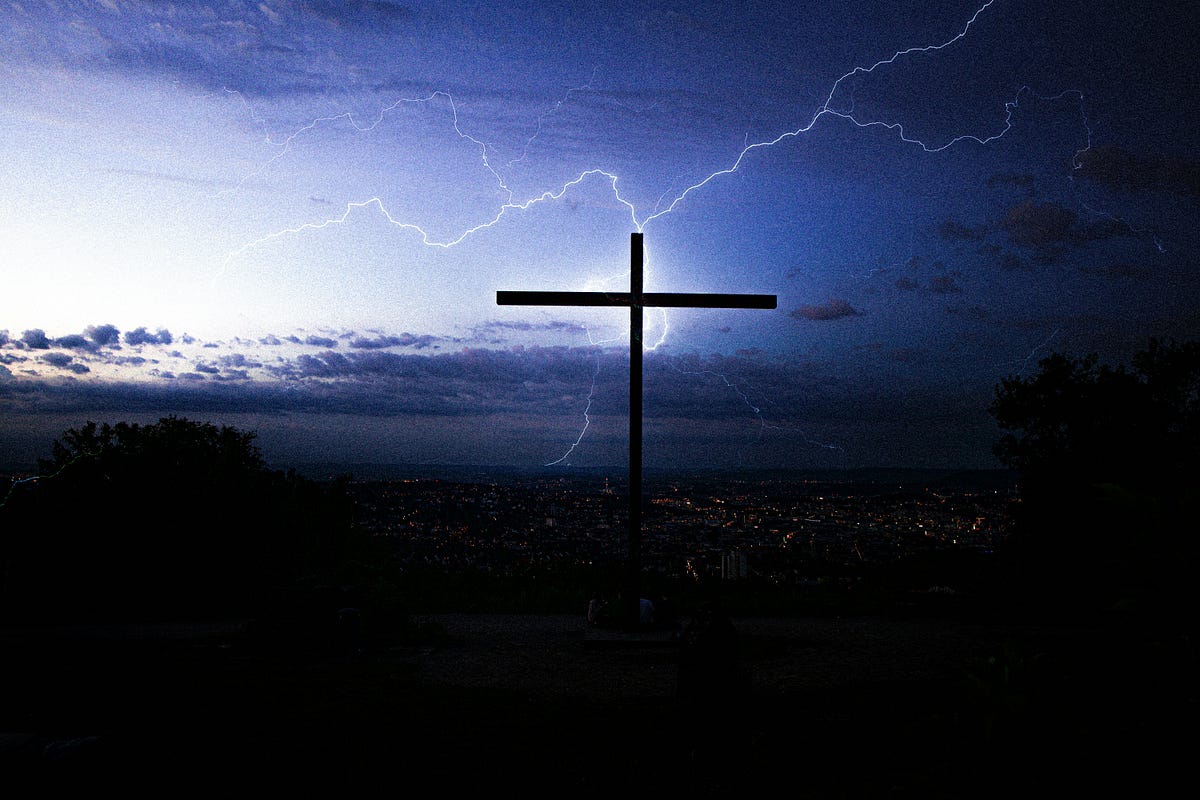
    Thunder behind the Christian Cross - Relationship Between Religion and Science
    Photo by Christian Lue on Unsplash

    Embracing the Relationship Between Religion and Science

    The Catholic Church is renowned for its rich intellectual tradition and has long championed the pursuit of knowledge. Although there is a common misconception that Christianity and scientific inquiry are at odds, the Catholic Church’s leadership, including the Pope, demonstrates that faith and science can coexist in harmony. Historically, Catholic institutions have been the cradle for significant scientific advancements, underscoring the Church’s deep-rooted commitment to exploring the natural world.

    From the Vatican Observatory’s focus on astronomical research to Pope Francis’s teachings on environmental stewardship, the Church’s actions genuinely recognize that science and religion are not in opposition. In his role as a spiritual leader, the Pope values scientific exploration as a means to uncover the intricacies of creation. This perspective suggests that scientific knowledge can complement religious faith by deepening the understanding of the divine order within the natural world, illustrating that a harmonious relationship between religion and science is not only possible but mutually enriching.

    Science as a Tool of Exploration

    Mainstream Christian denominations do not consider science as their enemy, but rather as a beneficial tool for exploration and discovery. The interpretation of religious texts symbolically allows for an interactive approach with scientific discoveries, perceiving them as a way to uncover the intricate details of God’s grand plan. The beauty and complexity of the universe, as revealed through scientific research, is viewed as evidence of divine craftsmanship.

    This viewpoint promotes an environment where individuals can wholeheartedly embrace their religious convictions while genuinely appreciating the insights provided by scientific knowledge. It encourages a nuanced understanding beyond the simplistic dichotomy of faith versus reason, recognizing that these realms can complement one another, leading to a more comprehensive understanding of the world and our place in it.

    Pope Francis from Behind - Relationship Between Religion and Science
    Photo by Coronel Gonorrea on Unsplash

    The Relationship Between Religion and Science per Fundamentalist Literalism

    In comparison to mainstream Christian denominations, fundamentalist Christians – often referred to as literalists – take a different approach to interpreting religious texts. They consider the Bible an absolute and literal truth, leaving little room for symbolic interpretation. This literalism can create a perceived conflict between science and faith, as scientific discoveries that challenge a literal interpretation of religious texts are seen as a threat to their beliefs.

    By taking a rigid stance on the literal truth of religious texts, fundamentalist literalists may find themselves at odds with scientific findings that contradict their understanding. This often leads to an adversarial relationship between Christianity and science, with each side viewed as incompatible with the other.

    Role of Education and Dialogue

    Education and dialogue are crucial in nurturing a more accurate understanding of the relationship between faith and science. By promoting a well-rounded education encompassing religious studies and scientific knowledge, individuals can develop a more nuanced perspective on the compatibility of these domains. Encouraging open and respectful dialogue between religious leaders, scientists, and the general public can help bridge the gap between faith and reason and promote mutual understanding and appreciation.

    Moreover, it is essential to highlight the contributions of religious individuals and institutions in advancing science throughout history. From the pioneering work of Gregor Mendel, a Catholic monk and the father of genetics, to the Big Bang theory proposed by Georges Lemaître, a Catholic priest and physicist, the interplay between faith and science has been a driving force behind many groundbreaking discoveries. Recognizing these historical examples can help dispel the myth of an inherent conflict between religion and science.

    Photo by Hal Gatewood on Unsplash

    Media’s Role

    The media has a significant impact on how people perceive the relationship between faith and science. Unfortunately, sensationalized headlines and oversimplified narratives often create the impression that there is an irreconcilable divide between religion and scientific inquiry. It is, therefore, essential for media outlets to provide balanced and nuanced coverage of this issue. They should highlight the diversity of perspectives within religious communities and showcase examples of harmonious coexistence between faith and science.

    By presenting a more comprehensive and accurate portrayal of the relationship between religion and science, the media can help combat stereotypes and promote a more informed understanding among the general public. This, in turn, can foster a climate of mutual respect and dialogue, where individuals from different backgrounds can engage in constructive conversations about the intersection of faith and reason.

    In a Nutshell: Relationship Between Religion and Science

    Recognizing the diverse perspectives within the broad spectrum of Christianity in America is crucial. The common portrayal often links religious individuals with Evangelicals, but a deeper examination reveals that mainstream denominations embrace a more nuanced relationship between faith and science. Their symbolic interpretation of sacred texts fosters a harmonious coexistence between religious beliefs and scientific exploration.

    From the Pope’s approach to the everyday believer’s outlook, science is considered a valuable means of investigating the marvels of creation, thus enriching their spiritual understanding. Mainstream Christian denominations demonstrate that faith and scientific knowledge can coexist and enhance each other. By acknowledging the harmony between faith and reason, they offer a more holistic view of the world, allowing believers to appreciate the beauty and complexity of creation through both spiritual and scientific perspectives.

    Promoting an accurate understanding of the relationship between religion and science requires education, dialogue, and responsible media coverage. We can transcend simplistic stereotypes by encouraging open and respectful discussions, emphasizing historical harmony between religion and science, and providing a balanced depiction of diverse beliefs. This approach helps cultivate a society where faith and science are seen as complementary, fostering a deeper appreciation for both the spiritual and scientific realms.

  • How American Evangelicals are Reshaping the US.

    How American Evangelicals are Reshaping the US.

    In the 21st century, Christianity has taken different paths on either side of the Atlantic, reflecting the complex relationship between religion, politics, and societal norms. While Europe is experiencing a decline in the public discussion of Christianity, the United States remains a stronghold where Christianity, especially the denomination of American Evangelicals, holds significant sway, permeating the political landscape and actively shaping policy debates.

    Throughout the European continent, there has been a noteworthy decline in religious presence and influence in public life, resulting in religious discourse being relegated to the private realm and confined to the personal beliefs of individuals. Christianity, historically a cornerstone of European identity, is now experiencing a lesser influence amidst the rapid pace of modernity and the shift away from traditional religious affiliations. The political arena, which used to be a stage for religious discourse, has now adopted a mostly secular framework, mirroring a broader societal shift away from traditional religious beliefs, changing how people perceive their interactions with religion and the relationship between religion and society.

    Conversely, the United States has observed the emergence of Evangelical Christianity as a formidable political force in recent years. The eagerness of Evangelical believers has translated into a potent political constituency, championing causes aligned with their doctrinal beliefs and challenging prevailing secular norms. The fusion of religion and politics has led to the intertwining of faith with governance to an extent unparalleled in many other Western democracies, sparking contentious debates about the boundaries between faith and governance and raising concerns about the encroachment of religious ideologies on democratic principles.

    As a result, questions have been raised about the role of religion in shaping public policy and the extent to which it should be allowed to influence the political process in the United States. While some argue that religion has a legitimate role to play in public life, others warn against the dangers of religious extremism and the erosion of democratic values.

    The role of Evangelical Christians in shaping public policy and discourse has become a topic of intense debate over time. While some argue that the movement’s inclination to prioritize doctrinal teachings over empirical evidence poses a challenge to the foundation of rational discourse and scientific inquiry, others contend that religious convictions are valid in shaping public policy.

    American Evangelicals’ advocacy of specific policies, often rooted in religious convictions rather than secular reasoning, has prompted broader discussions about the compatibility of religious faith with the principles of a pluralistic democracy. As a result, there are concerns that religious motivations on public policy could undermine the fundamental tenets of American democracy and threaten the rights and freedoms of citizens, irrespective of their religious affiliations.

    Furthermore, some Evangelical leaders have expressed the ambition to reshape the nation per their religious beliefs, reigniting debates about the separation of church and state, with critics expressing concern that such efforts could lead to the erosion of the secular nature of the state and the establishment of a theocracy.

    In light of these debates, it is increasingly important for Americans to reconsider the appropriate role of religious beliefs in shaping public policy and discourse and to ensure that the rights and freedoms of all citizens are protected, regardless of their religious affiliations or lack thereof.

    In a Nutshell

    The role of religion in governance, the boundaries between faith and reason, and the preservation of democratic values are complex dynamics that societies on both sides of the Atlantic are grappling with. As Christianity evolves in response to changing social landscapes, its interplay with politics continues to shape the contours of contemporary society, prompting reflection and debate on the nature of democracy, pluralism, and the common good.

    Even though Christianity has receded into the background in Europe, it remains a dynamic and influential force in the United States, highlighting the complex relationship between religion, culture, and politics. The conversation about the role of religion in public life is likely to persist as societies evolve, reflecting the ongoing negotiation between faith and secularism in the modern world. The relationship between religion and politics is a crucial aspect of contemporary culture, and the conversation around it will continue to influence the direction of democratic values and pluralism.


    Further Reading: Who Are American Evangelicals?

    American Evangelicals are a diverse group of Christians in the United States who share common religious beliefs, practices, and cultural values centered around the evangelical tradition. This tradition is marked by a strong emphasis on the authority of the Bible, the necessity of personal conversion or being “born again,” active evangelism, and the belief in Jesus Christ’s atonement for humanity’s sins. Despite this shared theological foundation, American Evangelicals are a heterogeneous group with varying views on politics, culture, and social issues. This essay explores the origins, beliefs, key characteristics, cultural impact, and political influence of American Evangelicals.

    Origins and Historical Context

    The term “evangelical” derives from the Greek word “euangelion,” meaning “good news” or “gospel.” Historically, evangelicalism has roots in the Protestant Reformation and emerged as a distinct movement in the 18th century with figures like John Wesley and George Whitefield. In the United States, evangelicalism gained prominence during the Great Awakenings—periods of religious revival in the 18th and 19th centuries. These revivals emphasized individual conversion, passionate preaching, and widespread evangelism.

    Core Beliefs and Practices

    American Evangelicals hold certain core beliefs and practices that distinguish them from other Christian groups:

    • Biblical Authority: Evangelicals regard the Bible as the ultimate authority in matters of faith and practice. They typically interpret it as the literal or inspired word of God.
    • Personal Conversion: A central tenet of evangelicalism is the belief in the need for personal conversion or being “born again.” This experience marks a turning point in one’s spiritual journey, leading to a personal relationship with Jesus Christ.
    • Evangelism: Evangelicals believe in sharing the Christian message and actively seeking to convert others. This missionary mindset has fueled a significant portion of evangelical outreach, both within the United States and globally.
    • Atonement through Christ: Evangelicals believe that Jesus Christ’s death and resurrection are central to human salvation. This belief underscores the importance of the cross and the redemptive power of Christ’s sacrifice.

    Cultural Impact and Diversity

    American Evangelicals are a diverse group, encompassing various denominations and theological perspectives. They include Baptists, Pentecostals, Methodists, Presbyterians, and non-denominational Christians, among others. This diversity leads to a wide range of worship styles, from traditional liturgies to more contemporary, music-driven services.

    Culturally, American Evangelicals have had a significant impact on the broader American landscape. They have established religious institutions, including churches, schools, and media networks. Their influence extends to music and entertainment, with Christian music and literature forming a vibrant industry.

    Political Influence and Controversies

    In recent decades, American Evangelicals have become increasingly involved in political and social issues, shaping the national conversation on topics like abortion, same-sex marriage, religious freedom, and education. This political engagement, often aligned with conservative values, has been both a source of strength and a point of controversy within the evangelical community.

    The rise of the Religious Right in the late 20th century signaled a growing alignment between evangelicalism and conservative politics. Figures like Jerry Falwell and Pat Robertson played pivotal roles in mobilizing evangelicals for political causes. However, this alignment has also generated criticism, with some arguing that the close relationship between religion and politics can compromise the spiritual focus of evangelicalism.

    In a Nutshell

    American Evangelicals represent a complex and multifaceted group within the broader context of American Christianity. While united by common religious beliefs and practices, they exhibit considerable diversity in theology, worship styles, and cultural engagement. Their influence on American society, culture, and politics is substantial, often shaping national debates on moral and social issues. As American society continues to evolve, so will the role and impact of American Evangelicals, ensuring their relevance in shaping the country’s religious and cultural landscape.