Explore the complex dynamics of society, examining cultural trends, social structures, and the forces that shape human communities. Dive into discussions on social justice, cultural evolution, and the impact of technology on societal norms.
A remarkable demographic shift is occurring in the United States, yet its political impact remains curiously muted. The largest group in this diverse nation isn’t defined by adherence to a particular faith but rather by the absence of religious affiliation. These individuals, often referred to as the “nones,” now comprise approximately 30% of the adult population, with this figure surpassing 40% among Generation Z.
To contextualize this, evangelical Christians, traditionally viewed as a strong force in American politics, comprise about 25–30% of the population.
So, why does the evangelical voice resonate loudly across political discourse during election seasons while the potentially larger irreligious demographic seems to fade into the background?
The root of this disparity lies in a striking statistic: while 70–80% of evangelicals actively participate in elections, a mere 12% of the irreligious population exercises their right to vote. Let that sink in.
One factor potentially contributing to this imbalance is the renowned rhetoric that “all politicians are the same.” This cynical viewpoint discourages people from participating in elections, and it seems to work wonders.
In a democratic society, the power to make choices rests with the people. Sometimes, this involves selecting the better option between two favorable candidates; at other times, it’s about choosing the lesser of two perceived evils. Regardless, the fundamental principle remains: people must choose.
For democracies to remain democratic, the slogan should not be “All politicians are the same,” but rather “If you want to matter, you must vote.”
A remarkable demographic shift is occurring in the United States, yet its political impact remains curiously muted. The largest group in this diverse nation isn’t defined by adherence to a particular faith but rather by the absence of religious affiliation. These individuals, often referred to as the “nones,” now comprise approximately 30% of the adult population, with this figure surpassing 40% among Generation Z.
To contextualize this, evangelical Christians, traditionally viewed as a strong force in American politics, comprise about 25-30% of the population.
So, why does the evangelical voice resonate loudly across political discourse during election seasons while the potentially larger irreligious demographic seems to fade into the background?
The root of this disparity lies in a striking statistic: while 70-80% of evangelicals actively participate in elections, a mere 12% of the irreligious population exercises their right to vote. Let that sink in.
One factor potentially contributing to this imbalance is the renowned rhetoric that “all politicians are the same.” This cynical viewpoint discourages people from participating in elections, and it seems to work wonders.
In a democratic society, the power to make choices rests with the people. Sometimes, this involves selecting the better option between two favorable candidates; at other times, it’s about choosing the lesser of two perceived evils. Regardless, the fundamental principle remains: people must choose.
For democracies to remain democratic, the slogan should not be “All politicians are the same,” but rather “If you want to matter, you must vote.”
In the minds of many people religion and morality are often intertwined. Not surprisingly, the question frequently arises: Why do atheists follow a moral code instead of simply doing whatever they feel like? Today, we’ll focus on the nature of morality, its origins, and its place in society – both religious and secular.
That idea that morality and religion are inseparable has been ingrained in many cultures for centuries, so much so that most don’t give it another thought. Consequently, some wonder how those without religious beliefs can possibly navigate the murky waters of right and wrong, as it was their religion that invented morality.
Does Religion Make People Moral?
Nearly 3% of the adult population in the United States is either in prison or on parole, which is particularly noteworthy because the US is widely recognized as one of the most religious countries in the Western world, so much so that according to Pew Research 55% American population pray daily while this is merely 6% in the UK, 30% in Greece, 60% in Turkey, and 87% in Iran.
If the hypothesis that religion is the sole or primary source of morality were to be true, one would expect to see lower rates of incarceration in such a devout nation.
Conversely, let’s turn our attention to Japan. In this East Asian country, where Abrahamic religions have not made a significant impact, we find one of the most peaceful societies in the world. Japan’s low crime rates and social harmony stand in stark contrast to the assumption that religious belief is necessary for a moral society.
The plot thickens when we consider certain Middle Eastern countries. Despite having highly religious populations, many of these nations grapple with widespread corruption. This further challenges the notion that religious devotion automatically translates to moral behavior on a societal level.
Whether religion is detrimental to morality is a separate matter, and I will leave that discussion to others. However, the examples given at least illustrate that religion is not a must for morality, and religiosity does not necessarily translate into moral societies.
The Universal Thread of Morality
So, if religion isn’t the sole source of morality, what is? The answer may lie in what we might call “common decency” – a basic sense of right and wrong that seems to transcend cultural and religious boundaries.
Think about your own circle of friends and acquaintances. Chances are, you know people from various backgrounds – some religious, some not. Among your religious friends, there may be those who are deeply devout yet not extreme in their views. Now, ask yourself: Is it really the fear of divine punishment that keeps these individuals from engaging in harmful or illegal activities?
For most people, regardless of their beliefs, the decision not to harm others or break laws stems from a more fundamental place. It’s rooted in empathy, social conditioning, and an understanding of the consequences of our actions – both for ourselves and for society at large.
The Secular Moral Compass
But what drives people, whether they believe in a god or not, to follow moral codes?
First, empathy and compassion matter a lot. People naturally understand and share the feelings of others, and this empathy guides many of our moral choices.
Second, we benefit from living in a stable society. Following moral rules helps keep things stable and makes life better for everyone.
Third, philosophical thinking provides another reason. Throughout their lives, most people spend a lot of time sorting out what is right and wrong, and, when the time comes, act on their instincts.
There’s also an evolutionary angle. Some believe our sense of right and wrong comes from the need for cooperation and helping each other, which helped our ancestors survive.
Additionally, acting morally usually leads to good outcomes for us personally, such as stronger relationships, a good reputation, and a clear conscience.
Cultural influence plays a role too. We are shaped by the values and norms of our culture, many of which involve moral ideas.
Finally, acting ethically often aligns with our own long-term interests. It helps build trust, creates positive relationships, and contributes to a healthy society.
The Universality of Ethics
One of the most compelling arguments for the independence of morality from religion is the remarkable similarity of basic ethical principles across different cultures and belief systems. Concepts like fairness, reciprocity, and the prohibition of murder are nearly universal, appearing in societies with vastly different religious backgrounds – or none at all.
This universality suggests that these moral principles arise from something more fundamental than religious texts or traditions. They seem to emerge from our shared human experience, our need to live cooperatively, and our capacity for reason and empathy.
Criticism
Of course, discussing morality – religious or secular—is never simple. Both religious and non-religious moral systems face criticism.
Religious morality is often criticized for being rigid or based on outdated cultural norms, which can lead to conflicts when different religious groups have opposing moral views.
Secular morality, on the other hand, is sometimes accused of being relativistic or lacking a solid foundation. Critics argue that without a divine authority, moral rules become arbitrary. However, the existence of God does not depend on the utility of the concept of God.
The Takeaway
As societies become increasingly diverse and interconnected, it makes sense to move beyond the false dichotomy of religious morality versus moral chaos. Humans – religious and non-religious alike—are capable of moral reasoning, ethical behavior, and compassion.
Rather than judgementally asking why atheists follow moral codes, perhaps everyone should ask themselves how we can encourage ethical behavior regardless of belief systems.
When I first set foot in New York City, I carried with me both the furniture shipped from the Netherlands and my preconceptions and cultural expectations. As a pale-skinned person, my decision to rent a three-bedroom apartment in Washington Heights would prove to be an eye-opening experience that challenged my perceptions and the way I looked at others.
The day I visited the apartment complex in Wahington Heights, Manhattan, was shrouded in rain. The streets were quiet, and the atmosphere subdued. Little did I know that this initial impression was merely a prelude to a community unlike any other.
It wasn’t until the day I paid my rent and deposit, key in hand, that I truly saw Washington Heights in all its glory. With the sun, the true spirit of Washington Heights came to life. The streets were alive with activity—people, all dark-colored, gathered for barbecues in the streets, listening to loud music. My skin color, which I had rarely given much thought to before, suddenly turned into a beacon radiating my difference.
The realization that I had unknowingly moved to a part of Harlem came as a secondary shock. Influenced by older American films, images of danger and unrest immediately appeared in my mind.
Despite my initial reservations, I soon discovered that my fears were unfounded. My neighbors, without exception, showed me nothing but kindness, quite the opposite of how Americans are depicted in movies. Once, on my way out, a group of young people apologized for smoking marijuana in the building. I told them they needn’t worry and that I was moving from a country where it was legal to smoke it.
One particular incident pops up when I think about living in the neighborhood. A neighbor approached me one day as I was checking my mail, visibly upset. He confronted me about not returning his greeting the previous evening when we had crossed paths. At that moment, I realized that what I would perceive as a non-event, if I remembered it at all, had been interpreted as a deliberate slight, possibly even a racist gesture.
I responded with honesty and humility, explaining that I had been returning from a bar and had no recollection of the encounter. My genuine apology and willingness to engage in dialogue diffused the tension immediately. What began as a confrontation grew into a friendly conversation, and from that day forward, we had a cool neighborly relationship. His apartment was right across mine, and he even offered to collect my deliveries when I was not at home, a gesture that I much appreciated.
This experience led me to a profound realization and a challenging question: Would I have been as anxious when my neighbor came at me if he had been white? The honest answer is probably not. This acknowledgment, however uncomfortable it may be, highlights the unconscious biases we all carry—biases that, in many ways, remain from our evolutionary past.
Throughout human history, the ability to quickly identify and be wary of those who looked differently from one’s own group was often a survival mechanism. Back then, encounters with unfamiliar tribes could spell danger; hence the instinct was purposeful. However, in our modern, interconnected world, these same instincts can be divisive and lead to prejudices that hinder rather than help us.
We must recognize that the emergence of such feelings, which eventually lay the grounds for racism and xenophobia, is a natural human tendency, which is not an excuse for racist or xenophobic behavior but rather a starting point for personal healing and societal change. Instead of demonizing people who experience these feelings, we can help individuals address the issue by acknowledging and explaining them.
The Takeaway
My Harlem experience shows that our preconceptions often bear little resemblance to reality and how vital it is to approach new situations and people with an open mind and a willingness to learn.
You may not always control your feelings. However, understanding the root cause of those feelings and what you do with them is up to you.
In our daily conversations, we often use phrases with religious origins. Expressions like “Goodbye,” “Thank God!” and “God forbid” have become so embedded in our language that we rarely pause to consider their roots. Today, let’s talk a bit about the evolution of language, the secularization of society, and the complex relationship between religious heritage and culture.
The Irony
One of the most amusing aspects of these religiously rooted phrases is the irony that while many people, regardless of their religious beliefs, use these expressions, it’s often the deeply religious individuals who refrain from using them casually. (Remember, Gosh, Goodness, Golly, and Jeez.)
Take, for instance, “Goodbye.” Originally a contraction of “God be with ye,” the phrase has lost its religious connotation for most speakers. Similarly, exclamations like “Oh my God!” or “Jesus!” are often used as general expressions of surprise or frustration rather than as invocations of deity. Like in many other European languages, these phrases have undergone a semantic shift, where their meanings separated from their original religious context.
The Secularization of Language
The widespread use of phrases with religious roots in secular contexts re in line with Western societies becoming increasingly secular. As a result, religious language has been repurposed and secularized.
However, while language secularization doesn’t necessarily indicate a complete departure from religious influence. it still demonstrates the waiting influence of religion in European societies.
Linguistic Heritage
Attempting to purge a language of phrases with religious origins would be both impractical and culturally counterproductive. Language is a living record of a society’s history and development over time, and the presence of religiously derived phrases is nothing but linguistic fossil records of cultural evolution.
Moreover, these phrases often carry emotional meanings that purely secular alternatives might lack. Such expressions merely contribute to the richness of language.
Cultural History
Accepting these language artifacts as part of cultural heritage is the constructive attitude supported by well-known theist scholars such as Richard Dawkins, who goes one step further and advocates for teaching the Bible in schools as literature.
Engaging with this linguistic heritage would demonstrate both the cultural appreciation from atheists and secularists and the fact that they are at peace with themselves.
The Danger of Linguistic Purges
History has shown that purge attempts in languages often stem from authoritarian motivations such as religious fundamentalism or extreme anti-religious sentiment with a desire to control thought and expression. A truly open and democratic society should be able to accommodate linguistic diversity, including phrases that reflect various aspects of its cultural heritage.
Moreover, attempts to eliminate these phrases to secularize the language would more than likely be futile since language evolves organically, shaped by the people speaking it every day. Engineering languages rarely succeed and often lead to unintended consequences.
The Value of Linguistic Awareness
Isn’t it awesome that the following words reflect the Pagan history of Germanic peoples?
Tuesday: Tiw’s Day, named after the god Tiw or Tyr
Panic: From Pan, the Greek god of nature
Echo: Named after a nymph in Greek mythology
Fauna and Flora: Named after Roman nature deities
Atlas: A Titan in Greek mythology, now used for map collections
Volcano: Named after Vulcan, the Roman god of fire
The Takeaway
Phrases with religious roots in everyday secular speech illustrate the natural evolution of languages. Rather than being a problem to solve, they showcase cultural history and the processes of societal change in English-speaking countries.
Ultimately, we must strive to understand and value the various schools of thought that have contributed to the current shape of languages rather than trying to rid it of all past influences.
We’ve all heard it before: “America is the land of free speech!” For many Americans, this is a point of pride, a fundamental right that sets the United States apart from many other nations. But here’s the thing – while it’s true that the government can’t tell you to zip it, there’s a whole other world of silence-buying going on that most of us don’t even realize.
Let’s break it down. The First Amendment is pretty clear: the government can’t stop you from speaking your mind. That’s great, and it’s led to some amazing progress over the years. Movements have started, scientific breakthroughs have been shared, and unpopular opinions have had their day in the sun. All because people could speak freely without worrying about the cops showing up at their door.
But here’s where it gets tricky. The USA isn’t just a democracy; it’s also a capitalist powerhouse. And in the land of the almighty dollar, money doesn’t just talk—it can also make others shut up.
Now, you might be thinking, “Wait a minute, how can money censor people if it’s not the government doing it?” Well, that’s the clever part. It’s not official censorship, but it’s censorship all the same. It’s like a magic trick – now you see the information, now you don’t, and you never even knew it was there in the first place.
How It Happens
The mechanisms of subtle censorship in our modern media landscape are far from straightforward and often go unnoticed by the average consumer. One of the primary concerns is the concentration of media ownership. A small number of large corporations control the majority of media outlets, giving them significant influence over the stories that reach the public. These conglomerates have the power to determine which narratives are presented and how they are framed. Unfortunately, stories that might negatively impact their financial interests or displease their advertisers may be suppressed or altered.
Advertising revenue plays a crucial role in the survival of media outlets, but this dependence can lead to compromised journalistic integrity. Advertisements may threaten to withdraw their financial support when expressing dissatisfaction with certain content, suppressing important stories, as media organizations prioritize their economic stability over comprehensive reporting.
Legal threats pose another significant challenge to free expression. Even when a story is factually accurate, the mere threat of a costly lawsuit can deter many outlets from publishing potentially controversial content. This is particularly true when the subject of the story is a wealthy individual or powerful corporation with substantial resources at their disposal.
Non-disclosure agreements (NDAs) have become another tool for silencing voices. While these contracts serve a legitimate purpose in protecting proprietary information, they are sometimes misused to prevent the disclosure of information that may be in the public interest, creating a culture of silence around certain topics, effectively censoring important discussions.
Some legal actions are initiated not with the intention of winning a case but rather to exhaust the financial resources of the opposing party, a tactic often referred to as a Strategic Lawsuit Against Public Participation (SLAPP), which can effectively silence critics by making the cost of speaking out prohibitively expensive.
Social media platforms, which have become primary sources of information for many, present their own challenges. Each platform has its own guidelines and policies regarding acceptable content. Enforcing these rules can sometimes result in the removal of posts or the suspension of accounts, often without clear explanations.
Finally, the algorithms that govern our online experiences play a significant role in shaping the information we encounter. These complex systems determine which content is prominently displayed and which is relegated to obscurity. The opaque nature of these algorithms raises questions about the potential for manipulation and the inadvertent suppression of certain viewpoints or information.
Let’s Look at Some Real-Life Examples:
Remember when Fox News sued Al Franken over his book title? The case got thrown out, but it showed how big companies can use their legal muscle to try and silence critics.
Or how about when local news anchors across the country all read the same script criticizing “fake news”? Turns out, one company owned all those stations and made them do it. Talk about controlling the narrative!
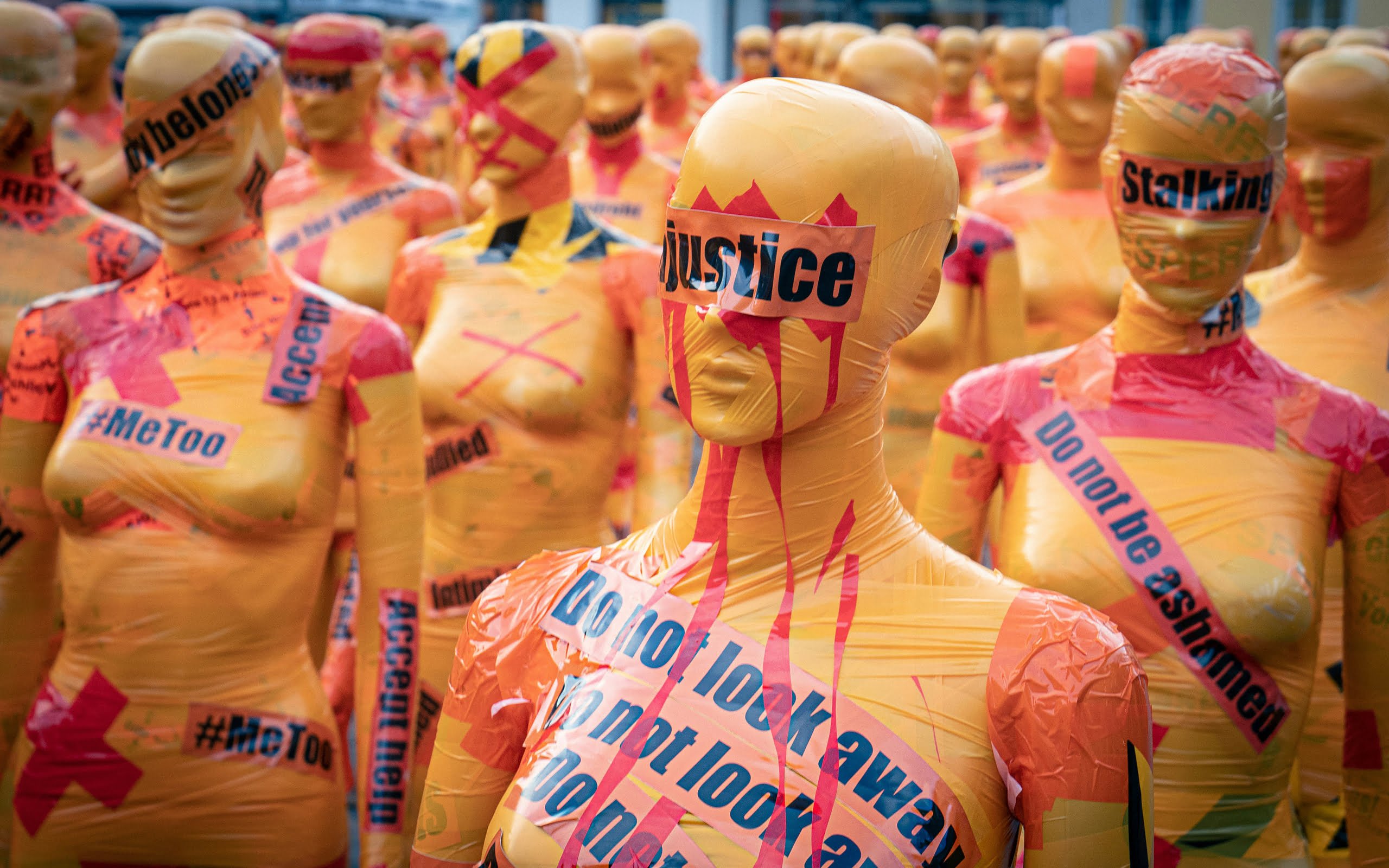
The #MeToo movement revealed how NDAs had been used for years to keep victims of sexual harassment and assault quiet, especially in Hollywood.
And let’s not forget whistleblowers like Edward Snowden, who faced serious legal trouble for revealing government secrets – even though many argue the public had a right to know.
What makes this type of censorship so tricky is that it’s often invisible. When the government bans a book, we know about it. But when a story never sees the light of day because an advertiser made a fuss or when a whistleblower stays quiet because of an NDA, we never even know what we’re missing.
And here’s the kicker—because private companies and individuals are doing this, not the government, it doesn’t technically violate the First Amendment. It’s a loophole big enough to drive a truck through.
So what does all this mean for us? Well, it can skew the public’s understanding of important issues, protect the powerful from facing the consequences, discourage investigative journalism, and create echo chambers where people only hear one side of the story, causing them to lose trust in the media and other institutions.
The Takeaway
Here’s the bottom line: Freedom of speech in America is more complicated than just what the government allows in a country where money talks, economic power can be used to keep people quiet in ways that aren’t always obvious.
The fight for free speech in America isn’t over – it’s just moved to a new battleground.
Hey everyone! Today, I want to talk about something that’s been on my mind lately – Israel. With all the news going around, it’s easy to get confused about what’s really happening there. So, I did some digging and boy, was I surprised!
First off, forget what you might have heard on Fox News or online forums. Israel isn’t just a country full of Jewish people. It’s way more diverse than that! Did you know that about one in five people living in Israel are actually Muslim? That’s right – Muslims make up the largest minority group in Israel.
Here’s a mind-blowing fact: there are about 2.1 million Muslim Israelis! That’s a lot of people. And get this – their numbers are growing. Back in 1990, only about 14% of Israel’s population was Muslim. Now it’s around 18%, and they think it might reach 25% by 2030. That’s a quarter of the population!
But here’s where it gets interesting. Even though there are more Muslim families in Israel than ever before, they’re actually having fewer kids. In 2022, Muslim Israeli women had an average of 2.91 children. Surprisingly, that’s less than Jewish Israeli women, who had about 3.03 children on average.
Now, you might be wondering, “What do Muslim Israelis do?” Well, they’re involved in pretty much everything! They work in politics and healthcare; some even serve in the military. In Jerusalem, the capital city, more than a third of the population is Muslim. That’s about 380,000 people!
And guess what? Muslim Israeli students are crushing it in school. Almost 75% of Muslims in Arab schools got their high school diploma. Even cooler? More Muslim women than men are going to college. You go, girls!
So, why am I telling you all this? Because it’s important to understand that the current conflict isn’t as simple as “all Muslims hating Jews.” It’s way more complicated than that. The fight is specifically between Israel and Hamas, a group that many countries see as terrorists.
Understanding Israel’s diversity helps us see the bigger picture. It’s not just about religion—people from different backgrounds live together, go to school, work, and try to make a life for themselves.
Next time you hear someone oversimplifying the situation in Israel, remember these facts. The world is rarely black and white – there are always shades of gray. And in Israel’s case, there are many colors in the mix!
What do you guys think? Did any of these facts surprise you? Let me know in the comments!
Today, we’re diving into a question that’s been bugging me for a while: What’s really keeping our society from going off the rails? Is it the good old Bible, the long arm of the law, or something else entirely? Buckle up because we’re about to take a wild ride through this age-old debate.
The Big Question
You know how it goes. Some folks swear up and down that without the fear of God, we’d all be running around like a bunch of hooligans. Others reckon it’s the threat of jail time that keeps us in line. But here’s the thing – what if they’re both wrong?
Now, I’m not here to ruffle any feathers or step on any toes. I’m just a curious guy with a penchant for digging into the nitty-gritty. So, let’s look at what the numbers tell us, shall we?
What the Stats Say
Alright, gather ’round for some mind-blowing facts. According to the United Nations Office on Drugs and Crime, Japan has the lowest murder rate in the world. Japan – a country where Judaism, Christianity, or Islam isn’t exactly the flavor of the month – is keeping its citizens from offering each other better than many Christian nations.
But wait, there’s more! Transparency International says Denmark is the least corrupt country out there. And last time I checked, Denmark wasn’t exactly known for its Bible-thumping ways.
Now, I’m not saying this proves anything definitively. But it sure makes you think, doesn’t it?
Religion: Not a Must-Have
Many people find comfort, community, and moral guidance in their beliefs, which is great as long as they don’t force their beliefs on others. However, statistics indicate that believing in God is not necessarily a requirement for maintaining a stable society.
The Law: Necessary, But Not the Whole Story
So, if it’s not religion, it must be the law keeping us in check, right? Well, yes and no. Laws are crucial, no doubt about it. They’re like the rulebook for our societal game. But here’s the kicker – every country has laws against murder, theft, and corruption. Yet, some places are safer and less corrupt than others. Makes you wonder, doesn’t it?
The Secret Ingredient: Culture
Here’s where things get interesting. What if it’s not just about having laws or religious beliefs, but about how they’re woven into the fabric of society?
Take Japan, for instance. They’ve got this whole harmony and respect thing going on. It’s not just words on paper – it’s a way of life. And Denmark? They’re all about transparency and social trust. It’s like it’s in their cultural DNA.
So, What’s Really Keeping Us in Check?
After diving into all this, here’s what I think:
Morality isn’t just a religious thing. You can be good without God, and some of the most peaceful places on Earth prove it.
Laws are important, but they’re not magic. It’s how people respect and follow them that counts.
The real MVP? It’s a mix of cultural values, education, social norms, and economic stability. It’s like a perfect recipe – you need all the ingredients to make it work.
Where Do We Go From Here?
Now, I’m not suggesting that in order to be moral, we should discard our law books or that people should throw out their Holy Books, as law and order is fundamental to society and everyone is free to believe what they believe, which is a private matter. However, perhaps we should consider placing more emphasis on cultivating a culture of responsibility, empathy, and mutual respect.
We must aim for a world where we do the right thing not because we’re scared of hell or jail, but because we genuinely care about each other. Sounds utopic? Well, Japan and Denmark beg to disagree.
The Takeaway
At the end of the day, what keeps society ticking isn’t just some ancient text or a bunch of laws. It’s us – you, me, and the guy next door – choosing to be decent human beings every single day.
So, the next time someone tries to tell you that we’d all go bonkers without religion or strict laws, maybe point them toward Japan or Denmark. Remind them that we humans are pretty capable of creating peaceful, ethical societies in all sorts of ways.
It’s not about which book you read or which laws you fear breaking. It’s about the values we choose to live by and the kind of world we want to create together.
What do you think? I’d love to hear your thoughts in the comments below!
Today, I wanted to share some thoughts on something that has been on my mind lately: the similarities between religion, nationalism, and ideology. These topics often come up in conversations, and I’ve noticed that they share some interesting characteristics.
Beliefs and Their Power
Religion, nationalism, and ideology are all powerful beliefs. They shape our values, influence our decisions, and give meaning to our lives. On their own, these beliefs can be deeply personal and even beautiful. They can provide a sense of community, purpose, and direction.
The Dark Side of Conviction
However, there’s a darker side to these strong convictions. When held in isolation, they can become self-destructive. We’ve all seen instances where extreme beliefs lead to conflict, division, and even violence. It’s a reminder that too much of anything can be harmful.
Susceptibility to Exploitation
One thing that really stands out to me is how susceptible these beliefs are to exploitation. People with strong feelings about religion, nationalism, or ideology can be easily manipulated. Leaders and groups with their own agendas often exploit these convictions to gain power and control.
Examples of Manipulation
Religion: Sometimes, leaders start groups that take advantage of people’s spiritual needs. They promise enlightenment but end up controlling their followers’ lives, taking their money or manipulating them emotionally. Another example is when groups twist religious teachings to justify harmful actions, convincing followers that they are doing something righteous. This preys on people’s faith in a harmful way.
Nationalism: Governments and political leaders often use national pride to influence public opinion. They might use propaganda to rally support for wars or strict policies, making anyone who disagrees seem unpatriotic. This usually involves spreading false information and creating an “us versus them” mentality. Politicians might also exploit national pride to promote policies against certain groups, convincing people that these groups are a threat to the nation, which stirs up division and hostility.
Ideology: Political parties frequently exploit ideological divides to influence society. They create an “us versus them” mentality to distract people from important issues and strengthen their own power. This often involves spreading false information and stirring up fears. Similarly, while many social movements start with good intentions, some leaders might take advantage of their followers’ passion for personal gain. They may push an agenda that benefits only a few rather than the broader cause, using the movement’s energy and resources for their own ends. This can lead to disappointment among followers and weaken the movement’s original goals.
Vulnerabilities in Convictions
It’s not just religion, nationalism, or ideology. Any strong conviction can become a vulnerability. When we feel passionately about something, we’re more likely to overlook the nuances and complexities of the situation. This makes it easier for others to manipulate our emotions and actions.
Finding Balance
So, what can we do about it? I think the key is finding a balance. It’s important to have strong beliefs and convictions, but we need to remain open-minded and critical. We should question the motives behind the messages we’re receiving and be wary of those who try to exploit our emotions.
At the end of the day, our values and principles should bring us together, not necessarily our beliefs.
Thanks for reading. I’d love to hear your thoughts on this topic. Feel free to share your experiences or opinions in the comments below.
Immigration has always been a hot topic in European discourse. From the waves of Turkish immigrants in Germany to Moroccan communities in the Netherlands, the challenges and triumphs of integrating into a new culture are manifold. While the common thread of Islam often ties these communities together, it is misleading and disrespectful to generalize all immigrants under a single religious or cultural label. As someone who has worked and lived in various parts of Western and Northern Europe, I have witnessed firsthand the complexities faced by Turkish immigrants, emphasizing the importance of understanding these nuances.
The Misconception of a Unified Muslim Identity
It is a common misconception that all Muslim immigrants in Europe share a unified identity. If Islam were the unifying force for Muslim European immigrants, we would see Moroccan immigrants in the Netherlands mingling effortlessly with Turkish immigrants. However, the reality is quite different. These two groups often do not get along, illustrating that cultural and national identities play a significant role beyond religious affiliation.
The Turkish Immigrant Experience
Having spent over a decade in Europe as a Turkish person born and raised in Turkey, I can speak specifically about the multiple-generation Turkish immigrants I had a chance to observe in Western Europe. It’s crucial to remember that many Turkish immigrants were invited to European countries to fill labor shortages in jobs that local citizens were unwilling to undertake. These jobs often involved conditions that were unacceptable for the local workforce, leading to an influx of unskilled laborers from Turkey, many of whom came from rural areas.
A Frozen Turkish Identity
An interesting phenomenon among Turkish immigrants is the preservation of a Turkish identity that no longer exists in Turkey. While Turkey has evolved socially, culturally, and politically, many Turkish immigrants cling to the version of Turkey they left behind. This frozen identity can create a disconnect not only with their host country but also with their homeland, as they try to preserve traditions and values that have since changed.
The Role of Education in Integration
Education plays a pivotal role in integration. In many European countries, immigrant children are often sent to religious schools by their parents, a choice permitted in the name of democracy. However, this segregation can hinder the integration process. Schools are where lifelong friendships are built and where children are exposed to diverse perspectives. When immigrant children are educated in environments limited to other Muslim children, they miss out on the opportunity to interact with peers from different backgrounds.
My Secular Education Experience
My personal experience with a strictly secular education highlights the benefits of a diverse learning environment. Throughout my primary and high school years, I formed relationships with children from various backgrounds, including conservative Muslims, modern Muslims, Jews, and Christians. These interactions enriched my understanding of different cultures and fostered a sense of unity and mutual respect.
The Need for Secularization in Education
For better integration of immigrant children, Europe needs to consider secularizing its education system, both private and state-run. Secular education would ensure that children from different backgrounds learn together, promoting inclusivity and social cohesion. It would also provide immigrant children with the opportunity to build friendships and networks beyond their immediate community, facilitating their integration into the broader society.
Challenges and Opportunities
The journey of integration is fraught with challenges, but it also presents numerous opportunities. By recognizing and addressing the unique experiences and needs of different immigrant communities, European countries can foster a more inclusive and harmonious society. This involves not only policy changes but also a shift in societal attitudes towards immigrants.
The Takeaway
In conclusion, the experiences of Turkish immigrants in Europe highlight the complexities of integration. Generalizing immigrants under a single religious or cultural label is both misleading and disrespectful. Understanding the nuances of each community, promoting secular education, and fostering inclusivity are essential steps towards better integration.