Tag: Secularism

  • How Europe and America Betrayed My Childhood Dream

    How Europe and America Betrayed My Childhood Dream

    For most of my life, I existed in a bubble. Born and raised in Istanbul, Turkey, to a fiercely secular family, my world revolved around a strict separation of religion and state. My education followed suit, devoid of any religious instruction. My social circle mirrored this — friends and family held similar beliefs, and conversations rarely ventured into theological territory. This, I naively assumed, was the norm everywhere. Europe and America, bastions of modernity and freedom in my mind, surely functioned the same way.

    This unshakeable conviction led me down a path of constant frustration. Turkish society, with its visible pockets of conservatism and religious influence, often grated on me. The occasional call to prayer, the headscarves sported by some women, the conservative news channels my grandparents religiously watched — all felt like anathema to my secular ideals. I’d indulge in endless conversations with friends, lamenting the state of affairs, convinced that life would have been smoother, more progressive, had I been born elsewhere. Europe, with its supposed secular utopia, or the United States, the land of the free and the home of the… well, not exactly strict separation of church and state, but surely a more relaxed approach compared to Turkey, seemed like the greener pastures.

    Then, the internet happened. The vast expanse of information it offered opened my eyes to a world far more nuanced than the one I’d constructed in my head. Social media, for all its flaws, became a window into the lives of people from across the globe. And that’s when I encountered them — the stories of people raised in deeply religious households in America, the experiences of those who attended strict, faith-based schools in the UK. Their narratives shattered the illusion I’d meticulously built.

    Sarah, a friend I made online who lived in a small town in the American Midwest, painted a picture of a life governed by strong Evangelical beliefs. Her family’s Sundays revolved around church services, and her social circle was largely confined to those who shared their faith. Discussions about evolution in her science class were fraught with tension, and her wardrobe choices were constantly scrutinized. John, from London, recounted his experiences at a prestigious private school steeped in religious tradition. Daily prayers, mandatory chapel services, and a curriculum that heavily emphasized religious studies were the norm. Their stories were a stark contrast to my own sheltered existence.

    These encounters forced me to re-evaluate my perspective. Here I was, complaining about the occasional headscarf or call to prayer, while others were grappling with a far more pervasive influence of religion in their daily lives. My frustration with Turkish conservatism suddenly seemed trivial compared to the experiences of Sarah and John.

    This realization was a humbling one. It exposed the naivety of my earlier beliefs. Here’s the truth — secularism, in its purest form, isn’t the universal standard everywhere. While Turkey might have its pockets of conservatism, it also offers a significant degree of freedom from religious influence in daily life. My education, devoid of religious indoctrination, empowered me to think critically and form my own beliefs. My social circle, a beautiful tapestry of diverse viewpoints, fostered tolerance and understanding.

    This newfound appreciation for my own reality didn’t erase the challenges Turkey faces. Religious conservatism remains a potent force, and navigating its influence requires constant vigilance. But it did shift my focus. Instead of yearning for a mythical European or American utopia, I began to see the value in working towards a more progressive and inclusive Turkey, one that embraces secularism while respecting the right to personal faith.

    My journey has been one of self-discovery, and it’s far from over. But one thing is certain — the grass truly isn’t always greener on the other side. Perhaps the key lies not in seeking out greener pastures but in nurturing the garden we already have. In the case of Turkey, that means fostering a society where secularism and religious freedom can coexist peacefully, where open dialogue trumps blind prejudice, and where progress is driven by mutual respect and understanding. It’s a tall order, but one that seems far more attainable now than ever before.


    The Path Toward Secular Turkey

    Turkey has a long and complex history when it comes to the role of religion in the state and society. While the Ottoman Empire was an Islamic caliphate for over 600 years, the modern Republic of Turkey, established in 1923 under Mustafa Kemal Atatürk, embarked on an ambitious path of secularization and Westernization.

    The Ottoman Empire allowed different religious groups to maintain their own laws and institutions under the millet system. However, Islam was the official state religion and the Sultan was also the Caliph, the supreme religious and political ruler of the Sunni Islamic world. In the 19th century, as the Ottoman Empire waned, reformist movements like the Young Ottomans and Young Turks pushed for modernization and secularization of the empire.

    After World War I and the collapse of the Ottoman Empire, Mustafa Kemal Atatürk founded the Republic of Turkey in 1923 with the goal of creating a modern, secular nation-state. Atatürk introduced a series of sweeping reforms aimed at separating religion from the state and embracing Western values. Some key reforms included:

    1. Abolition of the Caliphate in 1924, severing ties between religion and the state.
    2. Elimination of religious courts and education. The secular law codes replaced Sharia law.
    3. Banning religious clothing like the fez and giving rights to women like the adoption of a civil code.
    4. Replacing the Arabic script with the Latin alphabet to distance Turkey from the Arab world.
    5. State control and vocal criticism of Islam conflicted with Kemalist secular ideals.

    These top-down reforms met resistance from conservative and religious segments of society. However, Atatürk successfully implemented them due to his strong political will and support from the military and urban elite. Secularism, or laiklik in Turkish, became a core principle of the modern Turkish state and identity.

    Over the following decades, Turkey maintained its secular character despite the periodic rise of political Islam. However, tensions remained between secular Kemalists and groups seeking more integration of Islam into public life. It has been an ongoing negotiation to balance Turkey’s Muslim identity with its secular ideals and Western aspirations.

    In recent years under the AK Party government, there has been a perceived backing away from Kemalist secularism as religion has re-entered the public sphere. However, Turkey still officially defines itself as a secular state, making its experience negotiating the boundaries of secularism and religion a fascinating modern saga.

  • Faith is Personal, Not Public Property

    Faith is Personal, Not Public Property

    In our world, buzzing with a multitude of beliefs and ideologies, faith often ignites passionate debates and sharp divides. Yet, at its heart, faith is a deeply personal and intrinsic part of one’s life, going beyond the limits of public discourse. It’s a journey of self-discovery, a private quest to answer spiritual and existential questions and a testament to the inviolable freedom of thought and belief. Keeping faith personal is more than just good manners; it’s an acknowledgment of its profound and intimate nature.

    The Sanctity of Personal Belief

    Faith is a deeply personal and sacred part of one’s identity and often culture, intricately woven into who they are. It serves as a wellspring of meaning, purpose, and comfort, guiding us through life’s complexities and shaping our worldview. Reducing faith to mere casual conversation or subjecting it to public scrutiny strips it of its sanctity and diminishes its profound impact on the human experience.

    Moreover, faith is intensely subjective and multifaceted, with countless interpretations and expressions. It is a nuanced and ever-evolving journey, shaped by personal experiences, cultural influences, and individual beliefs. Attempting to dissect or analyze someone’s faith from an external perspective often leads to misunderstandings, oversimplifications, and unintentional offense.

    Respecting Personal Boundaries

    Imagine faith as a cherished family heirloom — something deeply personal and irreplaceable. Keeping it personal doesn’t mean locking it away in a vault. It’s about respecting its value and recognizing its inherent privacy. Just like you wouldn’t barge into someone’s most intimate moments, extend that same courtesy to their faith.

    By respecting the personal space around faith, we build a bridge of understanding. People feel comfortable exploring and nurturing their beliefs without the fear of judgmental eyes or unwanted advice. This creates a welcoming environment, a mosaic of diverse beliefs thriving side-by-side in harmony. It’s tolerance in action, paving the way for a more inclusive society.

    Avoiding Assumptions and Stereotypes

    Publicly dissecting or debating someone’s faith can unintentionally lead to assumptions, stereotypes, and generalizations. Faith is a deeply nuanced and multifaceted concept, rich with countless interpretations and expressions. Trying to understand or analyze another’s faith from an outside perspective often results in oversimplifications, misunderstandings, and even unintentional offense.

    By keeping faith personal, we avoid the pitfalls of making sweeping assumptions or perpetuating harmful stereotypes. We recognize that each individual’s faith journey is unique, shaped by personal experiences, cultural influences, and individual interpretations. This understanding fosters empathy, compassion, and a willingness to embrace the complexities and nuances of belief systems, rather than reducing them to narrow and potentially damaging generalizations.

    Fostering Meaningful Connections

    While faith may be personal, it does not necessarily preclude meaningful connections and shared experiences. By respecting the personal nature of faith, we create an environment where individuals feel safe to share their beliefs and spiritual journeys on their own terms, fostering deeper connections and understanding.

    When faith is shared voluntarily and with mutual respect, it can serve as a powerful catalyst for meaningful dialogue, personal growth, and the exploration of shared values and experiences. However, this sharing should be a organic and consensual process, free from coercion or pressure, allowing individuals to connect on a deeper level and gain insight into the rich tapestry of human spirituality.

    In a Nutshell

    In a world where everyone’s always debating and discussing things, it’s essential to remember that faith is really personal. It’s a deeply intimate part of someone’s life and it deserves respect and privacy. By keeping faith personal, we show that we respect individual beliefs, and it helps us understand and tolerate each other better. It also lets us form real connections and share experiences in a natural way.

    At the end of the day, faith is a journey of self-discovery and a way to show that everyone has the right to their own thoughts and beliefs. Letting people take this journey in their own time and on their own terms doesn’t just respect personal beliefs, it also makes for a kinder, more inclusive, and more peaceful society


    Further Reading: The Evolution of Faith

    The Roots of Faith in Ancient Societies Faith and religious belief systems have been a fundamental part of human civilization since the dawn of humanity. The earliest evidence of religious practices dates back tens of thousands of years, with ancient burial sites and cave paintings suggesting a belief in an afterlife and spiritual realms. As societies developed and grew more complex, so too did their belief systems, often centered around the natural world and the cycles of life, death, and rebirth.

    The Rise of Organized Religions

    As civilizations advanced and writing systems emerged, organized religions began to take shape. The ancient Egyptians, Mesopotamians, Greeks, and Romans all developed intricate belief systems with pantheons of gods, creation myths, and complex rituals. These religions were deeply intertwined with the social, political, and cultural fabric of their societies, influencing everything from architecture to laws and customs.

    The Abrahamic Faiths: Judaism, Christianity, and Islam

    The birth of the Abrahamic religions – Judaism, Christianity, and Islam – marked a significant turning point in the history of faith. These monotheistic religions emerged from the Middle East and spread across vast regions, shaping the course of human history and influencing countless cultures.

    Judaism, one of the oldest monotheistic faiths, traces its roots back to the covenant between God and Abraham, as described in the Hebrew Bible. Christianity, which grew out of Judaism, centered around the life and teachings of Jesus Christ and the belief in his divinity and resurrection. Islam, the youngest of the Abrahamic faiths, was founded in the 7th century CE by the Prophet Muhammad and is based on the teachings of the Quran.

    The Spread and Impact of World Religions

    As trade routes and empires expanded, world religions like Buddhism, Hinduism, Taoism, and Confucianism also spread across continents, shaping cultures and societies along the way.

    Buddhism, originating in ancient India, emphasized the path to enlightenment and the cessation of suffering through practices like meditation and non-violence. Hinduism, another ancient Indian faith, encompassed a rich tapestry of beliefs, deities, and philosophical concepts.

    In East Asia, Taoism and Confucianism emerged as influential belief systems, shaping the worldviews and social structures of societies in China and beyond.

    The Role of Faith in Society and Culture

    Throughout history, faith has played a central role in shaping societies, cultures, and worldviews. Religions have influenced everything from art and architecture to laws and social norms, often serving as the foundation for moral and ethical codes.

    Faith has also been a source of conflict, with religious differences and power struggles leading to wars, persecution, and oppression. However, it has also been a driving force for social justice, inspiring movements for equality, human rights, and peaceful coexistence.

    The Modern Landscape of Faith

    In the modern era, faith continues to evolve and adapt to changing social and cultural landscapes. While some traditional religions maintain their influence, new religious movements and spiritual practices have also emerged, reflecting the diversity of human experiences and beliefs.

    The rise of secular philosophies and the separation of church and state in many nations have also reshaped the role of faith in public life, challenging the traditional authority of religious institutions and sparking debates around the boundaries between faith and governance.

    Conclusion: The Enduring Significance of Faith

    Despite the challenges and changes brought about by modernity, faith remains a fundamental aspect of human experience for billions worldwide. Its history is a testament to the enduring human quest for meaning, purpose, and connection to something greater than oneself. As societies continue to evolve, the role and expression of faith will undoubtedly continue to adapt, reflecting the ever-changing tapestry of human civilization.

  • The Christian Founding of America?

    The Christian Founding of America?

    Some people argue for the Christian founding of America, claiming that the US was established on Christian principles and that its laws and institutions should reflect the values and teachings of Christianity. However, it’s important to examine what those Christian principles actually entail and whether they align with the liberal and secular ideals that also influenced the nation’s founding.

    Join us in exploring the historical and philosophical origins of Christianity and secularism, and how these differing worldviews have shaped the identity and principles undergirding the United States.

    What Is “Christian”?

    To answer the question if the US has a Christian founding of America, first, we must be able to define what “Christian” is. Christianity is far from being a monolithic or uniform religion, having many different branches, denominations, and interpretations of Christianity, each with its own doctrines, practices, and traditions. Some of these differences are based on historical, cultural, or theological factors, while others are based on personal or political preferences.

    For example, some Christians believe that the Bible is the literal and infallible word of God. In contrast, others believe it is a human and fallible document that must be understood in its historical and literary context. Some Christians believe that salvation is a gift of God’s grace that cannot be earned or lost, while others think that salvation depends on human actions and choices. Some Christians believe that the church is the visible and authoritative institution of God on earth, while others think that the church is the invisible and spiritual community of all believers.

    Said differences have led to conflicts and divisions among Christians throughout history, sometimes resulting in violence and persecution. For instance, medieval European nations believed they governed their countries according to Christian principles, but they also waged wars against each other and against other religions, such as Islam and Judaism. They also imposed their version of Christianity on their subjects, often suppressing dissent and diversity. Are these the principles to which some people are referring when they claim that the US has a Christian founding of America?

    The US was founded on liberal values, the political and moral values that emerged from the Enlightenment, a period of intellectual and cultural development in Europe and America in the 17th and 18th centuries. Liberal values include freedom, democracy, equality, human rights, tolerance, reason, and progress. Liberals believe that individuals have inherent dignity and worth and should be free to pursue their own happiness and interests as long as they do not harm others or infringe on their rights. Liberals also believe that governments should be based on the consent of the governed and that they should protect and promote the common good of the people.

    The founders of the US were deeply influenced by French thinkers of their era, such as Montesquieu, Voltaire, and Rousseau, who advocated for the separation of powers, the freedom of expression, and the social contract. They also drew inspiration from the English thinkers, such as Locke, Hobbes, and Hume, who defended natural rights, the state of nature, and empiricism. They also incorporated elements from the classical thinkers, such as Plato, Aristotle, and Cicero, who discussed the ideal forms of government, the nature of justice, and the role of virtue.

    The founders of the US applied these ideas to their own situation and created a new nation based on the principles of liberalism. They declared independence from the British monarchy and established a federal republic with a constitution and a bill of rights. They also recognized the diversity and pluralism of their society and tried to balance the interests and rights of the various states, regions, and groups. They also acknowledged the influence and importance of religion in their lives and guaranteed the freedom of religion for all citizens.

    So, while the Christian founding of America shaped some founders’ personal beliefs and moral frameworks, the nation’s founding philosophy and government were rooted in Enlightenment liberalism and secularism rather than a single Christian doctrine or interpretation. The Christian founding of America coexisted with a diversity of Christian and non-Christian influences in shaping the new nation’s core principles and structures.

    Mount Rushmore National Memorial, Keystone, US— Photo by John Bakator on Unsplash

    However, despite claims of a Christian founding of America, the founders of the US did not create a perfect or a Christian nation. They also made mistakes and compromises and left many issues unresolved or unaddressed. For example, they did not abolish slavery, and they did not grant equal rights to women, Native Americans, and other minorities. They also did not foresee the challenges and changes that would arise in the future, such as the Civil War, the Industrial Revolution, the World Wars, the Cold War, the Civil Rights Movement, the Vietnam War, the Watergate Scandal, the 9/11 Attacks, the War on Terror, and the Globalization.

    The US has evolved and adapted over time and has faced many crises and opportunities. It has also been influenced by many factors and forces, both internal and external, both religious and secular. One of these factors is secularism, which is the principle of seeking to conduct human affairs based on naturalistic considerations, uninvolved with religion. Secularism is most commonly thought of as the separation of religion from civil affairs and the state and may be broadened to a similar position seeking to remove or to minimize the role of religion in any public sphere.

    Secularism has different forms and meanings, depending on the context and the perspective. Some people view secularism as a positive and progressive value, that promotes rationality, science, and humanism, and that protects the rights and freedoms of all people, regardless of their religious beliefs or affiliations. Others view secularism as a negative and regressive value, that undermines morality, spirituality, and tradition, and that threatens the identity and values of the religious communities and individuals.

    Secularism has also been a source of debate and controversy in the US, especially in relation to the role and influence of Christianity in the public sphere. Some people claim that the US is a Christian nation, and that its laws and institutions should reflect the Christian principles and values. They argue that the founders of the US were Christians, and that they intended to create a Christian nation founded on Christian principles. They also argue that Christianity is the basis of the American culture and identity, and that it provides the moral and spiritual guidance for the nation. They oppose any attempts to limit or restrict the expression or practice of Christianity in the public sphere, such as in the government, the education, the media, or the courts. They also oppose any policies or actions that they perceive as contrary or hostile to the Christian principles and values, such as the legalization of abortion, same-sex marriage, euthanasia, or stem-cell research.

    Independence Day Celebration in the US, Photo by Grégoire Bertaud on Unsplash

    Some individuals assert that the United States is fundamentally a secular nation, with laws and institutions upholding the separation of church and state. They contend that the founding fathers were a diverse group, not exclusively Christian, and did not aim to establish a Christian nation. They emphasize that the U.S. is a melting pot of various religions and those without religious affiliations. Advocates for religious freedom for all, they urge the state to remain neutral in matters of faith. They champion the use of reason, science, and human rights in public affairs, and advocate for societal welfare. They also endorse policies and actions they believe align with secular principles, such as environmental conservation, poverty alleviation, peace promotion, and the enhancement of education and healthcare.

    These viewpoints are not inherently contradictory. Some individuals adopt a moderate stance, seeking harmony between the religious and secular elements of American society. They recognize the Christian founding of America as historically and culturally significant, yet also appreciate the nation’s multifaceted nature. They honor the rights of both believers and non-believers, striving for consensus and compromise on divisive issues. They value the insights and challenges presented by both religious and secular perspectives and endeavor to merge them constructively.

    The U.S. has evolved under the influence of secularism, yet it remains under the historical influence of the Christian culture introduced by its early European settlers. It grapples with this dual heritage, nurturing a rich religious tapestry alongside a robust secular tradition. The nation navigates a complex and fluid relationship with religion, paralleled by an ever-changing understanding of secularism. With its unique global standing, the U.S. bears significant responsibilities. It faces the ongoing challenge of defining itself as a secular nation, a Christian nation, both, neither, or something entirely distinct.

    In a Nutshell

    The debate surrounding the Christian founding of America is nuanced. While the nation’s founders were influenced by Christian morals and culture, concepts like freedom, democracy, and the separation of church and state were equally pivotal. America, as it stands today, is a tapestry woven from both religious and secular ideals, and it is this unique amalgamation that defines its character. As the country progresses, it continues to navigate the balance between religion and governance, striving to uphold freedom and justice for all citizens, albeit not always succeeding in excluding those politicians who leverage religion for their own agendas.

  • Does It Matter If a Scientist Is an Atheist, Christian or Muslim?

    Does It Matter If a Scientist Is an Atheist, Christian or Muslim?

    The interplay between personal beliefs and scientific objectivity has long been debated and scrutinized. While science is founded on empiricism, rationality, and impartiality, scientists are human beings with their own values, experiences, and worldviews. The question arises: Can scientists separate their personal convictions from their scientific endeavors, or do these convictions inevitably shape their approach and findings? This essay explores the complexities of this issue and argues for the importance of maintaining a clear distinction between religion and science to prevent scientific bias.

    The Pursuit of Objectivity

    Objectivity is a cornerstone of the scientific method. Science thrives on the ability to observe, measure, and interpret data without the influence of personal biases or preconceptions. Ideally, scientists should approach their research with an open mind, willing to follow the evidence wherever it leads, regardless of their personal beliefs or desires.

    However, achieving complete objectivity is a challenging endeavor. Scientists are not immune to the influence of their upbringing, cultural background, and life experiences. These factors can shape their perspectives and introduce unconscious biases, even in the most rigorous scientific investigations.

    The Role of Personal Convictions

    Personal convictions, whether religious, philosophical, or ideological, can potentially influence a scientist’s approach to their work. For example, a scientist with strong religious beliefs may be more inclined to interpret data in a way that aligns with their faith, consciously or unconsciously.

    It is important to note, however, that personal convictions do not inherently preclude objectivity. Many scientists with deeply held beliefs have made groundbreaking contributions to their fields while maintaining rigorous scientific standards and allowing the evidence to guide their conclusions.

    Separating Religion and Science

    To avoid inadvertently giving the impression of an atheist bias within the scientific community, it is crucial to maintain a clear separation between religion and science. Science operates within the realm of empirical observation and verifiable evidence, while religion concerns itself with matters of faith and spiritual beliefs.

    Introducing religious concepts or debates into scientific discourse can lead to confusion and undermine the integrity of scientific inquiry. Science should remain focused on understanding the natural world through rational and objective means, without the influence of religious dogma or supernatural explanations.

    Scientific Bias
    Photo by Milad Fakurian

    Atheist, Christian and Muslim Scientists

    When the religious beliefs of a scientist are highlighted, more often than not, it suggests that their scientific work is influenced by those beliefs, rather than simply being an aspect of their personal identity. Thus, emphasizing the number of atheist scientists to advocate for atheism can inadvertently reinforce a stereotype of bias, affecting both religious and non-religious scientists alike. 

    Science, as a discipline, is neutral and does not serve to affirm or negate the existence of deities. Therefore, it is prudent to avoid conflating atheism with scientific integrity or discovery.

    Embracing Diversity of Thought

    While maintaining objectivity is paramount, it is also important to recognize the value of diverse perspectives and approaches within the scientific community. Scientists from different cultural, religious, and philosophical backgrounds can bring unique insights and ideas that enrich the scientific discourse.

    By fostering an environment of open-mindedness and respectful dialogue, scientists can challenge one another’s assumptions, identify potential biases, and collectively strive for a more comprehensive understanding of the phenomena under study.

    Peer Review and Replication vs Scientific Bias

    One of the most effective safeguards against personal biases in science is the peer review process. Scientific findings are rigorously scrutinized by other experts in the field, who assess the methodology, data analysis, and conclusions for potential flaws or biases.

    Additionally, the principle of replication allows for independent verification of results, further reducing the impact of individual biases or personal convictions. If a study’s findings cannot be replicated by others, it calls into question the validity of the initial conclusions.

    In a Nutshell

    In conclusion, while personal convictions are an inherent part of the human experience, they should not be allowed to unduly influence the pursuit of scientific knowledge. Scientists must strive for objectivity and impartiality, relying on empirical evidence and rigorous methodology to guide their investigations.

    By maintaining a clear separation between religion and science, embracing diversity of thought, and upholding the principles of peer review and replication, the scientific community can mitigate the impact of personal biases and advance our understanding of the natural world.

    Ultimately, the goal of science is to uncover truth through rational inquiry and verifiable evidence, regardless of individual beliefs or convictions.

  • No Religion, No Morals? Examining the Complex Relationship
    No Religion, No Morals? Examining the Complex Relationship

    The age-old debate surrounding the relationship between religion and morality continues to spark heated discussions and differing perspectives. While some argue that a decline in religious beliefs will inevitably lead to a breakdown of moral foundations within societies, others contend that morality is a universal concept that transcends religious boundaries. This essay delves into the complexities of this intricate relationship between religion and morals, exploring the notion of universal morality and the challenges that arise when morality becomes intertwined with religion.

    The Universality of Morality

    At the core of human existence lies a fundamental set of ethical principles that guide our behavior and interactions with others. These principles, often referred to as universal morality, are grounded in the shared understanding that actions such as harming others or stealing are inherently wrong. Regardless of cultural, geographic, or societal differences, these basic moral guidelines remain constant, allowing individuals to navigate diverse landscapes with a sense of ethical grounding.

    One of the most compelling arguments for universal morality is its ability to foster cross-cultural understanding and cooperation. When individuals from different backgrounds can agree on fundamental ethical principles, it becomes easier to build bridges, resolve conflicts, and promote peaceful coexistence on a global scale. This shared moral framework transcends cultural differences and facilitates productive community interactions.

    Moreover, the universality of morality offers a sense of stability and consistency in an ever-changing world. As societies evolve and belief systems shift, universal moral principles act as a constant, providing a reliable foundation for ethical decision-making. This consistency is particularly crucial in an increasingly interconnected global community, where individuals from diverse backgrounds must navigate complex moral landscapes.

    Religion and Morals

    While the concept of universal morality presents a straightforward ethical compass, the intertwining of morality with religion often introduces complexities and contradictions. Religions undoubtedly play a significant role in shaping individuals’ and societies’ moral values and behaviors. However, these religious-based moral codes vary widely, leading to conflicting ethical beliefs and practices.

    One of the critical challenges arises when certain religious doctrines endorse practices that are considered morally problematic by broader societal standards. For instance, practices such as child marriage, marriage without consent, and even murder under specific circumstances may be supported by some religious teachings. These discrepancies between religious and universal morality can lead to moral dilemmas and ethical conflicts, making it challenging to establish a common ground for moral discourse.

    Furthermore, the effectiveness of religious-based morality as a guarantor of ethical behavior is called into question when deeply religious nations exhibit high levels of corruption and ethical misconduct. Conversely, some of the least corrupt nations are found in the Western world, where religiosity is less prevalent. This paradox raises doubts about the direct correlation between religion and adherence to moral codes.

    Reconciling Religion and Universal Morality

    As we navigate the complexities of this relationship, it becomes evident that a nuanced approach is necessary. While religion can provide a moral framework for some individuals and communities, it is crucial to acknowledge that ethical values based on religion can differ and may not always coincide with universally accepted standards.

    One potential solution lies in reinforcing a secular interpretation of morality that can unite diverse populations. By focusing on the shared ethical principles that resonate across cultures and belief systems, we can foster a sense of common ground and facilitate constructive moral discourse.

    Additionally, promoting critical thinking and ethical reasoning can help individuals navigate the complexities of moral dilemmas. By encouraging individuals to examine the underlying principles and consequences of their actions, rather than blindly following dogmatic religious teachings, we can cultivate a more nuanced understanding of morality.

    Moreover, religious institutions and leaders have a responsibility to re-evaluate and, if necessary, reform teachings that conflict with widely accepted moral norms. By aligning religious doctrines with universal moral principles, these institutions can play a constructive role in promoting ethical behavior and reducing moral contradictions.

    In a Nutshell: Religion and Morals

    The relationship between religion and morality is complex and multifaceted. While the concept of universal morality provides a foundation for ethical behavior that transcends cultural and religious boundaries, the integration of morality with religion often introduces challenges and contradictions.

    As our world becomes increasingly interconnected, it is crucial to acknowledge the limitations of religious-based morality and to reinforce a secular interpretation of morality that can unite diverse populations. By promoting critical thinking, ethical reasoning, and open dialogue, we can navigate the complexities of moral dilemmas and strive for a more ethical and just society.

    Ultimately, the pursuit of universal moral principles should not be seen as a rejection of religion but rather as an effort to find common ground and foster understanding among all people, regardless of their beliefs or backgrounds. By embracing the universality of morality while respecting religious diversity, we can create a more harmonious and ethical global community.

  • Atheism and the Separation of Church and State in America

    Atheism and the Separation of Church and State in America

    The United States has long prided itself on being a bastion of religious freedom and secularism, with a strict separation of church and state enshrined in the Constitution. However, the intersecting forces of Christianity, atheism, and the interpretation of secularism have created complex dynamics that both uphold and threaten true religious liberty in modern America. Let’s explore God’s role in the Separation of Church and State in America.

    The Founding Vision of Secularism

    When the Founding Fathers drafted the Constitution and Bill of Rights, they envisioned a secular government that would not officially endorse or be influenced by any particular religious doctrine. This idea of separating religious matters from affairs of the state stood in contrast to the state-sanctioned religions that had caused so much oppression and conflict throughout European history.

    By keeping the government secular and neutral towards religion, the Founders hoped to ensure that all citizens could freely practice their faith (or lack thereof) without facing discrimination or coercion. This secularism was meant to be a unifying force, creating an equitable public square where people of all beliefs could coexist. As Thomas Jefferson famously said, the government should erect “a wall of separation between church and state.”

    The Christian Nation Debate

    Despite this founding vision, there has long been a strain of political Christianity in America, asserting that the nation has an inherent Christian identity that should be reflected in its laws and institutions. Groups advocating this “Christian nation” narrative have pushed for policies like teaching creationism in schools, installing religious monuments on public property, and limiting rights around issues like abortion and LGBTQ equality.

    Proponents of this view often cite the religious beliefs of many Founders and historical references to Christianity in early American documents and events. They see secularism as an attack on the nation’s Christian heritage and values. Critics, however, argue that this interpretation is a misreading of history that would effectively establish a state religion, violating the First Amendment.

    The Rise of the Religious Right

    The debate over America’s secular or Christian identity took on renewed enthusiasm in the late 20th century with the rise of the politically powerful religious proper movement. Galvanized by issues like the Roe v. Wade Supreme Court decision legalizing abortion, these conservative Christian groups organized to inject their interpretations of Biblical morality into politics and policymaking at all levels of government.

    From advocating for socially conservative policies to mobilizing evangelical voters, the religious right became a potent political force. Its influence peaked during the Republican administrations of Ronald Reagan and George W. Bush. While the power of religious rights has ebbed and flowed in recent years, it remains a major factor shaping the national discourse around the role of religion in public life.

    Atheism and Anti-Religious Sentiment

    On the other side of the debate stand atheist activists who have pushed for a stricter separationist interpretation of secularism that would remove virtually all religious presence from civic affairs. Groups like the Freedom From Religion Foundation have launched legal battles to tear down public religious displays and halt practices like legislative prayer.

    While the constitutional rationale is to maintain a strict neutrality between religion and state, atheist rhetoric sometimes takes on a more militantly anti-religious tone that paints all religious influence as inherently oppressive. This has fueled a backlash from religious communities, who see it as an attack on their freedom of expression and an attempt to purge faith from the public square altogether.

    The atheist argumentation often hinges on equating true secularism with the absence of religion rather than state neutrality that allows religion to exist in society while being separate from political institutions. This narrow view has alienated many religious Americans and made them skeptical of the broader secularist cause.

    Finding the Balance in Separation of Church and State in America

    Between the religious right’s vision of a Christianity-infused public sphere and atheist groups’ desire to excise religion from civic life completely lies the founding model of secularism – a neutral government that neither promotes nor inhibits religious belief and expression. Polling consistently shows most Americans favor this balanced approach that allows personal faith while preventing a state-sponsored religion.

    Achieving this balance requires people of all faiths and none to respect America’s secular foundations while embracing the diversity of religious and non-religious views. Mainstream Christians must stand up to the excesses of the religious right and its attempts to impose a de facto Christian nationalism. At the same time, atheists should avoid the unproductive mockery of religion and recognize that secularism protects their rights as much as those of the devout.

    By working together to uphold the First Amendment’s delicate balance, believers, nonbelievers, and Americans of all persuasions can ensure a healthy pluralism where religious liberty truly means freedom for all. Secularism should be seen not as anti-religious hostility but as the impartial referee allowing faith to flourish in the private sphere while keeping dogma out of government.

    separation of church and state in america

    The Path Forward: Separation of Church and State in America

    Ultimately, the solution is not to glorify Christianity or atheism as America’s sanctioned worldview but to reinvigorate and defend the secular ideals laid out by the Founding Fathers. By maintaining a neutral government and fostering an environment where diverse beliefs can coexist without marginalization, the United States can remain a beacon of true religious freedom and democratic pluralism.

    This requires mutual understanding, vigorous civic engagement, and a commitment to the common good that transcends sectarian agendas. Christians must respect that they aren’t a privileged religious class. Atheists and secular activists must recognize that religion isn’t going away and respect its place in civil society. And all sides should support public policies and norms that protect the secular character of American democracy.

    When secularism works as intended, it creates a system where people practice their faith or lack thereof without interference and come together on common civic causes – united by shared values like freedom, equality, and human dignity. With open and pluralistic secularism as the standard, America can live up to its founding ideals and be a place where religious liberty truly means liberty for all.


    Further Reading: History of Separation of State and Church in America

    The history of the separation of church and state in America is a complex and fascinating journey that reflects the evolving relationship between religion and governance. From the earliest days of European colonization to the present day, this principle has been a cornerstone of American democracy, shaped by historical events, legal battles, and societal shifts.

    The concept of separating church and state has its roots in European history, particularly the religious conflicts that plagued the continent during the Reformation and Counter-Reformation periods. Many of the first European settlers in America were seeking refuge from religious persecution, and their experiences profoundly influenced the development of religious freedom in the New World.

    One of the earliest expressions of the separation of church and state in America can be found in the Virginia Statute for Religious Freedom, authored by Thomas Jefferson in 1777. This statute, which later served as a model for the First Amendment to the United States Constitution, declared that “no man shall be compelled to frequent or support any religious worship, place, or ministry whatsoever.”

    The First Amendment, ratified in 1791 as part of the Bill of Rights, enshrined the principle of religious freedom and prohibited the establishment of a state religion. It states, “Congress shall make no law respecting an establishment of religion, or prohibiting the free exercise thereof.” This amendment laid the foundation for the separation of church and state in America, ensuring that the government would neither promote nor interfere with religious beliefs and practices.

    Despite these constitutional protections, the relationship between religion and government in America has been the subject of ongoing debate and controversy. Throughout the 19th and early 20th centuries, various religious groups vied for influence in the public sphere, leading to conflicts over issues such as prayer in schools, government funding for religious institutions, and the teaching of evolution.

    One landmark Supreme Court case that helped to clarify the boundaries between church and state was Engel v. Vitale in 1962. In this case, the Court ruled that state-sponsored prayer in public schools violated the Establishment Clause of the First Amendment, further reinforcing the principle of secularism in the public education system.

    Another significant legal development came in 1971 with Lemon v. Kurtzman, which established the “Lemon test” for determining whether a government action violates the Establishment Clause. According to this test, a law must have a secular purpose, must not advance or inhibit religion, and must not result in excessive entanglement between church and state.

    In recent decades, debates over issues such as school vouchers, public displays of religious symbols, and the role of religion in public policy have continued to shape the interpretation and application of the separation of church and state in America. While the principle remains a fundamental aspect of American democracy, its precise boundaries and implications continue to be contested and refined through legal battles, political discourse, and societal change.

    In conclusion, the history of the separation of church and state in America reflects a constant tension between religious freedom and governmental authority. From the colonial era to the present day, this principle has been enshrined in law, tested in the courts, and shaped by the diverse religious landscape of the nation. While challenges and controversies persist, the separation of church and state remains a cornerstone of American democracy, ensuring that individuals are free to practice their faith without interference from the government and that the government remains neutral in matters of religion.

  • Child Marriage in Islam

    Child Marriage in Islam

    The concept of adulthood is understood differently across various cultures, societies, and religions. It’s typically associated with an individual’s legal and social rights and responsibilities, such as the ability to vote, drive, drink, and marry. Despite this general framework, there’s no global consensus on when a person transitions into adulthood and what we consider child marriage in Islam is an extension of it. Instead, many factors contribute to this determination, including the onset of puberty, which is the biological marker indicating reproductive maturity and the development of secondary sexual characteristics. In many religious traditions, particularly Judaism, Christianity, and Islam, reaching puberty is considered a significant step toward adulthood and an indication of suitability for marriage.

    However, secular societies often set a fixed age of consent, usually at 18, to define the threshold for marriage and other adult activities. This difference creates interesting questions about the relationship between religious beliefs and contemporary societal norms, especially concerning marriage. Historical cases like those of 16th-century Spanish King Philip and Prophet Mohammed demonstrate that in some contexts, marriage wasn’t consummated until both partners reached puberty, reflecting a religious and cultural understanding of adulthood.

    In the case of child marriage in Islam, interpretations may vary. Some consider puberty a clear sign of readiness for marriage, while others emphasize a broader perspective that includes emotional maturity and legal consent. This divergence in views highlights the complex dynamics between traditional religious practices and modern legal frameworks. It’s crucial to examine these historical precedents while also addressing the implications of these differing views on adulthood in the contemporary world, where there’s a growing emphasis on safeguarding the rights of minors and ensuring that marriage is a consensual and healthy institution.

    Child Marriage in Islam and Other Abrahamic Religions

    In Abrahamic faiths, adulthood often commences with puberty, signaling the shift from childhood to adult maturity. This perspective is entrenched in the scriptures and traditions of these religions. For instance, in Judaism, boys at 13 and girls at 12 reach the age of majority, known as bar and bat mitzvah, translating to “son and daughter of the commandment.” At this milestone, Jewish youth are tasked with adhering to religious laws and customs, and they gain eligibility to partake in synagogue and community activities. Similarly, Christianity views the onset of puberty as the age of reason or discretion, signifying the capacity to discern right from wrong and make ethical choices. Christian youth at this age are expected to confess their sins, partake in communion, and affirm their faith. In Islam, puberty marks the age of maturity or responsibility, denoting the duty to abide by Islamic precepts and rituals. Muslim youth are then expected to observe the five daily prayers, fast during Ramadan, give zakat (alms), and undertake the Hajj to Mecca if feasible.

    Secular societies often establish the age of consent and adulthood at a fixed number, usually 18, whereas Abrahamic religions take a different approach. They consider an individual’s physical and emotional maturity as a better measure of readiness for marriage. Thus, the beginning of puberty is viewed as a divine sign and authorization for marriage, as well as a natural and wholesome manifestation of human sexuality. This viewpoint is reinforced by numerous scriptural and historical references.

    • The Hebrew Bible’s Book of Genesis tells the tale of Isaac and Rebekah, who were wed when Isaac was 40 and Rebekah was 10. The Book of Numbers recounts the story of Zelophehad’s daughters, who gained the right to inherit their father’s land and wed their cousins upon reaching puberty.
    • The New Testament’s Book of Matthew lists the genealogy of Jesus, noting several women who entered marriage at young ages, including Ruth, who married Boaz at 12, and Mary, betrothed to Joseph at 13 or 14.
    • The Quran, in the chapter An-Nisa (The Women), mentions that the waiting period for divorced women yet to menstruate is three months, suggesting their eligibility for marriage. Similarly, the chapter At-Talaq (The Divorce) indicates the same waiting period for widowed women, implying they may remarry.
    • According to Hadith, the sayings and actions of Prophet Mohammed, he married Aisha, his youngest and most cherished wife, when she was six or seven and consummated the marriage when she reached puberty, at nine or ten. He also reportedly encouraged his followers to marry young and to seek virgin spouses.

    Anna of Austria and Her Uncle-Husband King Philip of Spain

    To illustrate the concept of marriage and its connection to puberty, consider a historical example from the 16th century. King Philip II of Spain, renowned for his multiple marriages, entered into a controversial union with his niece, Anna of Austria. Anna was sent to live with her uncle before she had reached puberty, but they did not consummate their marriage until she had passed this significant developmental milestone. This delay aligned with the religious and cultural beliefs of their era, marking the point at which their marriage could be blessed by God and completed.

    Although this practice might seem unconventional by today’s standards, it was in line with the norms of the 16th century. Marrying within the family was less stigmatized, and waiting until puberty was seen as a way to ensure that both parties were physically and emotionally ready for marriage. In this context, the marriage of King Philip and Anna of Austria was not solely a personal arrangement; it also had political motivations. The union aimed to strengthen ties between Spain and the Holy Roman Empire, ensuring that the Habsburg dynasty retained its influence and purity.

    This historical example underscores how cultural and religious norms can influence marriage practices, sometimes in ways that might clash with modern sensibilities. Today’s values emphasize individual rights, age of consent, and the protection of minors, recognizing the potential harms of child marriage and other practices that might undermine a person’s autonomy and well-being. By examining these historical cases, we can better understand the complexities of marriage traditions and the importance of safeguarding against practices that could be detrimental in contemporary contexts.

    Last Marriage of Mohammad

    The tradition of waiting to consummate marriage until after puberty is not confined to historical European royalty. For example, in the 7th century, Prophet Mohammed’s future wife was betrothed to him before reaching puberty, but their marriage wasn’t consummated until she had matured physically and emotionally. This practice reflects the Islamic belief that physical readiness and emotional maturity are key considerations for marriage.

    Although Prophet Mohammed’s final wife was not his niece, unlike King Philip’s situation, both cases exemplify the principle of postponing consummation until after puberty. In the case of Prophet Mohammed, the marriage to his last wife served multiple purposes beyond personal union—it aimed to strengthen ties with Abu Bakr, his close confidant and the father of the young bride, and to offer the child a stable environment after the death of her mother.

    These examples illustrate a shared understanding of the importance of maturity in marriage, while also showing how religious and cultural contexts can shape marriage practices. It’s important to recognize that while historical traditions like these can offer insights into past practices, contemporary views on marriage, child marriage in Islam, and age of consent have evolved. Today’s standards generally emphasize safeguarding the rights and well-being of minors, ensuring they have reached an appropriate level of maturity before entering into significant commitments like marriage.

    Secular societies, in contrast to religious viewpoints, have set the age of consent for marriage at 18 years. This is due to a variety of reasons, such as child protection, emotional maturity, and preventing forced or underage marriages. Unlike Abrahamic religions, which may consider the onset of puberty, secular values prioritize a specific age threshold.

    Some of the arguments in favor of this secular perspective are as follows:

    • Young individuals who enter into marriage often face a higher risk of experiencing physical, sexual, and psychological abuse from their partners or relatives, as well as health dangers like early pregnancy, complications during childbirth, and infections transmitted sexually. They are also at a greater risk of discontinuing their education, forfeiting economic prospects, and enduring social isolation and discrimination.
    • Youngsters in early marriage lack the total capacity to make informed and autonomous decisions about their futures, particularly concerning a commitment as significant and enduring as marriage. They are also emotionally unprepared to handle the demands and duties associated with marital life, including effective communication, compromise, and managing disagreements.
    • To prevent forced or underage marriages, it is crucial to recognize that children who marry early are often coerced or influenced by their families, communities, or situations, lacking genuine and complete consent. They frequently find themselves stripped of fundamental rights and options, including access to education, healthcare, and self-determination.
    Child Marriage in Islam
    Child Marriage

    In a Nutshell: Child Marriage in Islam

    The concept of adulthood is a complex and often debated topic, differing across cultures, societies, and religious traditions. It is commonly linked to the point at which a person gains certain legal and social rights and responsibilities, such as the ability to vote, drive, drink, and marry. However, there’s no universal standard for when someone is considered an adult, and various factors, including biology, culture, religion, and law, play roles in this determination.

    One significant factor often considered is the onset of puberty, which marks a biological transition signaling reproductive maturity and the development of secondary sexual characteristics. In many religious contexts, such as those found in Judaism, Christianity, and Islam, puberty is often viewed as a sign of readiness for marriage. However, this perspective can conflict with the fixed age-of-consent laws set by many secular societies, usually around 18, which define legal adulthood and the right to engage in adult activities. This tension raises important questions about the intersection between religious beliefs and contemporary societal values.

    For instance, child marriage in Islam has drawn attention due to differing interpretations of when a person is ready for marriage. Some interpretations align with traditional views that consider puberty as a threshold for marriage, while others stress a more contemporary approach, advocating for a higher age of consent. This divergence in views prompts discussions about how different societies reconcile traditional religious practices with modern legal standards and human rights.

    To understand the broader implications, we can look at historical examples where individuals, like the 16th-century Spanish King Philip and Prophet Mohammed, followed the custom of waiting until their partners reached puberty before consummating their marriages. These examples reflect a historical context where puberty was often used to mark adulthood. However, the current age of consent laws and the growing emphasis on human rights in many parts of the world suggest a shift towards establishing a clear, consistent legal framework for defining adulthood and protecting minors from potential harm.

    Overall, the concept of adulthood is complex and varies across different contexts. It requires a careful balance between respecting cultural and religious practices and ensuring the safety and well-being of all individuals, particularly minors. Addressing these challenges calls for a nuanced approach that considers the diverse ways societies understand adulthood and the need to protect individuals from potential exploitation or harm, especially within the context of marriage.

  • Life in  Istanbul: Surviving Istanbul’s Unwritten Rules

    Life in Istanbul: Surviving Istanbul’s Unwritten Rules

    Life in Istanbul, a city bridging continents, encompasses a rich mosaic of cultures and social strata, where the coexistence of extreme wealth and poverty paints a diverse portrait of human experience. Yet, amidst these contrasts, Istanbul stands as one of Europe’s safest cities, a testament to its resilient social fabric.

    Life in Istanbul: The Paradox of Proximity

    Many metropolises worldwide have become a symbol of wealth inequality, where the rich live in exclusive neighborhoods, and the poor live in the city’s outskirts, far from the affluent areas. However, Istanbul stands out, as it has managed to break this pattern. In this bustling city, grand palaces and humble homes coexist, where people lead vastly different lives but share the same streets, air, and city spirit.

    Despite the differences in lifestyles, the residents of Istanbul have learned to coexist peacefully, creating a sense of community and mutual understanding that is rare in a metropolis of this size, making Istanbul a unique blend of cultures and traditions, making Istanbul a melting pot of diversity.

    Of course, this proximity can sometimes lead to tensions, but the people of Istanbul have learned to embrace their differences and work towards a common goal of unity and harmony, making Istanbul a truly special city where diversity is celebrated and inclusivity is the norm.

    Safety amid Inequality

    The safety of Istanbul is a miracle of sorts, especially when viewed through the lens of income inequality. Despite its economic disparities, the city has managed to maintain a remarkable level of safety and order thanks to a complex interplay of cultural norms, community policing, and perhaps a shared understanding that harmonious coexistence benefits all.

    While Istanbul is a bustling metropolis, with all the usual precautions that come with any big city, there are certain areas that one might wish to avoid after dark. However, it’s also worth noting that the watchful eye of a neighbor can be a more effective deterrent than any security system.

    In fact, the city’s culture of community policing is one of the key pillars of its safety. Neighborhoods are tightly knit, and residents look out for one another, often forming informal watch groups. This sense of community and shared responsibility is reinforced by the police force, which works closely with residents to maintain safety and order. Overall, Istanbul’s safety is a testament to the power of cultural norms and community cohesion to overcome the challenges of economic inequality and ensure a harmonious coexistence for all.

    Bosphorus — Photo by Mert Kahveci on Unsplash

    Life in Istanbul: Understanding Turkish Conservatism

    Outsiders often misunderstand Turkish conservatism, which is far from being a monolith but rather a spectrum of beliefs and practices that can be both traditional and progressive.

    In Istanbul, conservatism manifests in a culture of discretion. The rule of thumb is that you can do anything as long as it is consensual, and you make sure that you don’t openly discuss every aspect of your life. It is a conservatism that respects privacy and personal choice, one that is less about imposing beliefs and more about living and letting live.

    For example, homosexuality was decriminalized as early as the 19th century by the palace, and today, Istanbul has a lively gay scene; however, for most people, being openly gay is not on the table.

    The Istanbulite Bubble

    Like residents of any large city, Istanbulites have mastered the art of creating personal spaces within the urban sprawl. They build bubbles filled with familiar faces and shared values, carving out a sense of home in a city constantly in flux. These bubbles are not isolating but rather a means of finding stability and comfort. For those within them, the rest of the country and the world may seem distant, but it is a distance born of contentment rather than ignorance.

    Life in Istanbul: Navigating the Urban Landscape

    Like any big city, life in Istanbul is governed by unspoken rules. For both women and men, the secret to a harmonious life lies in mastering the art of maneuvering through the city’s bustling environment. It involves discerning when to participate and when to withdraw when to voice opinions, and when to stay quiet. It revolves around showing respect – respect towards the city, its unique pace, and its inhabitants, who, despite their diverse backgrounds, are all Istanbul residents at their core.

    Sveti Stefan Church in Istanbul — Photo by Mert Kahveci on Unsplash

    In a Nutshell

    Istanbul’s tale is one of coexistence and resilience. It is a city where life’s contradictions are prominently showcased, yet they do not separate but instead enhance the shared experience. The safety and unity in Istanbul are not coincidental but rather the outcomes of a society that prioritizes community over discord and diversity over segregation. In this city, the underprivileged and the affluent may reside in close proximity, but they have more in common than just a location – they share the essence of Istanbul, which is as timeless as the Bosphorus itself.

  • Turkey—Islam Relationship Is Not What You Think

    Turkey—Islam Relationship Is Not What You Think

    Turkey, a country at the crossroads of East and West, has long been a melting pot of cultures, traditions, and religions, contributing to its complex relationship with religion, particularly Islam, the religion of the vast majority at birth due to state policies. However, beneath the surface of these official records, the religious landscape of Turkey is far more nuanced and diverse than it might appear.

    Statistical Overview of Religious Affiliation

    The Turkish state records the religion of individuals at birth based on their parents’ faith, leading to an official figure that categorizes virtually the whole population as Muslim. However, this surface-level statistic, which makes no difference in anyone’s life, masks the country’s complex tapestry of belief and non-belief. Almost no one is concerned about the accuracy of this data, and most people who are incorrectly registered believe that it is none of the state’s business that they believe or disbelieve, leaving the registration as is.

    However, according to the Turkish Statistical Institute, although a significant portion of the population is registered as Muslim, there is a growing trend of religious reidentification among the younger generations, which the Pew Research Center agrees.

    A comprehensive study conducted by the Pew Research Center reveals that the percentage of individuals identifying as atheists or deists is rising at approximately 6%, a notable increase from previous decades, signaling a gradual but significant shift in religious attitudes.

    The Spectrum of Belief Within Islam

    Turkey is not just another Muslim-majority country. Delving deeper into the beliefs of Turks who identify as Muslim, it becomes evident that there is a broad spectrum of religious practice and interpretation. A national survey found that while a majority of Muslims in Turkey express belief in core Islamic tenets, there is considerable variation in the observance of traditional practices. For instance, the percentage of Muslims who regularly perform the five daily prayers along with Mosque attendance is significantly lower than might be expected, suggesting a more personalized approach to religious practice.

    Moreover, the same survey indicates that a significant number of Muslims in Turkey do not see adherence to traditional practices such as fasting during Ramadan or regular mosque attendance as essential to their faith, highlighting a broader trend towards a more individualized form of Islam, which prioritizes personal belief and moral values over strict ritual observance.

    Secularism, Atheism, and the Public Sphere

    The distinction between secularism and atheism is crucial in the Turkish context. While secularism advocates for the separation of religion from public life, it does not inherently reject the presence of religious beliefs within society. This nuanced understanding of secularism allows for diverse religious expressions and beliefs, including those that may not fit neatly into traditional categories. It’s a perspective that acknowledges the complexity of faith in the modern world, where ancient scriptures may not directly address the challenges of contemporary life.

    Statistical data support this trend, with more Turks supporting secular values, including the separation of religion and state. A survey by the Education and Science Workers Union (Eğitim-Sen) found that a majority of respondents favored maintaining Turkey’s secular education system, reflecting a broader societal preference for keeping religious beliefs out of public institutions.

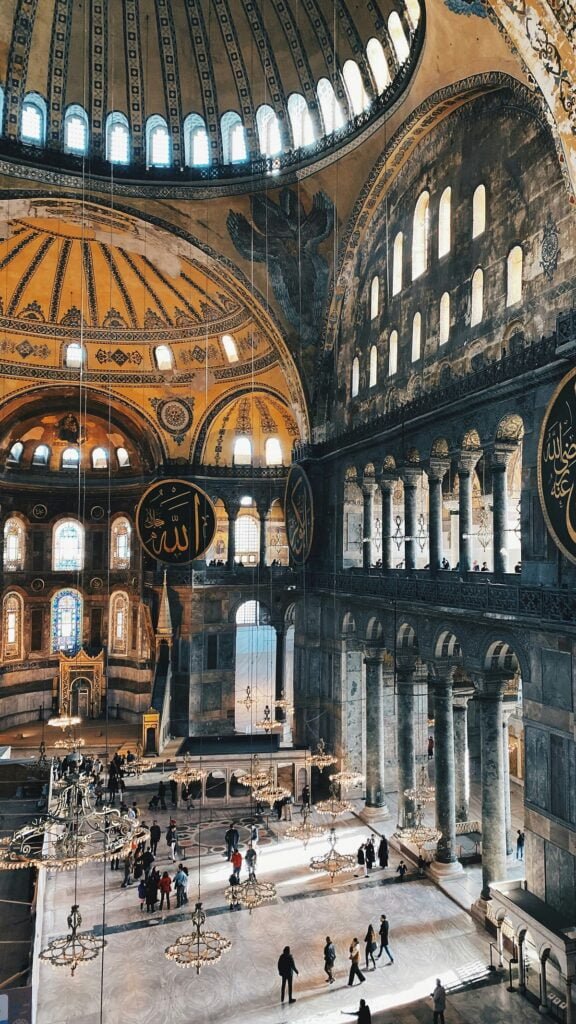
    View into the Hagia Sophia from the upper floor — Photo by Linus Mimietz on Unsplash

    Atheism Has No Place in Politics

    While there are numerous openly atheist Turkish thinkers, journalists, writers, and artists, some of whom are considered national treasures, atheism in Turkish politics is unheard of. This may have several reasons, but the biggest is perhaps that secularist atheists would see discussing atheism publicly and advocating for political changes as contradictory to secular values. Additionally, they may believe that being openly atheist would make them appear biased and hinder their ability to advocate for secularism since the main message of Turkish secularists is that atheism and secularism are unrelated.

    On the other hand, populist populations would likely aim to make any attempts by an openly atheist politician to enforce secularist principles seem like a war against Islam.

    Ultimately, thanks to the fact that Muslim secularist politicians aim to keep religion personal and private, separate from politics. As a result, Muslim secularists and atheist secularists are largely indistinguishable, and atheist secularists believe they do not have to advocate for secularism on their own since secularism is to protect everyone.

    Given the current statistical trends, it is plausible to project that the number of individuals identifying as atheists, deists, or non-traditional Muslims will continue to grow. This reflects a global trend of religious disaffiliation, particularly among younger generations who often prioritize personal experience and scientific understanding over traditional religious authority. My personal view is that more and more Turks leave organized religion altogether and identify themselves as deists.

    Turkish Deism

    Deism is a philosophical and religious viewpoint that posits the existence of a supreme being or creator, often referred to as “God,” based on reason and observation of the natural world rather than on revelation or religious scripture. Deists typically believe that this supreme being created the universe and set it in motion but does not intervene in its affairs through miracles or divine revelation. Instead, deists argue that the natural world operates according to rational laws established by this creator.

    Deism emerged during the Enlightenment period in Europe in the 17th and 18th centuries and was influential among many intellectuals, including thinkers like Voltaire, Thomas Paine, and Thomas Jefferson.

    It is not surprising that the Turkish flavor of deism is unconventional. Individuals who identify themselves as deists in Turkey typically believe in a creator who may or may not intervene in the day-to-day workings of the universe, allowing prayer as a final option. Moreover, Turkish deists often think that humans are put to the test in this world. Any action that harms others or any inaction that contradicts common decency is considered a ‘sin.’

    In a Nutshell

    As depicted through statistical data, Turkey’s evolving religious landscape illustrates a complex interplay of traditional beliefs, secular values, and a growing inclination towards personal spirituality, suggesting a future in which Turkey’s religious identity will be increasingly characterized by diversity, pluralism, and individual choice, challenging conventional narratives and paving the way for a more inclusive understanding of faith in the modern world.

  • American Atheists Are Weaker Together

    American Atheists Are Weaker Together

    Many people over thirty can attest to the difficulty of making new friends outside of work, especially if you have moved to a place as an adult. Therefore, as an expat living in New York, I thought attending an event for atheists in the Upper West Side might be an excellent way to meet like-minded people. However, when I checked the schedule for the event, I suddenly got filled with guilt and confusion and eventually decided not to go. Only years later, I realized that the cause of my guilt that day was the fact that attending a meeting of atheists went against my secularist principles.

    The Rise of Evangelicals in the US

    Evangelicalism has been a force in American politics since at least the 19th century, but its direction and influence have fluctuated over time. The modern alignment of evangelicals with the Republican party can be traced back to the civil rights era, particularly following the Brown v. Board Supreme Court decision, which outlawed public school segregation. In response, white evangelical communities created private “segregation academies” as a form of opposition to desegregation, framed as an expression of religious freedom rather than a defense of racial segregation.

    Evangelicals’ political engagement became more pronounced in the 1980s, as they emerged as a key Republican voting bloc, especially during Ronald Reagan’s and George W. Bush’s presidencies.

    American evangelicals’ active political engagement and strong Republican partisanship are relatively new and have significantly impacted presidential elections. The federal government’s intervention in local autonomy and the perceived favoring of African Americans and Latinos over whites were among the factors that led white evangelical leaders to argue for a political shift toward the modern Republican Right.

    Moreover, the backlash against right-wing evangelicals is also reshaping American politics and faith. Some sociologists believe that the rising number of non-religious Americans is a reaction against right-wing evangelicals. The movement’s insertion of religion in public debate and uncompromising style of public discourse has alienated many non-adherents and members of the larger public.

    Evangelicalism’s influence extends well beyond its religious orbit, significantly influencing American politics and culture since the 1970s, culminating with the Reagan Revolution and the rise of the Religious Right. Politically, evangelicals are highly active in advancing anti-abortion, anti-same-sex marriage, and “family values” positions to restore the country to its perceived Christian roots. However, it’s important to note that not all evangelicals agree about politics, and within evangelicalism, there exist racial differences.

    Photo by Tyler Nix on Unsplash

    The Rise of Irreligion in the US

    Although atheism is often viewed with suspicion in the public sphere historically, it has nonetheless played a role in shaping the secular and liberal aspects of American culture, particularly since the mid-20th century.

    In response to the surge of Christian fundamentalism in the 1920s, atheists launched legal initiatives to defend civil liberties and contest the intertwining of church and state, resulting in the emergence of influential figures such as Madalyn Murray O’Hair, who founded American Atheists in 1963 and served as its president until 1986. O’Hair was a staunch advocate for atheism and the strict separation of church and state, famously challenging mandatory prayer and Bible reading in public schools through the landmark Murray v. Curlett lawsuit, which was consolidated with Abington School District v. Schempp (1963) and led to a Supreme Court ruling that deemed such practices unconstitutional.

    The political leanings of atheists and agnostics tend to skew towards the left, and their impact has been notably significant within the Democratic Party. American atheists and agnostics are generally more politically active than white evangelicals. For instance, in 2020, 18% of atheists and 16% of agnostics reported participating in a political march or rally, compared to just 5% of white evangelicals. Moreover, half of all atheists and 43% of agnostics made political donations, highlighting their engagement and influence in political matters.

    Photo by Timon Studler on Unsplash

    Evangelicals versus Secularism

    The frustration of American atheists is understandable given Evangelicals’ history of making political demands that conflict with the principle of secularism.

    For example, the advocacy for school prayer and Bible readings in public schools by evangelical groups reflects their desire to see their religious convictions reflected in the educational environment. This has been a contentious issue, as it directly challenges the secular principle of separating church and state enshrined in the U.S. Constitution. The Supreme Court has historically ruled against such practices, citing the Establishment Clause of the First Amendment, which prohibits the government from making any law respecting an establishment of religion.

    On the topic of abortion, evangelical Christians have been vocal in their opposition, advocating for legislation that would limit or outright ban the procedure. This stance is often perceived as an attempt to legislate morality based on religious beliefs, which conflicts with the secular framework of the nation. The debate over abortion rights continues to be a polarizing subject, with evangelicals playing a significant role in the political discourse surrounding it.

    Regarding LGBTQ+ rights, there has been significant resistance from evangelical organizations to laws that aim to protect these rights, including same-sex marriage and anti-discrimination statutes. Evangelicals often argue that such laws are contrary to their religious doctrines, which has led to a complex dialogue about the balance between religious freedom and civil rights.

    Some evangelicals’ push for the inclusion of creationism or intelligent design in public school science curricula is another example of the tension between religious beliefs and secular education. Critics argue that teaching creationism in science classes undermines the scientific method and conflates faith with empirical inquiry.

    Lastly, the efforts to maintain or erect religious symbols on public property have sparked debates about the role of religion in public spaces. While evangelicals assert that these symbols are part of the country’s heritage, opponents argue that their presence on government property violates the principle of secularism and the separation of church and state.

    These examples highlight the ongoing debate regarding the impact of religious beliefs on public policy and the degree to which they ought to inform a secular society’s laws and cultural norms. This includes monuments on public property, which may conflict with secularist ideals.

    These demands reflect a broader debate about the role of religion in public life and the extent to which religious beliefs should influence government policy and legislation. While evangelicals may downplay religious expression in certain secular collaborations, their political demands often emphasize the country’s “Christian heritage” and promote forms of ethnoreligious nationalism.

    Photo by Jed Villejo on Unsplash

    Atheism versus Secularism

    The personal conviction in the existence or non-existence of a deity is an intensely private matter. Asserting one’s atheism in the context of political advocacy is no more appropriate than invoking one’s Christianity for the same purpose. Public declarations of atheism, coupled with calls for changes to uphold secularism, can be misconstrued as an antagonistic stance against religion, providing fodder for populist politicians to manipulate the narrative. In the collective struggle for secularism, atheists are weaker together unless they side with secularist theists.

    Madalyn Murray O’Hair’s activism serves as a case in point. The question arises whether her intent was to challenge religious beliefs or to reinforce the separation of church and state. The cessation of mandatory prayer and Bible reading in public schools was not a concession to atheistic preferences but rather a reaffirmation of secular principles. The outcome represented a triumph for secularism, not atheism.

    It is imperative, particularly for Americans, to discern that just as some may exploit religious sentiments, others may leverage anti-religious sentiments for their ends. Political movements should thus operate within the framework of secularism, advocating for reforms that fortify secular values rather than pursuing an agenda aimed at a future devoid of religion. The focus should remain on preserving the secular fabric of society, ensuring that personal beliefs, whether religious or atheistic, do not infringe upon the neutral governance of a pluralistic nation.

    The challenge for American atheists is not to distance themselves from their beliefs but to find common ground with those who, while holding different metaphysical views, are committed to a secular state. This approach requires a nuanced understanding of secularism, which recognizes the value of religious freedom as much as it does the absence of religion in governmental affairs. It’s about advocating for a public sphere where religious beliefs do not dictate policy, but also where atheism is not positioned as the only rational outcome of a secular society.

    In navigating the complexities of American politics and society, atheists might find it more productive to focus on issues of mutual concern with secular theists. These issues can range from defending science education from religious encroachment to ensuring that laws are based on reason and evidence rather than scripture. By doing so, they can demonstrate that secularism does not equate to atheism but to a broader principle of keeping government and religious institutions separate for the benefit of all, regardless of personal belief.

    This strategy also involves engaging in broader coalitions that might include religious groups with a history of advocating for the separation of church and state. Such alliances can be powerful, as they showcase a united front against the imposition of any single belief system on the diverse tapestry of American society. In these coalitions, atheists can most effectively contribute to preserving and strengthening secular democracy.

    Moreover, atheists must be vigilant in their advocacy, ensuring that their efforts do not inadvertently mirror the exclusivity they criticize in religious fundamentalism. This means embracing a pluralistic approach to secular activism, one that welcomes diverse voices and perspectives, including those of religious minorities who often face the brunt of theocratic policies. By doing so, atheists can help build a more inclusive movement that better represents the varied landscape of American belief and unbelief.

    In a Nutshell

    While the instinct among atheists to gather and advocate for a secular society is understandable, their efforts might be more impactful if they adopt a strategy emphasizing inclusivity and coalition-building. By working alongside secular theists and other allies, atheists can help foster a society where secularism serves as a foundation for freedom and equality, not as a battleground for religious dominance. This approach not only aligns with the principles of a pluralistic society but also strengthens the cause of secularism itself, ensuring that it remains a safeguard for all Americans, believers and non-believers alike.