Blog

  • Daniel Dennett and Lives Dedicated to an Illusion

    Daniel Dennett and Lives Dedicated to an Illusion

    In philosophy and public discourse, few statements have stirred as much controversy as the one attributed to Daniel Dennett, a prominent American philosopher known for his work on consciousness, free will, and the philosophy of mind. The quote in question goes, “There’s simply no polite way to tell people they’ve dedicated their lives to an illusion.” The sentiment Dennett expresses, according to a 2013 New York Times article, is problematic on multiple levels. Let’s delve into why this statement, regardless of its origin, is indefensible and how it undermines constructive dialogue, personal autonomy, and the very foundations of philosophical inquiry.

    There’s simply no polite way to tell people they’ve dedicated their lives to an illusion.
    Daniel Dennett

    The Arrogance of Certainty

    Daniel Dennett’s statement is troubling because it presupposes that the speaker has an infallible grasp on what constitutes reality versus illusion. This is a grandiose claim, especially considering that even in the hard sciences, our understanding of reality is constantly evolving. In philosophy, the nature of reality has been debated for millennia, from Plato’s allegory of the cave to modern discussions of simulation theory. To claim certainty in such a context is not just arrogant; it’s antithetical to the spirit of philosophical inquiry.

    Rudeness as a Philosophical Tool

    Moreover, the quote implies that it’s acceptable, even necessary, to be impolite or rude when conveying this supposed truth, which makes the statement truly indefensible. Rudeness and disrespect are not philosophical tools; they’re barriers to understanding. When we demean or belittle someone’s beliefs, we don’t open their minds; we close them. People naturally become defensive when attacked, making them less likely to engage with new ideas. This is basic psychology, not philosophical rocket science.

    The Myth of the Impolite Truth

    The idea that there’s “no polite way” to convey a message is also logically flawed. Politeness is not about softening hard truths; it’s about respecting the humanity of the person you’re addressing. It’s about recognizing that even if you believe someone is wrong, they’re still thinking, feeling, and deserving of dignity. Philosophers like Immanuel Kant argued for treating people as ends in themselves, not merely as means. Even if you believe someone’s life is built on an illusion, treating them rudely reduces them to a target for your supposed wisdom, violating their autonomy and dignity.

    The Perils of Intellectual Elitism:

    Furthermore, the quote smacks of intellectual elitism. It suggests that the speaker has reached a level of enlightenment that gives them the right to judge others’ lives. This is not only arrogant but also contradicts the democratic ideal of philosophy. From the Socratic dialogues to modern-day discussion forums, philosophy thrives on the exchange of ideas among equals. When we elevate ourselves to judges of others’ lives, we stifle this exchange. We create an us-versus-them mentality where “we” have the truth, and “they” live in illusion. This is the language of dogma, not philosophy.

    The Psychological Impact of Judgment

    Let’s also consider the psychological impact of such a statement. Telling someone they’ve wasted their life or dedicated it to an illusion is not a trivial matter. It can lead to existential crises, depression, or a loss of purpose. Even if you believe you have the truth, is it ethical to potentially shatter someone’s psychological well-being? Philosophers like John Stuart Mill argued for the harm principle — that our actions are only justifiable if they prevent harm to others. Causing psychological harm to prove a philosophical point is, at best, ethically dubious.

    The Subjectivity of Meaning

    The quote also fails to consider the subjective nature of meaning and value. What one person considers an illusion might be the very thing that gives another’s life purpose. Consider religious believers. To an atheist, their beliefs might seem illusory. But for the believer, their faith might provide comfort, community, and a framework for ethical living. Who are we to say their lives are wasted? As existentialist philosophers like Jean-Paul Sartre argued, we create our own meaning. Imposing our definition of a “meaningful life” on others is a form of bad faith.

    The Dynamic Nature of Lives

    Moreover, the idea that we can definitively judge someone’s life as wasted or dedicated to an illusion is shortsighted. Lives are not static; they’re ongoing narratives. Someone you believe is living in illusion today might have an epiphany tomorrow. Or they might use their “illusory” beliefs to do tangible good in the world. History is replete with examples of people whose beliefs we might consider misguided but who nevertheless made positive contributions. To dismiss their lives as wasted is to ignore the complexity of human existence.

    The Role of Doubt in Philosophy

    The quote also ignores the role of doubt and uncertainty in philosophical growth. Socrates, often considered the father of Western philosophy, famously claimed that the only thing he knew was that he knew nothing. This humble acknowledgment of our limitations is a cornerstone of philosophical inquiry. When we become so certain of our views that we feel justified in rudely imposing them on others, we’ve lost this humility. We’ve closed ourselves off to the possibility that we might be wrong, that there might be value in perspectives we currently dismiss as illusions.

    The Misuse of the Quote

    Another problematic aspect of the quote is its potential for misuse. As you rightly point out, it wouldn’t seem out of place coming from a religious fundamentalist. Imagine a zealot using this logic to justify rudeness towards non-believers. “There’s no polite way to tell atheists they’re going to hell,” they might say. This reveals the danger of the quote’s logic. It can be used to justify rudeness and intolerance from any ideological standpoint, not just a secular or philosophical one. In endorsing such a statement, we provide ammunition to dogmatists of all stripes. 

    The Power of Kindness in Persuasion

    The quote also fails to account for the persuasive power of kindness and respect. History shows that minds are changed more often by compassion than by confrontation. Consider figures like Martin Luther King Jr. or Mahatma Gandhi. Their success lay not in rudely dismissing their opponents’ views but in appealing to shared values with dignity and respect. In philosophy, too, the most influential thinkers are often those who engage opposing views with rigor and respect, not those who dismiss them as illusions.

    The Fallacy of Binary Thinking

    Moreover, the quote assumes a binary: either you agree with me, or you’re living in illusion. This black-and-white thinking is the antithesis of nuanced philosophical discourse. Reality is complex, and so are people’s relationships with it. Someone might hold some beliefs we consider illusory while having profound insights in other areas. By labeling their entire life an illusion, we miss the opportunity to learn from those insights. We engage in the fallacy of ad hominem, attacking the person rather than engaging with their ideas.

    The Social Context of Beliefs

    The quote also overlooks the social context of beliefs. Our views are shaped by our upbringing, culture, and experiences. Someone born into a deeply religious community, for example, might find it harder to question those beliefs. Telling them rudely that their life is an illusion ignores these social factors. It places all the blame on the individual, neglecting the role of societal influences. This goes against the insights of philosophers like Michel Foucault, who highlighted how power structures shape our understanding of truth.

    The Pragmatic Implications

    Lastly, let’s consider the pragmatic implications of this quote. If we accept its logic, we’re endorsing a world where civil discourse is replaced by self-righteous pronouncements. Where instead of engaging in dialogue, we simply declare others deluded. This doesn’t lead to understanding or progress; it leads to polarization and conflict. In an era already rife with division, do we really want to provide philosophical justification for more hostility?

    In a Nutshell

    The quote, “There’s simply no polite way to tell people they’ve dedicated their lives to an illusion,” is indefensible. It conflates rudeness with truth-telling, ignores the complexity of human lives, and undermines the very spirit of philosophical inquiry. It promotes a dogmatic, elitist approach to ideas that stifles dialogue and understanding.

    Philosophy, at its best, is a tool for understanding, not a weapon for belittling others. It’s about questioning our assumptions, respecting different perspectives, and acknowledging our own fallibility. It’s about engaging in respectful dialogue, even — especially — with those we disagree with. The path to wisdom isn’t paved with rude dismissals of others’ lives. It’s paved with humility, empathy, and a recognition that in the grand tapestry of human experience, we’re all grappling with our own versions of truth and illusion. Let’s walk this path together, with politeness, respect, and an open mind. That’s not just good philosophy; it’s good humanity.

    Afterword

    This article critically examines Daniel Dennett’s quote, “There’s simply no polite way to tell people they’ve dedicated their lives to an illusion,” primarily focusing on the quote itself rather than its context within his 2013 interview or his other works. This approach is chosen because the sentence is frequently quoted in isolation, necessitating an analysis of its standalone significance.

    Daniel Dennett’s Philosophy

    Daniel Dennett is a prominent American philosopher, cognitive scientist, and author, renowned for his contributions to the philosophy of mind, science, and biology. His work often intersects with the fields of cognitive science and evolutionary biology, providing a comprehensive view of consciousness, free will, and the nature of human existence. This essay delves into Dennett’s key philosophical ideas, emphasizing his theories on consciousness, free will, and evolution.

    The Nature of Consciousness

    Daniel Dennett’s exploration of consciousness is perhaps his most well-known contribution to philosophy. He challenges traditional views, arguing that consciousness is not a single, unified phenomenon but rather a collection of mental processes.

    The Intentional Stance

    Central to Dennett’s theory of consciousness is the concept of the “intentional stance.” This is the idea that to understand and predict the behavior of a system (whether a human, animal, or machine), one can ascribe beliefs, desires, and intentions to it. Dennett posits that this approach is a powerful tool for understanding complex systems, including the human mind.

    Multiple Drafts Model

    Dennett’s “Multiple Drafts” model further elaborates on his theory of consciousness. He suggests that there is no single, definitive “stream of consciousness” but rather multiple, parallel processes occurring in the brain. These processes are like drafts of a narrative, being continuously revised and edited, with no central “observer” overseeing them. This model challenges the Cartesian notion of a central theater of consciousness and supports a more decentralized view of mental processes.

    Free Will and Determinism

    Dennett’s views on free will are deeply intertwined with his understanding of consciousness. He aims to reconcile the concept of free will with a scientifically deterministic worldview.

    Compatibilism

    Dennett is a leading advocate of compatibilism, the belief that free will is compatible with determinism. He argues that free will should not be understood as the ability to have acted differently in an identical situation, but rather as the capacity to act according to one’s reasons and motives. This perspective maintains that human beings can be morally responsible for their actions even in a deterministic universe.

    Evolutionary Perspective on Free Will

    Dennett also incorporates evolutionary theory into his discussion of free will. He suggests that free will evolved as an advantageous trait, allowing organisms to make complex decisions and adapt to their environments more effectively. This evolutionary perspective helps to demystify free will, grounding it in natural processes rather than supernatural or metaphysical concepts.

    Evolution and the Mind

    Dennett’s work on evolution extends beyond free will to encompass the origins and development of the human mind.

    Darwinian Thinking

    A staunch proponent of Darwinian evolution, Dennett applies Darwin’s ideas to the evolution of the mind. He argues that mental phenomena, like physical traits, can be understood as products of evolutionary processes. This approach challenges the idea that human consciousness and cognition are fundamentally different from other natural phenomena.

    Memetics

    One of Dennett’s significant contributions to evolutionary theory is his work on memetics, the study of how ideas and cultural phenomena spread and evolve similarly to genes. Dennett posits that memes, like genes, undergo a process of natural selection, where the most successful ideas propagate and persist in the cultural landscape. This theory provides a framework for understanding how human culture and cognition have evolved over time.

    Conclusion

    Daniel Dennett’s philosophical work offers a comprehensive and scientifically informed perspective on consciousness, free will, and evolution. By challenging traditional notions and incorporating insights from cognitive science and evolutionary biology, Dennett provides a robust framework for understanding the complexities of the human mind and its place in the natural world. His ideas continue to provoke thought and inspire further exploration in both philosophy and science.

  • On the Supernatural

    On the Supernatural

    The human desire to understand the universe around us is a primal one. Science, with its rigorous methods and emphasis on objectivity, has been an incredibly powerful tool in unraveling the mysteries of the cosmos. However, there exists a realm beyond the tangible, the realm of the supernatural — ghosts, spirits, divine intervention — that science often struggles to grapple with.

    This post isn’t about advocating for the existence of the supernatural. It’s about exploring the inherent challenges that arise when we try to apply the rigid framework of science to phenomena that, by their very nature, exist outside of their domain. The core issue lies in the way we handle evidence, or rather, the lack thereof.

    The Scientific Skeptic’s Eye

    Science thrives on repeatable experiments and verifiable data. It demands clear explanations and rejects anything that cannot be definitively explained within its current understanding. This is a perfectly reasonable stance. After all, how can we trust something that can’t be consistently observed and measured?

    However, this very strength of science becomes its limitation when dealing with the supernatural. Suppose you experience an inexplicable event, a haunting in your old house, a premonition that comes true. Science, by its very design, can’t conclusively prove or disprove such an experience. It can’t recreate the haunting, nor can it definitively explain the premonition.

    The Unknown vs. The Supernatural: A Delicate Dance

    The knee-jerk reaction in such situations is to label the experience as “unknown.” This umbrella term encompasses everything from scientific mysteries yet to be solved to psychological quirks of the human mind. While this approach keeps the scientific method intact, it leaves us with a nagging question: where does the supernatural fit in?

    Here’s the crux of the issue. When faced with something unexplainable, wouldn’t it be more logical to consider the possibility of what we perceive as supernatural, even if we can’t definitively prove it? Instead, we often relegate it to the realm of the “unknown,” effectively pushing the possibility of the supernatural out of the scientific conversation altogether.

    This creates a frustrating situation for those who have had genuine experiences that defy easy explanations. Their stories are dismissed as figments of the imagination or psychological anomalies. This dismissive attitude can be particularly disheartening for those seeking a genuine understanding of these unexplainable events.

    The Importance of Open-Mindedness

    This isn’t to say that every unexplained phenomenon needs to be attributed to the supernatural. There’s a healthy dose of skepticism that needs to be applied. However, a complete dismissal of what we perceive as supernatural based solely on the inability to definitively prove it is equally unhelpful.

    Perhaps a more productive approach lies in acknowledging the limitations of science in this specific domain — we are nowhere close to fully understanding what the universe is capable of and what it is not. We can accept that the methods used to study the physical world might not be readily applicable to the ethereal. This doesn’t mean abandoning science altogether; it simply means recognizing that different questions require different approaches.

    Alternative Paths: Embracing the Unexplained

    Many cultures throughout history have developed rich traditions for exploring the non-physical realm. Shamans, mediums, and mystics all have practices that attempt to interact with forces beyond our everyday understanding. While these practices might seem outlandish to the scientific mind, they offer valuable perspectives on human consciousness and our connection to something larger than ourselves.

    The key lies in fostering a dialogue between science and these alternative ways of knowing. Perhaps through collaboration, we can develop new investigative methods to explore the unexplained without compromising the core principles of scientific inquiry.

    The Power of Personal Experience

    Ultimately, the question of the supernatural can be a deeply personal one. Each of us may have our own experiences that challenge our understanding of the world. While science may not be able to validate those experiences, they still hold weight in our personal narratives.

    Dismissing these experiences as mere figments of the imagination can be dismissive of the profound impact they can have on an individual’s life. Instead, perhaps we can create a space where these experiences can be shared and explored openly, without the pressure to conform to a purely scientific explanation.

    Conclusion

    Science and the supernatural may seem like diametrically opposed concepts, but perhaps they don’t have to be. By acknowledging the limitations of science in this specific domain and embracing alternative approaches with an open mind, we can begin to bridge the gap between the known and the unknown.

    The supernatural may forever remain a mystery, but that doesn’t mean we can’t find meaning and value in exploring it. After all, the universe is a vast and intricate place, and perhaps science, for all its advancements, is simply not equipped to explain it all. It’s in this space of the unexplained that the power of the supernatural lies, waiting to be explored with curiosity, respect, and a healthy dose of skepticism.

    Remember, both the man who proposed our modern understanding of the atom as building blocks and the man who discovered that doctors were spreading disease through an invisible medium by not washing their hands before surgery died in mental health institutions.

  • The Blurry Line Between Natural and Supernatural

    The Blurry Line Between Natural and Supernatural

    Carl Sagan’s famous dictum “extraordinary claims require extraordinary evidence,” often referred to as the “Sagan Standard,” has become a cornerstone principle in the realms of scientific skepticism and critical thinking. At first glance, it seems like an unassailable maxim. However, upon closer examination, this widely-cited phrase reveals some hidden complexities that are worth unpacking about the natural and supernatural.

    Defining the “Extraordinary”

    The crux of the issue lies in how we define what constitutes an “extraordinary” claim versus an ordinary one. Sagan seemed to be using the term as a stand-in for phenomena that appear to violate or defy our current established scientific principles and understanding of the natural world – claims that perhaps veer into realms that could be considered paranormal or even supernatural.

    The Paradox of Proving the Supernatural

    However, this is where a paradox emerges. If we accept the premise that something is truly supernatural or miraculous and thereby exists completely outside the known natural world, wouldn’t that by definition place it outside the scope and ability of scientific evidence and inquiry altogether? The scientific method is designed to probe and explain the natural, physical universe around us. But if a phenomenon operates by principles that transcend the conventional laws of nature, how could scientific evidence from within this world ever verify its existence?

    Quantum Strangeness and the Malleable “Extraordinary”

    To illustrate the blurring of this line, we can look to modern quantum mechanics. Theories like quantum entanglement or experiments like the double-slit paradox, where individual particles appear to defy our macroscopic sense of reality, undeniably reflect the bizarre, counterintuitive nature of the universe at its core. From our ordinary perspectives, these concepts appear almost paranormal. And yet, based on vast theoretical and empirical evidence, these outlandish quantum phenomena are simply how reality operates at its most fundamental levels.

    The Extraordinary Becoming Ordinary

    Wouldn’t something like quantum entanglement have been dismissed as extraordinary pseudoscience deserving of no consideration, if not for the overwhelming evidence from multiple lines of inquiry substantiating it? Here, the “extraordinary” is not relegated to the fringes but becomes a core part of our understanding of the natural world, simply because it aligns with our evolving scientific models.

    Placebo Power and Alternative Healing

    This conundrum reveals itself in other domains too. In medicine, we have the documented phenomenon of placebo effects catalyzing real symptom changes through mere belief. From a Western scientific mindset grounded in materialism, the idea that consciousness could overrule physiological dysfunction seems almost mystical. Apply this to claims of spontaneous remissions at places of pilgrimage or through alternative healing practices. Even with strong empirical evidence, the same people who half-heartedly demand evidence would still dismiss it as an “extraordinary” claim defying conventional medical science, unworthy of consideration unless meeting an arbitrarily elevated evidence bar.

    The Fine-Tuned Universe and Arguments from Ignorance

    Sagan’s example of the apparent fine-tuning of physical constants as potentially compelling evidence for an intelligent creative force also illustrates the difficulty of these delineations. Is the “fine-tuning” truly “extraordinary” enough to constitute proof of the supernatural? Or are we falling victim to the “God of the gaps” fallacy by attributing unexplained anomalies to divine forces?

    Defending Against Cultural Biases

    Perhaps the true wisdom is that Sagan’s dictum should be a starting point for more scientific rigor, not necessarily an absolute litmus test for determining the possible or impossible. We must be cautious about letting cultural biases cloud our judgment over what constitutes “extraordinary evidence.” Just because a phenomenon defies Western conventions doesn’t necessarily make it paranormal if substantiated.

    Embracing Uncertainty at the Boundaries

    Ultimately, science should acknowledge that our current working models, while stunningly effective, are incomplete representations of an underlying reality that may permanently elude human intellect. Strict delineations between ordinary and extraordinary may be more malleable than assumed. The cosmos has repeatedly subverted our intuitions about the “natural” and “possible.” Perhaps the greatest extraordinary evidence lies in retaining an open yet critical mind as we navigate the fertile terrain where our knowledge frameworks are tested.

    Recommended Reading

    Here are some online resources you can find that discuss the topic of the blurry line between natural and supernatural:

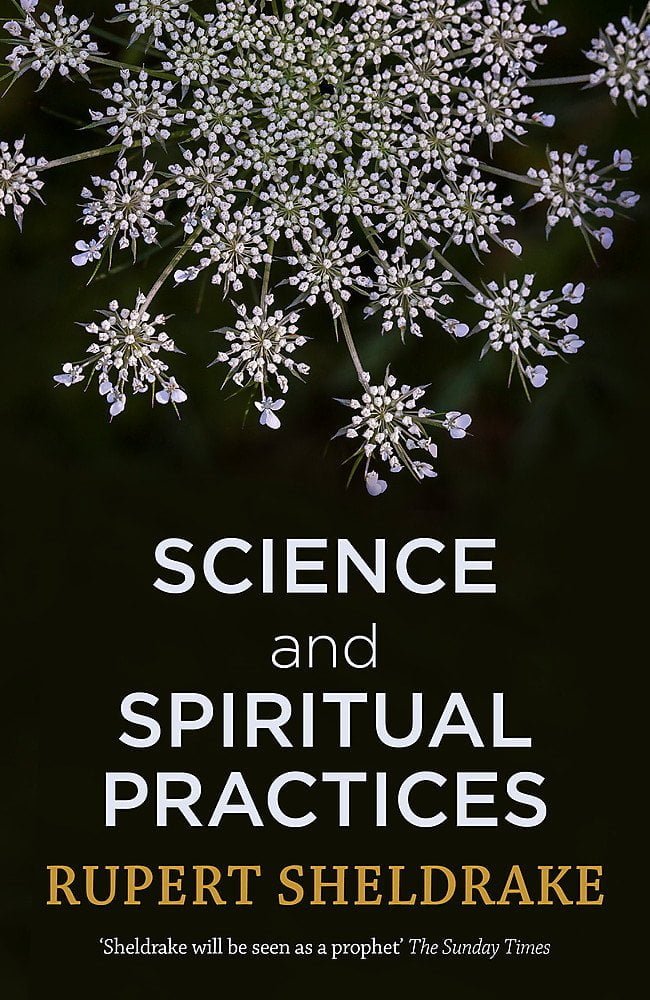
    Science And Spiritual Practices by Rupert Sheldrake

    This 2012 book by Rupert Sheldrake, a British biologist and parapsychologist, explores the relationship between science and spirituality. Sheldrake argues that science is too narrow in its focus and that there are many phenomena that cannot be explained by materialism. He discusses topics such as telepathy, near-death experiences, and the placebo effect.

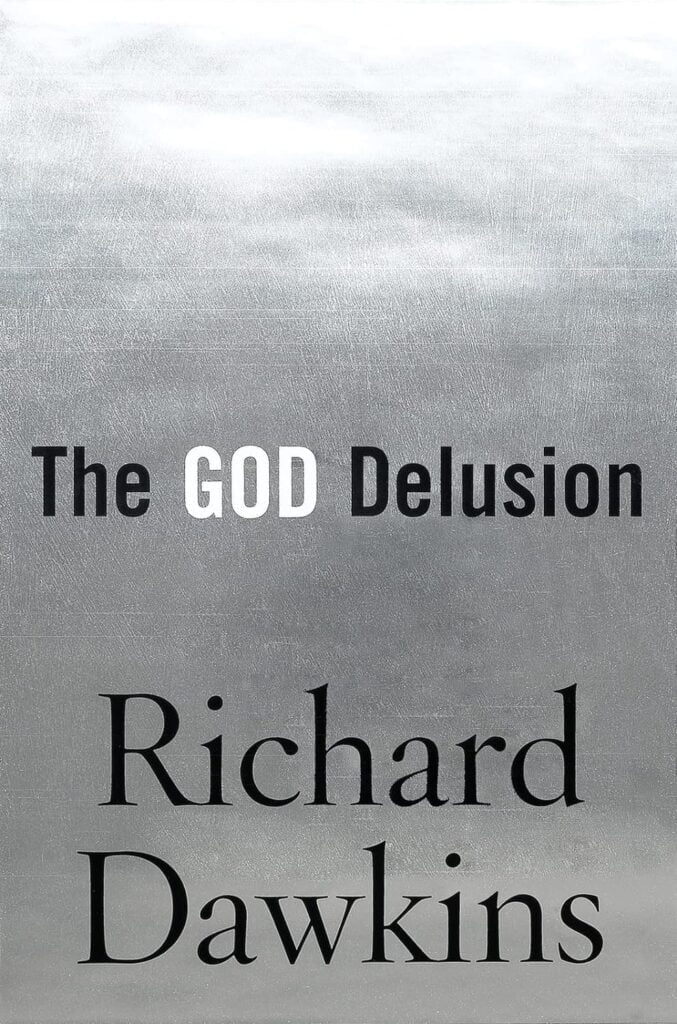
    The God Delusion by Richard Dawkins

    This 2006 book by Richard Dawkins, a British evolutionary biologist, is a critique of religion. Dawkins argues that God does not exist and that religion is a delusion. He discusses topics such as the argument from design, the problem of evil, and the nature of faith.

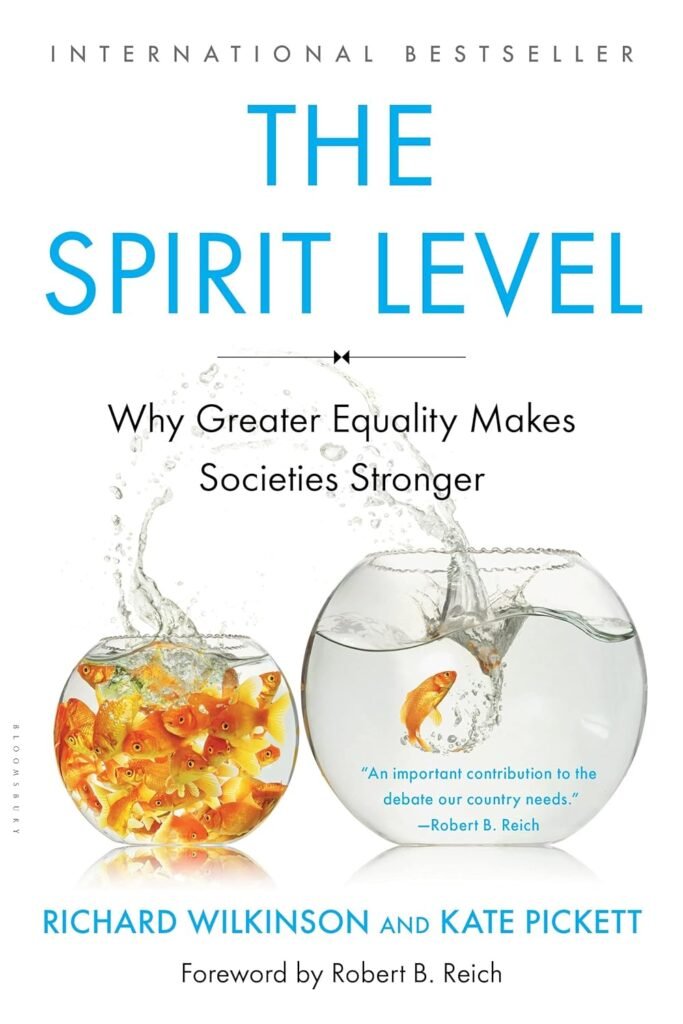
    The Spirit Level by Richard Wilkinson and Kate Pickett

    This 2009 book by Richard Wilkinson and Kate Pickett, examines the relationship between social inequality and a variety of social problems. The authors argue that more equal societies are better off in terms of a variety of social indicators, such as crime, health, and education.

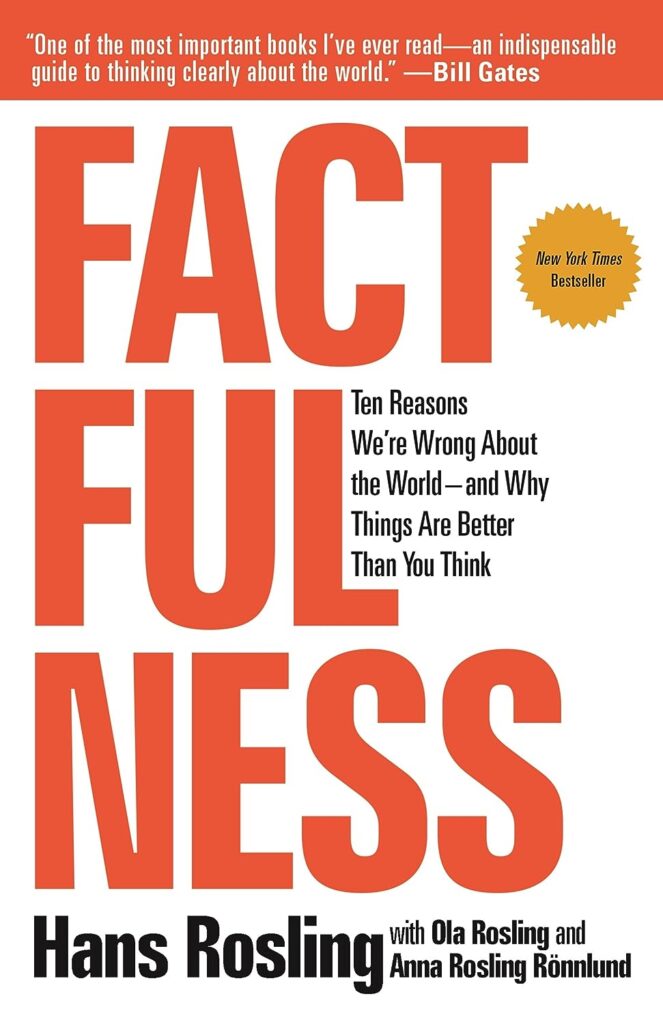
    Factfulness: Ten Reasons We’re Wrong About the World – and Why Things Are Better Than You Think by Hans Rosling

    This 2018 book by Hans Rosling, a Swedish physician and global health researcher, challenges our perception of the world. Rosling argues that the world is actually getting better in many ways, and that we are often too pessimistic in our outlook.

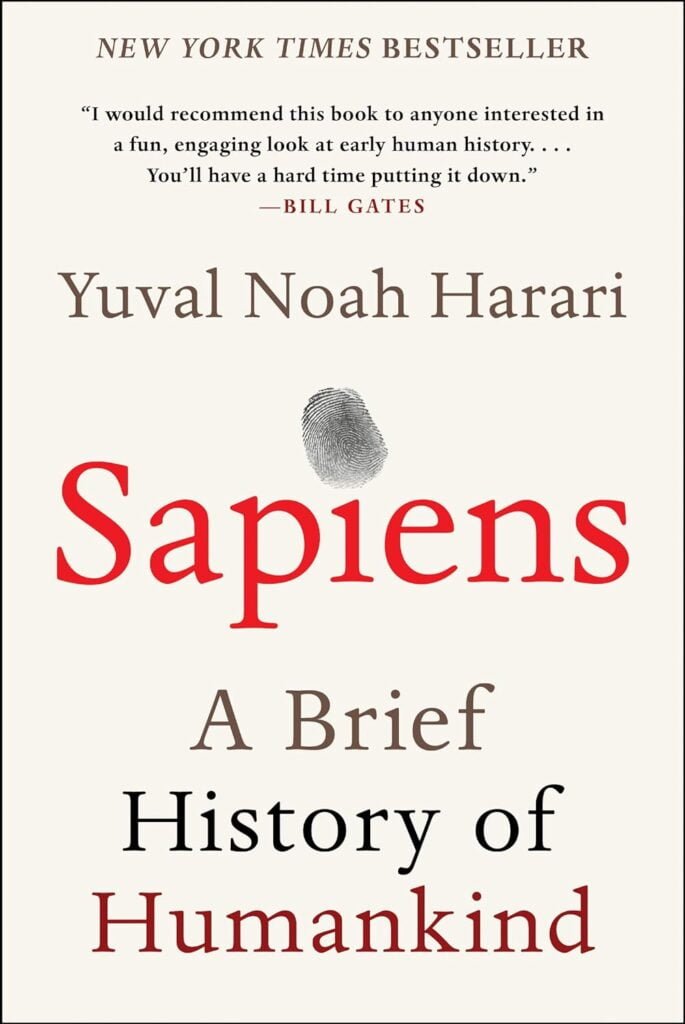
    Sapiens: A Brief History of Humankind by Yuval Noah Harari

    This 2014 book by Yuval Noah Harari, a Israeli historian, examines the history of humankind from our evolutionary origins to the present day. Harari explores topics such as the development of language, agriculture, and religion.

  • The Pre-Islamic Origins of Allah

    The Pre-Islamic Origins of Allah

    The concept of Allah, the supreme deity, has been a central pillar in the religious and cultural landscape of the Arabian Peninsula for centuries. While Islam introduced significant reforms and redefined the understanding of Allah, there remain notable similarities between the pre-Islamic and Islamic conceptions of this divine entity. In this blog entry, we delve into the common characteristics shared by the pre-Islamic and Islamic interpretations of Allah.

    Monotheistic Foundations

    Both the pre-Islamic and Islamic traditions embraced the idea of monotheism, recognizing Allah as the sole, supreme deity. Although pre-Islamic Arabia was home to a diverse array of deities and religious practices, many tribes, particularly the Quraysh, revered Allah as the highest and most powerful god.

    This monotheistic belief laid the foundation for Islam’s strict adherence to the worship of one God, rejecting the veneration of any other deities or idols. The continuity of monotheism, albeit in a more refined and exclusive form, represents a significant common thread between the pre-Islamic and Islamic understandings of Allah.

    Transcendence and Omnipotence

    In both pre-Islamic and Islamic contexts, Allah was perceived as a transcendent and all-powerful deity, exerting supreme authority over the natural world and human affairs. This belief in Allah’s omnipotence and ability to control the course of events and determine the fate of individuals and communities was deeply ingrained in the religious consciousness of the region.

    The pre-Islamic Arabic poetry and mythology are replete with invocations and supplications to Allah, acknowledging the deity’s unparalleled might and influence over the forces of nature and the destinies of humankind. This fundamental belief in Allah’s transcendence and omnipotence remained a core tenet in the Islamic conception of the divine.

    Sacred Sites and Rituals

    The pre-Islamic reverence for the Kaaba in Mecca as a sacred site and the performance of rituals and pilgrimages around it were carried over and incorporated into Islamic traditions. The Kaaba served as a focal point for religious practices and ceremonies among various Arab tribes, including the Quraysh, who oversaw its custodianship.

    Islam not only preserved the sanctity of the Kaaba but also elevated its significance, making it the direction of prayer (qibla) for Muslims worldwide and a central site for the annual Hajj pilgrimage. This continuity in the recognition of sacred sites and the importance of rituals and pilgrimages reflects a shared cultural and religious heritage between the pre-Islamic and Islamic understandings of Allah.

    Linguistic Continuity: The Name “Allah”

    Perhaps the most evident common characteristic between the pre-Islamic and Islamic conceptions of Allah is the retention of the name itself. The Arabic word “Allah,” derived from the contraction of “al-ilah” (the god or deity), has been used to refer to the supreme deity in the Arabian Peninsula for centuries.

    While Islam reshaped and redefined the attributes, nature, and relationship between Allah and humanity, the preservation of the name “Allah” signifies a linguistic and cultural continuity that spans the pre-Islamic and Islamic eras. This linguistic continuity serves as a bridge, connecting the ancient religious traditions of the region with the more recent Islamic interpretations.

    Invocations and Supplications

    The practice of invoking Allah through prayers, supplications, and invocations was widespread in both pre-Islamic and Islamic contexts. Pre-Islamic Arabic poetry and literature are replete with examples of invocations directed towards Allah, reflecting the deity’s centrality in the religious and cultural life of the region.

    Islam not only maintained this tradition of invoking and supplicating to Allah but also established a structured system of ritual prayers (salah) and supplications. This shared emphasis on seeking divine guidance, protection, and blessings through invocations and supplications underscores the common spiritual heritage of the pre-Islamic and Islamic conceptions of Allah.

    Divine Judgement and Fate

    Both pre-Islamic and Islamic belief systems acknowledged Allah as the ultimate arbiter of human destiny and fate. The belief that Allah determines the course of events and controls the fortunes of individuals and communities was deeply rooted in the religious consciousness of the Arabian Peninsula.

    This shared understanding of Allah’s role in shaping human affairs and dispensing divine judgment reflects a common worldview and a recognition of the supreme deity’s power and authority over the lives of mortals.

    In a Nutshell

    While Islam introduced significant reforms and departures from pre-Islamic beliefs and practices, the commonalities between the pre-Islamic and Islamic conceptions of Allah are undeniable. From the foundations of monotheism and the recognition of Allah’s transcendence and omnipotence to the continuity of sacred sites, rituals, and linguistic heritage, these shared characteristics reflect the enduring religious and cultural legacy of the region.

  • God Bless the Religious Phrases

    God Bless the Religious Phrases

    Some suggest removing religious phrases from the English language to accommodate secular speakers or those who do not believe in God. I am afraid I have to disagree with this approach. The beauty of the English language lies in its diversity, a blend of various cultures and historical periods that have contributed to its rich lexicon. This linguistic tapestry is adorned with many evolved words and expressions, reflecting the dynamic nature of communication.

    Examples of said phrases include “to pass away,” “to rest in peace,” “heaven,” “hell,” “godsend,” “blessing,” and “for heaven’s sake.” Although rooted in religious origins, these phrases have transcended their boundaries to become an integral part of the cultural fabric of English-speaking societies. They evoke a sense of solemnity, reverence, and shared cultural understanding. Their usage is a testament to the enduring legacy of language in shaping our worldviews and means of expression.

    Historical Context and Religious Origins

    Expressions used to describe death, the afterlife, divine providence, and other spiritual concepts have a deep history and cultural significance intertwined with religion. Phrases like “rest in peace” emerged from liturgical practices and beliefs about the soul’s journey after death. “Heaven” and “hell” directly reference religious cosmologies and realms of the sacred and profane. “Blessings” and “godsends” hearken back to petitions for divine favor and grace.

    These phrases formed an essential part of the ritual language to provide comfort, make sense of the human condition, and unite communities around shared beliefs. This language was not merely descriptive, but served a greater purpose – it was a potent tool that helped individuals navigate the intricate and often overwhelming emotions, mysteries, and hardships of the human experience.

    Transition to Secular Use

    Over centuries of use and linguistic evolution, phrases once confined to religious contexts took on new shades of meaning in secular vernacular. “Rest in peace” is now a common inscription on headstones and an expression of solemnity, regardless of one’s spiritual beliefs about an afterlife. “Heaven” and “hell” describe metaphorical states of bliss or torment. Even non-religious people use “blessings” to mean good fortunes and “godsends” for timely aid.

    This evolution of language reflects a broader societal shift where certain terms are no longer strictly limited to individual belief systems but become part of a shared cultural heritage. As a result, these phrases have become a universal way to express empathy, consolation, awe, and other profound sentiments toward the human condition.

    The Role of Language in Cultural Evolution

    The dynamic nature of language is exemplified by its continuous evolution, which reflects societies’ cultural changes and adaptability. As the fabric of societies transforms through technological progress, migrations, spiritual awakenings, and more, so too do the meanings and uses of words and phrases within them.

    Simple expressions like “To pass away” and “To rest in peace” have transcended their basic religious definitions. They have become cultural markers that signify bridging personal beliefs and collective shared experiences through language. Families saying “rest in peace” at a loved one’s graveside create a communal moment of remembrance regardless of whether they follow that phrase’s scriptural origins about the afterlife.

    The fluidity of language allows it to absorb and reflect the changing cultural landscape, highlighting its significance as a living, breathing entity that remains an integral part of human existence, identity, and means of expression.

    Current Usage and Cultural Significance

    In present times, former religious phrases are commonly used regardless of a person’s spiritual convictions or lack thereof. They have now become an integral part of our collective consciousness as signs of respect for universal human experiences like death, good fortune, moral codes, and more.

    This transformation in language usage depicts its capability to go beyond its original dogmatic roots and bring together people from all walks of life through shared cultural vocabulary. An atheist author can write about experiencing “hell” on earth without affirming beliefs about a literal fiery realm of the damned. A secular couple can “thank their lucky stars” on their wedding day as an idiom for feelings of joy without pagan connotations.

    The Importance of Preserving Linguistic Heritage

    To remove such phrases from the English language would be a disservice to its rich heritage and the diverse cultural tapestry that has shaped it over centuries. Language is not merely a tool for communication but a reflection of the human experience, our histories, arts, and our collective journey as a species. By erasing these phrases, we risk losing a crucial part of our linguistic identity and connection to the past that has helped mold the present.

    Furthermore, the removal of these phrases could contribute to the erosion of cultural understanding, empathy, and artistic expression. These linguistic fossils of ancestral worldviews have become a shared language that transcends individual modern beliefs. They allow a diverse populace to express sentiments surrounding profound aspects of existence like mortality, fortune, morality, and more without compromising personal philosophies.

    These phrases are part of our linguistic genomic makeup – losing them would strip away context for understanding the development of human culture and thought that led to our present vantage point. Like archaeological relics, they are also useful study pieces for insights into the traditions, beliefs, and mindsets of those who coined them centuries ago, providing knowledge about how our ancestors perceived and grappled with the great mysteries of life.

    Rather than purge this ancient but still relevant vocabulary, a living linguistic museum, we should embrace and underscore their cross-cultural resonance as part of global human poetry.

  • A Brief History of Man from the Dawn of Life to the Moon

    A Brief History of Man from the Dawn of Life to the Moon


    The story of human evolution is a captivating saga, stretching back billions of years and culminating in the remarkable creature you are today. It’s a journey that begins not with a bang, but with a whimper — the emergence of single-celled life on a young Earth.

    The First Sparks of Life (3.8 Billion Years Ago)

    Our tale starts with the most basic of beginnings: microscopic, single-celled organisms called prokaryotes. These were simple entities, lacking the complexity of modern cells. Yet, within their basic structure, the fundamental processes of life — like obtaining energy and replicating — were taking root. These tiny pioneers, believed to have arisen around 3.8 billion years ago, laid the groundwork for all life that would follow.

    The Rise of Complexity (Over Billions of Years)

    Over eons, these simple cells diversified and evolved. Some developed a more complex structure, becoming eukaryotes with a true nucleus and specialized compartments within the cell. These advancements unlocked new possibilities, paving the way for the emergence of multicellular organisms. Early multicellular lifeforms, like algae and fungi, were the first steps toward the incredible diversity of plants and animals that would eventually dominate the planet.

    A Pivotal Turning Point: The Evolution of Animals (Around 600 Million Years Ago)

    The rise of animals marked a significant leap in the evolutionary timeline. These multicellular organisms possessed specialized cells for different functions, allowing for greater complexity and movement. Among this diverse group, vertebrates emerged — creatures defined by a backbone that provided support and structure. A lineage of small, shrew-like mammals, particularly adept at surviving in challenging environments, would become crucial players in the next chapter of our story.

    The Primate Lineage (Over 66 Million Years Ago)

    From these early mammals, the ancestors of primates, including humans, branched out. Over millions of years, these primate forebears adapted to life in the trees. This arboreal lifestyle led to the development of key traits — grasping hands for better maneuverability, binocular vision for improved depth perception, and a gradual increase in brain size.

    The First Hominins (Around 4 Million Years Ago)

    The first recognizable human ancestors, classified under the genus Australopithecus, emerged in Africa roughly 4 million years ago. These early hominins possessed a groundbreaking capability — they walked upright on two legs. Bipedalism, as it’s called, freed up their hands for carrying tools and manipulating objects, a defining characteristic that would propel our lineage forward.

    Our Evolutionary Kin: Homo Erectus and Neanderthalensis (Over 2 Million Years Ago)

    The genus Homo, encompassing our direct ancestors, emerged next. Species like Homo erectus, with their larger brains and ability to control fire, represent a significant advancement. Later, Homo neanderthalensis, with their complex social structures and advanced toolmaking skills, shared the Earth with early Homo sapiens for a period.

    The Arrival of Homo Sapiens (Around 300,000 Years Ago)

    Finally, around 300,000 years ago, our own species, Homo sapiens, took center stage. These modern humans possessed a larger brain, allowing for sophisticated cognitive abilities, complex language, and the capacity for innovation. Our ability to fashion advanced tools, coupled with our exceptional problem-solving skills, propelled our progress and laid the foundation for the technological and cultural achievements that define our world today.

    A Branching Evolutionary Tree

    It’s important to note that human evolution wasn’t a linear path from Australopithecus to Homo sapiens. The evolutionary tree is more like a bush, with various hominin species emerging and sometimes coexisting. For instance, recent discoveries suggest interbreeding between early Homo sapiens and Neanderthals, adding another layer of complexity to our evolutionary history.

    The Role of Climate Change

    Climate change has also played a significant role in shaping our evolution. Fluctuations in temperature, ice ages, and periods of drought all exerted pressure on our ancestors, forcing them to adapt or perish. For example, the development of bipedalism in Australopithecus might be linked to a shift from dense forests to more open savannas.

    The Dawn of Tool Use (Over 3 Million Years Ago)

    A defining feature of human evolution is our tool use. While some animals exhibit rudimentary tool manipulation, our ancestors took it to a whole new level. Early hominins used sharpened stones and bones for cutting and scraping, a skill that would become increasingly sophisticated over time. The ability to craft tools not only aided in acquiring food and defending against predators but also sparked innovation and problem-solving.

    The Emergence of Language (Around 100,000 Years Ago)

    The development of language is another defining characteristic of our species. The exact origins of language remain shrouded in mystery, but evidence suggests it emerged around 100,000 years ago with early Homo sapiens. Language allowed for complex communication, enabling our ancestors to share ideas, collaborate on tasks, and transmit knowledge across generations. This revolutionized social interaction and fostered the development of culture.

    The Rise of Culture (Around 50,000 Years Ago)

    Culture, encompassing everything from art and music to rituals and beliefs, is a hallmark of human existence. The earliest evidence of cultural expression comes from around 50,000 years ago, with the emergence of cave paintings, intricate tools, and symbolic objects. These artifacts hint at a growing capacity for abstract thought, imagination, and storytelling. Culture served to bind communities together, fostering a sense of shared identity and purpose.

    The Cognitive Leap (Around 70,000 Years Ago)

    Around 70,000 years ago, a significant cognitive leap occurred, sometimes referred to as the “Behavioral Modernity Revolution.” This period witnessed a surge in technological innovation, with the development of sophisticated tools like barbed points for hunting and needles for sewing clothing. Symbolic art became more elaborate, with the emergence of figurines and engravings. This advancement in cognitive abilities suggests a shift in how our ancestors processed information, planned for the future, and interacted with the world around them.

    The Last Ice Age (Around 110,000 to 11,700 Years Ago)

    The Earth’s climate has undergone dramatic shifts throughout history, and the last Ice Age, spanning roughly 110,000 to 11,700 years ago, significantly impacted human evolution. Our ancestors faced harsh conditions, with vast swathes of the planet covered in glaciers. This period likely intensified competition for resources, pressuring them to develop new survival strategies. The challenges of the Ice Age might have played a role in promoting cooperation, innovation, and the development of complex social structures.

    The Rise of Agriculture (Around 12,000 Years Ago)

    A pivotal moment in human history arrived around 12,000 years ago with the rise of agriculture. This transition from a hunter-gatherer lifestyle to one based on cultivating crops and domesticating animals marked a significant shift in our relationship with the environment. Agriculture enabled the development of permanent settlements, population growth, and the rise of complex societies.

    The Evolution Continues

    Human evolution is not a static process; it continues to this day, albeit at a much slower pace. Modern advancements in medicine, technology, and nutrition have altered our environment and shaped our selection pressures. The future of human evolution remains uncertain, but understanding our remarkable past offers invaluable insights into who we are and where we might be headed.

    Concluding Thoughts on the History of Man

    The story of human evolution is a testament to the power of adaptation, innovation, and the ability to learn and build upon the knowledge of previous generations. From our humble, single-celled origins to our current state as a technologically advanced species, the journey has been extraordinary. As we continue to explore the universe and push the boundaries of knowledge, a deeper understanding of our evolutionary heritage becomes ever more crucial. It reminds us of our place within the web of life and the incredible forces that have shaped us into the beings we are today.


    Further Reading

    The Smithsonian Institution’s Human Origins Program
    The Hall of Human Origins offers a welcoming place to explore one of the most exciting areas of science, the study of…humanorigins.si.edu

    Understanding Evolution
    Your one-stop source for information on evolutionevolution.berkeley.edu

    Human Evolution
    Learn how early humans evolved from Homo habilis, to Homo erectus, to Homo sapiens and developed basic survival tools.education.nationalgeographic.org

    Human Evolution | PBS LearningMedia
    Find lessons on Human Evolution for all grades. Free interactive resources and activities for the classroom and home.www.pbslearningmedia.org

    The evolution of man
    BBC > Science & Nature > Prehistoric Life > Human Beginnings > The Evolution of Manwww.bbc.co.uk

    Human evolution overview (video) | Khan Academy
    Learn for free about math, art, computer programming, economics, physics, chemistry, biology, medicine, finance…www.khanacademy.org

    The Leakey Foundation
    The Leakey Foundation’s mission is to increase scientific knowledge, education, and public understanding of human…leakeyfoundation.org

    The Origin and Legacy of the Human Age
    Whether we live a million more years or another week is up to uswww.scientificamerican.com

    https://www.amnh.org/exhibitions/permanent/human-origins

  • How We Discovered The Ape Within Us

    How We Discovered The Ape Within Us


    For centuries, humans have grappled with the question of our origins and our place in the natural world. It wasn’t until the groundbreaking work of scientists like Charles Darwin and Thomas Huxley that we began to unravel the profound truth: humans are not a separate creation from other animals, but rather a branch of the great ape family tree. This realization shattered long-held beliefs and sparked heated debates, but ultimately paved the way for a deeper understanding of our evolutionary past.

    The Ancient Observers

    Long before modern science, ancient philosophers and naturalists had observed the striking similarities between humans and apes. Aristotle, the famous Greek philosopher, noted the resemblance between apes and humans in his writings. In the 3rd century BCE, the Roman writer Claudius Aelianus remarked on the human-like behaviors of apes, such as their ability to learn and their social nature.

    However, these early observations were often dismissed or interpreted through the lens of religious beliefs, which placed humans as a separate and superior creation from animals.

    The Dawn of Evolutionary Theory

    It wasn’t until the 19th century that the scientific foundations were laid for understanding our true kinship with apes. In 1859, Charles Darwin published his revolutionary work, “On the Origin of Species,” which introduced the theory of evolution by natural selection. While Darwin initially shied away from explicitly linking humans to apes, his groundbreaking ideas paved the way for further exploration of our evolutionary origins

    The Ape-Man Debate

    One of the fiercest proponents of the ape-human connection was Thomas Huxley, a renowned biologist and staunch supporter of Darwin’s theory. In 1863, Huxley delivered a powerful lecture titled “Evidence as to Man’s Place in Nature,” where he presented compelling anatomical and physiological evidence that humans and apes share a common ancestor.

    Huxley’s bold assertions ignited a firestorm of controversy, as they challenged deeply rooted religious and cultural beliefs about human exceptionalism. The debate between Huxley and his opponents, such as Richard Owen, the renowned anatomist, became known as the “Ape-Man Debate,” a clash of ideas that captivated the public imagination.

    The Missing Link

    As the debate raged on, scientists sought to find the elusive “missing link” — a fossil that would bridge the evolutionary gap between apes and humans. In 1891, a remarkable discovery was made in Java, Indonesia: the fossilized remains of a human-like creature, later named Homo erectus, which lived around 1.8 million years ago.

    While not the direct ancestor of modern humans, Homo erectus provided tangible evidence of our ape-like ancestors, further solidifying the evolutionary connection. Additional fossil discoveries, such as the famous “Lucy” skeleton found in Ethiopia in 1974, continued to shed light on our ancient primate relatives.

    The Genetic Evidence

    In the latter half of the 20th century, a new field of study emerged that would provide the most compelling evidence yet of our ape ancestry: molecular biology. By comparing the genetic makeup of humans and other primates, scientists were able to quantify the remarkable similarities between our species.

    Groundbreaking studies revealed that humans share over 98% of our DNA with chimpanzees and bonobos, our closest living relatives in the ape family. This genetic evidence, coupled with the fossil record and anatomical comparisons, cemented our place as a branch on the ape evolutionary tree.

    In a Nutshell

    The journey to unraveling our ape origins was long and arduous, fraught with religious and cultural resistance. However, through the tireless efforts of scientists like Darwin, Huxley, and countless others, the truth emerged: we are not a separate creation, but an integral part of the rich tapestry of life on Earth, sharing a common ancestry with our ape cousins.

    This realization not only deepens our understanding of our past but also shapes our perspective on our present and future. By embracing our evolutionary roots, we can better appreciate our place in the natural world and how interconnected life on our planet is.


    Further Reading

    Nested Hierarchies, the Order of Nature: Carolus Linnaeus
    Homo sapiens, Tyrannosaurus rex, Escherichia coli -our English conversation is littered with pairs of Latin names for…evolution.berkeley.edu

    Human taxonomy – Wikipedia
    From Wikipedia, the free encyclopedia Homo (“humans”) Scientific classification Genus: Homo Linnaeus, 1758 Type species…en.wikipedia.org

    Human evolutionary genetics – Wikipedia
    Human evolutionary genetics studies how one human genome differs from another human genome, the evolutionary past that…en.wikipedia.org

    How humans and apes are different, and why it matters
    Why it’s important to study the deep similarities, and the critical differences, between humans and the apes to seek an…www.sciencedaily.com

    New Fossil Discovery May Change What We Know About Human Evolution
    The ancient species Homo naledi had small brains and seems to have intentionally carried their dead into caveswww.smithsonianmag.com


    A Brief History of Human Evolution From the Dawn of Life

    The journey of human evolution is a remarkable story that spans billions of years, tracing its origins back to the most humble and microscopic of beginnings – the unicellular organism. These single-celled lifeforms, tiny though they were, laid the foundation for the incredible diversity of life that would eventually emerge on our planet, including the rise of our own species, Homo sapiens.

    The earliest forms of unicellular life are believed to have arisen on Earth around 3.8 billion years ago, simple prokaryotic cells that lacked a true nucleus or membrane-bound organelles. These primitive cells, powered by the chemical reactions of their internal metabolic processes, represented the first stirrings of life on our planet.

    The Rise of Complexity

    Over vast stretches of time, these unicellular organisms diversified and evolved, giving rise to more complex eukaryotic cells with a true nucleus and specialized organelles. It was from these eukaryotic cells that the first multicellular organisms emerged, a pivotal moment in the grand tapestry of evolution. These early multicellular lifeforms, such as simple algae and fungi, paved the way for the subsequent emergence of more complex lifeforms, including the earliest animals and plants.

    The Evolutionary Leap to Multicellularity

    The evolution of animals, in particular, set the stage for the eventual rise of vertebrates, a diverse group of organisms characterized by the possession of a backbone or spinal column. Among these vertebrates, a lineage of small, shrew-like mammals emerged, adapted to a nocturnal lifestyle and possessing a remarkable ability to adapt and survive.

    The Primate Lineage

    It was from this lineage of early mammals that the ancestors of primates, including humans, eventually emerged. Over millions of years, these primate ancestors underwent a series of evolutionary changes, adapting to life in the trees and developing traits such as grasping hands, binocular vision, and increased intelligence.

    The First Human Ancestors

    The first true human ancestors, members of the genus Australopithecus, emerged around 4 million years ago in Africa. These early hominins walked upright on two legs, a trait that would become a defining characteristic of our species. Over time, the genus Homo emerged, with species like Homo erectus and Homo neanderthalensis representing important milestones in our evolutionary journey.

    The Emergence of Homo Sapiens

    Finally, around 300,000 years ago, our own species, Homo sapiens, appeared on the evolutionary stage. These modern humans possessed a larger brain, advanced cognitive abilities, and a capacity for language and complex tool-making that set them apart from their predecessors.

    The Legacy of Evolution

    From these humble beginnings as unicellular organisms, our species has undergone an extraordinary journey of evolution, one that has taken us from the microscopic realm to the heights of technological and cultural achievement. Yet, despite our remarkable progress, we remain inextricably linked to the vast web of life that surrounds us, a testament to the incredible power of evolution to shape and transform the living world.

  • Why Every Civilization Believed in Gods

    Why Every Civilization Believed in Gods

    For millennia, humanity has gazed at the vastness of the cosmos, the intricate dance of nature, and the spark of life within ourselves, and pondered one profound question: are we alone? The answer, as evidenced by every ancient civilization we’ve encountered, has overwhelmingly been a resounding no. From the majestic pyramids dedicated to Egyptian gods to the intricate pantheons of Greece and Rome, every culture has embraced a belief in a higher power, or more accurately, a multitude of higher powers.

    This inherent tendency towards faith is perhaps unsurprising. The world around us, from the delicate balance of ecosystems to the awe-inspiring complexity of the human body, often appears meticulously designed. In the absence of scientific understanding, attributing these wonders to the works of powerful deities seems a logical conclusion.

    How Civilizations Explained the Unexplained

    Each civilization developed its own unique tapestry of gods and goddesses, reflecting their cultural values and societal structures. The Egyptians, with their dependence on the Nile’s annual floods, worshipped deities like Osiris, the god of agriculture, and Isis, the goddess of fertility. The Greeks, a seafaring people, saw Poseidon, the god of the sea, as a crucial figure, while the Romans, with their emphasis on law and order, revered Jupiter, the king of the gods.

    This wasn’t just about explaining the natural world. Deities were often seen as playing an active role in human affairs, influencing love, war, health, and prosperity. People sought to appease these powerful beings through offerings, prayers, and rituals, hoping to curry favor and avoid misfortune.

    Bridging the Divide: The Politics of Polytheism

    Interestingly, the existence of multiple gods also offered a pragmatic solution for diplomacy. When civilizations interacted, leaders sometimes incorporated each other’s deities into their own pantheon. This act of acknowledging foreign gods served a dual purpose: it fostered a sense of shared belief, promoting peaceful coexistence, and it potentially ensured that the “adopted” deities wouldn’t unleash their wrath on the new worshippers.

    The Evolution of Belief: When Gods Adapt to Changing Times

    It’s important to remember that religious belief systems are not static. As societies evolve, so too do their conceptions of the divine. Take, for instance, Allah as an example. While Allah was certainly a pre-Islamic deity in the Arabian peninsula, Islam fundamentally reshaped the concept. The all-encompassing, merciful Allah of Islam bears little resemblance to the local gods worshipped by the Arabs before the rise of Islam. This transformation reflects the changing social and political landscape of the region.

    Judaism and the Rise of Monotheism

    Judaism, another religion you mentioned, presents a unique case. Unlike the polytheistic traditions prevalent at the time, Judaism championed the concept of a single, all-powerful God, Yahweh (or Jehovah). This belief system, emphasizing a covenant between God and a chosen people, the Jews, had a profound impact on the development of Western religion.

    Beyond Centrism: Universality in the Human Experience of Faith

    It’s important to avoid portraying these belief systems as solely ethnocentric. While cultural context undoubtedly shapes how deities are perceived, the core human experience of seeking meaning and purpose in a vast universe transcends geographical boundaries. The concept of a higher power, regardless of its specific form, has provided comfort, guidance, and a sense of order for countless generations.

    The Enduring Power of Belief

    Even in our modern, scientific age, belief in a higher power persists. While the explanations for natural phenomena have shifted, the fundamental human desire to connect with something larger than ourselves remains. From the intricate cosmologies of established religions to the rise of new spiritual movements, the human search for meaning in the universe continues. Whether it takes the form of a single, all-powerful deity or a pantheon of gods and goddesses, the concept of a higher power has served as a cornerstone of human experience for millennia, and it seems likely to remain so in the foreseeable future.

  • Can We Refute God?

    Can We Refute God?

    Belief in the existence of at least one higher power is a profoundly subjective matter, intertwining human emotions and philosophical perspectives. For many, the concept of a higher power provides a sense of purpose, comfort, and meaning. It shapes cultural narratives and individual lives, influencing ethics, morality, and personal identity. The belief in a higher power is often rooted in personal experiences, upbringing, and emotional needs, making it a profoundly personal matter that transcends objective analysis. While some may refute God, others find solace and guidance in their faith. Ultimately, the question of whether a higher power exists remains a deeply contemplative and multifaceted inquiry.

    Emotional and Philosophical Dimensions

    Humans are inherently emotional beings, inheriting beliefs that often reflect our emotional landscapes. The need for security, the search for meaning, and the desire to understand our place in the universe drive many toward the concept of a higher power. Philosophically, the idea of a higher power addresses existential questions that science and reason alone may not satisfy. It answers the why of existence rather than the how, offering a narrative connecting the individual to a more significant, often benevolent force.

    Scientific Evidence and the Higher Power

    When asserting that there is zero evidence for a higher power, one typically refers to scientific evidence, which relies on empirical data, reproducibility, and objective validation. Scientific methodologies are designed to test hypotheses through controlled experiments and observable phenomena. By its very nature, science excludes subjective experiences and eyewitness testimony as robust evidence, which is essential for understanding the physical world but has limitations when applied to prove or refute God, and all other metaphysical entities.

    Limitations of Scientific Inquiry

    Scientific evidence is inherently limited to the observable and measurable aspects of reality. The concept of a deity or higher power often lies beyond the empirical scope of science. Deities are typically considered supernatural entities, existing outside the parameters of physical laws. As such, they cannot be tested or observed in the same way as natural phenomena. This does not invalidate the belief in higher powers but highlights scientific inquiry’s boundaries. It is a category error to demand scientific proof for something that, by definition, exists outside the purview of science. 

    Human Invention of Deities

    Knowing what we know, no compelling reason exists to believe that any specific deity is not a human invention. Throughout history, diverse cultures have created a myriad of gods and goddesses, each reflecting their society’s values, fears, and aspirations. These deities often serve social functions, such as enforcing moral codes, explaining natural events, and unifying communities under a shared belief system. The anthropological perspective suggests that gods are products of human imagination and cultural evolution.

    Uncertainty and the Nature of Reality

    However, we cannot categorically state that there are no entities that humans would consider godly. Our understanding of reality is limited and constantly evolving. Advances in physics, particularly in quantum mechanics and cosmology, have revealed the universe to be far stranger and more complex than previously imagined. Concepts such as parallel universes, higher dimensions, and the fundamental nature of consciousness challenge our conventional understanding and suggest that reality may hold surprises beyond our current comprehension.

    The Imitation of Consciousness

    One intriguing aspect of this uncertainty is the possibility that what we consider consciousness might not be exclusive to biological entities. As artificial intelligence advances, questions arise about the nature of consciousness and the potential for machines to develop awareness. If consciousness can emerge from non-biological substrates, the line between creator and creation blurs. This raises the possibility that entities with god-like attributes could exist, created either by advanced civilizations or as emergent properties of complex systems.

    Philosophical Implications

    The philosophical implications of such possibilities are profound. If higher powers exist as emergent properties or creations of advanced intelligence, our understanding of divinity and its relationship to humanity would need reevaluation. This perspective aligns with certain interpretations of pantheism and panentheism, which view the divine as inherent in the fabric of the universe itself. It also resonates with some interpretations of transhumanism, where the future of human evolution involves merging with advanced technologies, potentially achieving god-like capabilities.

    The Takeaway

    Believing in a higher power is ultimately subjective and deeply intertwined with human emotions and philosophical perspectives. By its nature, scientific evidence cannot encompass deities as they lie outside the scope of empirical inquiry. While historical and cultural analysis suggests that deities are human inventions, our limited understanding of reality leaves room for the possibility that entities humans would consider godly could exist. If anything, this ongoing uncertainty invites a humble and open-minded approach to the profound questions embedded in human nature.

    In essence, science is not to prove or refute God.


    Further Reading: Scientists Who Tried to Prove or Refute God

    The quest to prove or refute God through scientific means has captivated many great minds throughout history. While science deals with the observable and testable natural world, the supernatural realm of a supreme deity exists beyond its scope. Nonetheless, several scientists have grappled with this profound question, attempting to reconcile faith and reason. Their efforts have sparked intense debates and challenged conventional wisdom, leaving an indelible mark on the intersection of science and religion.

    One of the earliest and most influential figures in this endeavor was René Descartes, the 17th-century French philosopher and mathematician. Descartes sought to establish a firm foundation for knowledge, leading him to the famous phrase “I think, therefore I am.” In his metaphysical writings, he attempted to prove God’s existence through reason alone, using arguments based on the idea of a perfect being and the concept of causality. While his arguments were later critiqued and challenged, Descartes’ efforts laid the groundwork for subsequent thinkers to explore the relationship between science and religion.

    In the 18th century, the Age of Enlightenment saw a surge of scientific discoveries and a growing emphasis on reason and empiricism. Philosophers like Voltaire and David Hume questioned traditional religious beliefs and sought to apply rational scrutiny to the existence of God. Hume’s famous argument against miracles, which posited that it is always more likely that a reported miracle is a product of human error or deceit than a violation of the laws of nature, became a cornerstone of skeptical thought.

    The 19th century witnessed a remarkable figure in Charles Darwin, whose theory of evolution by natural selection revolutionized our understanding of life’s origins and challenged the biblical account of creation. While Darwin himself was reluctant to wade into the debate over God’s existence, his work ignited heated controversies between proponents of science and defenders of religious doctrine. The implications of evolutionary theory continue to shape discussions on the intersection of science and faith to this day.

    In the 20th century, advances in physics and cosmology reignited the debate over God’s role in the universe. Albert Einstein, one of the most renowned scientists of all time, famously remarked, “Science without religion is lame, religion without science is blind.” While Einstein rejected the notion of a personal God, he believed in a cosmic intelligence or rationality underlying the universe’s order and beauty, a concept he referred to as “the Old One.”

    More recently, scientists like Richard Dawkins and Lawrence Krauss have taken a firm stance against the existence of God, using scientific evidence and reasoning to challenge religious beliefs. Dawkins’ book “The God Delusion” became a bestseller and sparked widespread discussions on the compatibility of science and religion. Krauss, on the other hand, has argued that modern physics and cosmology provide a compelling alternative to the need for a divine creator, proposing that the universe could have emerged from nothing.

    On the other side of the debate, scientists like Francis Collins and John Polkinghorne have sought to reconcile their religious beliefs with scientific knowledge. Collins, the former director of the National Institutes of Health and a devout Christian, has argued that science and faith can coexist, pointing to the complexity and beauty of the natural world as evidence of a divine creator. Polkinghorne, a theoretical physicist turned Anglican priest, has explored the intersection of theology and quantum physics, suggesting that the inherent uncertainties in quantum mechanics leave room for divine intervention.

    While the debate using science to prove or refute God continues, it is clear that the pursuit has captivated some of the greatest minds in history. Whether driven by faith, skepticism, or a desire for understanding, these scientists have challenged conventional thinking and pushed the boundaries of human knowledge. Their efforts have enriched our understanding of the natural world and the profound questions that lie beyond the realm of science, reminding us of the enduring human quest for truth and meaning.

  • How Europe and America Betrayed My Childhood Dream

    How Europe and America Betrayed My Childhood Dream

    For most of my life, I existed in a bubble. Born and raised in Istanbul, Turkey, to a fiercely secular family, my world revolved around a strict separation of religion and state. My education followed suit, devoid of any religious instruction. My social circle mirrored this — friends and family held similar beliefs, and conversations rarely ventured into theological territory. This, I naively assumed, was the norm everywhere. Europe and America, bastions of modernity and freedom in my mind, surely functioned the same way.

    This unshakeable conviction led me down a path of constant frustration. Turkish society, with its visible pockets of conservatism and religious influence, often grated on me. The occasional call to prayer, the headscarves sported by some women, the conservative news channels my grandparents religiously watched — all felt like anathema to my secular ideals. I’d indulge in endless conversations with friends, lamenting the state of affairs, convinced that life would have been smoother, more progressive, had I been born elsewhere. Europe, with its supposed secular utopia, or the United States, the land of the free and the home of the… well, not exactly strict separation of church and state, but surely a more relaxed approach compared to Turkey, seemed like the greener pastures.

    Then, the internet happened. The vast expanse of information it offered opened my eyes to a world far more nuanced than the one I’d constructed in my head. Social media, for all its flaws, became a window into the lives of people from across the globe. And that’s when I encountered them — the stories of people raised in deeply religious households in America, the experiences of those who attended strict, faith-based schools in the UK. Their narratives shattered the illusion I’d meticulously built.

    Sarah, a friend I made online who lived in a small town in the American Midwest, painted a picture of a life governed by strong Evangelical beliefs. Her family’s Sundays revolved around church services, and her social circle was largely confined to those who shared their faith. Discussions about evolution in her science class were fraught with tension, and her wardrobe choices were constantly scrutinized. John, from London, recounted his experiences at a prestigious private school steeped in religious tradition. Daily prayers, mandatory chapel services, and a curriculum that heavily emphasized religious studies were the norm. Their stories were a stark contrast to my own sheltered existence.

    These encounters forced me to re-evaluate my perspective. Here I was, complaining about the occasional headscarf or call to prayer, while others were grappling with a far more pervasive influence of religion in their daily lives. My frustration with Turkish conservatism suddenly seemed trivial compared to the experiences of Sarah and John.

    This realization was a humbling one. It exposed the naivety of my earlier beliefs. Here’s the truth — secularism, in its purest form, isn’t the universal standard everywhere. While Turkey might have its pockets of conservatism, it also offers a significant degree of freedom from religious influence in daily life. My education, devoid of religious indoctrination, empowered me to think critically and form my own beliefs. My social circle, a beautiful tapestry of diverse viewpoints, fostered tolerance and understanding.

    This newfound appreciation for my own reality didn’t erase the challenges Turkey faces. Religious conservatism remains a potent force, and navigating its influence requires constant vigilance. But it did shift my focus. Instead of yearning for a mythical European or American utopia, I began to see the value in working towards a more progressive and inclusive Turkey, one that embraces secularism while respecting the right to personal faith.

    My journey has been one of self-discovery, and it’s far from over. But one thing is certain — the grass truly isn’t always greener on the other side. Perhaps the key lies not in seeking out greener pastures but in nurturing the garden we already have. In the case of Turkey, that means fostering a society where secularism and religious freedom can coexist peacefully, where open dialogue trumps blind prejudice, and where progress is driven by mutual respect and understanding. It’s a tall order, but one that seems far more attainable now than ever before.


    The Path Toward Secular Turkey

    Turkey has a long and complex history when it comes to the role of religion in the state and society. While the Ottoman Empire was an Islamic caliphate for over 600 years, the modern Republic of Turkey, established in 1923 under Mustafa Kemal Atatürk, embarked on an ambitious path of secularization and Westernization.

    The Ottoman Empire allowed different religious groups to maintain their own laws and institutions under the millet system. However, Islam was the official state religion and the Sultan was also the Caliph, the supreme religious and political ruler of the Sunni Islamic world. In the 19th century, as the Ottoman Empire waned, reformist movements like the Young Ottomans and Young Turks pushed for modernization and secularization of the empire.

    After World War I and the collapse of the Ottoman Empire, Mustafa Kemal Atatürk founded the Republic of Turkey in 1923 with the goal of creating a modern, secular nation-state. Atatürk introduced a series of sweeping reforms aimed at separating religion from the state and embracing Western values. Some key reforms included:

    1. Abolition of the Caliphate in 1924, severing ties between religion and the state.
    2. Elimination of religious courts and education. The secular law codes replaced Sharia law.
    3. Banning religious clothing like the fez and giving rights to women like the adoption of a civil code.
    4. Replacing the Arabic script with the Latin alphabet to distance Turkey from the Arab world.
    5. State control and vocal criticism of Islam conflicted with Kemalist secular ideals.

    These top-down reforms met resistance from conservative and religious segments of society. However, Atatürk successfully implemented them due to his strong political will and support from the military and urban elite. Secularism, or laiklik in Turkish, became a core principle of the modern Turkish state and identity.

    Over the following decades, Turkey maintained its secular character despite the periodic rise of political Islam. However, tensions remained between secular Kemalists and groups seeking more integration of Islam into public life. It has been an ongoing negotiation to balance Turkey’s Muslim identity with its secular ideals and Western aspirations.

    In recent years under the AK Party government, there has been a perceived backing away from Kemalist secularism as religion has re-entered the public sphere. However, Turkey still officially defines itself as a secular state, making its experience negotiating the boundaries of secularism and religion a fascinating modern saga.