Category: Religion

Explore our extensive collection of resources on religion, featuring insightful articles, thought-provoking discussions, and comprehensive guides to diverse faiths and spiritual traditions. From ancient practices to contemporary beliefs, our content delves into the history, rituals, teachings, and cultural impact of various religions. Discover new perspectives and deepen your understanding of spirituality and religious communities with our expertly curated content. Whether you’re a scholar, seeker, or just curious, find inspiration and knowledge in our dedicated category on religion.

  • Do Atheists Have Beliefs Just Like Believers?

    Do Atheists Have Beliefs Just Like Believers?

    Have you ever found yourself pondering the nature of belief? Maybe you’ve wondered if atheists, who don’t believe in God, actually hold beliefs of their own. Well, you’re not alone! This question has come up in countless debates and discussions, and today, we’re going to give another go to answer it.

    Let’s start with a common assumption: atheists don’t necessarily have ny beliefs. But is that really true?

    Atheism 101

    Before we go any further, let’s clear up what atheism actually is. At its core, atheism is simply the absence of belief in gods or deities. That’s it. It doesn’t necessarily mean a person believes there are definitely no gods; it just means they don’t actively believe in any.

    Now, here’s where it gets interesting. Just because atheists don’t believe in gods, does it inherently mean they don’t have any beliefs at all?

    The Scientific Worldview

    For example, atheists on Medium tend to believe that “There is always natural causes for everything that happens in the world around us.”, which is indeed a common perspective among many atheists in the West, and it’s closely tied to the scientific worldview.

    This belief in natural causes is often called “naturalism,” and it’s a philosophical stance that everything in the universe can be explained through natural processes, without the need for supernatural explanations. That being said, this isn’t unique to atheism — many religious people in the West also accept scientific explanations for natural phenomena to varying extends.

    However the belief in natural causes is itself an assumption. It can’t be proven with 100% certainty, just like the existence of God can’t be definitively proven or disproven. So, in a way, atheists who hold this view are indeed exercising a form of belief.

    It’s Not Just Black and White

    Now, let’s shake things up a bit. Belief isn’t a simple yes-or-no matter. It’s more like a spectrum, with different levels of certainty. Some atheists might say, “I’m absolutely certain there are no gods,” while others might say, “I don’t see any evidence for gods, but I can’t be 100% sure.”

    This spectrum of belief applies to religious people too. Some might have unwavering faith, while others might have moments of doubt. The point is, both atheists and religious believers can have varying degrees of certainty in their positions.

    The Unavoidable Nature of Belief

    To be fair, it’s practically impossible to go through life without some form of belief. We all have to make assumptions about reality to function in our daily lives. For example:

    • We believe our senses generally give us accurate information about the world.
    • We believe that other people have minds and aren’t just robots or figments of our imagination.
    • We believe that the sun will rise tomorrow, based on our past experiences.

    These are all beliefs that most of us have hold in order to function, regardless of our stance on religion or the existence of gods. They’re so fundamental that we often don’t even think about them as beliefs.

    The Role of Evidence and Reason

    Now, you might be thinking, “But wait, aren’t atheists all about evidence and reason?” And you’d be right! Many atheists pride themselves on basing their worldview on empirical evidence and logical reasoning.

    However, the very belief in the importance of evidence and reason is itself a philosophical position. It’s a belief about how we should approach understanding the world. And while it’s a belief that has proven incredibly useful and reliable, it’s still, at its core, a belief.

    The Uncertainty

    All these bring us to an important point: Does this uncertainty mean atheists and theists are in the same boat, both relying on faith without irrefutable evidence? Not exactly. There’s a major difference between believing that a deity walked the earth 2,000 years ago, died, and was resurrected, and believing that the sun will set in the evening.

    What we’ve gone through so far merely suggests that when we dig down to the basics, the nature of reality itself becomes open to question, which demands humility in claiming absolute certainty about anything.


  • The Rise and Shine of American Nones

    The Rise and Shine of American Nones

    In recent years, a notable cultural shift has occurred in the United States and other Western countries, with an increasing number of individuals identifying as “Nones”, which covers anyone who don’t associate with organized religions.

    Today, approximately 30% of adult Americans fall into this category, with over 40% among Generation Z. But who are these Nones?

    Who Are the Nones?

    The Nones are not a uniform group; they consist of diverse individuals with varying beliefs and to an extent values. While some may identify themselves as agnostics or atheist, the majority — about 22% of the population — simply do not have connections with any religion.

    In other words, 1 in 5 Americans holds spiritual beliefs but reject organized religion due to past experiences or disillusionment with religious institutions.

    Worldviews of the Nones

    The worldview of the Nones is often characterized by a desire for authenticity and a rejection of dogma. Many Nones express an ethical perspective that focuses on doing good and promoting social justice rather than adhering to traditional religious teachings.

    Nones tend to prioritize values such as tolerance, fairness, and the pursuit of a better world, often leading them to be skeptical of both religious and secular institutions that they perceive as corrupt or discriminatory.

    Morality of the Nones

    Morality among the Nones is frequently shaped by first-hand experiences and a commitment to ethical living rather than adherence to religious doctrine. Many Nones believe in a moral obligation to contribute positively to society.

    Actually, Nones often view their ethical stance as more genuine than that of those who strictly follow religious texts.

    Demographics of Nones

    The demographic profile of the Nones is notably mixed, particularly among younger generations. According to PRRI (Public Religion Research Institute):

    Age Distribution

    • 38% of ages 18–29
    • 32% of ages 30–49
    • 20% of ages 50–64
    • 17% of ages 65 and over

    Ethnicity Distribution

    • 63% White
    • 37% People of Color (combined other ethnicities)

    Gender Distribution

    • Men: More likely to identify as atheist or agnostic
    • Women: More likely to describe their religion as “nothing in particular”

    Education Level:

    • Atheists and agnostics: Higher
    • “Nothing in particular”: Lower

    Political Affiliation:

    • 16% Republican
    • 35% Democrat
    • 46% Independent

    Political Force of the Nones

    As the Nones continue to grow in number, their potential as a political force is becoming increasingly evident. Historically, their turnout at the polls has been low, around merely 12%, largely due to their youth and lack of organization.

    Interestingly, however, political scientists draw parallels between the Nones today and the rise of evangelical Christians in the 1970s, suggesting that the Nones could emerge as a powerful voting bloc that shapes the future of American politics.

    That being said, the Nones are already beginning to impact political direction of the US, particularly within the Democratic Party, where their socially liberal views are pushing candidates to adopt more progressive stances.

  • 6 Hard Truths Evangelicals Don’t Want You to Know

    6 Hard Truths Evangelicals Don’t Want You to Know

    Evangelical Christians in the United States too often steal the spotlight, particularly when it comes to their political and social views. While many would argue that their beliefs stem from a strong religious conviction, a quick look reveals that this could not be further from the truth.

    1. Political Alignment and Partisanship

    It is not a secret that American Evangelicals are associated with conservative political views and the Republican Party. However, this political alignment is so pronounced that more often than not it overshadows core Christian values like “love”, “compassion”, and “impartiality”.

    The strong political rhetoric from some evangelical leaders appear to be more about advancing a political agenda than about upholding the teachings of Jesus. Their emphasis on political power and influence is so strong that they support divisive rhetoric and policies that clash with Christian principles on caring for the marginalized and loving one’s neighbor.

    2. Economic Inequality and Wealth

    Another point of contention is the evangelical support not only for the capitalist market but also for a ruthless capitalist society that favors wealth accumulation. It’s not uncommon to hear them hold the poor accountable for their poverty and call them lazy. If anything, all these openly contradict Jesus’ teachings on wealth and poverty. The Bible is clear in its condemnation of the love of money and its call to care for the poor (e.g., Matthew 19:24, 1 Timothy 6:10).

    Yet, evangelicals often advocate for economic systems that exacerbate inequality, at odds with the biblical message. The support for policies that favor the wealthy and diminish social safety nets makes one question whether evangelical support for hardcore capitalism aligns with their religious teachings or is driven by ideological preferences.

    3. Social Justice and Human Rights

    Evangelicals’ opposition to progressive social justice movements is another area of concern. Many evangelical leaders resist movements advocating for racial and gender equality, despite Christian teachings emphasizing justice, mercy, and equality (e.g., Micah 6:8, Galatians 3:28).

    This resistance of Evangelicals is inconsistent with the call for social justice and human rights found in the Bible. The fact that evangelical leaders and followers oppose efforts to address systemic inequalities signals that their positions are not rooted in genuine religious belief but in political and cultural ideologies.

    4. Taking Care of Earth

    It’s not exactly a rarity to hear evangelicals opposing environmental regulations or climate change initiatives, which contradicts the biblical call to be stewards of the Earth (e.g., Genesis 2:15, Psalm 24:1). The support for policies that harm the environment or reject scientific consensus on climate change demonstrates that their positions are not rooted in Christianity but in an ideology that exploits it

    5. Approach to Science and Education

    The rejection of evolutionary theory and support for creationism among evangelicals conflict with the value of seeking truth and understanding the natural world as part of God’s creation. The Bible endorses wisdom and knowledge (e.g., Proverbs 1:7, 2 Timothy 2:15), but the insistence on a literal interpretation of creationism undermines the pursuit of scientific understanding.

    6. Ethical and Moral Conduct

    Finally, evangelical positions on issues like immigration and LGBTQ+ rights conflict with Jesus’ teachings on “love”, “acceptance”, and “non-judgment”. For example, advocating for strict immigration policies is obviously contrary to the biblical call to welcome the stranger (e.g., Matthew 25:35, Leviticus 19:34). Similarly, stances against LGBTQ+ rights are inconsistent with the call to love one’s neighbor, not judge.

    Before You Go

    The scrutiny of evangelical positions on various issues and the apparent contradictions between their political and social views and the teachings of Jesus leave no room for doubt that evangelicals in the US are aligned with an ideology that aims to use Jesus as the driving force.

    Which of these truths do you find most concerning? Let me know in the comments!

  • Is Islamic Reform Possible?

    Is Islamic Reform Possible?


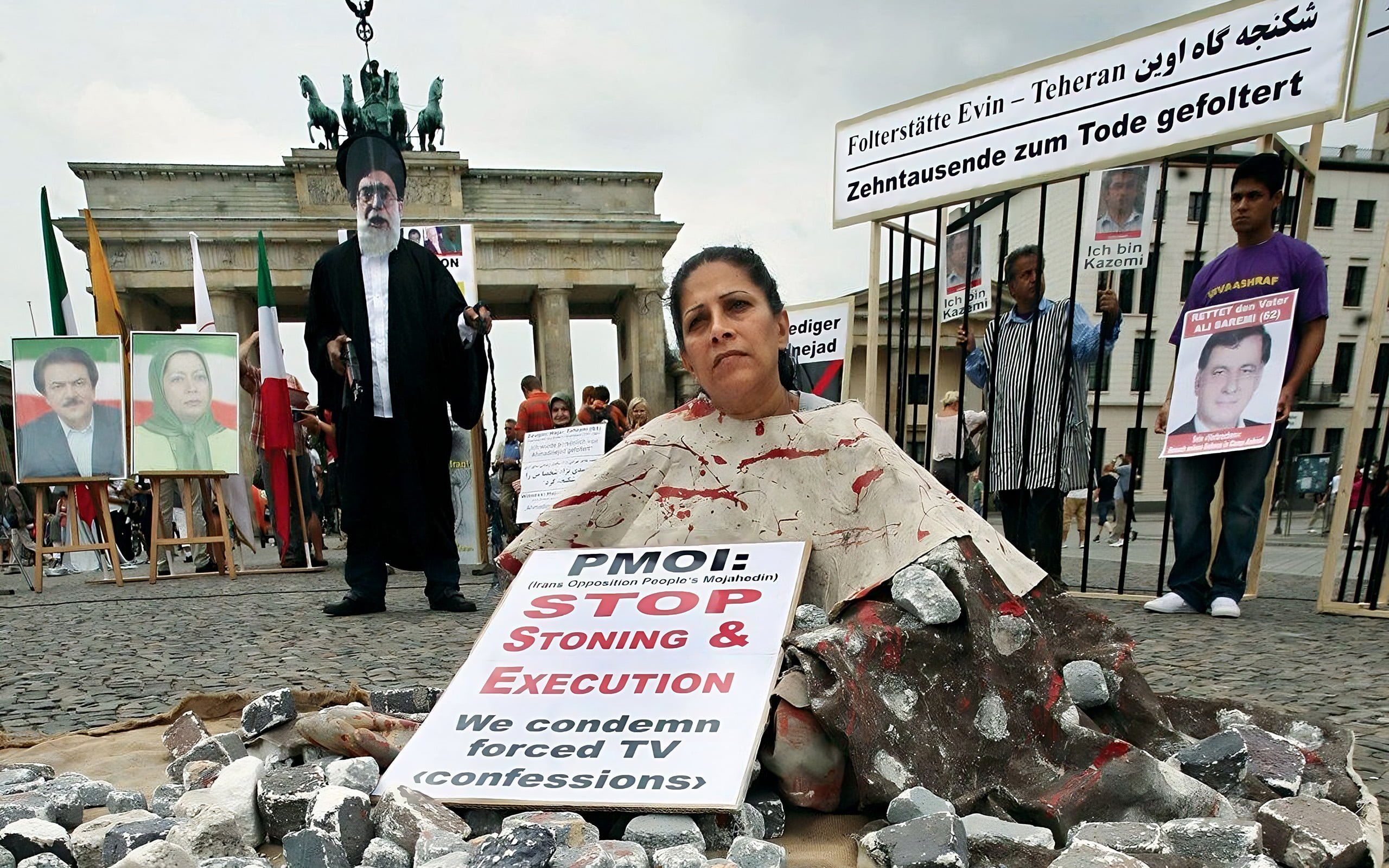
    If you had asked me a few years ago whether Islamic reform was possible, I would have said it was impossible. I wrongly assumed that Muslims were strictly following the Quran and believed that practices such as the hijab (where women must cover their heads) and violent traditions like stoning and executions for immoral acts stemmed from the Quran. I also thought that the unforgiving and suppressive aspects of Islam, which people came to dislike, were also in the Quran. How wrong I was.

    My old view overlooked a crucial fact: Islam’s violence did not stem from the Quran. Araps decided the Quran was incomplete and that his sayings, collected after his death, should be treated as if they were part of it.

    These sayings, known as Hadith, were collected after Muhammad’s death and were based on memory. Hence, they could be influenced by false memory, misunderstanding, fabrication, being taken out of context, or being told in anger by Muhammad.

    Without Mohammad’s request, after his death, Mohammad’s alleged words were collected and interpreted by early Muslim scholars, sometimes introducing practices and beliefs that did not align with the Quran’s message.

    Many important practices and beliefs in Islam were introduced by these early interpretations and rulings, which were sometimes inconsistent with the Quran’s spirit. Here are some examples of practices that were developed later and are not directly supported by the Quran:

    • Five Daily Prayers: The Quran encourages regular prayer but does not specify that it should occur five times a day at specific times. Islamic tradition established this practice later.
    • Hijab and Dress Code: While the Quran advocates modesty for both genders, it does not explicitly mandate that women cover their heads. The practice of wearing the hijab was introduced later.
    • Images of Muhammad: The Quran does not ban the depiction of Muhammad or other holy figures. The prohibition on images came from later interpretations and cultural practices.
    • Apostasy and Blasphemy: The Quran does not prescribe earthly punishments for apostasy or blasphemy. These issues are seen as matters between the individual and God, not subject to human enforcement.
    • Adultery: The Quran mentions a certain number of fogging punishments for adultery, but nothing further.
    • Homosexuality: The Quran does not prescribe specific earthly punishments for homosexuality or punishment from God in the afterlife. The story of Lot implies condemnation but that’s it,
    • Capital Punishment: Ordered only for murder, but also instructions given for the murder to avoid the punishment, such as financial settlement with the family of the victim.

    Given these points, Muslims must decide if the Quran is a perfect book, can one truly rely on it alone for guidance? Moreover, does it matter if the Quran remains unchanged, if practices and laws derived from the Hadith, which Mohammad did not order to collect, are treated as equivalent to Quranic teachings?

    Is there a need for additional laws and punishments to the Quran that God forgot to mention?

    Reform within Islam could involve revisiting and reinterpreting these practices and beliefs in light of the Quran’s teachings. It may require questioning the validity and impact of Hadith-based practices and focusing more closely on the Quran’s guidance.

    #IslamicReform, #QuranVsHadith, #ProgressiveIslam

  • The Religion Business Is Too Big to Fail

    The Religion Business Is Too Big to Fail

    Religion in the United States isn’t just about faith and worship—it’s also an economic force, not to be ignored. From donations to religious institutions to religious media, education, and even tourism, religion plays a major role in the U.S. economy. The stakes are too high for too many who stand to lose if Christianity and others wane in the country.

    Billions in Assets and Donations

    Religious organizations, including churches, synagogues, mosques, and other houses of worship, collectively hold a staggering amount of wealth. In 2020, these institutions were estimated to have assets worth around $1.2 trillion, far more than the GDP of the bottom 50 countries.

    Americans are generous when it comes to supporting their religious communities. In 2022, they donated about $134 billion to religious organizations, which made up roughly 27% of all charitable giving in the country that year.

    A Thriving Industry

    Religious media and publishing are another important part of the religious business market. Religious books, television, radio, and online content have a large and dedicated audience. The Bible, for example, continues to be one of the best-selling books in the United States year after year.

    Christian publishing is a multi-billion-dollar industry, with companies like Harper Collins Christian Publishing, which owns well-known imprints such as Zondervan and Thomas Nelson. Additionally, religious television networks like Trinity Broadcasting Network (TBN) and EWTN reach millions of viewers, bringing in substantial revenue from donations and advertising.

    A Booming Market

    Religious tourism is another area where religion and business intersect. People travel across the country to attend religious conferences, visit holy sites, and participate in pilgrimages, which contribute millions of dollars to local economies.

    Cities like Salt Lake City, home to the headquarters of The Church of Jesus Christ of Latter-day Saints, and Orlando, which features The Holy Land Experience, see significant economic benefits from religious tourists. These visitors spend money on hotels, restaurants, and other local businesses, boosting the local economy.

    Major Revenue Generators

    Many religious organizations in the United States operate schools, universities, hospitals, and charities. These institutions often generate substantial revenue. For example, Catholic healthcare systems are some of the largest in the country, bringing in billions of dollars each year.

    Religious schools and universities also contribute significantly to the economy through tuition fees. These institutions not only provide education but also create jobs and support local economies.

    Religious Retail

    The religious retail market, including books, music, apparel, and other religious-themed products, is another profitable area. Stores like LifeWay Christian Stores and online retailers like Christianbook.com cater to a large and loyal customer base. From Bibles and religious literature to Christian-themed clothing and jewelry, religious retail is a thriving industry.

    More Than Just Worship

    Mega-churches, which are large churches with weekly attendance of 2,000 or more, often operate like businesses. These churches may own real estate, run bookstores and cafes, and offer various services that generate income. Some of the largest mega-churches have annual budgets exceeding $20 million, making them significant players in the religious economy.

    Tax-Exempt Status

    Religious organizations in the United States benefit from tax-exempt status, which allows them to accumulate wealth without paying income or property taxes. This tax advantage helps religious institutions grow their financial assets and expand their operations.

    Reaching Millions

    Religious broadcasting networks, both television and radio, are major players in the media industry. Networks like TBN and Daystar generate significant revenue through advertising and donations. These networks reach millions of viewers and listeners, many of whom contribute financially to support their operations.

    The Takeaway

    Religion in the United States is more than a matter of faith—it’s a major economic force. From the billions of dollars held by religious institutions to the thriving industries of religious media, publishing, and tourism, religion plays an important role in the U.S. economy. Do you think profiteers would sit idly by and watch religion fade, or would they fight back to radicalize their followers and stay relevant?

    #ReligiousEconomy, #FaithAndFinance, #ChurchIndustry

  • The Teachings That Shook Christianity, But Not in a Good Way

    The Teachings That Shook Christianity, But Not in a Good Way

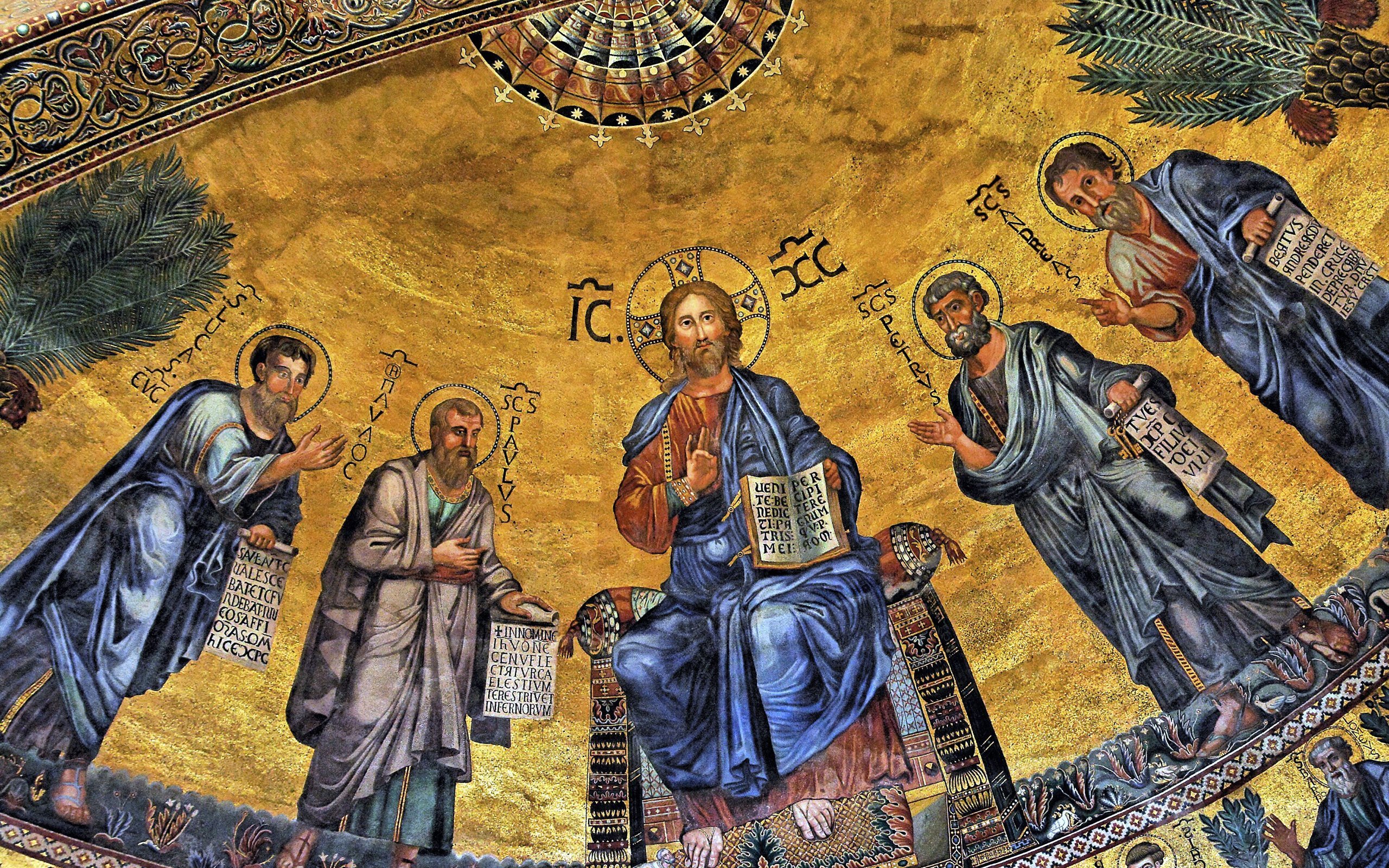
    The Apostle Paul, argueably the father of Christianity as a religion, laid the foundation for much of Christian theology through his letters. However, some of Paul’s teachings were ripe for exploitation over the centuries, leading to interpretations and practices that diverged from his likely original intent.

    Paul’s writing techniques were particularly susceptible to distortion due to their inherent ambiguity, use of metaphors, and context-specific advice that could be generalized or misapplied. His complex theological discussions, especially the tension between law and grace, allowed for selective emphasis, where readers could cherry-pick passages to support their own agendas. The authoritative tone Paul used lent itself to being wielded as a tool for control, while his occasional contradictions and focus on eschatology made it easier for later interpreters to manipulate his teachings for various ends, often distorting his original intent.

    Justification by Faith

    Paul’s teaching that believers are justified by faith alone, without the need for works, was central to his message. However, during the Protestant Reformation and in subsequent periods, this doctrine was sometimes used to argue that moral or ethical behavior was secondary or even unnecessary for salvation, leading to the development of “antinomianism,” the belief that Christians are not bound by moral law, which was far from what Paul originally envisioned.

    Submission to Authorities

    In his letter to the Romans, Paul instructed Christians to “submit to governing authorities” because they are established by God. This teaching has been exploited by various regimes throughout history to justify absolute obedience to tyrannical or unjust rulers. From European monarchies to Nazi Germany, this passage was used to suppress dissent and maintain oppressive power structures.

    The Role of Women

    Paul’s instructions regarding women’s roles in the church, such as women being silent in church and not having authority over men, have been historically exploited to justify the exclusion of women from leadership roles. These teachings were used to reinforce patriarchal structures within Christianity, often ignoring the more egalitarian aspects of Paul’s ministry, where he acknowledged and worked alongside female leaders.

    Slavery

    Paul’s letters contain instructions for slaves to obey their masters, which were later exploited to justify the institution of slavery, particularly in the American South. These passages were used to uphold slavery as a God-ordained practice, despite the broader Christian message of love, equality, and freedom.

    Sexual Ethics

    Paul’s teachings on sexual ethics, including his condemnation of same-sex relations, have been exploited to justify persecution, discrimination, and violence against LGBTQ+ individuals. These passages have been used to marginalize and oppress, rather than to encourage a inclusive and loving community that Paul envisioned.

    Original Sin

    Paul’s teaching on the fall of humanity and the concept of original sin was later developed by theologians like Augustine into a doctrine that became a cornerstone of Western Christian theology. This doctrine has been exploited to justify harsh practices such as infant baptism for the remission of sins and has been used to instill fear and guilt in believers, rather than the grace-filled message Paul intended.

    Eschatology and the End Times

    Paul’s teachings on the return of Christ and the end times have been exploited by various groups throughout history to predict the end of the world. These predictions have sometimes led to extreme behaviors, including withdrawal from society, financial exploitation, and even mass suicides, which are far removed from Paul’s original encouragement for believers to live in hope and readiness.

    Unity and Division

    Paul’s emphasis on unity within the Christian community meant to bring believers together. However, this teaching has sometimes been exploited to suppress dissent and enforce uniformity, leading to the marginalization of differing viewpoints within the church. The misuse of Paul’s call for unity has often killed healthy debate and diversity within the Christian community.

    #ChristianTheology, #ApostlePaul, #ReligiousHistory

  • Casting Out Witch Myths

    Casting Out Witch Myths

    Even in our childhood stories, witches have long been associated with fear, superstition, and persecution. What makes the concept of witches particularly tragic is that the very concept of witches has no roots in Christianity. Instead, it comes from Pagan folklore in Europe, a belief system that predates 

    Witches and Pagan Folklore

    In ancient Pagan cultures, witches were often seen as figures of mystery, possessing knowledge of the natural world, healing, and magic. These beliefs were centered around nature, seasons, and rituals that honored various deities. Witches in Pagan folklore were not necessarily evil but were sometimes revered as wise women or healers who could tap into the spiritual forces of the earth.

    When Christianity began to spread across Europe, it clashed with Pagan beliefs. Like in many other cultures for different religions, many of these old European traditions were absorbed, reinterpreted, or condemned instead of completely eradicating them. The figure of the witch, however, became increasingly demonized, transforming from a respected figure in some cultures to a symbol of evil.

    The Heresy of Believing in Witches

    Ironically, the heresy in Christian terms was not in practicing witchcraft but in believing in the existence of witches. The Bible does not support the idea of witches as they were understood in European folklore. Instead, it condemns practices like sorcery and divination, which were seen as attempts to gain knowledge or power outside of God’s will.

    However, during the Middle Ages and beyond, the fear of witches grew, fueled by superstition, ignorance, and the desire to control what was not understood, leading to witch hunts, where countless innocent people, mostly women, were accused of witchcraft, tortured, and executed. The Church has often played a central role in these persecutions.

    The Misguided Persecution

    The persecution of alleged witches was not based on Christian doctrine but on a distorted interpretation of both Pagan and Christian beliefs. In a time when disease, famine, and death were common, blaming witches provided a convenient scapegoat.

    The real tragedy is that these persecutions were rooted in a belief that was itself heretical. Christianity should have rejected the idea of witches as mythical creatures from Pagan stories, not embraced it as a justification for cruelty and murder.

    What does it mean for today?

    Looking back, we think the witch hunt is ridiculous; however, it clearly shows that religion is more about what the rulers and clergy conveniently interpret rather than what the books actually say in every Abrahamic faith.

    Did you know that the Quran suggests capital punishment only for murder and even then provides guidance on how to avoid this punishment for the culprit? There is no prescribed punishment for homosexuality, apostasy, or blasphemy, and the God of the Quran forbids people from judging others on His behalf and orders people to leave the final judgment to Him. Does this sound like Islamic to you?

  • 4 Major Threats Facing Religion

    4 Major Threats Facing Religion

    When it comes to religion, it is not a secret that more and more people are identifying as “nones.” But who are the culprits killing religion slowly but surely?

    A Changing World

    One of the biggest reasons for the rise of the “nones” is the rapid change in our world. We live in an information age, where almost the answer to a question is only a quick Google search away. This easy access to knowledge allows people to face different perspectives and question long-held beliefs.

    Additionally, science and technology have given us incredible insights into the world around us. Concepts like evolution, the Big Bang, and quantum mechanics can explain phenomena that were once attributed to divine forces. As a result, relying on religious explanations for life’s big questions is fading.

    Disillusionment with Organized Religion

    Another major factor driving people away from religion is disillusionment with religious institutions. Scandals involving church leaders, financial corruption, and hypocrisy have left many feeling betrayed by the very institutions they once trusted. For some, it’s hard to reconcile the teachings of love and compassion with the actions of certain religious leaders or organizations.

    Moreover, younger generations are increasingly turned off by what they perceive as rigid and outdated views on social issues. Topics like LGBTQ+ rights, gender equality, and reproductive rights often clash with traditional religious stances, leading many to distance themselves from organized religion in favor of more inclusive and progressive viewpoints.

    A Desire for Authenticity

    There’s an increasing desire for authenticity. People want to live lives that align with their true selves, and for some, that means stepping away from religious labels that no longer fit. Many “nones” still consider themselves spiritual or believe in a higher power, but they prefer to find out their beliefs on their own terms rather than within the confines of a particular religion.

    This shift is also about finding community and connection in new ways. Instead of attending church services, some people seek out like-minded individuals through online forums, meetups, or social activism, which offers support and a sense of belonging without the need for religious affiliation.

    The Influence of Secularism

    The rise of secularism is another piece of the puzzle. In many parts of the world, there’s a growing separation between religion and public life. Governments and institutions are becoming more secular, and there’s less pressure to conform to religious norms. This environment makes it easier for people to openly identify as “none” without fear of social repercussions.

    Secularism also encourages critical thinking and the questioning of authority, which can lead individuals to re-evaluate their religious beliefs. As society becomes more accepting of different worldviews, people feel freer to express their doubts and explore alternatives to traditional faith.

    What Does It All Mean?

    The future of organized religions appears bleak. As they scramble to catch up with the times, many are finding it increasingly challenging to reconnect with newer generations without alienating the older ones. Efforts to modernize and appeal to younger generations may seem like a step in the right direction, but the question we must ask ourselves is whether we need to keep making changes to religions so that we can continue believing in them.

    #Nones #Secularism #Spirituality

  • Is Islam the Religion of Peace?

    Is Islam the Religion of Peace?

    Whenever I hear that Islam is a religion of peace and tolerance, I approach these claims with skepticism. After all, the notion of executing people for apostasy, adultery, blasphemy, or homosexuality seems to contradict the idea of a peaceful and merciful faith. However, the more I dig into the teachings of Islam, the more I realize that these claims are not entirely baseless. Let me explain.

    The Tale of Two Religions

    Throughout history, religions have played a significant role in shaping societies and cultures. However, not all religions have approached the coexistence of different beliefs in the same way. Christianity, in particular, has a historical record of intolerance towards other religions and even within its own denominations. It may come as a surprise to some, but this stands in contrast to the teachings of the Quran, which emphasize respect for other religions and condemn forced conversion.

    Christianity’s Struggle with Coexistence

    Christianity’s historical approach to religious coexistence has been marked by a refusal to accept beliefs outside of its doctrine. From its earliest days, the Christian Church sought to establish itself as the one true faith, often at the expense of other religions. When different denominations began to emerge within Christianity, the intolerance extended inward. Each faction viewed the other as heretical, often branding them as sinners who needed to be stopped before their “sinful” ideas could spread.

    This intolerance wasn’t just theoretical—it had real, violent consequences. The Spanish Inquisition is a prime example of this, where the Catholic Church systematically persecuted, tortured, and executed those who were deemed heretics, including Jews, Muslims, and even fellow Christians. The conquest of the Americas further illustrates this point. Native populations were often given a simple choice: convert to Christianity or face brutal punishment, including death, clearly showing that coexistence was not an option under Christian rule—religious uniformity was enforced through violence and fear.

    Islam’s Stance on Religious Tolerance

    In contrast, the Quran explicitly orders Muslims to respect other religions and condemns forced conversion. Islam, according to the Quran, recognizes the existence of other faiths and allows them to practice freely, which is evident in the way Islamic empires governed the lands they conquered.

    I am not saying non-Muslims didn’t have grievances, however, it is a fact that after six centuries of living under Islamic rule, Eastern Europe, for example, retained its national identities and religions. This contrasts sharply with what might have happened if these regions had been invaded by a Christian empire—historical evidence suggests that the local population would likely have been slaughtered or forcibly converted to Christianity, given Christianity’s lack of acceptance for coexistence.

    The Quran emphasizes that faith is a matter of personal conviction and that no one should be compelled to convert to Islam. Surah Al-Baqarah (2:256) states, “There is no compulsion in religion.” This verse underscores the idea that belief cannot be forced—it must come from within. Moreover, the Quran does not prescribe any earthly punishment for apostasy or blasphemy.

    Hadiths and the Danger of Repeated Claims

    However, the Quran’s order that there is no compulsion in religion, has been overshadowed by the Hadith—sayings attributed to the Prophet Muhammad. Unlike the Quran, which Muslims believe to be the literal word of God, Hadith are reports of what Muhammad is believed to have said and done. Some of these sayings were passed down orally for generations before being written down, leading to questions about their authenticity and context. Unfortunately, some Hadith have been used to justify violence against non-Muslims, even though they contradict the Quran’s message of tolerance.

    For example, while the Quran prescribes violent punishments for certain immoral acts, such as 100 lashes for adultery, it also emphasizes forgiveness if the person repents. The Quran teaches that final judgment belongs to God alone, and humans should not assume this divine role. Yet, some Hadith advocate for harsh earthly punishments for apostasy and blasphemy, leading to the persecution of those who leave Islam or criticize it. This contradiction between the Quran and certain Hadith illustrates the danger of accepting repeated claims without question.

    When religious teachings are repeated often enough, they can become ingrained in people’s minds as absolute truth, even if they were never part of the original religion. In theory, Hadiths were supposed to be referred to if the Quran is too ambiguous, Arab rulers and teologians treat the Quran incomplete, and must be completed by Hadith as a source of what God forgot to mention in the Holy Book.

    By accepting these sayings with no context—some of which Muhammad may not have even said, or which were said in anger—Islam has been made more violent than it truly is.

    Is God of the Quran Merciful?

    Well, the God of the Quran is still vicious. He repeatedly threatens what He will do to those who do not believe in Him, either in this life or the afterlife. Yet He discourages taking over God’s role in judgment, and people who repent must be given, and the rest must be left to God.

    That being said, the God of the Quran orders violent punishments such as the amputation of hands for theft as a deterrent and lashing for adultery. However, it is ambiguous whether these punishments are still carried out for a person who has already repented.

    One of the most troubling aspects is that it allows followers to seek retribution if a family member is murdered. However, the murderer’s family can financially settle the issue with the victim’s family.

    Lashing and amputation were already forms of punishment in pre-Islamic Arabia, and I suppose financial settlements with the victim’s family made sense in 7th-century Arab culture. However, allowing retribution when there is no settlement has led to vendettas between families, with members killing each other. Sometimes, families did not even remember why the vendetta had started.

    The Takeaway

    While Christianity historically did not accept coexistence with other religions and denominations, Islam, as taught by the Quran, promotes tolerance and condemns forced conversion. However, Arab rulers and theologians, by treating the Quran as an incomplete book and conveniently supplementing it with alleged words of Muhammad with missing context, have distorted these teachings in a way that has made Islam unrecognizable. This distortion has led to the unjust persecution and often death of countless non-Muslims, those who leave Islam, LGBT people, and people who have had sex out of wedlock.

    Based on the Quran alone, I would still not call Islam the religion of peace due to the violent threats attributed to God; however, it is infinitely more tolerant and less violent than what Arabs have done to it over time.

    #Religious Coexistence #IslamChristianityHistory #FaithTolerance

    [amazon link=”B07M71LQH8″]
  • How Globalization Shakes Faith to the Core

    How Globalization Shakes Faith to the Core

    Imagine growing up believing that the sun revolves around the Earth. For centuries, this was accepted as absolute truth by nearly everyone. It wasn’t until new ideas spread that people began to see that this truth was, in fact, a misunderstanding. Now, imagine the beliefs you hold about religion—the ones you were taught from childhood. Could they, too, be influenced by where you were born rather than being universal truths? Thanks to globalization, more people are beginning to ask this question.

    The Role of Geography in Shaping Beliefs

    When you were a child, your religion was likely presented to you as the one true path. It was part of your identity, your community, and your world. But if you had been born in a different country or even a different region, chances are your beliefs would have been different, too, thanks to the fact that faith is often closely tied to the culture and geography where it is practiced.

    For example, a child born in Saudi Arabia is likely to be raised as a Muslim, while a child born in India might be brought up as a Hindu. In the United States, a child might grow up as a Christian, while in Japan, they might be raised with Shinto and Buddhist practices. Each of these religions is rooted in the history and culture of its region. But does this mean that one is more true than the others? Or is it possible that what we believe is simply a matter of where we were born?

    Globalization: Bridging the Gaps

    Globalization, the process by which the world is becoming more interconnected through trade, communication, and travel, has had a fundamental impact on how we see the world—including how we view religion.

    In the past, people, more often than not, lived their entire lives without encountering someone of a different faith. Today, on the other hand, it’s common to interact with people from various religious backgrounds, whether in person or online, which has been an eye-opener to many.

    For instance, when someone from a predominantly Christian country befriends someone who is Muslim, they may start to see similarities and differences between their beliefs. They might realize that both religions share values like compassion, charity, and devotion despite having different practices and teachings, leading to the realization that no one religion has a monopoly on truth.

    The Concept of Religious Relativism

    This growing awareness has led to what some call religious relativism—the idea that one’s religion is not the absolute truth but rather one of many possible truths (or fallacies). For many, this is a liberating thought. It allows for the possibility that other religions might offer valuable insights and that one’s faith doesn’t have to be in conflict with others.

    But religious relativism can also be unsettling. It challenges the notion that one’s beliefs are unique or divinely chosen. It forces people to consider that if they had been born in a different part of the world, they might have been just as devoted to a completely different, potentially making individuals uncomfortable, especially if one’s religion has been a central part of their identity.

    The Impact on Faith and Identity

    As more people recognize the role that geography plays in shaping beliefs, they begin to question their faith. They wonder if they believe what they do simply because they were raised to do so rather than because it is the ultimate truth, pushing them into a period of doubt and reevaluation.

    Conversely, for some, this realization strengthens their faith, knowing that they have chosen to follow it despite the existence of other paths.

    The Global Conversation on Religion

    Globalization has also sparked a global conversation about religion. Social media, international travel, and the availability of information online mean that people from different faiths can engage in dialogue like never before.

    Furthermore, people coming from parts of the world where disbelief is seen as an illogical position have met people who were content with their non-religion.

    The Future of Religion in a Globalized World

    As the world continues to become more interconnected, it’s likely that the trend of questioning religion as an accident of geography will spread. Future generations will grow up with an even greater awareness of the diversity of beliefs around the world and the fact that there is no evidence to suggest one religion is supported by stronger evidence than the other.

    The Takeaway

    Globalization is helping people see that their religion, once taught as absolute truth in childhood, is more of an accident of geography, helping them realize there is no good reason to choose one religion over the other on a factual basis.

    Some see science as the true enemy of religion, overlooking the fact that globalization is an infinitely more formidable foe of faith.