Explore our extensive collection of resources on religion, featuring insightful articles, thought-provoking discussions, and comprehensive guides to diverse faiths and spiritual traditions. From ancient practices to contemporary beliefs, our content delves into the history, rituals, teachings, and cultural impact of various religions. Discover new perspectives and deepen your understanding of spirituality and religious communities with our expertly curated content. Whether you’re a scholar, seeker, or just curious, find inspiration and knowledge in our dedicated category on religion.
The question of whether God exists is one of the oldest and most debated topics in human history. Over the centuries, philosophers, theologians, and thinkers have proposed countless arguments to support the existence of a divine being. While some find these arguments compelling, others believe they fall short. Today we will get into some of the most famous arguments for God’s existence and discuss why they may not be as convincing as they seem.
The Cosmological Argument
One of the oldest and most widely discussed arguments for the existence of God is the cosmological argument. It posits that everything that exists has a cause, and because the universe exists, it, too, must have a cause. This cause, the argument goes, must be something outside the universe and not bound by the same laws — namely, God.
Why It Fails
Critics of the cosmological argument often point out that it leads to an infinite regress. If everything must have a cause, what caused God? To counter this, proponents claim that God is a necessary being who doesn’t require a cause. However, this exception seems arbitrary and raises the question of why the universe itself couldn’t be a necessary being without a cause. Additionally, modern physics suggests that the universe could have arisen from quantum fluctuations, challenging the idea that it needs a cause at all.
The Ontological Argument
The ontological argument, first proposed by St. Anselm in the 11th century, is more abstract. It starts with the concept of God as the greatest being imaginable. The argument claims that a being that exists both in the mind and in reality is greater than one that exists only in the mind. Therefore, if God is the greatest being imaginable, God must exist in reality.
Why It Fails
The ontological argument has been criticized for being a mere play on words. Just because we can conceive of the greatest possible being doesn’t mean that such a being exists in reality. Philosophers like Immanuel Kant argued that existence is not a predicate or a quality that can make something greater. Additionally, the argument can be used to “prove” the existence of any perfect entity, which leads to absurd conclusions.
The Argument from Design
Also known as the teleological argument, the argument from design observes the complexity and order in the universe and concludes that it must have been designed by an intelligent being. The complex structure of biological systems, the precise laws of physics, and the fine-tuning of the universe are often cited as evidence of this divine designer.
Why It Fails
One major criticism of the argument from design is the presence of flaws and imperfections in the natural world. If an intelligent designer created the universe, why are there so many imperfections and instances of poor design? Additionally, the theory of evolution by natural selection provides a robust explanation for the complexity of life without invoking a designer. The fine-tuning argument also faces challenges from the multiverse theory, which posits that our universe is just one of many, each with different physical constants. In this context, it’s not surprising that at least one universe would have the conditions suitable for life.
The Moral Argument
The moral argument suggests that objective moral values and duties exist and that these can only be grounded in a divine being. According to this argument, if God does not exist, objective morals do not exist either. Since we observe moral values and duties, God must exist to provide their foundation.
Why It Fails
One issue with the moral argument is the challenge of proving the existence of objective moral values. Moral relativists argue that morals are subjective and culturally dependent. Furthermore, it’s possible to ground morality in secular frameworks, such as human well-being or social contracts, without invoking a divine lawgiver. The existence of moral disagreements and the evolution of moral norms over time also suggest that morality might be more complex and human-centric than the argument allows.
The Takeaway
While the arguments for God’s existence have been influential and thought-provoking, they all face significant challenges and criticisms. The cosmological argument struggles with the question of what caused God, while the argument from design is undermined by natural explanations like evolution and the multiverse theory. The ontological argument is often seen as a linguistic trick, and the moral argument fails to conclusively establish objective moral values or their divine origin.
In the end, whether one finds these arguments compelling often depends on personal beliefs and perspectives. That being said, none of the arguments explain why there has to be only one god and why that god has to be the Abrahamic one.
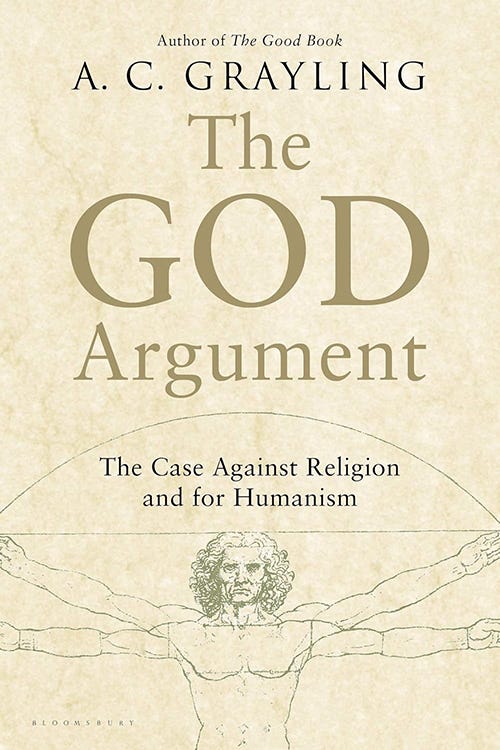
The God Argument by A. C. Grayling is a significant contribution to the debate on religion and secularism. Grayling, a critic of religion, meticulously examines the arguments for the existence of God and the motivations behind religious belief. He then advocates for humanism as a compelling alternative to religion, promoting a worldview grounded in reason, evidence, and a commitment to goodness without infringing on individual beliefs or freedoms.
Grayling presents humanism as an ethical framework based on sympathy and tolerance, aiming to understand human nature and condition. While acknowledging the historical reasons for the emergence of various faiths, he argues that organized religion should no longer hold a privileged status in society. The book asserts that a secular belief system, free from religious dogma, fosters a more compassionate and caring perspective on life.
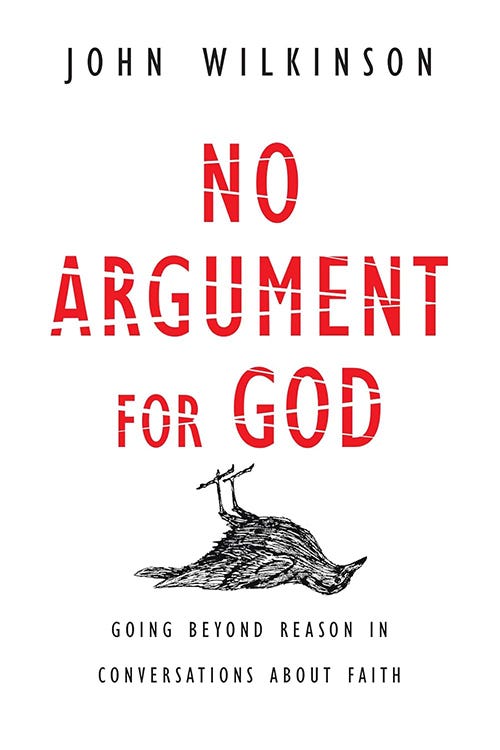
In No Argument for God, John Wilkinson challenges the prevailing notion that religion is irrational and outdated. While the New Atheists argue that belief in God is a sign of intellectual weakness, Wilkinson asserts that the perceived irrationality of faith is actually a strength. He argues that rationalism imposes artificial constraints on our understanding, focusing only on what can be empirically observed rather than exploring deeper meanings and the “why” behind existence.
Wilkinson contends that while rational investigation is valuable, it often falls short of addressing our deeper yearnings and the search for revelation. He suggests that true understanding and fulfillment come from engaging with the divine in a way that transcends purely logical arguments, leading to a transformative encounter with God that satisfies both the mind and the soul.
Throughout human history, the question of God’s existence has captivated minds, sparked debates, and shaped civilizations. This intense search has kept countless individuals, from ancient philosophers to modern scientists, awake at night. Yet, despite centuries of contemplation and argumentation, constructing a methodology to definitively prove the existence of God remains an impossible task.
The Nature of Proof
The concept of proof varies widely depending on the context. In scientific contexts, the proof requires repeatable observations and experiments. Scientific proof also involves falsifiable hypotheses to ensure reliable and consistent knowledge.
In mathematics, proof is derived from logical reasoning and axioms. Mathematical proofs are rigorous and precise, often requiring logical iterations to conclusively demonstrate the validity of statements. Unlike scientific proofs, and luckily for mathematicians, mathematical proofs are not subject to change through new observations; once proven, mathematical theorems remain true.
Legal proof, on the other hand, relies on evidence and testimony to establish facts beyond a reasonable doubt. Legal proof involves presenting evidence, such as physical objects, documents, or witness testimonies, to build a case. The goal is to convince a judge or jury of the truth of a claim. While judiciary systems aim to minimize it, the evaluation of legal proof is subjective.
When it comes to proving the existence of God, none of these methods are entirely applicable or sufficient. Scientific proof is limited to the natural world and relies on empirical evidence, which is not easily applicable to metaphysical concepts. Mathematical proof requires logical structures and axioms that are not readily available for theological arguments. Legal proof depends on tangible evidence and testimony and unlike the other two types, it is not objective and universal.
The Limitations of Science
Science has been remarkably successful in explaining natural phenomena and uncovering the mysteries of the universe. Through detailed observation, experimentation, and the development of theories, science has advanced our understanding of everything from the smallest particles to the vastness of space. However, science has inherent limitations when it comes to proving or disproving the existence of God.
One of the main principles of science is methodological naturalism, which means that science operates under the assumption that natural causes explain natural phenomena. While methodological naturalism is powerful for investigating and understanding the world around us, it cannot, by definition, investigate supernatural claims, one of which is God, an entity that is not bound by the laws of nature.
Another limitation is that science relies on collecting data through observation and experimentation in the physical world. God, as typically conceived, exists beyond our physical world, making it impossible to gather direct, empirical evidence of their existence.
Furthermore, although experiments must be repeatable and their hypotheses falsifiable in science, the concept of God often falls outside these criteria.
Lastly, the scope of scientific inquiry is limited to understanding how the natural world works. However, it does not address why the natural world exists in the first place or whether there is a purpose behind its existence, leaving these types of questions to philosophers or theologians.
Philosophical Challenges
Philosophy has long grappled with the question of God’s existence, offering various arguments and counterarguments over the centuries. However, it, too, faces significant hurdles in providing a definitive answer to this impossible question.
One major challenge is the definition of God, which lacks universality as different cultures and religions conceive of divine beings in various ways. Some see God as an all-powerful, all-knowing, and all-good entity, while others have more abstract or varied interpretations. This diversity makes it difficult to prove the existence of any specific deity because the criteria for proof vary widely.
Philosophers have proposed logical arguments for God’s existence, such as Anselm’s ontological argument, suggesting that the very concept of God as the greatest being implies God’s existence, as existence is a necessary attribute of greatness. However, these ontological arguments often rely on disputable premises and word games.
Another significant hurdle is the problem of evil. Should an all-powerful, all-knowing, and all-good God exists, why does suffering occur? Philosophers have struggled with this question for centuries, offering various justifications for God’s tolerance to evil.
The issue of infinite regress also presents a philosophical challenge. The question “If God created the universe, then what created God?” leads to an infinite regress, where each cause must have a prior cause, stretching back infinitely.
The Limits of Human Understanding
The limits of our ability to comprehend the nature of existence and reality become evident when tackling profound questions like the existence of God.
One major limitation comes from cognitive biases. Human thinking is subject to various biases that can influence our perception and reasoning. These biases can lead us to see patterns where none exist, make illogical leaps, or favor information that supports our preconceptions while ignoring evidence to the contrary.
Another limitation is the scope of our perception. Our senses and the instruments we have developed to extend them can only detect a tiny fraction of reality. For example, we cannot see ultraviolet light without special equipment, and we are only beginning to understand phenomena like dark matter and dark energy.
Moreover, the concept of an all-powerful, all-knowing being may be inherently beyond human comprehension. Our brains have evolved to handle the complexities of daily life on Earth, not to grasp infinite or absolute entities.
Faith and Personal Experience
For many people, belief in God is based on faith and personal experience rather than empirical evidence.
One key reason is the subjective nature of personal spiritual experiences. These experiences can be deeply meaningful and transformative for individuals, providing a sense of connection, purpose, or understanding. However, they are inherently subjective and not verifiable by others. What one person experiences as a divine encounter, another may interpret differently or not at all. This subjectivity makes it difficult to use personal experiences as a basis for universal proof of God’s existence.
Another important factor is faith. Religious faith often involves believing without concrete proof. For many, faith is about trust and conviction in the absence of empirical evidence. This means that the quest for definitive, empirical evidence of God can seem somewhat contradictory to the nature of faith itself. Faith is not necessarily about seeking scientific validation but about a personal commitment to a belief system or deity.
The diversity of beliefs around the world further highlights that personal conviction, rather than universal proof, drives belief in God. Different cultures and religions have developed a wide variety of spiritual beliefs and practices, each with their own conceptions of the divine. This diversity suggests that belief in God is often rooted in cultural, historical, and personal contexts, rather than a single, universally accepted proof. The existence of many different religions and spiritual paths indicates that what is compelling or convincing for one group may not be for another, underscoring the role of personal and collective experiences in shaping belief.
The Problem of Unfalsifiability
A key issue in proving God’s existence is the concept of unfalsifiability.
One aspect of this issue is the shifting goalposts. As science explains more natural phenomena, the domain of God often shifts to areas that are not yet explained. This means that as our scientific understanding grows, the idea of God is continually repositioned to remain outside the reach of scientific scrutiny. This perpetual shifting makes the concept of God unfalsifiable, as it continually retreats to the margins of our current knowledge.
Supernatural claims are another factor that contributes to unfalsifiability. By definition, supernatural explanations fall outside the realm of natural investigation. Science is designed to study and explain natural phenomena, so anything deemed supernatural is beyond its scope. Because of this, supernatural claims, including those about God, cannot be conclusively proven or disproven by scientific methods. This inherent limitation ensures that supernatural explanations remain unfalsifiable.
The absence of evidence is also a significant point. While it is true that the absence of evidence is not evidence of absence, the lack of conclusive proof for God’s existence after millennia of searching is noteworthy. Despite extensive philosophical, theological, and scientific inquiry, no definitive evidence has emerged to conclusively prove God’s existence. This persistent absence of evidence highlights the challenge of unfalsifiability, as it suggests that the question of God’s existence may be inherently beyond the reach of empirical investigation.
Logical and Epistemological Considerations
From a logical and epistemological standpoint, proving God’s existence faces several challenges.
One significant challenge is the burden of proof. In logical argumentation, the burden of proof typically lies with the person making a positive claim. If someone asserts that God exists, it is their responsibility to provide evidence to support this claim. On the other hand, proving non-existence is often impossible, as it would require demonstrating that something does not exist anywhere under any circumstances. This asymmetry makes it particularly challenging to address the existence of God through traditional logical methods.
Another influential idea is Russell’s teapot, introduced by philosopher Bertrand Russell. He argued that the burden of proof lies with the person making unfalsifiable claims. Russell used the analogy of a teapot orbiting the sun: while it is impossible to disprove the existence of such a teapot, the lack of evidence for it means that we are not justified in believing in its existence. Similarly, if someone claims that God exists but provides no verifiable evidence, the burden of proof remains on them, as unfalsifiable claims do not warrant acceptance without substantial evidence.
Occam’s Razor also presents a challenge. This principle suggests that simpler explanations are preferable to more complex ones when multiple explanations are available. In the context of the existence of God, Occam’s Razor might favor natural explanations over supernatural ones. For instance, if natural phenomena can be explained through scientific theories without invoking a divine being, the principle of Occam’s Razor would suggest that we should prefer these simpler, natural explanations. This principle encourages skepticism towards more complex, supernatural claims when simpler alternatives suffice.
The Impact of Cultural and Historical Context
Our understanding of God and the quest to prove divine existence are deeply influenced by cultural and historical factors.
One major factor is cultural diversity. Throughout history, different cultures have developed vastly different concepts of divinity. From polytheistic pantheons in ancient Greece and Rome to the monotheistic God of Abrahamic religions, the variety of divine conceptions is immense. This diversity makes it challenging to prove the existence of any one particular god, as each culture’s understanding of divinity is shaped by its unique history, values, and experiences. The multiplicity of beliefs suggests that the concept of God is more fluid and culturally relative than a single, universally accepted entity.
Historical development also plays a significant role in shaping religious ideas. Over time, religious beliefs and practices have evolved, reflecting the changing social, political, and intellectual contexts of different eras. For example, the transition from polytheism to monotheism in many cultures was influenced by broader shifts in societal organization and philosophical thought. These changes indicate that religious ideas are not static truths but are instead dynamic and responsive to the conditions of their time. This historical evolution makes it difficult to argue for the timeless and unchanging existence of a specific deity.
Psychological and sociological factors also contribute to the belief in God. Humans have a natural tendency to seek patterns, meaning, and explanations for the unknown. This inclination can lead to the creation and acceptance of religious beliefs, as they provide a framework for understanding the world and our place in it. Additionally, social structures and communities often reinforce these beliefs, creating a sense of belonging and shared purpose. These psychological and sociological influences suggest that belief in God may arise more from human nature and societal dynamics than from empirical provability.
The Takeaway
The impossibility of proving God’s existence stems from a combination of factors: the limitations of scientific inquiry, the philosophical challenges involved, the bounds of human understanding, the nature of faith and personal experience, the problem of unfalsifiability, logical and epistemological considerations, and the influence of cultural and historical contexts.
Ultimately, the question of God’s existence is about belief rather than proof.
Ancient stories aren’t short on gods and heroes with extraordinary origins. A common narrative is the miraculous birth, where divine intervention plays a critical role. In Greek and Roman mythology, several gods and demigods were born through these mysterious ways.
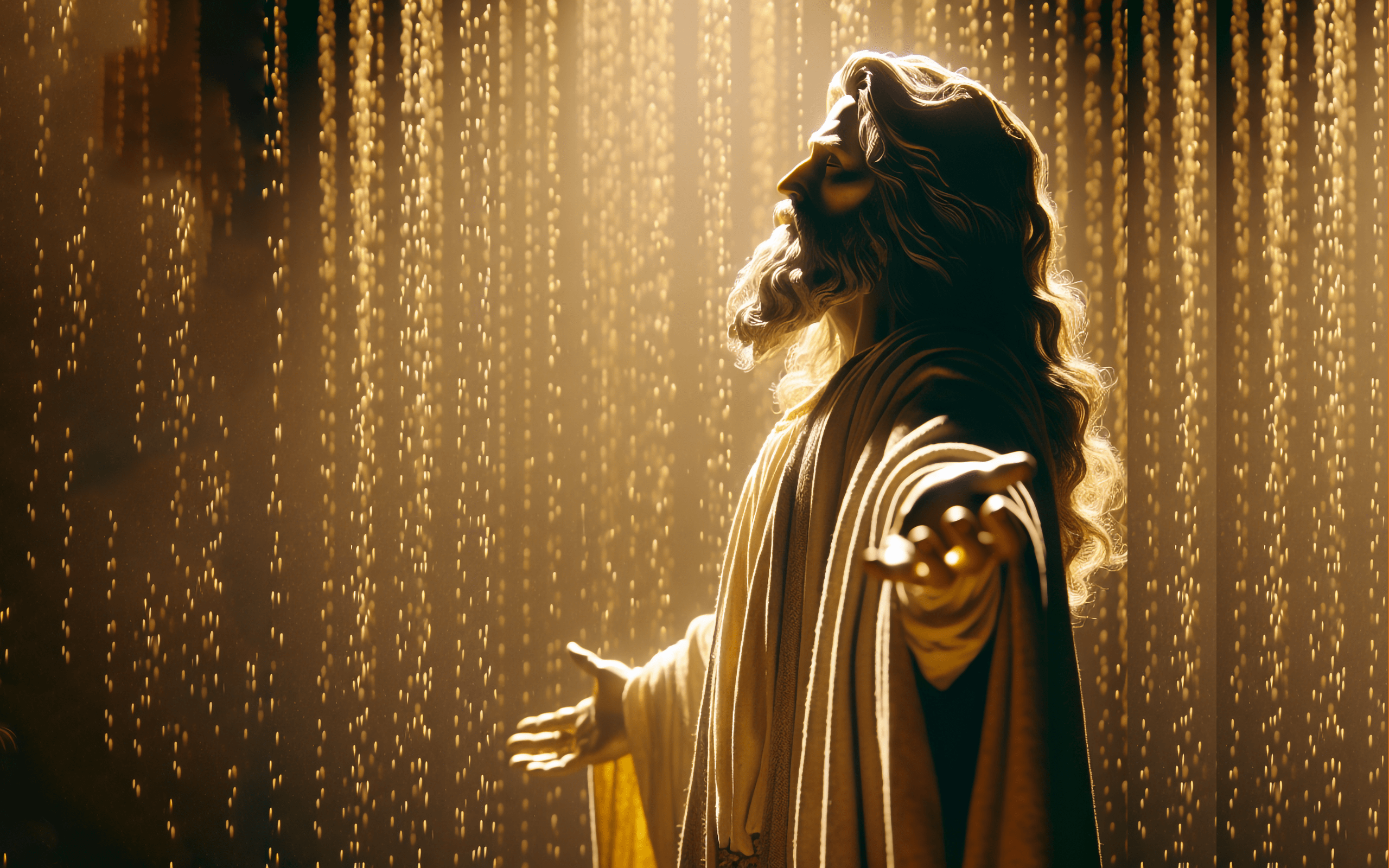
Take Hercules, for example, one of the most renowned heroes in Greek mythology. He was the son of Zeus, the king of the gods, and Alcmene, a mortal woman. Zeus disguised himself as Alcmene’s husband to conceive Hercules. Another notable example is Perseus, who was born to Danaë after Zeus visited her in the form of a golden shower. These stories, along with many others, set a precedent for miraculous births involving divine intervention.
Jesus’ Birth: A Unique Yet Familiar Narrative
The story of Jesus’ birth in Christian tradition replicates certain elements of these ancient myths while holding a unique significance for believers. According to Christian teachings, Jesus was born to the Virgin Mary, who conceived him through the Holy Spirit. Jesus’ nothing short of miraculous birth, occurring without a biological father, aligns with the theme of divine intervention found in many mythologies.
For example, in Hindu mythology, Kunti, the mother of the Pandavas in the scripture, was granted a wish by the sage Durvasa, allowing her to conceive children by involving various gods without losing her virginity (every girl’s dream?). She used this wish to give birth to Karna, Yudhishthira, Bhima, and Arjuna.
However, Christians believe Jesus’ birth is unique and holds special significance as it marks the incarnation of God in human form, which Christians view as a one-of-a-kind event.
While Muslims agree with Christians on the uniqueness of Jesus’ birth and his status as the prophesied Messiah, they don’t buy his divinity.
Sacrifice and Resurrection in Mythology
Sacrifice and resurrection are abundant in ancient myths. Long before Jesus, many deities and heroes had undergone death and returned to life, symbolizing renewal and triumph over death for their followers. In Egyptian mythology, Osiris, the god of the afterlife, was murdered by his brother Set and later resurrected by his wife, Isis. According to believers, the resurrection of Osiris represented the cyclical nature of life and death, hope and continuity.
Jesus’ crucifixion and resurrection are central to Christianity. Its followers see Jesus’ death as a sacrifice for humanity’s sins and his resurrection as a victory over death and the promise of eternal life. While the themes aren’t original, Christians view Jesus’ resurrection as a historical and unique event with profound theological implications.
That being said, Gnostic Christians, who emerged in the early centuries of Christianity, held conflicting views about Jesus’ death and resurrection. While some Gnostics accepted what later became the orthodox Christian doctrine, others believed that Jesus ascended to heaven before the crucifixion and that Judas was crucified in his place, a view that was later adopted by Islam in the 7th century.
Eating Flesh and Drinking Blood: The Eucharist
One of the more controversial aspects of Christian practice is the Eucharist, also known as Communion. During this ritual, believers eat bread and drink wine, which symbolizes the body and blood of Jesus, based on his instructions at the Last Supper.
There are no records of a ritual mimicking the awkward Communion; hence, it seems Christianity holds the copyright.
The Utility of Belief
Belief in God and religious narratives fulfill a utilitarian purpose, providing morals, thought, and meaning to life. From this perspective, belief in God is key to understanding the world, morality, and human existence.
For many, belief in God provides comfort and a sense of connection to something greater than themselves. It can offer moral guidance and a foundation for community and shared values. The stories of divine births, sacrifices, and resurrections reinforce these beliefs by illustrating themes of hope, renewal, and moral integrity.
However, it is also possible to derive meaning and morality from secular sources, such as human reason, empathy, and cultural traditions. To many, secular approaches provide a strong understanding of human existence and ethical living.
At the end of the day, it is up to individuals which source they pick to base their understanding of reality on. However, one must bear in mind that the utility of belief says nothing about its validity.
The Takeaway
Among Abrahamic religions, what Christianity sells is arguably the toughest to buy. However, unlike many other religion critics, I can relate to belief in a higher power than oneself. However, wouldn’t this power be too intelligent to follow the borrowed narratives of divine births, sacrifices, and resurrections to guide their people with confusing texts that will be interpreted in many ways as well as obviously misinterpreted?
By the way, If there has to be a higher power for our universe to make sense, why should there have to be only the one?
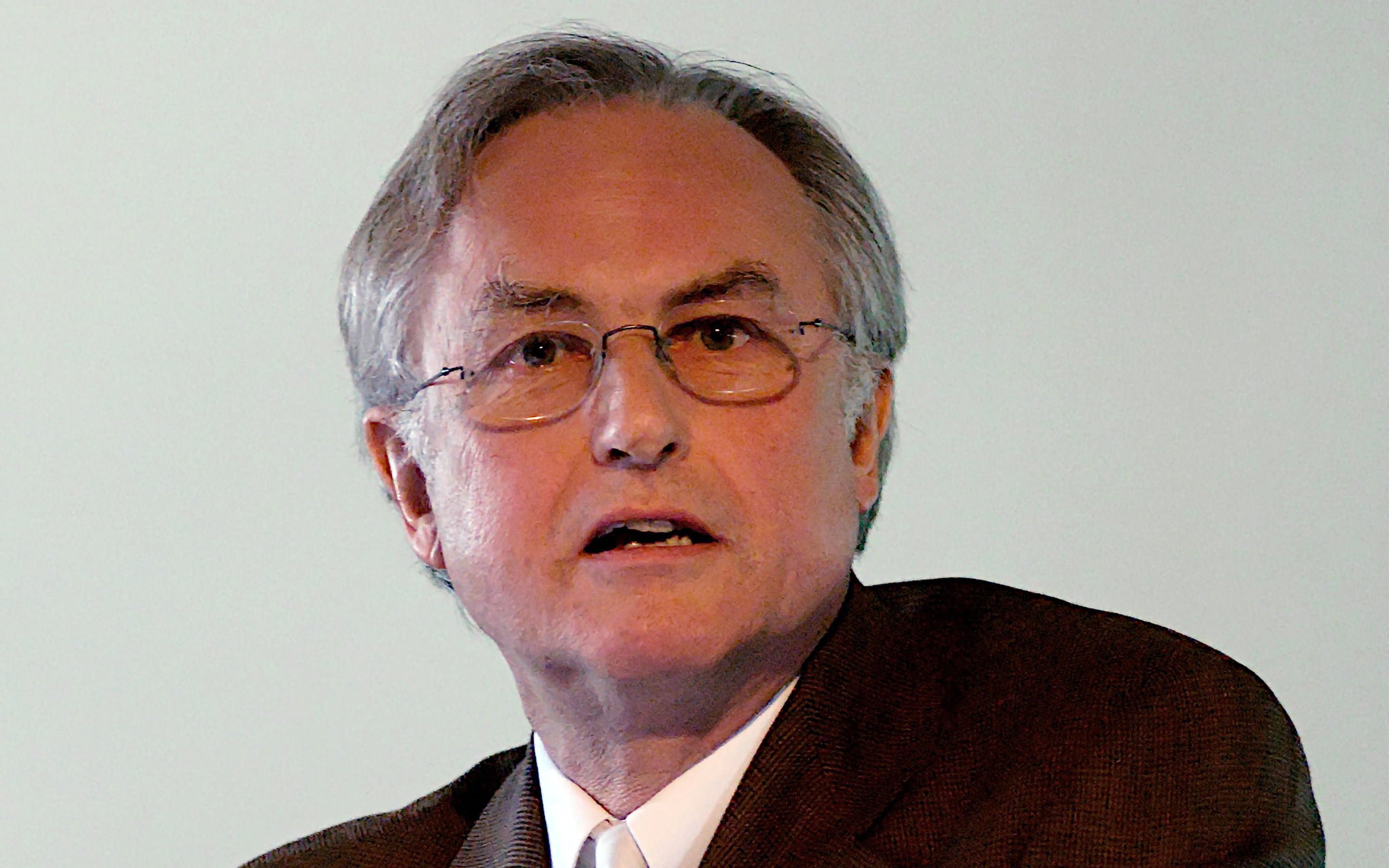
Richard Dawkins, whose name often sparks heated debates about religion, science, and atheism, has unquestioningly left an indelible mark on modern thought. But how accurate is it to call him an antitheist? To answer this question, we must examine Dawkins’ beliefs, public statements, and positions on religion.
Understanding Antitheism
Before we can determine whether Dawkins fits the antitheist label or not, we must first make what antitheism means clear. While atheism is simply the lack of belief in gods, antitheism actively opposes the belief in deities and often argues that such beliefs are harmful to society. Antitheists typically assert that religion is both false and detrimental to human progress and well-being. While atheism can be a secularist and democratic position, antitheism often has non-democratic associations.
Dawkins’ Background and Influence
The British evolutionary biologist Richard Dawkins became a household name in some circles with his 1976 book “The Selfish Gene,” making the gene-centered view of evolution popular. However, it was his post-9/11 works, particularly “The God Delusion” (2006), that brought him into the spotlight as a harsh critic of Christianity and Islam.
Dawkins, along with Christopher Hitchens, Sam Harris, and Daniel Dennett, has become the leading public figure of the “New Atheism” movement and has come to be known for his outspoken criticism of religious beliefs and institutions, sometimes overlooking historical facts.
Dawkins’ Stance on Religion
Dawkins has spent a significant portion of his career as a public figure arguing against the existence of God and the validity of religious beliefs. He has consistently maintained that there is no credible evidence for the existence of any supernatural being. However, being a scientist, he asserts that the existence of God is improbable rather than impossible since scientists never lay claims for the non-existence of any given such claims are by nature unprovable.
According to his public speeches, Dawkins’ primary concern is not the abstract concept of a deity but the real-world impacts of faith. He has frequently criticized organized religion, particularly the Abrahamic faiths (Christianity, Islam, and Judaism), for their negative influences on society.
The “Good People Doing Bad Things” Argument
One of Dawkins’ most notable arguments is how religions cause good people to do bad things. He insists that religious beliefs can motivate otherwise moral individuals to engage in harmful or unethical behaviors due to their adherence to religious doctrines or interpretations.
“The good people doing bad things” argument is central to antitheist thought, as it positions religion both false and harmful. Dawkins has provided numerous examples to support this claim, from historical religious conflicts to modern-day issues like opposition to stem cell research or resistance to climate change action based on religious grounds.
Dawkins’ Ideal Society
Dawkins says his dream society would consider the claim for any supernatural entities’ existence as baseless. Dawkins advocates for a world where decisions are based on empirical evidence and rational thought rather than religious doctrine or supernatural beliefs.
However, it’s important to note that Dawkins does not support dogmatic atheism. The statement that he “rejects the dogma ‘there is no God’” is consistent with his scientific approach. Dawkins has often emphasized that he cannot prove with absolute certainty that no god exists. Instead, he argues that the lack of evidence for a god makes the probability of one existing extremely low.
This position aligns with Dawkins’ scientific background. He approaches the question of God’s existence as he would any scientific hypothesis, arguing that extraordinary claims require extraordinary evidence. In the absence of such evidence, he concludes that it’s reasonable to live as if there is no god.
Is Dawkins an Antitheist?
Given the evidence, it’s fair to say that Richard Dawkins exhibits many characteristics of an antitheist. He goes beyond simply not believing in a god to actively arguing against the merits of religious belief. His works and public statements consistently portray religion as not just false but potentially harmful to individuals and society.
However, Dawkins himself has not always embraced the label of antitheist. He has described himself as a “tooth fairy agnostic,” meaning he’s as certain that God doesn’t exist as he is that the tooth fairy doesn’t exist. This playful description underscores his evidence-based approach to the question of God’s existence.
Additionally, Dawkins has admitted certain aspects of religious culture, such as the beauty of religious art and music, to have been to society’s advantage. While he strongly opposes religious beliefs and their societal impacts, he doesn’t wholesale reject every aspect of religious heritage.
He believes in freedom of religion as a fundamental human right and opposes discriminatory bans targeting specific faiths, such as the burqa ban in France. Furthermore, he wants the inclusion of all religions and holy books as literary texts in the school curriculum, arguing that religious literacy is essential for understanding European history and culture.
The Controversy Surrounding Dawkins
Dawkins’ outspoken views have made him a controversial figure. Supporters praise him for his clear articulation of atheist ideas and his defense of scientific thinking. On the other hand, critics accuse him of being overly confrontational and dismissive of religious perspectives.
Some have argued that Dawkins’ approach is counterproductive, potentially alienating moderate religious individuals who might otherwise be open to scientific ideas. Others defend his style, arguing that challenging strongly held beliefs requires a direct and uncompromising approach.
The Takeaway
While Richard Dawkins may not always use the term “antitheist” to describe himself, his beliefs and public statements align closely with many antitheist positions. He goes beyond atheism to actively argue against the validity and value of religious beliefs. His primary concern is not the abstract question of God’s existence but the real-world impacts of religious beliefs and institutions.
Dawkins envisions a society guided by evidence and reason rather than faith and dogma. He rejects the belief in God and the idea that such belief is benign or beneficial. At the same time, he maintains a scientist’s openness to evidence, rejecting dogmatic atheism in favor of an evidence-based approach to the question of God’s existence.
In the wake of the Charlie Hebdo attack, discussions about whether Islam bans images of the Prophet Muhammad have become heated and widespread. Some Muslims assert a strict prohibition, while others, both Muslim and non-Muslim, argue for a more nuanced interpretation.
Complex Islamic Jurisprudence
Many debates have centered on verses from the Quran and sayings of the Prophet (Hadith), yet neither provides a definitive answer. To truly understand the issue, one must delve into Islamic law, which reveals a more complex picture.
Early Islamic Legal Opinions
Ibn Qudama (d. 1223), a notable Sunni theologian, discussed the legality of images in his medieval law book. He argued that images are not inherently prohibited; their permissibility depends on what they depict and their context. This early source suggests that a blanket ban on images is not supported by Islamic law.
A century later, Ibn Taymiyya (d. 1328), influential in today’s Wahhabi and Salafi movements, issued legal opinions warning against using images for seeking intercession or favors from God. However, even his conservative views did not explicitly ban images, focusing instead on their misuse in religious practices.
Modern Interpretations and Reforms
Moving forward, Muhammad ‘Abduh (d. 1905), a reformist jurist in Egypt, argued that images and paintings preserve Islamic cultural heritage and knowledge. He emphasized that as long as images are not used in idolatry, depicting people, plants, and trees is not forbidden. His stance highlighted the educational and cultural benefits of images, rejecting a blanket prohibition.
Impact of Mass Media
The 19th century saw the rise of mass media, which brought new anxieties about images. This led to legal controls over prophetic representations, such as a 1926 fatwa from al-Azhar University banning a Turkish film about Muhammad. In contrast, Moustapha Akkad’s 1976 film “The Message,” which never shows Muhammad on screen, received mixed responses from different Sunni clerical bodies, showing the diversity of opinion within Sunni Islam.
Contemporary Debates
In the late 20th century, legal opinions on images of Muhammad became more varied. In 2000, Taha Jaber al-Alwani, a respected scholar, argued that there are no firm prohibitions on images in Islam and praised the depiction of Muhammad in the Supreme Court of the United States. However, post-9/11 geopolitics and events like the Danish cartoons of 2005 intensified debates, with some Saudi scholars declaring images of prophets disrespectful and caricatures blasphemous.
Sectarian Differences
Today, legal opinions on images of Muhammad vary, often along sectarian lines. Salafi scholars maintain a strict prohibition, while Shi’i scholars like Ayatollah al-Sistani accept respectful depictions. This divergence reflects broader sectarian differences but also highlights that views on images have evolved with contemporary circumstances.
The Takeaway
The notion of an absolute ban on images of the Prophet Muhammad is a recent development, influenced by modern media and geopolitical events. Historical and contemporary Islamic jurisprudence shows a more nuanced and complex landscape, where the legality of images depends on context, usage, and evolving interpretations within the Muslim world.
Notes
If you live in the West and are not a Muslim, you might not be concerned about whether Islam bans depictions of the Prophet Muhammad. However, understanding this issue is important as it reflects the recent retrogress in Islam.
Many might find it surprising that Islam was once considered a religion of tolerance toward other faiths. The laws it introduced for women were progressive for their time. It modernized Sharia law, did not expect non-Muslims to obey it, decriminalized homosexuality, and acknowledged and respected other cultures. All this was happening while Europe was enduring the Dark Ages and slaughtering the masses into Christianity.
Few threads in human governance are as contentious as the relationship between state and faith. As we navigate the complexities of the 21st century, an intriguing phenomenon demands our attention: state atheism, a concept often misunderstood and frequently misrepresented, offers a fascinating lens through which to examine the delicate balance between secular governance and religious freedom.
Defining State Atheism
Fundamentally, state atheism is more than just opposing religion in public life. It represents a proactive approach in which a government actively advances atheistic ideas while also distancing itself from religious institutions. However, this approach often ventures into contentious and, at times, very unsettling areas, going much beyond the well-known concept of secularism.
As someone who is most interested in political systems, I’ve often pondered the motivations behind such a stark governmental position. Is it born from a genuine belief in the benefits of a godless society, or does it stem from a desire for absolute control over citizens’ thoughts and beliefs? The answer, I suspect, lies somewhere in the murky waters between ideology and power.
Historical Context
The Soviet Union casts a looming shadow over any discussion of official atheism. This large country began what can only be called a massive and disastrous experiment in godless administration from 1922 to 1991. The intensity with which religious expression was repressed during this time serves as a clear reminder of the abuse risk present in every system that aims to regulate an individual’s beliefs.
However, to interpret official atheism solely from a Soviet standpoint would be to oversimplify the reality. From Albania to China, several nations have embraced their own versions of this concept, each with unique characteristics that are a reflection of their particular historical and cultural contexts, which I find especially interesting because they show how political views may be adapted to certain geographic circumstances.
The Paradox of Enforced Disbelief
The irony of governmental atheism is too strong to overlook. In its passionate pursuit of a society free from religious influence, it often builds a system that is a reflection of the exact structures it seeks to eliminate. When imposed with religious fervor, state-approved atheism adopts the traits of a distinct secular religion, complete with dogmas, ceremonies, and heresies.
This issue raises significant questions concerning the nature of belief and the boundaries of the government’s authority. Is it possible for a state to pass laws in line with the opinions of its people, or does this only serve to suppress genuine religious convictions? Religions’ ability to withstand persecution only demonstrates that spirituality is a trait that is difficult to destroy in people.
Contemporary Reflections
Official atheism, as applied by former communist countries, appears increasingly out of touch with the modern global environment. Still, its echoes can be heard worldwide in more subdued forms of forceful secularism or governmental atheism.
Distinguishing these modern manifestations from the more extreme historical versions is crucial. Today’s extreme secularism sometimes takes the shape of atheistic management, eliminating religious symbols and displays from public spaces for the sake of fairness. Though these laws are not overtly coercive, they still elicit strong feelings about the role of religion in public life.
The Unintended Consequences
When we look back at the history of official atheism, we must confront its unanticipated consequences. Rather than instituting the rational, atheistic utopias that their advocates had dreamed of, these regimes often fostered cultures of distrust, anxiety, and cultural loss. Suppression of religious expression sometimes led to the disintegration of long-standing social bonds and rich cultural customs.
Moreover, state ideologies and personality cults that demanded a dedication strikingly similar to religious faith frequently filled the void left by the forced eradication of religion from public life. This observation brings us to a depressing conclusion: political decrees are not easily able to erase the human predisposition towards believing, whether it be religious or ideological.
Looking Forward
What can we learn from the experiment state atheism as we turn to the future? The significance of true pluralism, or a system that permits a range of beliefs, including the freedom to not believe, is arguably the most important. State atheism’s shortcomings should be considered as a cautionary tale about the dangers of any society that tries to impose a specific worldview—religious or atheistic—on its whole population under the disguise of the greater good.
Building political systems where people’s freedom of conscience is respected above all else, where people of different religions and none at all can coexist, and where governance is really neutral in matters of belief are the tasks facing our interconnected globe. If we wish to build a more peaceful world, we must make this difficult effort.
The Takeaway
If anything, our challenge going forward is to take what we can from these past trials and work toward striking a balance that honors people’s strongly held beliefs as well as the secular nature of contemporary government. By accepting this complexity, we can only hope to build societies that are truly free, diverse, and tolerant of various viewpoints on the divine—or lack thereof.
The concept of God has fascinated humanity for millennia. While many find comfort and meaning in religious beliefs, others question the foundations of these faiths. Today, we’ll explore some challenging questions about Christian monotheism, particularly in relation to the natural world and the historical context of Christianity’s origins.
Nature as Evidence of a Higher Being
Many people, regardless of their religious beliefs, find awe and wonder in the natural world. From the intricate patterns of a snowflake to the vast expanse of the cosmos, nature often inspires a sense of something greater than ourselves. This feeling has led many to believe in the existence of a higher power or divine creator.
However, the jump from appreciating nature’s complexity to believing in a specific deity is not straightforward. While nature might suggest intelligent design to some, it doesn’t necessarily point to any particular god or religious tradition.
The Challenge of Christian Monotheism
Christianity, like other Abrahamic religions, asserts that there is only one God. This God is described as having three aspects: the Father, the Son (Jesus Christ), and the Holy Spirit. This concept, known as the Trinity, is central to Christian theology but can be challenging to understand and explain.
For those who see nature as evidence of a higher power, several questions arise when considering Christian monotheism:
Why Only One God?
If the complexity of nature suggests a creator, why couldn’t there be multiple creators? Many ancient cultures believed in pantheons of gods, each responsible for different aspects of the natural world. The idea of a single, all-powerful deity is not the only possible conclusion from observing nature.
The Trinity Concept
The Christian understanding of God as three persons in one being (the Trinity) is a complex theological concept. Critics argue that this idea is difficult to reconcile with strict monotheism and can be confusing for both believers and non-believers alike.
Historical and Geographical Context
Another aspect that raises questions is the historical and geographical context of Christianity’s origins. The Christian scriptures primarily describe God’s interactions with people in the Middle East, particularly the Israelites. This leads to several points of consideration:
Divine Focus on One Region
If God is the creator of all humanity, why does the Bible primarily focus on events in one specific part of the world? What about people in other regions, such as the Americas, Asia, or Australia, who had no contact with Middle Eastern civilizations for thousands of years?
Cultural Specificity
Many of the instructions and laws in the Bible are closely tied to the cultural practices of ancient Middle Eastern societies. This raises questions about their universal applicability and relevance to people from different cultural backgrounds.
Timing of Revelation
Christianity teaches that Jesus Christ, as God incarnate, came to Earth at a specific point in history. This means that this crucial aspect of God’s plan was unknown for thousands of years before Christ and many people after. How does this align with the idea of a God who desires a relationship with all of humanity?
Consequences of Religious Instructions
Religious texts, including the Bible, have been subject to various interpretations throughout history. This has led to several challenges:
Misinterpretations and Disagreements
Different readings of religious texts have led to the formation of numerous denominations and sects within Christianity, each with its own understanding of God’s will and instructions.
Religious Conflicts
Tragically, differing interpretations of religious texts have often led to conflicts, ranging from family disagreements to full-scale wars. This raises questions about why a benevolent God would provide instructions in a form that could lead to such division and suffering.
Cultural Clashes
As Christianity spread beyond its Middle Eastern origins, it sometimes clashed with local cultures and belief systems. This has led to complex historical legacies, including both positive cultural exchanges and traumatic experiences of colonialism and forced conversion.
Philosophical and Theological Responses
Christian theologians and philosophers have grappled with these questions for centuries, offering various explanations and interpretations:
Mystery of God
Many Christians argue that the full nature of God is beyond human comprehension and that apparent contradictions or difficulties in understanding result from our limited perspective.
This excuse is too weak and dangerous. With the suggested mindset, we would have to consider the truthfulness of just about any nonsense told about God, even if we may find it immoral.
Progressive Revelation
Some theologians suggest that God’s revelation to humanity has been progressive, with understanding deepening over time.
But what has truly deepened? Not much has been revealed. God seems to want to remain mysterious, always leaving room for skepticism. It appears He wants people to fail the test while maintaining a clear conscience by claiming to have given some instructions to some people.
Cultural Accommodation
Others propose that God communicated in ways that were understandable to specific cultures at specific times, with the core message being adaptable to different cultural contexts.
How nice of God to compensate Middle Easterners while disregarding every other culture.
Free Will and Human Responsibility
Many Christian thinkers argue that misinterpretations and conflicts arise not from God’s instructions but from human failings in understanding and applying them.
Why give instructions in a way that humans, who God created in the first place, would fail to understand and apply?
The Takeaway
Christians love having debates with atheists about the existence of God, while you don’t see that Muslims and Christians debate over whose version of God is true. Is it perhaps because of the lack of evidence for the identity of that deity?
By discussing only the existence of God, atheists treat them nicely. Instead, they need to press Christians to demonstrate their version of God is true.
Not too long ago, the idea of someone not believing in God was pretty out there. I mean, we’re talking pre-20th century here. Back then, most people looked around and thought, “Wow, everything seems so perfectly designed. There’s gotta be a big guy upstairs pulling the strings, right?”
And honestly, can you blame them? Nature’s wild and unpredictable. It’s not like you stumble upon a fully formed watch or a cozy house just growing in the woods. Without all the scientific know-how we have today, it’s no wonder people assumed everything pointed to some cosmic creator.
But here’s the kicker – even the smartest cookies who saw through a lot of religious mumbo-jumbo still clung to the idea of God. It’s like they couldn’t quite let go of that last thread. Why? Well, let’s take a little stroll through history and figure it out.
The “Everything’s Designed” Argument
Picture this: You’re walking along a beach, and suddenly, you spot a shiny watch half-buried in the sand (yes, we are talking about the infamous watch analogy). What’s your first thought? “Oh look, a naturally occurring timepiece!” Of course not! You’d assume someone made it, right? That’s basically how people used to look at the whole world.
They’d see a flower, with all its delicate petals and vibrant colors, and think, “No way that just happened by accident.” Or they’d gaze up at the stars, marvel at the vastness of it all, and conclude, “Yep, definitely the work of a master architect.”
This way of thinking was so darn convincing that it stuck around for ages. Even when people started questioning specific religious teachings, they often held onto the idea of a divine watchmaker. It’s like they were saying, “Okay, maybe this particular religion got it wrong, but surely someone or something kicked this whole universe thing off!”
Why Atheism Was a Tough Sell
Now, let’s put ourselves in our ancestors’ shoes for a minute. Imagine living in a world without Google, without telescopes that can peer into the depths of space, without microscopes that reveal the building blocks of life. Pretty mind-boggling, right?
In that world, nature seemed random and chaotic. Storms would appear out of nowhere, diseases would strike without warning, and the cycle of life and death seemed mysterious and often cruel. Meanwhile, human-made stuff like tools, buildings, and art all had clear purposes and designs.
Given all that, it’s not hard to see why people jumped to the conclusion that everything must have a maker. The alternative – that all this complexity just… happened – seemed about as likely as a tornado ripping through a junkyard and assembling a perfect Boeing 747 (yes, infamous tornado analogy).
Plus, let’s not forget that in many places and times, questioning the existence of gods wasn’t just frowned upon – it could get you in serious hot water. We’re talking social outcast status at best, and “off with their heads” at worst. Not exactly a great environment for free thinking, if you catch my drift.
Science Enters the Chat
But then, things started to change. Slowly at first, then picking up steam as we rolled into the late 19th and early 20th centuries. Scientists began unraveling the natural world’s mysteries, and boy, they found some eye-opening stuff.
First, there was this guy Darwin with his wild ideas about evolution. Suddenly, there was a way to explain the diversity of life without needing a divine designer. Then geologists and fossil hunters started piecing together the Earth’s history, showing that our planet and its inhabitants had been changing gradually over mind-bogglingly long periods.
Meanwhile, physicists were busy figuring out how the universe ticks, from the tiniest particles to the largest galaxies. And let’s not forget the biologists, peering into cells and unraveling the secrets of DNA.
All this new knowledge started to chip away at the old “everything’s designed” argument. It’s not that science disproved God, exactly. But it did provide alternative explanations for a lot of things that used to seem inexplicable without a divine touch.
Atheism on the Rise
As all this scientific knowledge spread, especially in Western countries, something interesting started happening. More and more people began identifying as atheists or just generally non-religious. It’s no coincidence that this trend was strongest in places with good education systems and relatively high standards of living.
Think about it: When you’ve got a solid education, a roof over your head, and food on the table, you might be more inclined to question traditional beliefs. You’ve got the time and mental energy to ponder life’s big questions, and you’re exposed to a wider range of ideas.
Plus, in many Western countries, the separation of church and state meant that religion wasn’t as deeply embedded in public life as it used to be. And let’s not forget the internet – suddenly, people could connect with others who shared their doubts, find information that challenged their beliefs, and explore alternative worldviews from the comfort of their own homes.
The Global Picture
Now, it’s important to note that this trend towards atheism isn’t happening everywhere at the same pace. In many parts of the world, especially in developing countries, religious belief is still going strong. Atheism might be seen as a weird Western idea, or even as a threat to traditional values and social order.
But here’s the thing: As more countries develop economically and improve their education systems, we’ll likely see atheism and non-religious attitudes grow globally. It probably won’t happen overnight, and it doesn’t mean religion will disappear entirely. But the landscape of belief is definitely changing.
What It All Means
So, what do we make of all this? Well, for one thing, it shows how our understanding of the world shapes our beliefs. When the design argument was the best explanation we had, it made sense that atheism was rare. But as we’ve developed new ways of understanding the world, more people have found it possible to let go of the idea of a divine creator.
Does this mean atheists have it all figured out? Hardly! There are still plenty of big questions that science hasn’t answered (and maybe never will). Things like: Why is there something rather than nothing? What happens after we die? What’s the meaning of life?
These are the kinds of questions that used to be religion’s territory. Now, atheists and other non-religious people are having to grapple with them, too, leading to some fascinating philosophical discussions and new ways of thinking about ethics, community, and what it means to live a good life.
Looking Ahead
As we move forward, it’ll be interesting to see how this all plays out. Will atheism continue to grow? Will new forms of spirituality emerge? How will traditional religions adapt?
One thing’s for sure: We’re living in a time of major change when it comes to beliefs and worldviews. The challenge for all of us – believers, non-believers, and everyone in between – is to figure out how to coexist peacefully and respectfully in this diverse landscape.
Who knows? Maybe a hundred years from now, people will look back at our time and marvel at how much things have changed, just as we’re doing now when we think about a time when atheists were few and far between.
In the end, whether you believe in a higher power or not, we’re all trying to make sense of this crazy, beautiful universe we find ourselves in. And that shared quest for understanding? That’s pretty amazing in itself.
Imagine a universe where Islam never existed. In this alternate reality, it is highly likely that the Middle East would be Christian since Christianity was the dominant religion in the region for centuries before the rise of Islam, and it is likely that it would have remained so without the Islamic conquest.
However, it is also likely that Christianity in the Middle East would be quite different from Christianity in Europe where Christianity has been shaped by centuries of interaction with other religions and cultures, including Paganism. As a result, it has developed a number of unique doctrines and practices.
Middle Eastern Christianity, on the other hand, would have developed in isolation from other denominations and retained a closer connection to its Jewish roots. Perhaps, it would have developed some unique doctrines and practices of its own.
So, in this alternate universe, the Middle East would be Christian, but it would be a different kind of Christianity, which is mostly shaped by Romans, than the Christianity that we know today. The conflict between different denominations of Christianity would be just as intense, if not more so. Both sides would call each other heretics, and they would be willing to fight to the death to defend their beliefs.
To understand the dynamics of this alternative universe let’s dive into the lives of Al-Amins and the Al-Husseins.
The Tail of Two Denominations
In our alternative universe, the Al-Amins and the Al-Husseins are two Christian families who have lived in the same village in the Middle East for centuries. They are both devout Christians, but they belong to different denominations. The Al-Amins are Syriac Orthodox Christians, while the Al-Husseins are Roman Catholic Christians.
The two denominations have different beliefs about a number of theological issues, including the nature of Christ and the role of the Virgin Mary. They also have different practices, such as the language of worship and the way that the Eucharist is celebrated.
Despite their differences, the Al-Amins and the Al-Husseins have always lived peacefully together. They have intermarried and socialized with each other for generations. However, the conflict between different denominations of Christianity is becoming increasingly intense, and it is starting to strain the relationship between the two families.
One day, a group of Syriac Orthodox Christians attack a Roman Catholic Church, kill several people, and destroy the church’s interior, including the heretical idols of Jesus Christ and the Virgin Mary. The Al-Husseins are horrified by the attack, and they demand that the Al-Amins apologize.
The Al-Amins refuse to apologize, and they argue that the attack was justified. They say that the Roman Catholic Church is heretical and that it deserves to be punished.
The conflict between the two families escalates, and they eventually end up fighting in the streets. Several people are killed and injured on both sides.
The Al-Amins and the Al-Husseins are now enemies and can no longer live together in the same village. The Al-Husseins are forced to flee, and they leave their homes and businesses behind.
The conflict between the two families, which is rooted in deep theological and cultural differences, reflects the larger conflict between different denominations of Christianity in the Middle East. In our alternative universe, this conflict has been brewing for centuries, and it is likely to continue for many years to come.
The Takeaway
In exploring the hypothetical scenario of a universe without Islam, it’s evident that Christianity would likely have retained its dominance in the Middle East. However, the absence of Islamic influence would have shaped Middle Eastern Christianity differently from its European counterpart. This divergence would have potentially maintained a stronger link to its Jewish origins, fostering unique doctrines and practices.
The narrative of the Al-Amins and the Al-Husseins illustrates the theoretical conflict that might have ensued between different Christian denominations in this alternate reality. Despite coexistence for generations, the deep-rooted theological disparities eventually erupted into violence, leading to the expulsion of one faction.
This clash reflects the larger historical struggle between Christian denominations in the Middle East, emphasizing the intensity of theological and cultural differences. It underscores the potential for intra-Christian conflicts, highlighting the human propensity to fight fervently for divergent beliefs.
Ultimately, the scenario not only shows the possible trajectory of Christianity in a universe without Islam but also serves as a reminder of the human inclination toward division, conflict, and the enduring struggle to reconcile differences, irrespective of specific religious or cultural contexts, as long as there is diversity in either one.
Today, we’re diving into a pretty hot topic – the religious landscape of the Middle East. You’ve probably heard whispers about atheism gaining ground in this traditionally religious region. But is there any truth to it? Let’s chat about it.
The Challenge of Gathering Data
First things first, let’s get real – getting solid numbers on atheism in the Middle East is like trying to nail jelly to a wall. Why? Well, in many countries there, saying you’re not religious can land you in some serious hot water. We’re talking penalties that’ll make your hair stand on end. So, understandably, folks aren’t exactly shouting their atheism from the rooftops.
But here’s the thing – despite these challenges, there are some intriguing signs that the winds of change might be blowing. Let me break it down for you.
The Impact of Social Media
Remember when social media exploded onto the scene? Well, it’s become a bit of a safe haven for Middle Eastern atheists to speak their minds. There are now over 50 atheist Facebook groups and pages, some with thousands of followers. Pretty impressive, right?
And get this – after the Arab Spring (remember that whirlwind?), there was a noticeable uptick in online chatter about non-religious viewpoints. It’s like people suddenly felt a bit braver about questioning the status quo.
Youth and Atheism
Now, let’s talk about the youth. You know how young people are often at the forefront of change? Well, it seems the Persian Gulf is no exception. There have been reports of young people in these super-religious societies expressing atheistic views online. Talk about courage!
But hold your horses – before we declare atheism the new trend, let’s look at the bigger picture. Recent surveys actually show that religion is still a big deal for most people in the region. In fact, in many countries, fewer people are saying they’re “not religious” compared to just a few years ago. Surprising, huh?
Factors Influencing Religious Beliefs
So what’s going on? Well, life in the Middle East isn’t exactly a walk in the park right now. With all the economic and political instability, not to mention that pesky pandemic, some folks might be finding comfort in faith. It’s like reaching for a warm, familiar blanket when times get tough.
On the flip side, the actions of extremist groups might be pushing some people away from religion altogether. It’s a classic case of “you’re not helping the cause, guys!”
And let’s not forget about education and the internet. With more people hitting the books and having the world at their fingertips, it’s only natural that some are starting to question things.
The Takeaway
So, what’s the bottom line? Is atheism becoming the new cool in the Middle East? Well, it’s not that simple. While some brave souls are indeed exploring atheism and secular ideas, others are doubling down on their faith. It’s like the religious landscape is becoming a more colorful tapestry, with different beliefs and ideas all woven together.
One thing’s for sure – the relationship between faith, society, and personal identity in the Middle East is as fascinating as ever. It’s like a really complex, high-stakes game of chess, and we’re all watching to see what moves come next.
So, there you have it, folks! The next time someone asks you about atheism in the Middle East, you can wow them with your nuanced understanding. Just remember, in matters of faith and belief, things are rarely black and white – it’s all about those shades of gray.
What do you think? Has this changed your perspective on religion in the Middle East? I’d love to hear your thoughts!