Author: Tamer Aydogdu

  • Why Religions Cannot Be True

    Why Religions Cannot Be True

    According to most religions, God deemed it necessary to provide humanity with a user manual—a set of guidelines for leading a righteous life and understanding that we are here to be tested. For the sake of argument, let’s assume that one of these religions is true and that our existence is indeed a test.

    The Problem of Religious Indoctrination

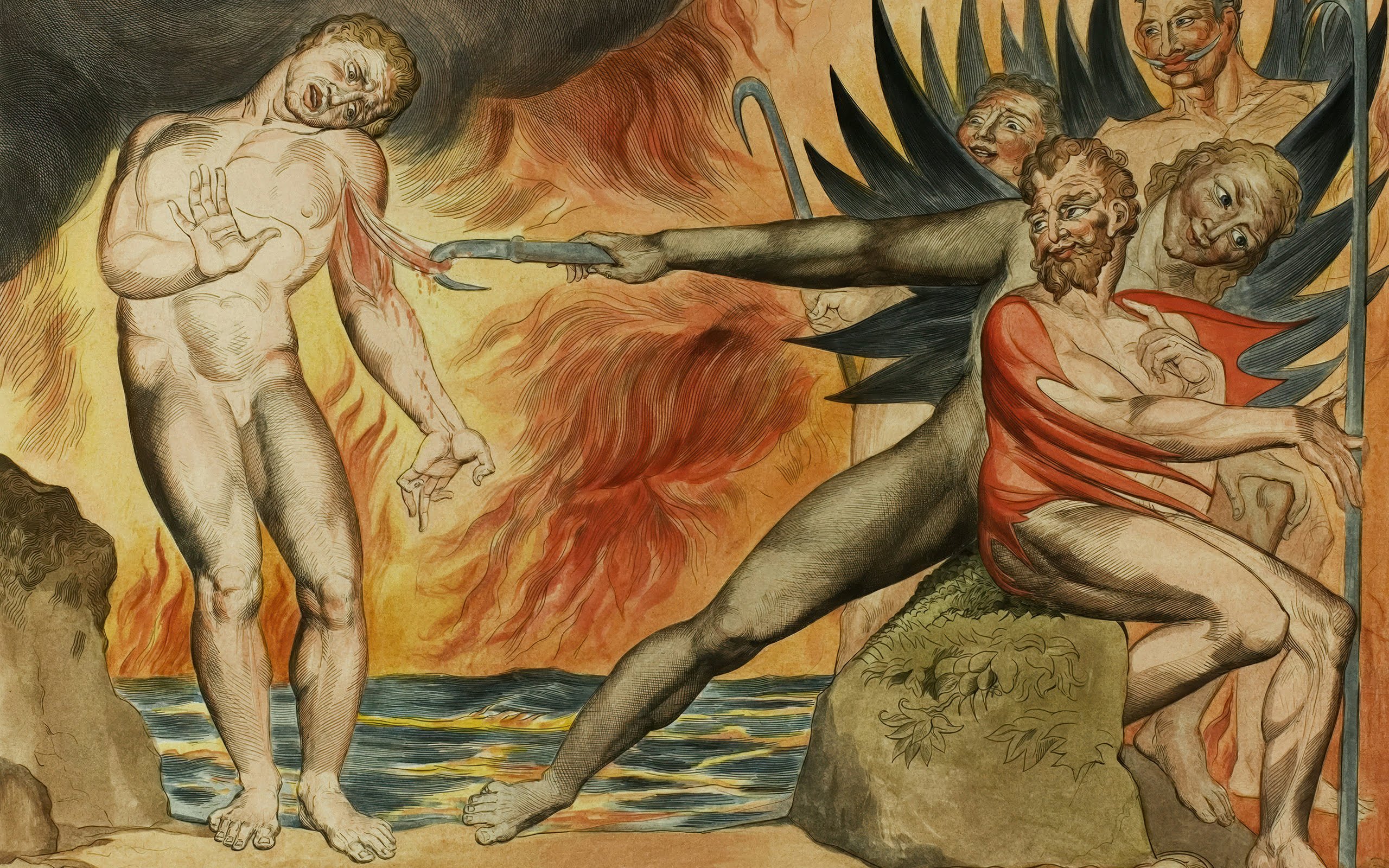
    If adherence to this divine manual is indispensable and the consequences of failure are eternal damnation, why does God allow the majority of children to be indoctrinated with beliefs that are obviously not true? Why let children be threatened with hellfire for not following teachings that are fundamentally wrong while, in reality, obeying those teachings will cause want to Hell?

    As things are, God must allow, if not encourage, the spread of falsehoods, which would ultimately lead to the eternal punishment of many innocents.

    The Issue of Inconsistencies and Doubt

    If following the divine manual is so important, why did God include so many inconsistencies and points of doubt within religious teachings? For instance, if Islam is the true religion, why would God first tell His subjects that His word is susceptible to human alteration and, in fact, it did happen multiple times before but not have Muhammad inscribe the Quran on endurable tablets, ensuring its integrity and providing absolute confidence that it has remained unchanged, unlike the previous ones?

    Instead, the Quran was compiled from memory long after Muhammad’s death. We are expected to believe in its unaltered state simply because the Quran itself claims so. If it had been altered, it is unlikely that this alteration would be acknowledged within its own text.

    The Question of Christian Foundations

    If Christianity is the true religion, why did Jesus not leave behind a clear and unequivocal user manual? Instead, we are expected to place our trust in Paul, who never met Jesus in person yet made significant changes to Christianity. These changes were so profound that Christianity could no longer be considered a sect of Judaism, which is how Jesus originally presented it. Why expect the subjects to rely on the interpretations and teachings of someone who did not directly know Jesus but had the authority to make changes in his teachings?

    The Problem of Identifying the True Religion

    If sending this divine user manual was so crucial, why does God not help people clearly identify the true religion? Despite claims of signs and miracles, religions primarily grow through reproduction rather than conversion, indicating that God deliberately used signs that did not work.

    The Takeaway

    Given these points, it appears that God, as depicted by many religions, must want the majority of people to fail the test and burn in Hell eternally but have a clear conscience, saying to Himself that He had sent the user manual that the subjects should have followed.

    Despite the presence of a divine manual, the inconsistencies, indoctrination, and ambiguity suggest that these manuals are not divinely inspired, which does not necessarily prove the non-existence of God but strongly indicates that there is no rational reason to believe that any of the gods introduced by any religion is the true one.

    #ReligionDebate #DivineQuestions #FaithandLogic

  • Oh My God(s)! Are Atheists or Theists More Moral?

    Oh My God(s)! Are Atheists or Theists More Moral?

    Online, morality is a popular topic among theists and atheists. Theists often claim that if morality’s source is not divine, then there is no clear right and wrong, hence the atheist path is the immoral path. In return, it is not unusual to hear atheists say they are more moral than theists because they have better critical thinking skills. However, dividing people into “theist” and “atheist” categories and coming to conclusions is misleading and unhelpful. It is suspiciously too simple, to say the least.

    Income and education levels have a clear impact on the morality not only of individuals but also of their parents who brought them up, which shouldn’t come as a surprise to anyone. Since atheists and theists don’t necessarily share the same average income or education levels, we can’t draw a straight line between religion and immoral behavior, even if an average atheist is more moral than an average theist.

    However, what is evident is that religion is far from being a foolproof tool for ensuring ethical conduct, and it’s not the most effective path to morality.

    Teaching Children Right and Wrong

    Regardless of their belief in God, some parents teach their children to use reason and common sense to judge right and wrong. These parents set their children up for success because their loved ones learn to think critically, adapt to new situations, and resist manipulation.

    On the other hand, some parents rely solely on a list of rules from a holy book, making their children vulnerable to corruption. After all, it makes sense that someone who blindly follows prescribed morals without understanding the underlying principles would be more susceptible to manipulation. We see this dynamic play out in regions like the Middle East, where rigid interpretations of religious texts sometimes lead to actions many would consider unethical.

    Prescription for a Brighter Future.

    First, we should move away from using simplistic labels such as “theist” and “atheist.” These terms do not fully capture the complexity of an individual’s character, reducing them to a single oversimplified label.

    Second, we need to acknowledge that multiple factors influence moral behavior and that religion is only one aspect of the equation. Other elements, such as education, economic stability, and social environment, play significant roles in shaping how individuals act and make decisions.

    Third, it is only logical to prioritize teaching critical thinking and ethical reasoning from an early age to help children face complex moral dilemmas in the future. These skills are indispensable for making informed and thoughtful decisions throughout their lives.

    Lastly, we must resist oversimplifying matters

    [amazon table=”3281″]

    The Takeaway

    The bottom line is moral behavior is a function of many factors, including education, economic circumstances, and how we’re taught to deal with ethical questions.

    At the end of the day, the path to a more moral society isn’t through blind faith or rigid categorizations but through critical thinking, education, and a willingness to understand the complexities of human behavior.

    #MoralityBeyondBelief #EthicsAndReligion #CriticalThinking

  • What Are Contextualist Bible Readers?

    What Are Contextualist Bible Readers?

    The Bible is a complex book that has been read and interpreted in many ways throughout history. One group of Bible readers is known as contextualists. These readers believe that understanding the context of the Bible is crucial for interpreting its meaning correctly. So, what type of Bible readers are contextualists?

    Who Are Contextualist Bible Readers?

    Contextualist Bible readers are people who believe that to understand the Bible properly, we need to consider the historical, cultural, and literary context in which it was written. They think that without this context, we might misunderstand what the Bible is really saying.

    These readers come from various backgrounds. They can be scholars, pastors, or everyday Christians who want to dig deeper into the Bible’s meaning. What unites them is their commitment to reading the Bible in its original context.

    While there’s no definitive statistic, it’s safe to say that contextualist Christians represent a growing and influential segment of Western Christianity.

    The Importance of Context in Bible Reading

    Contextualists argue that the Bible wasn’t written in a vacuum. It was written by real people, in real places, at specific times in history. These factors shaped how the Bible was written and what it meant to its original audience.

    For example, when Paul wrote letters to early Christian churches, he was addressing specific issues those churches were facing. Understanding those issues helps us better understand Paul’s advice and teachings.

    By focusing on context, contextualists aim to avoid misinterpreting the Bible. They believe that taking verses out of context can lead to wrong conclusions about what the Bible teaches.

    For instance, a verse that seems to support slavery when read alone might actually be criticizing slavery when understood in its historical context.

    How Contextualists Read the Bible

    Contextualists pay close attention to the historical setting of each part of the Bibl, asking questions like: When was this part of the Bible written? What was happening in the world at that time? What were the social and political conditions? Understanding these factors helps them grasp why certain things were written and what they meant to people at that time.

    Additionally, since the Bible was written in cultures very different from our own, contextualists try to understand these cultures to better interpret the text. They look at things like social customs and norms, religious practices of the time, and economic systems to help them understand references and practices that might seem strange to modern readers.

    Contextualists also consider the type of literature each part of the Bible represents. The Bible contains many different types of writing, including historical narratives, poetry, letters, and prophecy. Each type of literature has its own rules and conventions.

    Tools and Methods Used by Contextualists

    Contextualists often use various tools to help them understand the Bible’s context. They look at historical books and documents, archaeological findings, language studies (Hebrew, Greek, Aramaic), and commentaries written by scholars. They may spend a lot of time studying these resources to gain a deeper understanding of the Bible’s background.

    Contextualists often compare different Bible translations. They know that translation is not always straightforward, and different versions can highlight different aspects of the original text. This comparison helps them see the text from various angles and understand it better.

    Many contextualists consult with experts in various fields, such as historians, archaeologists, and linguists. These experts can provide valuable insights into the world of the Bible, helping contextualists grasp the nuances and deeper meanings of the text.

    Benefits of the Contextualist Approach

    By considering the context, readers often gain a richer, more nuanced understanding of the Bible. They can see connections and meanings that might not be obvious at first glance.

    The contextualist approach helps bridge the gap between the ancient world of the Bible and our modern world. It helps readers see how the Bible’s teachings can apply to their lives today.

    Contextualists believe their approach shows respect for the Bible as a historical document. They try to understand it on its own terms, rather than imposing modern ideas onto it.

    Challenges and Criticisms of Contextualism

    One challenge of the contextualist approach is that it requires a lot of time and effort. Not everyone has the resources or ability to do extensive historical research.

    Some critics argue that contextualists can become so focused on historical details that they miss the spiritual message of the text.

    Even among contextualists, there can be disagreements about how to interpret historical evidence. This can lead to different conclusions about what the Bible means.

    The Takeaway

    Contextualist Bible readers play an important role in how we understand and interpret the Bible today. Their approach surfaces a complex text rooted in history and culture. While this method has its challenges, it offers valuable insights that can improve our understanding of this important book.

    #BibleContext #BiblicalInterpretation #ScriptureStudy

  • Godless and Goodness: The Connection That’ll Make You Question Everything

    Godless and Goodness: The Connection That’ll Make You Question Everything

    In the minds of many people religion and morality are often intertwined. Not surprisingly, the question frequently arises: Why do atheists follow a moral code instead of simply doing whatever they feel like? Today, we’ll focus on the nature of morality, its origins, and its place in society – both religious and secular.

    That idea that morality and religion are inseparable has been ingrained in many cultures for centuries, so much so that most don’t give it another thought. Consequently, some wonder how those without religious beliefs can possibly navigate the murky waters of right and wrong, as it was their religion that invented morality.

    Does Religion Make People Moral?

    Nearly 3% of the adult population in the United States is either in prison or on parole, which is particularly noteworthy because the US is widely recognized as one of the most religious countries in the Western world, so much so that according to Pew Research 55% American population pray daily while this is merely 6% in the UK, 30% in Greece, 60% in Turkey, and 87% in Iran.

    If the hypothesis that religion is the sole or primary source of morality were to be true, one would expect to see lower rates of incarceration in such a devout nation.

    Conversely, let’s turn our attention to Japan. In this East Asian country, where Abrahamic religions have not made a significant impact, we find one of the most peaceful societies in the world. Japan’s low crime rates and social harmony stand in stark contrast to the assumption that religious belief is necessary for a moral society.

    The plot thickens when we consider certain Middle Eastern countries. Despite having highly religious populations, many of these nations grapple with widespread corruption. This further challenges the notion that religious devotion automatically translates to moral behavior on a societal level.

    Whether religion is detrimental to morality is a separate matter, and I will leave that discussion to others. However, the examples given at least illustrate that religion is not a must for morality, and religiosity does not necessarily translate into moral societies.

    The Universal Thread of Morality

    So, if religion isn’t the sole source of morality, what is? The answer may lie in what we might call “common decency” – a basic sense of right and wrong that seems to transcend cultural and religious boundaries.

    Think about your own circle of friends and acquaintances. Chances are, you know people from various backgrounds – some religious, some not. Among your religious friends, there may be those who are deeply devout yet not extreme in their views. Now, ask yourself: Is it really the fear of divine punishment that keeps these individuals from engaging in harmful or illegal activities?

    For most people, regardless of their beliefs, the decision not to harm others or break laws stems from a more fundamental place. It’s rooted in empathy, social conditioning, and an understanding of the consequences of our actions – both for ourselves and for society at large.

    The Secular Moral Compass

    But what drives people, whether they believe in a god or not, to follow moral codes?

    First, empathy and compassion matter a lot. People naturally understand and share the feelings of others, and this empathy guides many of our moral choices.

    Second, we benefit from living in a stable society. Following moral rules helps keep things stable and makes life better for everyone.


    Third, philosophical thinking provides another reason. Throughout their lives, most people spend a lot of time sorting out what is right and wrong, and, when the time comes, act on their instincts.

    There’s also an evolutionary angle. Some believe our sense of right and wrong comes from the need for cooperation and helping each other, which helped our ancestors survive.

    Additionally, acting morally usually leads to good outcomes for us personally, such as stronger relationships, a good reputation, and a clear conscience.

    Cultural influence plays a role too. We are shaped by the values and norms of our culture, many of which involve moral ideas.

    Finally, acting ethically often aligns with our own long-term interests. It helps build trust, creates positive relationships, and contributes to a healthy society.

    The Universality of Ethics

    One of the most compelling arguments for the independence of morality from religion is the remarkable similarity of basic ethical principles across different cultures and belief systems. Concepts like fairness, reciprocity, and the prohibition of murder are nearly universal, appearing in societies with vastly different religious backgrounds – or none at all.

    This universality suggests that these moral principles arise from something more fundamental than religious texts or traditions. They seem to emerge from our shared human experience, our need to live cooperatively, and our capacity for reason and empathy.

    Criticism

    Of course, discussing morality – religious or secular—is never simple. Both religious and non-religious moral systems face criticism.

    Religious morality is often criticized for being rigid or based on outdated cultural norms, which can lead to conflicts when different religious groups have opposing moral views.

    Secular morality, on the other hand, is sometimes accused of being relativistic or lacking a solid foundation. Critics argue that without a divine authority, moral rules become arbitrary. However, the existence of God does not depend on the utility of the concept of God.

    The Takeaway

    As societies become increasingly diverse and interconnected, it makes sense to move beyond the false dichotomy of religious morality versus moral chaos. Humans – religious and non-religious alike—are capable of moral reasoning, ethical behavior, and compassion.

    Rather than judgementally asking why atheists follow moral codes, perhaps everyone should ask themselves how we can encourage ethical behavior regardless of belief systems.

    #MoralityAndReligion #EthicsWithoutGod #SecularEthics

  • Contagious Misconceptions: Sun and Its Supermassive Black Hole

    Contagious Misconceptions: Sun and Its Supermassive Black Hole

    Have you ever gazed up at the night sky and wondered about the grand cosmic dance happening above us? It’s easy to imagine that everything in space moves in the same way, like a giant mobile hanging from the ceiling. But the truth is far more fascinating and complex. Today, we’re going to bust a common myth and explore how our planet Earth, the Sun, and even our entire Milky Way galaxy really move through space.

    The Misconception

    First, let’s address the elephant in the room – or should we say, the black hole in the galaxy. There’s a widespread belief that the way Earth and other planets orbit the Sun is the same as how the Sun orbits the supermassive black hole at the center of our Milky Way galaxy. It seems logical, right? If the planets circle the Sun, surely the Sun must circle the black hole in the same way?

    Well, not quite.

    Earth and the Sun

    Let’s start with what we know best – our own solar system. Earth, along with the other planets, does indeed orbit the Sun, primarily driven by the Sun’s immense gravitational pull. Our star containing 99.86% of all the mass in our solar system, makes it the undisputed gravitational boss of our cosmic neighborhood.

    The planets, including Earth, move around the Sun in elliptical orbits, balancing between the Sun’s gravity pulling the planets inward and the planets’ own momentum trying to carry them away.

    Supermassive Black Hole of Milky Way

    The Milky Way: A Different Kind of Motion

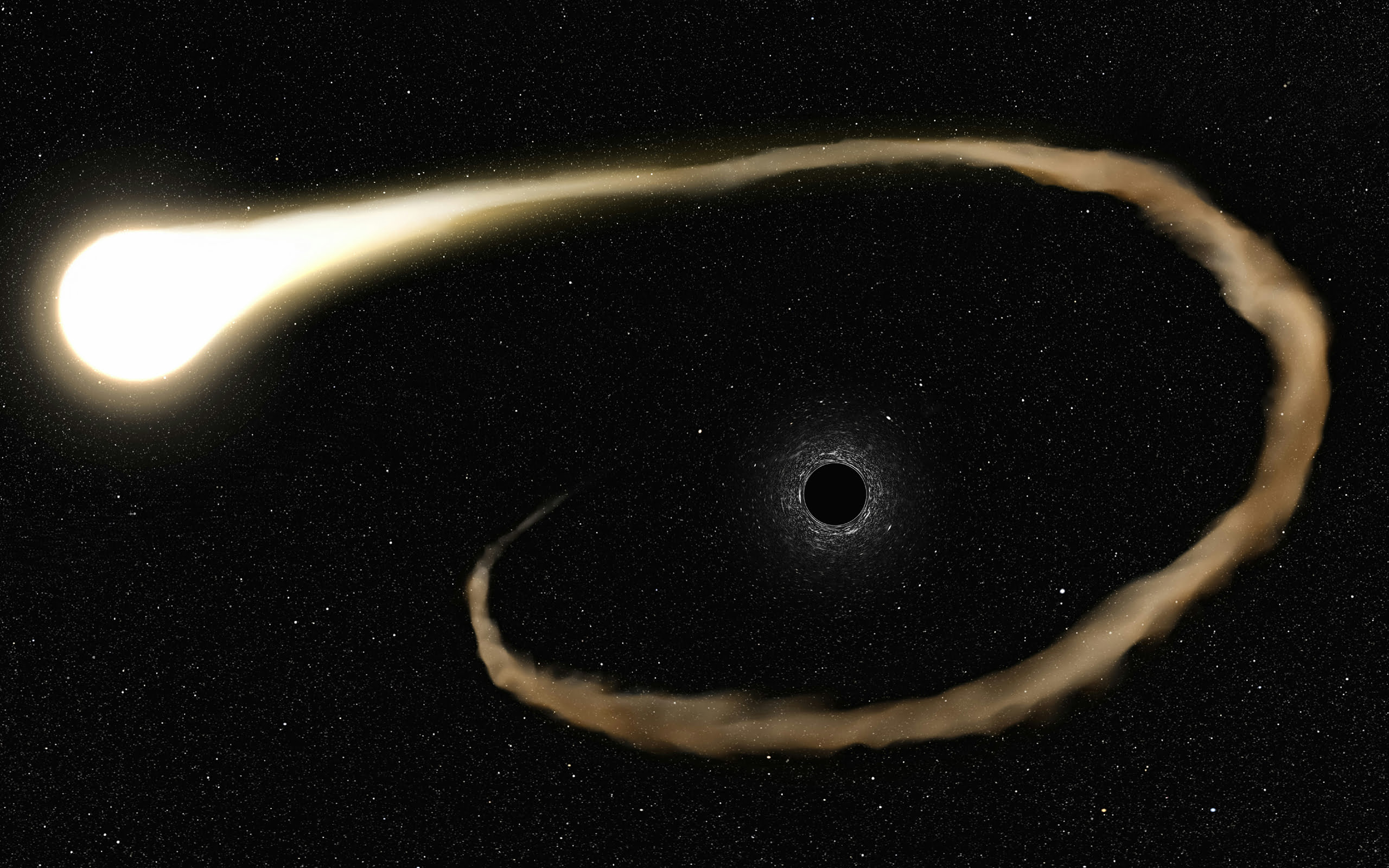
    Now, let’s zoom out – way out – to the scale of our entire galaxy, the Milky Way. At the center of our galaxy lies a supermassive black hole, often referred to as Sagittarius A* (pronounced “Sagittarius A-star”). It’s incredibly massive, about 4 million times the mass of our Sun. That’s huge, right?

    Well, yes and no. While 4 million solar masses is indeed enormous by our earthly standards, it’s actually tiny compared to the total mass of the Milky Way galaxy. Our galaxy contains hundreds of billions of stars, vast clouds of gas and dust, and a mysterious substance called dark matter (more on that later). All of this combined makes the Milky Way about 1.5 trillion times more massive than our Sun.

    This is where our misconception starts to fall apart. The supermassive black hole at the center of our galaxy, despite its impressive size, simply isn’t massive enough to be the primary force keeping the entire galaxy together and in motion.

    The Gravitational Influence of the Black Hole

    The black hole’s gravitational influence is strong, but it’s localized. It primarily affects the stars and gas clouds in the very center of the galaxy. Our Sun, located about 26,000 light-years from the galactic center, is far too distant to be significantly influenced by the black hole’s gravity.

    So, if it’s not the black hole’s gravity keeping our Sun in orbit around the galactic center, what is it?

    Enter Dark Matter

    This is where our story takes another fascinating turn. Scientists have discovered that there’s more to our galaxy than meets the eye – literally. Enter dark matter, a mysterious substance that we can’t see or directly detect but whose gravitational effects we can observe.

    Dark matter doesn’t interact with light or other forms of electromagnetic radiation, which is why we can’t see it. However, its gravitational effects are unmistakable. Scientists estimate that dark matter makes up about 85% of the matter in the universe and about 26% of its total energy content.

    The Milky Way’s Rotation

    In our Milky Way, dark matter forms a vast, spherical halo that extends far beyond the visible disk of stars. The dark matter halo provides the additional gravitational force needed to keep the outer parts of the galaxy, including our Sun, orbiting around the galactic center.

    The Sun’s orbit around the galactic center takes about 225-250 million years to complete, meaning that since the time of the dinosaurs, our solar system has only made about one-quarter of a trip around the galaxy!

    Interestingly, the rotation of stars, gas and dust clouds, and dark matter isn’t uniform across the galaxy. The inner parts of the galaxy rotate faster than the outer parts, creating a differential rotation, which is different from how planets orbit the Sun, where inner planets complete their orbits faster than outer ones.

    A Cosmic Web

    Zooming out even further, we find that our Milky Way galaxy isn’t just rotating on its own. It’s part of a local group of galaxies, which in turn is part of a larger supercluster. These structures are all interconnected in a vast cosmic web, with filaments of galaxies separated by enormous voids.

    On this grand scale, the movement of galaxies is influenced by the combined gravitational effects of all matter in the universe, including the mysterious dark energy that appears to be accelerating the expansion of the universe.

    The Takeaway

    The motion of Earth around the Sun is indeed different from how the Sun moves within our galaxy. While Earth’s orbit is primarily influenced by the Sun’s gravity, the Sun’s motion in the galaxy is part of a much larger, more complex system involving billions of stars, vast amounts of dark matter, and the collective gravitational influence of the entire galaxy.

    #AstronomyFacts, #SpaceScience, #GalacticMisconceptions

  • When No Clue Is the Only Clue

    When No Clue Is the Only Clue

    At some point in your life, you must have heard the phrase “absence of evidence is not evidence of absence” at least once. It might sound like a tongue twister, but this powerful statement holds a wealth of wisdom, especially in all btanches of science, critical thinking, and everyday life. Today, we’re going to unpack this concept and explore why it’s so important in our quest for knowledge and understanding.

    What Does It Mean?

    At its core, “absence of evidence is not evidence of absence” means that just because we haven’t found proof of something doesn’t necessarily mean that it doesn’t exist or isn’t true. In other words, a lack of evidence doesn’t automatically disprove an idea or theory.

    This concept is crucial in many fields, from scientific research to criminal investigations and even in our day-to-day lives, reminding us to keep an open mind and not jump to conclusions too quickly.

    The Scientific Perspective

    In science, open-mindedness is particularly important. Scientists are always searching for evidence to support or disprove theories. But here’s the thing: just because they haven’t found evidence for something yet, it doesn’t mean they never will.

    Take the search for extraterrestrial life, for example. We haven’t found concrete evidence of aliens yet, but that doesn’t mean they don’t exist. It just means we haven’t discovered them (if they’re out there). Scientists continue to explore and search because they understand that the absence of evidence isn’t the final word.

    Another great example is the concept of dark matter. For years, scientists observed that there seemed to be more gravity in the universe than could be explained by the visible matter we can see. To explain this phenomenon, they proposed the existence of dark matter. While we still haven’t directly observed dark matter, the absence of direct evidence doesn’t mean it doesn’t exist. Scientists continue to research and look for ways to detect it.

    The Multiverse Theory

    Let’s talk a bit about a mind-bending example: the multiverse theory, which suggests that our universe might be just one of many universes existing parallel to each other, and the possibility of more than one universe has captured the imagination of scientists and sci-fi enthusiasts alike.

    Currently, we don’t have conclusive evidence that other universes exist. But does that mean we should dismiss the idea entirely? Not at all! The absence of evidence for the multiverse doesn’t prove it doesn’t exist. It simply means we haven’t found a way to detect or observe other universes yet – if they’re out there.

    Scientists continue to work on this theory because they understand that our current lack of evidence doesn’t rule out the possibility. Who knows? Future technological advancements or new theoretical frameworks might one day allow us to find evidence for or against the multiverse theory.

    The Impossibility of Proving a Negative

    Another important aspect of this concept is the difficulty – often impossibility – of proving a negative. This is where the famous example of Russell’s Teapot comes in.

    Philosopher Bertrand Russell proposed a thought experiment: imagine he claimed that a teapot was orbiting the Sun somewhere between Earth and Mars, but it was too small to be detected by our telescopes. It would be absurd to expect others to believe this claim simply because they couldn’t prove it wrong.

    This example illustrates why the burden of proof usually lies with the person making a claim, not with those skeptical of it. It’s nearly impossible to prove that something doesn’t exist anywhere in the universe. The absence of evidence for Russell’s teapot isn’t proof that it doesn’t exist, but it’s also not a reason to believe that it does.

    Practical Applications in Everyday Life

    This principle isn’t just for scientists and philosophers – it has practical applications in our daily lives too. Here are a few examples:

    • Just because your friend hasn’t called you in a while doesn’t necessarily mean they don’t care about you. There could be many reasons for their silence that you’re unaware of.
    • Not hearing back from a company after an interview doesn’t automatically mean you didn’t get the job. They might still be in the decision-making process.
    • The absence of symptoms doesn’t always mean you’re not ill. Some conditions can be present without obvious signs, which is why regular check-ups are important.
    • Just because there’s no evidence linking a suspect to a crime doesn’t necessarily mean they’re innocent. It just means there’s not enough evidence to prove guilt.

    The Importance of Keeping an Open Mind

    Understanding that the absence of evidence is not evidence of absence encourages us to keep an open mind. It reminds us that our current knowledge is limited and that there’s always more to learn and discover.

    However, open-mindedness doesn’t mean we should equal probability to any claim or theory without conclusive evidence that comes our way. Skepticism is healthy and necessary. It is just that we should be willing to consider new ideas and be open to changing our minds if new evidence comes to light.

    Know Your Limits

    While it’s important to remember that absence of evidence isn’t evidence of absence, we also need to be careful not to take this principle too far. If we’ve looked extensively for something and found no evidence, it’s often reasonable to think it probably doesn’t exist – even if we can’t be 100% certain.

    Let’s consider some examples to understand this better:

    Unicorns, Space Teapots and Vulcan

    There’s no good reason to believe that unicorns or teapots orbiting the sun exist. It wouldn’t make sense to spend time and resources searching for these.

    However, scientists though it was worthwhile to look for a a hypothetical planet called Vulcan orbitting between Mercury and the Sun because it potentially explain peculiarities in Mercury’s orbit. Ultinately, Einstein’s theory of general relativity later explained these anomalies without the need for an extra planet.

    Alien Life

    Our galaxy, the Milky Way, is estimated to have between 200-400 billion stars. Even more mind-boggling, scientists think there could be around 2 trillion galaxies in the part of the universe we can see. With numbers this big, even if the chance of life emerging is small, it’s quite possible that it has happened at least once more in the universe besides Earth, making scientists believe it’s sensible to keep looking for signs of alien life.

    Multiverse and Many-Worlds Theories

    Some scientific ideas, like the Multiverse Theory and the Many-Worlds Theory, are appealing to scientists even though we don’t have direct evidence for them yet. The Multiverse Theory helps explain why our universe seems to be “just right” for life to exist, which otherwise seems like an incredibly lucky coincidence. The Many-Worlds Theory offers an explanation for why particles behave differently when we observe them compared to when we don’t. These theories solve some puzzling problems in physics, which is why scientists continue to explore them despite the current lack of direct evidence.

    The key is to balance open-mindedness with critical thinking and respect for the evidence we do have.

    The Takeaway

    “Absence of evidence is not evidence of absence” is more than just a catchy phrase. It’s a reminder of the limits of our knowledge and the importance of continued exploration and learning.

    Remember, some of the greatest discoveries in history came from people who were willing to look beyond the absence of evidence and ask, “What if?” So go ahead, embrace the uncertainty, and keep exploring.

    #CriticalThinking #SciencePhilosophy #EvidenceBasedReasoning

  • God’s Out-of-Office Reply to Corrupt Countries

    God’s Out-of-Office Reply to Corrupt Countries

    Corruption remains a persistent challenge in global politics and governance, affecting nations worldwide. The Corruption Perceptions Index (CPI), published annually by Transparency International, provides remarkable insights into the perceived levels of public sector corruption in different countries. Today, we will take a closer look at the top 10 most corrupt countries according to the CPI and explore what this list tells us about morality, religion, and governance.

    The Top 10 Most Corrupt Countries

    According to the latest CPI data, the following countries are ranked as the most corrupt in the world:

    1. Somalia
    2. Syria
    3. South Sudan
    4. Venezuela
    5. Yemen
    6. North Korea
    7. Burundi
    8. Haiti
    9. Libya
    10. Equatorial Guinea

    Bear in mind that this ranking is based on perceptions of public sector corruption, as measured by expert assessments and opinion surveys.

    What Does This List Tell Us?

    Looking at this list, it’s clear that these countries face significant challenges in terms of governance, stability, and the rule of law. Many of them have been plagued by ongoing conflicts, political instability, or authoritarian regimes, raising some interesting questions about the relationship between corruption, morality, religion, and governance.

    The Role of Religion and Morality

    One striking observation from the list of the most corrupt countries is that many have strong religious influences in their societies and governance structures. However, their presence on this list suggests that religious beliefs alone are not sufficient to prevent corruption or ensure ethical governance. This highlights an important point: the mere presence of religious or moral teachings does not guarantee that corruption will be minimized or eliminated.

    The fear of divine judgment does not seem to be the primary factor keeping morality intact in these societies. If religious teachings were enough to curb corruption effectively, we might expect to see a different set of countries on this list. Instead, this data suggests that other factors, such as political stability, economic development, and institutional strength, play a more significant role in shaping governance and reducing corruption.

    The Focus of Morality

    In many religious countries, there is often a strong emphasis on personal morality, particularly concerning sexual behavior and relationships. While these concerns may be contextually important, focusing solely on regulating personal morality, caring merely about sex before marriage, and caring too much about the hymens of women clearly fail to address the broader issues affecting good morality, governance and societal well-being.

    Concentrating on issues like sexual conduct is easy because they are visible and can be easily legislated. However, this focus distracts from addressing more complex systemic issues like corruption, which has a real impact on societal health.

    The Impact of Corruption

    Corruption has far-reaching effects that extend beyond just politics. It impacts economic development, social equality, and the overall quality of life. When corruption is rampant, it discourages investment, which is essential for economic growth. Investors and businesses are reluctant to engage in environments where bribes and dishonesty are prevalent, leading to economic stagnation. This stagnation results in fewer job opportunities and hampers overall economic advancement.

    Additionally, corruption contributes to greater inequality. When wealth and power are concentrated in the hands of a few corrupt officials and business leaders, the majority of people are left with less. This creates a society where only a small portion thrives while many struggle to meet their basic needs. The widening gap between the rich and poor makes social mobility and economic advancement more difficult for the majority.

    Corruption also undermines public institutions. Government agencies, law enforcement, and public services become ineffective when they are tainted by corruption. Rather than serving the common good, these institutions may become tools for a few powerful individuals, diminishing their ability to function properly and eroding public trust.

    Moreover, widespread corruption erodes trust in government and public institutions. Citizens may feel that the system is rigged against them and that their voices are ignored. This lack of trust can lead to social unrest and a weakened sense of community, as people become disconnected and disillusioned with their leaders.

    Finally, corruption is often linked with human rights violations. Those in power who are focused on their own enrichment may use oppressive tactics to maintain control and silence dissent. This can result in abuses such as unlawful detentions, violence, and suppression of freedoms. Thus, corruption affects not only the material well-being of individuals but also their fundamental rights and freedoms.

    The Takeaway

    In conclusion, while religion and personal morality are important, they alone are not sufficient to ensure good governance or prevent corruption. Addressing systemic issues and focusing on broader aspects of governance, economic development, and institutional integrity is crucial for creating a just and equitable society.of society, but it’s one that’s crucial for building a more just and equitable world for all.

    #GlobalCorruption #TransparencyMatters #GoodGovernance

  • A Look at Young Earth Creationism and Related Claims

    A Look at Young Earth Creationism and Related Claims

    In our diverse world, people hold a wide range of beliefs. Hence it is given that some of these beliefs challenge mainstream scientific understanding and historical evidence. Today, we’ll explore a set of interconnected ideas that some individuals hold, which differ significantly from widely accepted scientific and historical views. These beliefs include the notion of a young Earth, skepticism towards evolutionary biology, alternative explanations for dinosaur fossils, and a literal interpretation of the biblical flood story.

    The Young Earth Perspective

    One of the central beliefs we’ll discuss is the idea that the Earth is only a few thousand years old. This view, often called Young Earth Creationism, stands in stark contrast to the scientific consensus that our planet is approximately 4.5 billion years old.

    Proponents of the young Earth view often base their belief on a literal interpretation of religious texts, particularly the Bible. They calculate the Earth’s age by adding up the generations mentioned in biblical genealogies and arrive at a figure typically ranging from 6,000 to 10,000 years.

    However, this perspective faces significant challenges when confronted with scientific evidence. Numerous scientific disciplines, including geology, physics, and astronomy, have developed multiple independent methods for dating the Earth. These methods consistently point to a much older planet.

    For instance, radiometric dating of rocks and minerals provides strong evidence for an ancient Earth. This technique measures the decay of radioactive isotopes in rocks, which occurs at a known rate, allowing scientists to calculate their age. Similarly, the study of ice cores, tree rings, and sedimentary layers all support the concept of an old Earth.

    Evolutionary Biology: Science or Conspiracy?

    Another claim associated with this belief system is that evolutionary biology is an international conspiracy orchestrated by atheists. This view sees the scientific community’s acceptance of evolution as a deliberate attempt to undermine religious faith.

    Evolutionary biology, however, is a well-established scientific field with a vast body of evidence supporting it. It explains the diversity of life on Earth through natural selection and genetic variation over long periods, and multiple lines of evidence, including the fossil record, comparative anatomy, embryology, and genetics, support this theory.

    The scientific community, comprised of individuals from various backgrounds and beliefs, has overwhelmingly accepted evolution as the best explanation for the diversity of life on Earth, based on rigorous research, peer review, and ongoing scientific inquiry rather than any coordinated conspiracy.

    The Dinosaur Dilemma

    Another intriguing claim within this belief system is that dinosaur fossils were deliberately planted to test the faith of Christians or that humans and dinosaurs lived alongside each other in an attempt to reconcile the existence of dinosaur fossils with the belief in a young Earth.

    However, the field of paleontology offers a different explanation. Paleontologists study fossils and have comprehensively understood how these remains form naturally over millions of years. The process of fossilization involves the replacement of organic material with minerals, preserving the structure of bones, shells, and sometimes even soft tissues.

    Dinosaur fossils have been found on every continent, often in predictable geological layers. They show a clear progression over time, with different species appearing and disappearing from the fossil record. This global distribution and the consistent patterns observed would be extremely difficult to fake on such a massive scale.

    Moreover, dinosaur fossils aren’t just bones. Scientists have discovered fossilized dinosaur eggs, nests, footprints, and even skin impressions. These findings provide a wealth of information about dinosaur behavior, physiology, and ecosystems, further supporting their authenticity.

    The Great Flood and Noah’s Ark

    The final claim we’ll examine is the belief in a worldwide flood and the story of Noah’s Ark. According to this view, a 950-year-old man named Noah built a ship that saved over 8 million land animal species, including diverse creatures like penguins, polar bears, camels, African elephants, and kangaroos.

    This narrative raises several questions when examined from a logistical and biological perspective. The sheer number of animal species presents a significant challenge. Modern estimates suggest there are about 6.5 million land species on Earth today. Accommodating two of each (or seven of some, according to some interpretations) on a single ship would require an enormous vessel and present complex logistical issues for feeding, waste management, and preventing predation.

    The global distribution of animals also poses questions. How did animals from diverse habitats, such as polar bears from the Arctic and kangaroos from Australia, travel to and from the Middle East, where the Ark was supposedly built? How did they survive in climates vastly different from their native habitats during and after the flood?

    From a geological perspective, a worldwide flood of this magnitude would be expected to leave significant and uniform evidence across the globe. However, geological studies have not found consistent evidence of such an event occurring simultaneously worldwide.

    The Importance of Critical Thinking

    While it’s crucial to respect diverse beliefs, it’s equally important to approach claims with critical thinking and consider the available evidence. The scientific method provides a systematic way to investigate the natural world, test hypotheses, and build our understanding based on observable evidence.

    Science is not about absolute certainty but about developing the best explanations based on available evidence. It’s a self-correcting process, always open to new data and better explanations. This is why scientific consensus can change over time as new evidence emerges and better theories are developed.

    It’s also worth noting that many people of faith find ways to reconcile their religious beliefs with scientific understanding. Numerous religious leaders and scholars interpret religious texts metaphorically rather than literally, allowing for harmony between faith and scientific knowledge.

    The Takeaway

    The beliefs we’ve explored today – a young Earth, skepticism towards evolution, alternative explanations for dinosaur fossils, and a literal interpretation of Noah’s Ark – represent a particular worldview that differs significantly from our reality.

    While it’s important to respect diverse perspectives, engaging with the wealth of scientific evidence available to us is equally crucial.

    Ultimately, the pursuit of knowledge is a journey that requires open-mindedness, critical thinking, and a willingness to engage with evidence, even when it challenges our preconceptions.


  • The Best Arguments for God’s Existence (And Why They Fail)

    The Best Arguments for God’s Existence (And Why They Fail)


    The question of whether God exists is one of the oldest and most debated topics in human history. Over the centuries, philosophers, theologians, and thinkers have proposed countless arguments to support the existence of a divine being. While some find these arguments compelling, others believe they fall short. Today we will get into some of the most famous arguments for God’s existence and discuss why they may not be as convincing as they seem.

    The Cosmological Argument

    One of the oldest and most widely discussed arguments for the existence of God is the cosmological argument. It posits that everything that exists has a cause, and because the universe exists, it, too, must have a cause. This cause, the argument goes, must be something outside the universe and not bound by the same laws — namely, God.

    Why It Fails

    Critics of the cosmological argument often point out that it leads to an infinite regress. If everything must have a cause, what caused God? To counter this, proponents claim that God is a necessary being who doesn’t require a cause. However, this exception seems arbitrary and raises the question of why the universe itself couldn’t be a necessary being without a cause. Additionally, modern physics suggests that the universe could have arisen from quantum fluctuations, challenging the idea that it needs a cause at all.

    The Ontological Argument

    The ontological argument, first proposed by St. Anselm in the 11th century, is more abstract. It starts with the concept of God as the greatest being imaginable. The argument claims that a being that exists both in the mind and in reality is greater than one that exists only in the mind. Therefore, if God is the greatest being imaginable, God must exist in reality.

    Why It Fails

    The ontological argument has been criticized for being a mere play on words. Just because we can conceive of the greatest possible being doesn’t mean that such a being exists in reality. Philosophers like Immanuel Kant argued that existence is not a predicate or a quality that can make something greater. Additionally, the argument can be used to “prove” the existence of any perfect entity, which leads to absurd conclusions.

    The Argument from Design

    Also known as the teleological argument, the argument from design observes the complexity and order in the universe and concludes that it must have been designed by an intelligent being. The complex structure of biological systems, the precise laws of physics, and the fine-tuning of the universe are often cited as evidence of this divine designer.

    Why It Fails

    One major criticism of the argument from design is the presence of flaws and imperfections in the natural world. If an intelligent designer created the universe, why are there so many imperfections and instances of poor design? Additionally, the theory of evolution by natural selection provides a robust explanation for the complexity of life without invoking a designer. The fine-tuning argument also faces challenges from the multiverse theory, which posits that our universe is just one of many, each with different physical constants. In this context, it’s not surprising that at least one universe would have the conditions suitable for life.

    The Moral Argument

    The moral argument suggests that objective moral values and duties exist and that these can only be grounded in a divine being. According to this argument, if God does not exist, objective morals do not exist either. Since we observe moral values and duties, God must exist to provide their foundation.

    Why It Fails

    One issue with the moral argument is the challenge of proving the existence of objective moral values. Moral relativists argue that morals are subjective and culturally dependent. Furthermore, it’s possible to ground morality in secular frameworks, such as human well-being or social contracts, without invoking a divine lawgiver. The existence of moral disagreements and the evolution of moral norms over time also suggest that morality might be more complex and human-centric than the argument allows.

    The Takeaway

    While the arguments for God’s existence have been influential and thought-provoking, they all face significant challenges and criticisms. The cosmological argument struggles with the question of what caused God, while the argument from design is undermined by natural explanations like evolution and the multiverse theory. The ontological argument is often seen as a linguistic trick, and the moral argument fails to conclusively establish objective moral values or their divine origin.

    In the end, whether one finds these arguments compelling often depends on personal beliefs and perspectives. That being said, none of the arguments explain why there has to be only one god and why that god has to be the Abrahamic one.

    Further Reading

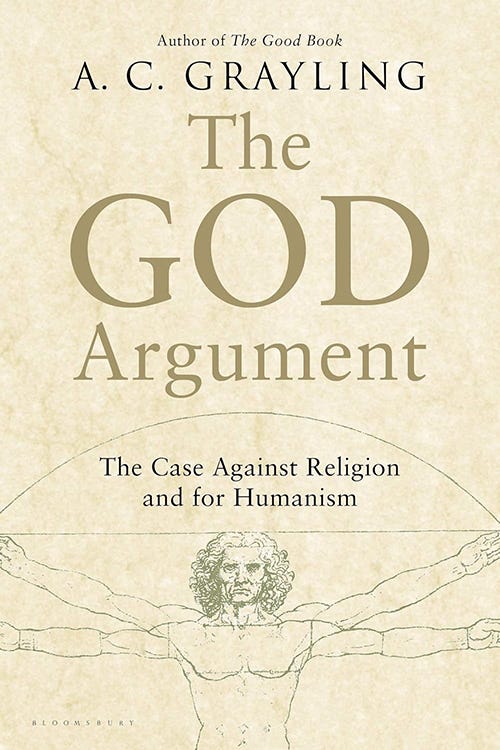
    The God Argument: The Case Against Religion and for Humanism

    The God Argument by A. C. Grayling is a significant contribution to the debate on religion and secularism. Grayling, a critic of religion, meticulously examines the arguments for the existence of God and the motivations behind religious belief. He then advocates for humanism as a compelling alternative to religion, promoting a worldview grounded in reason, evidence, and a commitment to goodness without infringing on individual beliefs or freedoms.

    Grayling presents humanism as an ethical framework based on sympathy and tolerance, aiming to understand human nature and condition. While acknowledging the historical reasons for the emergence of various faiths, he argues that organized religion should no longer hold a privileged status in society. The book asserts that a secular belief system, free from religious dogma, fosters a more compassionate and caring perspective on life.


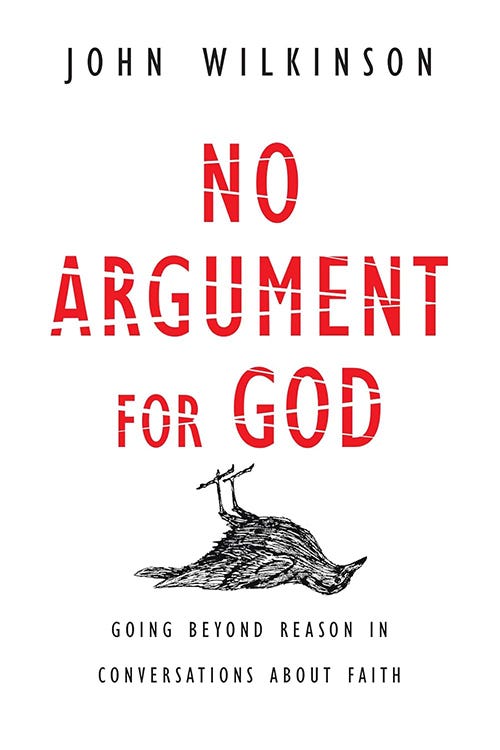
    No Argument for God: Going Beyond Reason in Conversations About Faith

    In No Argument for God, John Wilkinson challenges the prevailing notion that religion is irrational and outdated. While the New Atheists argue that belief in God is a sign of intellectual weakness, Wilkinson asserts that the perceived irrationality of faith is actually a strength. He argues that rationalism imposes artificial constraints on our understanding, focusing only on what can be empirically observed rather than exploring deeper meanings and the “why” behind existence.

    Wilkinson contends that while rational investigation is valuable, it often falls short of addressing our deeper yearnings and the search for revelation. He suggests that true understanding and fulfillment come from engaging with the divine in a way that transcends purely logical arguments, leading to a transformative encounter with God that satisfies both the mind and the soul.

    #GodExistence, #PhilosophyOfReligion, #CriticalThinking

  • Is the Universe Fine-Tuned for Life, or Is It Just Chance?

    Is the Universe Fine-Tuned for Life, or Is It Just Chance?

    Have you ever looked up at the night sky and wondered, “Why are we here?” It’s a question that has puzzled humans for millennia. But in the last century, scientists and philosophers have approached this age-old question from a new angle, asking, “Is the universe somehow set up perfectly for life to exist, or is our existence just a lucky accident?”

    What is the Anthropic Principle?

    The Anthropic Principle is a concept that tries to explain why the universe appears to be perfectly suited for life, particularly human life. It suggests that the fundamental constants of the universe – things like the strength of gravity, the mass of electrons, and the speed of light – are just right for life to exist. If any of these constants were even slightly different, the universe as we know it wouldn’t exist, and neither would we.

    The Fine-Tuning Argument

    Imagine you’re baking a cake. You need just the right amount of each ingredient, the correct oven temperature, and the perfect baking time. If any of these factors are off, even by a little bit, your cake might end up as a disaster. Now, apply this idea to the entire universe. Scientists have discovered that many cosmic constants seem to be “just right” for life to exist.

    For example,

    • If gravity were a tiny bit stronger, stars would burn out too quickly for life to evolve. If it were a bit weaker, stars wouldn’t form at all.
    • If the strong nuclear force (which holds atomic nuclei together) were slightly weaker, only hydrogen would exist in the universe. If it were slightly stronger, all hydrogen would have been converted to heavier elements.
    • If the cosmological constant (which relates to the expansion of the universe) were a little larger, the universe would have expanded too fast for galaxies to form. If it were a little smaller, the universe would have collapsed before life could evolve.

    These examples, and many others like them, form the basis of the “fine-tuning” argument. Proponents of this view argue that the precise balance of these constants is evidence that the universe was designed with life in mind.

    The Chance Explanation

    On the other hand, critics of the fine-tuning argument say that our existence in this universe is simply a matter of chance. They argue that we shouldn’t be surprised that we find ourselves in a universe that can support life because if we didn’t, we wouldn’t be here to observe it in the first place.

    To understand this perspective, imagine a giant cosmic lottery among countless universes with different physical constants, most of which can’t support life. We just happen to have won the lottery by existing in one that can. It’s like being amazed that you won the lottery after you’ve already won – of course, the winner is going to be amazed, but that doesn’t mean the lottery was rigged in their favor.

    The Multiverse Theory

    One way to make sense of the chance explanation is through the Multiverse Theory, which suggests that our universe is just one of many – perhaps even an infinite number – of universes with different physical constants. In this scenario, it’s not surprising that at least one universe (ours) has the right conditions for life. We simply happen to be in that lucky universe.

    The multiverse theory is appealing because it provides a naturalistic explanation for the apparent fine-tuning of our universe. However, it’s important to note that some researchers question the scientificity of the Multiverse Theory because it does not offer any falsifiable hypotheses.

    Philosophical and Religious Implications

    The Anthropic Principle and the fine-tuning argument have significant philosophical and religious implications. For some, the apparent fine-tuning of the universe is evidence of a divine creator or intelligent designer. They argue that the precision required for life to exist is too great to have occurred by chance.

    Others see it differently. They point out that even if the universe is fine-tuned for life, that doesn’t necessarily imply a conscious designer. It could be the result of some as-yet-unknown natural process. Moreover, they argue that a universe capable of producing life might be the only kind of universe we could ever observe, regardless of how it came to be.

    Scientific Caution

    While the fine-tuning of the universe is an intriguing concept, it’s based on our current understanding of physics, which is incomplete. As our knowledge grows, we might discover that some of these “fine-tuned” constants are actually related to each other or determined by deeper principles we don’t yet understand.

    Additionally, we only have one universe to observe. We can’t compare our universe to others to see if ours is truly special or just one possibility among many. This limitation makes it challenging to draw definitive conclusions about fine-tuning or chance.

    The Anthropic Principle in Popular Culture

    The Anthropic Principle has captured the imagination of not just scientists and philosophers but also writers and filmmakers. It’s been explored in science fiction novels like Douglas Adams’ The Hitchhiker’s Guide to the Galaxy and films like The Matrix, playing with the idea of a universe designed for a purpose.

    Practical Implications

    While the Anthropic Principle might seem like a purely theoretical concept, it has practical implications for scientific research by encouraging scientists to question fundamental assumptions and explore alternative possibilities, potentially leading to new discoveries and promoting caution about assuming that the way things are is the only way they could be.

    The Takeaway

    In the end, the question of whether the universe is fine-tuned for life or whether our existence is just a cosmic accident remains open. The Anthropic Principle provides a framework for thinking about these deep questions, but it doesn’t provide definitive answers.

    As we continue to explore the cosmos and unravel its mysteries, the debate surrounding the Anthropic Principle is likely to evolve. New discoveries in physics, astronomy, and even biology could shed light on this cosmic puzzle. For now, it remains one of the most intriguing and thought-provoking ideas in modern science and philosophy.

    #AnthropicPrinciple #CosmicFinetuning #UniverseMysteriesUnraveled