Author: Tamer Aydogdu

  • Why Proving God’s Existence Remains Impossible

    Why Proving God’s Existence Remains Impossible

    Throughout human history, the question of God’s existence has captivated minds, sparked debates, and shaped civilizations. This intense search has kept countless individuals, from ancient philosophers to modern scientists, awake at night. Yet, despite centuries of contemplation and argumentation, constructing a methodology to definitively prove the existence of God remains an impossible task.

    The Nature of Proof

    The concept of proof varies widely depending on the context. In scientific contexts, the proof requires repeatable observations and experiments. Scientific proof also involves falsifiable hypotheses to ensure reliable and consistent knowledge.

    In mathematics, proof is derived from logical reasoning and axioms. Mathematical proofs are rigorous and precise, often requiring logical iterations to conclusively demonstrate the validity of statements. Unlike scientific proofs, and luckily for mathematicians, mathematical proofs are not subject to change through new observations; once proven, mathematical theorems remain true.

    Legal proof, on the other hand, relies on evidence and testimony to establish facts beyond a reasonable doubt. Legal proof involves presenting evidence, such as physical objects, documents, or witness testimonies, to build a case. The goal is to convince a judge or jury of the truth of a claim. While judiciary systems aim to minimize it, the evaluation of legal proof is subjective.

    When it comes to proving the existence of God, none of these methods are entirely applicable or sufficient. Scientific proof is limited to the natural world and relies on empirical evidence, which is not easily applicable to metaphysical concepts. Mathematical proof requires logical structures and axioms that are not readily available for theological arguments. Legal proof depends on tangible evidence and testimony and unlike the other two types, it is not objective and universal.

    The Limitations of Science

    Science has been remarkably successful in explaining natural phenomena and uncovering the mysteries of the universe. Through detailed observation, experimentation, and the development of theories, science has advanced our understanding of everything from the smallest particles to the vastness of space. However, science has inherent limitations when it comes to proving or disproving the existence of God.

    One of the main principles of science is methodological naturalism, which means that science operates under the assumption that natural causes explain natural phenomena. While methodological naturalism is powerful for investigating and understanding the world around us, it cannot, by definition, investigate supernatural claims, one of which is God, an entity that is not bound by the laws of nature.

    Another limitation is that science relies on collecting data through observation and experimentation in the physical world. God, as typically conceived, exists beyond our physical world, making it impossible to gather direct, empirical evidence of their existence.

    Furthermore, although experiments must be repeatable and their hypotheses falsifiable in science, the concept of God often falls outside these criteria.

    Lastly, the scope of scientific inquiry is limited to understanding how the natural world works. However, it does not address why the natural world exists in the first place or whether there is a purpose behind its existence, leaving these types of questions to philosophers or theologians.

    Philosophical Challenges

    Philosophy has long grappled with the question of God’s existence, offering various arguments and counterarguments over the centuries. However, it, too, faces significant hurdles in providing a definitive answer to this impossible question.

    One major challenge is the definition of God, which lacks universality as different cultures and religions conceive of divine beings in various ways. Some see God as an all-powerful, all-knowing, and all-good entity, while others have more abstract or varied interpretations. This diversity makes it difficult to prove the existence of any specific deity because the criteria for proof vary widely.

    Philosophers have proposed logical arguments for God’s existence, such as Anselm’s ontological argument, suggesting that the very concept of God as the greatest being implies God’s existence, as existence is a necessary attribute of greatness. However, these ontological arguments often rely on disputable premises and word games.

    Another significant hurdle is the problem of evil. Should an all-powerful, all-knowing, and all-good God exists, why does suffering occur? Philosophers have struggled with this question for centuries, offering various justifications for God’s tolerance to evil.

    The issue of infinite regress also presents a philosophical challenge. The question “If God created the universe, then what created God?” leads to an infinite regress, where each cause must have a prior cause, stretching back infinitely.

    The Limits of Human Understanding

    The limits of our ability to comprehend the nature of existence and reality become evident when tackling profound questions like the existence of God.

    One major limitation comes from cognitive biases. Human thinking is subject to various biases that can influence our perception and reasoning. These biases can lead us to see patterns where none exist, make illogical leaps, or favor information that supports our preconceptions while ignoring evidence to the contrary.

    Another limitation is the scope of our perception. Our senses and the instruments we have developed to extend them can only detect a tiny fraction of reality. For example, we cannot see ultraviolet light without special equipment, and we are only beginning to understand phenomena like dark matter and dark energy.

    Moreover, the concept of an all-powerful, all-knowing being may be inherently beyond human comprehension. Our brains have evolved to handle the complexities of daily life on Earth, not to grasp infinite or absolute entities.

    Faith and Personal Experience

    For many people, belief in God is based on faith and personal experience rather than empirical evidence.

    One key reason is the subjective nature of personal spiritual experiences. These experiences can be deeply meaningful and transformative for individuals, providing a sense of connection, purpose, or understanding. However, they are inherently subjective and not verifiable by others. What one person experiences as a divine encounter, another may interpret differently or not at all. This subjectivity makes it difficult to use personal experiences as a basis for universal proof of God’s existence.

    Another important factor is faith. Religious faith often involves believing without concrete proof. For many, faith is about trust and conviction in the absence of empirical evidence. This means that the quest for definitive, empirical evidence of God can seem somewhat contradictory to the nature of faith itself. Faith is not necessarily about seeking scientific validation but about a personal commitment to a belief system or deity.

    The diversity of beliefs around the world further highlights that personal conviction, rather than universal proof, drives belief in God. Different cultures and religions have developed a wide variety of spiritual beliefs and practices, each with their own conceptions of the divine. This diversity suggests that belief in God is often rooted in cultural, historical, and personal contexts, rather than a single, universally accepted proof. The existence of many different religions and spiritual paths indicates that what is compelling or convincing for one group may not be for another, underscoring the role of personal and collective experiences in shaping belief.

    The Problem of Unfalsifiability

    A key issue in proving God’s existence is the concept of unfalsifiability.

    One aspect of this issue is the shifting goalposts. As science explains more natural phenomena, the domain of God often shifts to areas that are not yet explained. This means that as our scientific understanding grows, the idea of God is continually repositioned to remain outside the reach of scientific scrutiny. This perpetual shifting makes the concept of God unfalsifiable, as it continually retreats to the margins of our current knowledge.

    Supernatural claims are another factor that contributes to unfalsifiability. By definition, supernatural explanations fall outside the realm of natural investigation. Science is designed to study and explain natural phenomena, so anything deemed supernatural is beyond its scope. Because of this, supernatural claims, including those about God, cannot be conclusively proven or disproven by scientific methods. This inherent limitation ensures that supernatural explanations remain unfalsifiable.

    The absence of evidence is also a significant point. While it is true that the absence of evidence is not evidence of absence, the lack of conclusive proof for God’s existence after millennia of searching is noteworthy. Despite extensive philosophical, theological, and scientific inquiry, no definitive evidence has emerged to conclusively prove God’s existence. This persistent absence of evidence highlights the challenge of unfalsifiability, as it suggests that the question of God’s existence may be inherently beyond the reach of empirical investigation.

    Logical and Epistemological Considerations

    From a logical and epistemological standpoint, proving God’s existence faces several challenges.

    One significant challenge is the burden of proof. In logical argumentation, the burden of proof typically lies with the person making a positive claim. If someone asserts that God exists, it is their responsibility to provide evidence to support this claim. On the other hand, proving non-existence is often impossible, as it would require demonstrating that something does not exist anywhere under any circumstances. This asymmetry makes it particularly challenging to address the existence of God through traditional logical methods.

    Another influential idea is Russell’s teapot, introduced by philosopher Bertrand Russell. He argued that the burden of proof lies with the person making unfalsifiable claims. Russell used the analogy of a teapot orbiting the sun: while it is impossible to disprove the existence of such a teapot, the lack of evidence for it means that we are not justified in believing in its existence. Similarly, if someone claims that God exists but provides no verifiable evidence, the burden of proof remains on them, as unfalsifiable claims do not warrant acceptance without substantial evidence.

    Occam’s Razor also presents a challenge. This principle suggests that simpler explanations are preferable to more complex ones when multiple explanations are available. In the context of the existence of God, Occam’s Razor might favor natural explanations over supernatural ones. For instance, if natural phenomena can be explained through scientific theories without invoking a divine being, the principle of Occam’s Razor would suggest that we should prefer these simpler, natural explanations. This principle encourages skepticism towards more complex, supernatural claims when simpler alternatives suffice.

    The Impact of Cultural and Historical Context

    Our understanding of God and the quest to prove divine existence are deeply influenced by cultural and historical factors.

    One major factor is cultural diversity. Throughout history, different cultures have developed vastly different concepts of divinity. From polytheistic pantheons in ancient Greece and Rome to the monotheistic God of Abrahamic religions, the variety of divine conceptions is immense. This diversity makes it challenging to prove the existence of any one particular god, as each culture’s understanding of divinity is shaped by its unique history, values, and experiences. The multiplicity of beliefs suggests that the concept of God is more fluid and culturally relative than a single, universally accepted entity.

    Historical development also plays a significant role in shaping religious ideas. Over time, religious beliefs and practices have evolved, reflecting the changing social, political, and intellectual contexts of different eras. For example, the transition from polytheism to monotheism in many cultures was influenced by broader shifts in societal organization and philosophical thought. These changes indicate that religious ideas are not static truths but are instead dynamic and responsive to the conditions of their time. This historical evolution makes it difficult to argue for the timeless and unchanging existence of a specific deity.

    Psychological and sociological factors also contribute to the belief in God. Humans have a natural tendency to seek patterns, meaning, and explanations for the unknown. This inclination can lead to the creation and acceptance of religious beliefs, as they provide a framework for understanding the world and our place in it. Additionally, social structures and communities often reinforce these beliefs, creating a sense of belonging and shared purpose. These psychological and sociological influences suggest that belief in God may arise more from human nature and societal dynamics than from empirical provability.

    The Takeaway

    The impossibility of proving God’s existence stems from a combination of factors: the limitations of scientific inquiry, the philosophical challenges involved, the bounds of human understanding, the nature of faith and personal experience, the problem of unfalsifiability, logical and epistemological considerations, and the influence of cultural and historical contexts.

    Ultimately, the question of God’s existence is about belief rather than proof.

    #ExistenceOfGod #FaithVsScience #PhilosophyOfReligion
  • Jesus and the Golden Shower

    Jesus and the Golden Shower

    Ancient stories aren’t short on gods and heroes with extraordinary origins. A common narrative is the miraculous birth, where divine intervention plays a critical role. In Greek and Roman mythology, several gods and demigods were born through these mysterious ways.

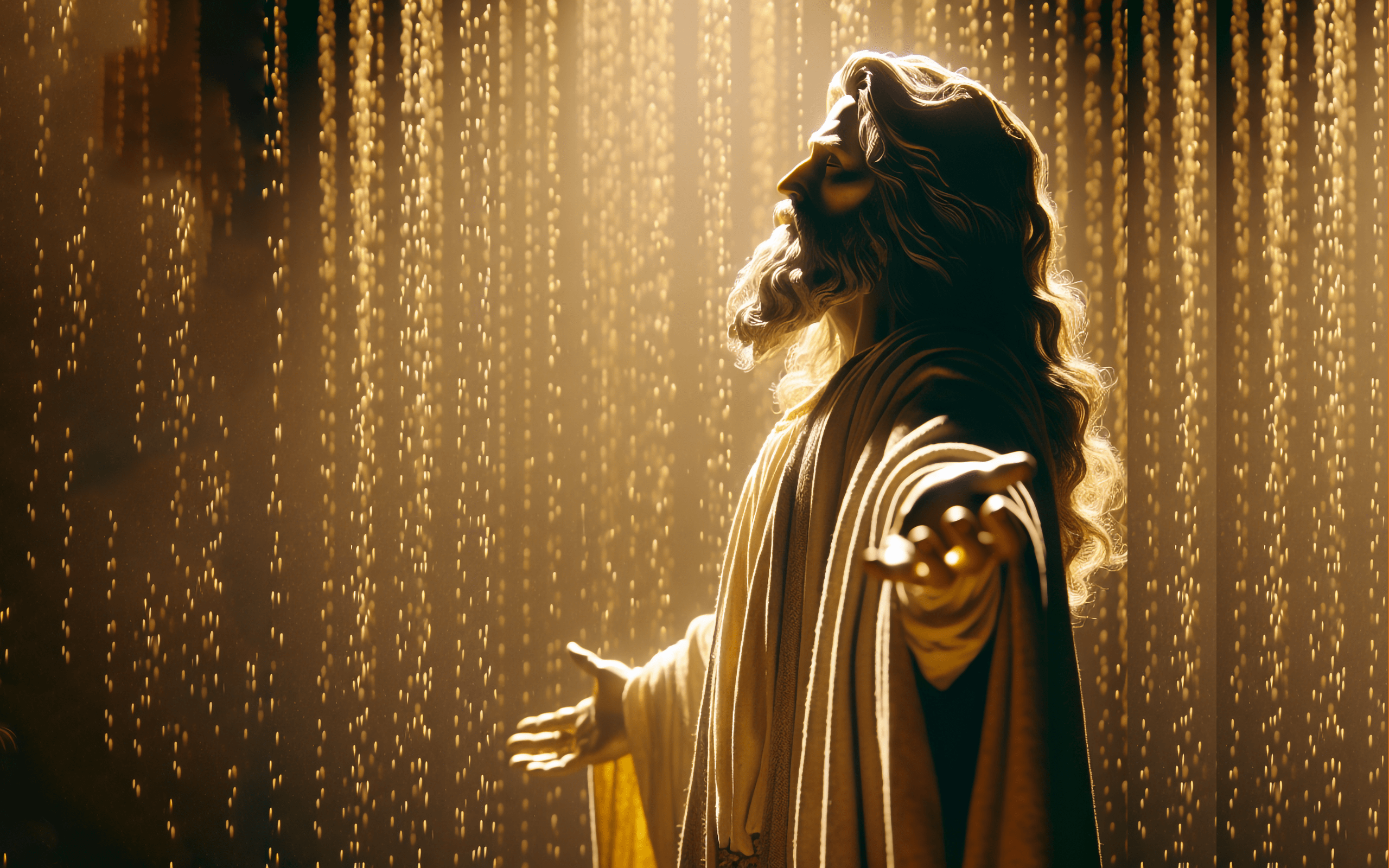
    Take Hercules, for example, one of the most renowned heroes in Greek mythology. He was the son of Zeus, the king of the gods, and Alcmene, a mortal woman. Zeus disguised himself as Alcmene’s husband to conceive Hercules. Another notable example is Perseus, who was born to Danaë after Zeus visited her in the form of a golden shower. These stories, along with many others, set a precedent for miraculous births involving divine intervention.

    Jesus’ Birth: A Unique Yet Familiar Narrative

    The story of Jesus’ birth in Christian tradition replicates certain elements of these ancient myths while holding a unique significance for believers. According to Christian teachings, Jesus was born to the Virgin Mary, who conceived him through the Holy Spirit. Jesus’ nothing short of miraculous birth, occurring without a biological father, aligns with the theme of divine intervention found in many mythologies.

    For example, in Hindu mythology, Kunti, the mother of the Pandavas in the scripture, was granted a wish by the sage Durvasa, allowing her to conceive children by involving various gods without losing her virginity (every girl’s dream?). She used this wish to give birth to Karna, Yudhishthira, Bhima, and Arjuna.

    However, Christians believe Jesus’ birth is unique and holds special significance as it marks the incarnation of God in human form, which Christians view as a one-of-a-kind event.

    While Muslims agree with Christians on the uniqueness of Jesus’ birth and his status as the prophesied Messiah, they don’t buy his divinity.

    Sacrifice and Resurrection in Mythology

    Sacrifice and resurrection are abundant in ancient myths. Long before Jesus, many deities and heroes had undergone death and returned to life, symbolizing renewal and triumph over death for their followers. In Egyptian mythology, Osiris, the god of the afterlife, was murdered by his brother Set and later resurrected by his wife, Isis. According to believers, the resurrection of Osiris represented the cyclical nature of life and death, hope and continuity.

    Jesus’ crucifixion and resurrection are central to Christianity. Its followers see Jesus’ death as a sacrifice for humanity’s sins and his resurrection as a victory over death and the promise of eternal life. While the themes aren’t original, Christians view Jesus’ resurrection as a historical and unique event with profound theological implications.

    That being said, Gnostic Christians, who emerged in the early centuries of Christianity, held conflicting views about Jesus’ death and resurrection. While some Gnostics accepted what later became the orthodox Christian doctrine, others believed that Jesus ascended to heaven before the crucifixion and that Judas was crucified in his place, a view that was later adopted by Islam in the 7th century.

    Eating Flesh and Drinking Blood: The Eucharist

    One of the more controversial aspects of Christian practice is the Eucharist, also known as Communion. During this ritual, believers eat bread and drink wine, which symbolizes the body and blood of Jesus, based on his instructions at the Last Supper.

    There are no records of a ritual mimicking the awkward Communion; hence, it seems Christianity holds the copyright.

    The Utility of Belief

    Belief in God and religious narratives fulfill a utilitarian purpose, providing morals, thought, and meaning to life. From this perspective, belief in God is key to understanding the world, morality, and human existence.

    For many, belief in God provides comfort and a sense of connection to something greater than themselves. It can offer moral guidance and a foundation for community and shared values. The stories of divine births, sacrifices, and resurrections reinforce these beliefs by illustrating themes of hope, renewal, and moral integrity.

    However, it is also possible to derive meaning and morality from secular sources, such as human reason, empathy, and cultural traditions. To many, secular approaches provide a strong understanding of human existence and ethical living.

    At the end of the day, it is up to individuals which source they pick to base their understanding of reality on. However, one must bear in mind that the utility of belief says nothing about its validity.

    The Takeaway

    Among Abrahamic religions, what Christianity sells is arguably the toughest to buy. However, unlike many other religion critics, I can relate to belief in a higher power than oneself. However, wouldn’t this power be too intelligent to follow the borrowed narratives of divine births, sacrifices, and resurrections to guide their people with confusing texts that will be interpreted in many ways as well as obviously misinterpreted?

    By the way, If there has to be a higher power for our universe to make sense, why should there have to be only the one?

    #ComparativeReligion #MythologyVsChristianity #ReligiousPhilosophy

  • Confronting Racial Prejudices and Biases in Harlem

    Confronting Racial Prejudices and Biases in Harlem

    When I first set foot in New York City, I carried with me both the furniture shipped from the Netherlands and my preconceptions and cultural expectations. As a pale-skinned person, my decision to rent a three-bedroom apartment in Washington Heights would prove to be an eye-opening experience that challenged my perceptions and the way I looked at others.

    The day I visited the apartment complex in Wahington Heights, Manhattan, was shrouded in rain. The streets were quiet, and the atmosphere subdued. Little did I know that this initial impression was merely a prelude to a community unlike any other.

    It wasn’t until the day I paid my rent and deposit, key in hand, that I truly saw Washington Heights in all its glory. With the sun, the true spirit of Washington Heights came to life. The streets were alive with activity—people, all dark-colored, gathered for barbecues in the streets, listening to loud music. My skin color, which I had rarely given much thought to before, suddenly turned into a beacon radiating my difference.

    The realization that I had unknowingly moved to a part of Harlem came as a secondary shock. Influenced by older American films, images of danger and unrest immediately appeared in my mind.

    Despite my initial reservations, I soon discovered that my fears were unfounded. My neighbors, without exception, showed me nothing but kindness, quite the opposite of how Americans are depicted in movies. Once, on my way out, a group of young people apologized for smoking marijuana in the building. I told them they needn’t worry and that I was moving from a country where it was legal to smoke it.

    One particular incident pops up when I think about living in the neighborhood. A neighbor approached me one day as I was checking my mail, visibly upset. He confronted me about not returning his greeting the previous evening when we had crossed paths. At that moment, I realized that what I would perceive as a non-event, if I remembered it at all, had been interpreted as a deliberate slight, possibly even a racist gesture.

    I responded with honesty and humility, explaining that I had been returning from a bar and had no recollection of the encounter. My genuine apology and willingness to engage in dialogue diffused the tension immediately. What began as a confrontation grew into a friendly conversation, and from that day forward, we had a cool neighborly relationship. His apartment was right across mine, and he even offered to collect my deliveries when I was not at home, a gesture that I much appreciated.

    This experience led me to a profound realization and a challenging question: Would I have been as anxious when my neighbor came at me if he had been white? The honest answer is probably not. This acknowledgment, however uncomfortable it may be, highlights the unconscious biases we all carry—biases that, in many ways, remain from our evolutionary past.

    Throughout human history, the ability to quickly identify and be wary of those who looked differently from one’s own group was often a survival mechanism. Back then, encounters with unfamiliar tribes could spell danger; hence the instinct was purposeful. However, in our modern, interconnected world, these same instincts can be divisive and lead to prejudices that hinder rather than help us.

    We must recognize that the emergence of such feelings, which eventually lay the grounds for racism and xenophobia, is a natural human tendency, which is not an excuse for racist or xenophobic behavior but rather a starting point for personal healing and societal change. Instead of demonizing people who experience these feelings, we can help individuals address the issue by acknowledging and explaining them.

    The Takeaway

    My Harlem experience shows that our preconceptions often bear little resemblance to reality and how vital it is to approach new situations and people with an open mind and a willingness to learn.

    You may not always control your feelings. However, understanding the root cause of those feelings and what you do with them is up to you.

    #DiversityMatters, #CulturalAwakening, #UrbanStories

  • Secularization of Language. To Do or Not to Do?

    Secularization of Language. To Do or Not to Do?

    In our daily conversations, we often use phrases with religious origins. Expressions like “Goodbye,” “Thank God!” and “God forbid” have become so embedded in our language that we rarely pause to consider their roots. Today, let’s talk a bit about the evolution of language, the secularization of society, and the complex relationship between religious heritage and culture.

    The Irony

    One of the most amusing aspects of these religiously rooted phrases is the irony that while many people, regardless of their religious beliefs, use these expressions, it’s often the deeply religious individuals who refrain from using them casually. (Remember, Gosh, Goodness, Golly, and Jeez.)

    Take, for instance, “Goodbye.” Originally a contraction of “God be with ye,” the phrase has lost its religious connotation for most speakers. Similarly, exclamations like “Oh my God!” or “Jesus!” are often used as general expressions of surprise or frustration rather than as invocations of deity. Like in many other European languages, these phrases have undergone a semantic shift, where their meanings separated from their original religious context.

    The Secularization of Language

    The widespread use of phrases with religious roots in secular contexts re in line with Western societies becoming increasingly secular. As a result, religious language has been repurposed and secularized.

    However, while language secularization doesn’t necessarily indicate a complete departure from religious influence. it still demonstrates the waiting influence of religion in European societies.

    Linguistic Heritage

    Attempting to purge a language of phrases with religious origins would be both impractical and culturally counterproductive. Language is a living record of a society’s history and development over time, and the presence of religiously derived phrases is nothing but linguistic fossil records of cultural evolution.

    Moreover, these phrases often carry emotional meanings that purely secular alternatives might lack. Such expressions merely contribute to the richness of language.

    Cultural History

    Accepting these language artifacts as part of cultural heritage is the constructive attitude supported by well-known theist scholars such as Richard Dawkins, who goes one step further and advocates for teaching the Bible in schools as literature.

    Engaging with this linguistic heritage would demonstrate both the cultural appreciation from atheists and secularists and the fact that they are at peace with themselves.

    The Danger of Linguistic Purges

    History has shown that purge attempts in languages often stem from authoritarian motivations such as religious fundamentalism or extreme anti-religious sentiment with a desire to control thought and expression. A truly open and democratic society should be able to accommodate linguistic diversity, including phrases that reflect various aspects of its cultural heritage.

    Moreover, attempts to eliminate these phrases to secularize the language would more than likely be futile since language evolves organically, shaped by the people speaking it every day. Engineering languages rarely succeed and often lead to unintended consequences.

    The Value of Linguistic Awareness

    Isn’t it awesome that the following words reflect the Pagan history of Germanic peoples?

    • Tuesday: Tiw’s Day, named after the god Tiw or Tyr
    • Panic: From Pan, the Greek god of nature
    • Echo: Named after a nymph in Greek mythology
    • Fauna and Flora: Named after Roman nature deities
    • Atlas: A Titan in Greek mythology, now used for map collections
    • Volcano: Named after Vulcan, the Roman god of fire

    The Takeaway

    Phrases with religious roots in everyday secular speech illustrate the natural evolution of languages. Rather than being a problem to solve, they showcase cultural history and the processes of societal change in English-speaking countries.

    Ultimately, we must strive to understand and value the various schools of thought that have contributed to the current shape of languages rather than trying to rid it of all past influences.

    #LanguageEvolution #CulturalHeritage #LinguisticDiversity

  • Richard Dawkins, an Antitheist?

    Richard Dawkins, an Antitheist?

    Richard Dawkins, whose name often sparks heated debates about religion, science, and atheism, has unquestioningly left an indelible mark on modern thought. But how accurate is it to call him an antitheist? To answer this question, we must examine Dawkins’ beliefs, public statements, and positions on religion.

    Understanding Antitheism

    Before we can determine whether Dawkins fits the antitheist label or not, we must first make what antitheism means clear. While atheism is simply the lack of belief in gods, antitheism actively opposes the belief in deities and often argues that such beliefs are harmful to society. Antitheists typically assert that religion is both false and detrimental to human progress and well-being. While atheism can be a secularist and democratic position, antitheism often has non-democratic associations.

    Dawkins’ Background and Influence

    The British evolutionary biologist Richard Dawkins became a household name in some circles with his 1976 book “The Selfish Gene,” making the gene-centered view of evolution popular. However, it was his post-9/11 works, particularly “The God Delusion” (2006), that brought him into the spotlight as a harsh critic of Christianity and Islam.

    Dawkins, along with Christopher Hitchens, Sam Harris, and Daniel Dennett, has become the leading public figure of the “New Atheism” movement and has come to be known for his outspoken criticism of religious beliefs and institutions, sometimes overlooking historical facts.

    Dawkins’ Stance on Religion

    Dawkins has spent a significant portion of his career as a public figure arguing against the existence of God and the validity of religious beliefs. He has consistently maintained that there is no credible evidence for the existence of any supernatural being. However, being a scientist, he asserts that the existence of God is improbable rather than impossible since scientists never lay claims for the non-existence of any given such claims are by nature unprovable.

    According to his public speeches, Dawkins’ primary concern is not the abstract concept of a deity but the real-world impacts of faith. He has frequently criticized organized religion, particularly the Abrahamic faiths (Christianity, Islam, and Judaism), for their negative influences on society.

    The “Good People Doing Bad Things” Argument

    One of Dawkins’ most notable arguments is how religions cause good people to do bad things. He insists that religious beliefs can motivate otherwise moral individuals to engage in harmful or unethical behaviors due to their adherence to religious doctrines or interpretations.

    “The good people doing bad things” argument is central to antitheist thought, as it positions religion both false and harmful. Dawkins has provided numerous examples to support this claim, from historical religious conflicts to modern-day issues like opposition to stem cell research or resistance to climate change action based on religious grounds.

    Dawkins’ Ideal Society

    Dawkins says his dream society would consider the claim for any supernatural entities’ existence as baseless. Dawkins advocates for a world where decisions are based on empirical evidence and rational thought rather than religious doctrine or supernatural beliefs.

    However, it’s important to note that Dawkins does not support dogmatic atheism. The statement that he “rejects the dogma ‘there is no God’” is consistent with his scientific approach. Dawkins has often emphasized that he cannot prove with absolute certainty that no god exists. Instead, he argues that the lack of evidence for a god makes the probability of one existing extremely low.

    This position aligns with Dawkins’ scientific background. He approaches the question of God’s existence as he would any scientific hypothesis, arguing that extraordinary claims require extraordinary evidence. In the absence of such evidence, he concludes that it’s reasonable to live as if there is no god.

    Is Dawkins an Antitheist?

    Given the evidence, it’s fair to say that Richard Dawkins exhibits many characteristics of an antitheist. He goes beyond simply not believing in a god to actively arguing against the merits of religious belief. His works and public statements consistently portray religion as not just false but potentially harmful to individuals and society.

    However, Dawkins himself has not always embraced the label of antitheist. He has described himself as a “tooth fairy agnostic,” meaning he’s as certain that God doesn’t exist as he is that the tooth fairy doesn’t exist. This playful description underscores his evidence-based approach to the question of God’s existence.

    Additionally, Dawkins has admitted certain aspects of religious culture, such as the beauty of religious art and music, to have been to society’s advantage. While he strongly opposes religious beliefs and their societal impacts, he doesn’t wholesale reject every aspect of religious heritage.

    He believes in freedom of religion as a fundamental human right and opposes discriminatory bans targeting specific faiths, such as the burqa ban in France. Furthermore, he wants the inclusion of all religions and holy books as literary texts in the school curriculum, arguing that religious literacy is essential for understanding European history and culture.

    The Controversy Surrounding Dawkins

    Dawkins’ outspoken views have made him a controversial figure. Supporters praise him for his clear articulation of atheist ideas and his defense of scientific thinking. On the other hand, critics accuse him of being overly confrontational and dismissive of religious perspectives.

    Some have argued that Dawkins’ approach is counterproductive, potentially alienating moderate religious individuals who might otherwise be open to scientific ideas. Others defend his style, arguing that challenging strongly held beliefs requires a direct and uncompromising approach.

    The Takeaway

    While Richard Dawkins may not always use the term “antitheist” to describe himself, his beliefs and public statements align closely with many antitheist positions. He goes beyond atheism to actively argue against the validity and value of religious beliefs. His primary concern is not the abstract question of God’s existence but the real-world impacts of religious beliefs and institutions.

    Dawkins envisions a society guided by evidence and reason rather than faith and dogma. He rejects the belief in God and the idea that such belief is benign or beneficial. At the same time, he maintains a scientist’s openness to evidence, rejecting dogmatic atheism in favor of an evidence-based approach to the question of God’s existence.

    #RichardDawkins #Antitheism #ScienceVsReligion

  • Why Religion Will Always Stay Relevant. Kinda.

    Why Religion Will Always Stay Relevant. Kinda.

    Have you ever wondered why certain events in history unfolded the way they did? Or why some conflicts seem to persist for centuries? Well, here’s a thought that might surprise you: You can’t fully grasp world history without knowing a thing or two about Abrahamic religions. That’s right – whether you’re a history buff, a curious student, or just someone who wants to understand the world better, diving into the holy books of these religions can be eye-opening.

    Now, before you roll your eyes and think, “Oh great, another lecture about religion,” hear me out. This isn’t about preaching or converting anyone. It’s about understanding the massive impact these belief systems have had on our world. So, let’s break it down and see why this knowledge is so crucial.

    Abrahamic Religions

    First things first – what exactly are we talking about when we say “Abrahamic religions”? These are the three major monotheistic religions that trace their roots back to the patriarch Abraham: Judaism, Christianity, and Islam. Together, they account for more than half of the world’s population. That’s a lot of people following beliefs that stem from the same source!

    The Power of Belief

    Now, imagine billions of people throughout history, all guided by these belief systems. It’s not hard to see how this could shape the course of human events, right? These religions have influenced everything from laws and governments to art and literature. They’ve been the cause of great acts of kindness and, unfortunately, terrible conflicts too.

    A Window to the Past

    Each of these religions has its own holy book (or books):

    • Judaism has the Tanakh, which includes the Torah
    • Christianity has the Bible (including the Old and New Testaments)
    • Islam has the Quran

    These texts aren’t just religious guidebooks. They’re historical documents that give us insights into ancient civilizations, cultural practices, and ways of thinking. Reading them can help us understand why people in different parts of the world behave the way they do, even today.

    Shaping the World Map

    Let’s talk about how these religions have literally shaped the world map. The Crusades, for instance, were a series of religious wars that had a huge impact on Europe and the Middle East. The spread of Islam influenced the rise and fall of empires across Asia, Africa, and parts of Europe. Jewish diaspora has led to communities establishing themselves all over the globe.

    When you look at a world map today, many of the borders you see were influenced by religious movements and conflicts. Pretty mind-blowing, right?

    Laws and Governance

    Ever wondered why certain laws exist in different countries? Many legal systems around the world have roots in religious teachings. The concept of the weekend, for example, comes from the Judeo-Christian tradition of the Sabbath. In some countries, Islamic law (Sharia) plays a significant role in the legal system.

    Understanding these religious influences helps us make sense of different societies and their rules. It’s like having a secret decoder ring for world cultures!

    Art and Architecture

    Now, let’s talk about something more visually appealing – art and architecture. Have you ever marveled at the beauty of a Gothic cathedral, an Islamic mosque, or ancient Jewish artifacts? These aren’t just pretty buildings or objects. They’re expressions of faith that tell us so much about the people who created them.

    Religious themes have inspired some of the world’s greatest artworks. From Michelangelo’s Sistine Chapel ceiling to intricate Islamic calligraphy, these masterpieces give us a window into the hearts and minds of people throughout history.

    Science and Education

    Here’s a surprising fact: religious institutions played a crucial role in preserving and advancing knowledge, especially during the Middle Ages. Monasteries kept libraries and copied books, Islamic scholars made huge strides in mathematics and astronomy, and many of the world’s oldest universities were founded by religious orders.

    Of course, there have also been conflicts between religious beliefs and scientific discoveries. Understanding this complex relationship helps us appreciate the journey of human knowledge and the challenges faced by scientists and thinkers throughout history.

    Language and Literature

    Did you know that many common phrases we use today come from religious texts? Expressions like “an eye for an eye,” “forbidden fruit,” or “peace be upon you” all have religious origins. Religious stories and concepts have influenced literature for centuries, from Dante’s “Divine Comedy” to modern novels.

    Even if you’re not religious, chances are you’ve been influenced by this linguistic and literary heritage. It’s part of our shared cultural DNA!

    Conflicts and Peacemaking

    Now for a more serious topic – conflicts. Many of history’s wars and disputes have had religious elements. The Thirty Years’ War in Europe, the ongoing Israeli-Palestinian conflict, and tensions in Northern Ireland are just a few examples.

    But here’s the flip side: religious leaders and movements have also been at the forefront of peacemaking efforts. Think of figures like Martin Luther King Jr., Mahatma Gandhi, or Desmond Tutu. Their faith-inspired actions changed the course of history.

    Understanding these conflicts and peace efforts gives us valuable insights into human nature and the complexities of society.

    The Modern World

    You might be thinking, “Okay, but that’s all in the past, right?” Not quite! Religious beliefs continue to play a significant role in today’s world. They influence political movements, social issues, and international relations.

    From debates about abortion and same-sex marriage to discussions on climate change and social justice, religious viewpoints often shape public discourse. Even in secular societies, the echoes of religious traditions can be felt in cultural norms and values.

    Why It Matters for You

    So, why should you care about all this if you’re not religious or not interested in becoming religious? Well, understanding these influences helps you in more ways than you might think. Let’s break it down.

    First off, it helps you make sense of current events and global politics. Many conflicts and tensions around the world have roots in religious differences or are influenced by religious beliefs. By understanding these backgrounds, you can better grasp why certain events unfold the way they do. It’s like having a key to decode complex situations that might otherwise seem baffling.

    Next, it opens up a whole new world of appreciation for art, literature, and cultural traditions. Think about it: so much of our cultural heritage is steeped in religious symbolism and stories. From Renaissance paintings to modern literature, religious themes and references are everywhere. When you understand these influences, you can enjoy and interpret these works on a deeper level. It’s like suddenly seeing in color after only seeing in black and white.

    Understanding religious influences also helps you communicate better with people from different backgrounds. In our increasingly connected world, you’re bound to interact with people whose beliefs and cultures differ from yours. Having a basic understanding of various religious perspectives can help you avoid misunderstandings and build stronger relationships. It’s a valuable tool for fostering empathy and respect.

    Moreover, many social and ethical debates have their roots in religious ideas. Whether it’s discussions about human rights, environmental stewardship, or medical ethics, religious thought has played a role in shaping these conversations. By understanding these influences, you can engage more meaningfully in important societal discussions, even if you don’t share the religious beliefs that inform them.

    Lastly, gaining knowledge about religious influences gives you a deeper appreciation for human history and diversity. Religions have been a driving force in human development, influencing everything from art and science to law and philosophy. Understanding this aspect of human experience enriches your perspective on our shared history and the incredible diversity of human cultures.

    The Takeaway

    Here’s the deal: whether you’re a believer, an atheist, or somewhere in between, the impact of Abrahamic religions on world history is undeniable. By familiarizing yourself with their holy books and teachings, you’re not signing up for a religion – you’re equipping yourself with a powerful tool for understanding the world.

    After all, history isn’t just about memorizing dates and names. It’s about understanding the forces that have shaped our world. And in that grand story, Abrahamic religions have played a starring role.

    #WorldHistoryInsights #ReligionAndSociety #UnderstandingCultures

  • The Hidden Censorship: How Money Silences Voices in America

    The Hidden Censorship: How Money Silences Voices in America

    We’ve all heard it before: “America is the land of free speech!” For many Americans, this is a point of pride, a fundamental right that sets the United States apart from many other nations. But here’s the thing – while it’s true that the government can’t tell you to zip it, there’s a whole other world of silence-buying going on that most of us don’t even realize.

    Let’s break it down. The First Amendment is pretty clear: the government can’t stop you from speaking your mind. That’s great, and it’s led to some amazing progress over the years. Movements have started, scientific breakthroughs have been shared, and unpopular opinions have had their day in the sun. All because people could speak freely without worrying about the cops showing up at their door.

    But here’s where it gets tricky. The USA isn’t just a democracy; it’s also a capitalist powerhouse. And in the land of the almighty dollar, money doesn’t just talk—it can also make others shut up.

    Now, you might be thinking, “Wait a minute, how can money censor people if it’s not the government doing it?” Well, that’s the clever part. It’s not official censorship, but it’s censorship all the same. It’s like a magic trick – now you see the information, now you don’t, and you never even knew it was there in the first place.

    How It Happens

    The mechanisms of subtle censorship in our modern media landscape are far from straightforward and often go unnoticed by the average consumer. One of the primary concerns is the concentration of media ownership. A small number of large corporations control the majority of media outlets, giving them significant influence over the stories that reach the public. These conglomerates have the power to determine which narratives are presented and how they are framed. Unfortunately, stories that might negatively impact their financial interests or displease their advertisers may be suppressed or altered.

    Advertising revenue plays a crucial role in the survival of media outlets, but this dependence can lead to compromised journalistic integrity. Advertisements may threaten to withdraw their financial support when expressing dissatisfaction with certain content, suppressing important stories, as media organizations prioritize their economic stability over comprehensive reporting.

    Legal threats pose another significant challenge to free expression. Even when a story is factually accurate, the mere threat of a costly lawsuit can deter many outlets from publishing potentially controversial content. This is particularly true when the subject of the story is a wealthy individual or powerful corporation with substantial resources at their disposal.

    Non-disclosure agreements (NDAs) have become another tool for silencing voices. While these contracts serve a legitimate purpose in protecting proprietary information, they are sometimes misused to prevent the disclosure of information that may be in the public interest, creating a culture of silence around certain topics, effectively censoring important discussions.

    Some legal actions are initiated not with the intention of winning a case but rather to exhaust the financial resources of the opposing party, a tactic often referred to as a Strategic Lawsuit Against Public Participation (SLAPP), which can effectively silence critics by making the cost of speaking out prohibitively expensive.

    Social media platforms, which have become primary sources of information for many, present their own challenges. Each platform has its own guidelines and policies regarding acceptable content. Enforcing these rules can sometimes result in the removal of posts or the suspension of accounts, often without clear explanations.

    Finally, the algorithms that govern our online experiences play a significant role in shaping the information we encounter. These complex systems determine which content is prominently displayed and which is relegated to obscurity. The opaque nature of these algorithms raises questions about the potential for manipulation and the inadvertent suppression of certain viewpoints or information.

    Let’s Look at Some Real-Life Examples:

    Remember when Fox News sued Al Franken over his book title? The case got thrown out, but it showed how big companies can use their legal muscle to try and silence critics.

    Or how about when local news anchors across the country all read the same script criticizing “fake news”? Turns out, one company owned all those stations and made them do it. Talk about controlling the narrative!

    The #MeToo movement revealed how NDAs had been used for years to keep victims of sexual harassment and assault quiet, especially in Hollywood.

    And let’s not forget whistleblowers like Edward Snowden, who faced serious legal trouble for revealing government secrets – even though many argue the public had a right to know.

    What makes this type of censorship so tricky is that it’s often invisible. When the government bans a book, we know about it. But when a story never sees the light of day because an advertiser made a fuss or when a whistleblower stays quiet because of an NDA, we never even know what we’re missing.

    And here’s the kicker—because private companies and individuals are doing this, not the government, it doesn’t technically violate the First Amendment. It’s a loophole big enough to drive a truck through.

    So what does all this mean for us? Well, it can skew the public’s understanding of important issues, protect the powerful from facing the consequences, discourage investigative journalism, and create echo chambers where people only hear one side of the story, causing them to lose trust in the media and other institutions.

    The Takeaway

    Here’s the bottom line: Freedom of speech in America is more complicated than just what the government allows in a country where money talks, economic power can be used to keep people quiet in ways that aren’t always obvious.

    The fight for free speech in America isn’t over – it’s just moved to a new battleground.

    #FreeSpeech #HiddenCensorship #MediaFreedom

  • Depicting the Prophet Muhammad in Islamic Law Will Surprise You

    Depicting the Prophet Muhammad in Islamic Law Will Surprise You

    In the wake of the Charlie Hebdo attack, discussions about whether Islam bans images of the Prophet Muhammad have become heated and widespread. Some Muslims assert a strict prohibition, while others, both Muslim and non-Muslim, argue for a more nuanced interpretation.

    Complex Islamic Jurisprudence

    Many debates have centered on verses from the Quran and sayings of the Prophet (Hadith), yet neither provides a definitive answer. To truly understand the issue, one must delve into Islamic law, which reveals a more complex picture.

    Early Islamic Legal Opinions

    Ibn Qudama (d. 1223), a notable Sunni theologian, discussed the legality of images in his medieval law book. He argued that images are not inherently prohibited; their permissibility depends on what they depict and their context. This early source suggests that a blanket ban on images is not supported by Islamic law.

    A century later, Ibn Taymiyya (d. 1328), influential in today’s Wahhabi and Salafi movements, issued legal opinions warning against using images for seeking intercession or favors from God. However, even his conservative views did not explicitly ban images, focusing instead on their misuse in religious practices.

    Modern Interpretations and Reforms

    Moving forward, Muhammad ‘Abduh (d. 1905), a reformist jurist in Egypt, argued that images and paintings preserve Islamic cultural heritage and knowledge. He emphasized that as long as images are not used in idolatry, depicting people, plants, and trees is not forbidden. His stance highlighted the educational and cultural benefits of images, rejecting a blanket prohibition.

    Impact of Mass Media

    The 19th century saw the rise of mass media, which brought new anxieties about images. This led to legal controls over prophetic representations, such as a 1926 fatwa from al-Azhar University banning a Turkish film about Muhammad. In contrast, Moustapha Akkad’s 1976 film “The Message,” which never shows Muhammad on screen, received mixed responses from different Sunni clerical bodies, showing the diversity of opinion within Sunni Islam.

    Contemporary Debates

    In the late 20th century, legal opinions on images of Muhammad became more varied. In 2000, Taha Jaber al-Alwani, a respected scholar, argued that there are no firm prohibitions on images in Islam and praised the depiction of Muhammad in the Supreme Court of the United States. However, post-9/11 geopolitics and events like the Danish cartoons of 2005 intensified debates, with some Saudi scholars declaring images of prophets disrespectful and caricatures blasphemous.

    Sectarian Differences

    Today, legal opinions on images of Muhammad vary, often along sectarian lines. Salafi scholars maintain a strict prohibition, while Shi’i scholars like Ayatollah al-Sistani accept respectful depictions. This divergence reflects broader sectarian differences but also highlights that views on images have evolved with contemporary circumstances.

    The Takeaway

    The notion of an absolute ban on images of the Prophet Muhammad is a recent development, influenced by modern media and geopolitical events. Historical and contemporary Islamic jurisprudence shows a more nuanced and complex landscape, where the legality of images depends on context, usage, and evolving interpretations within the Muslim world.

    Notes

    If you live in the West and are not a Muslim, you might not be concerned about whether Islam bans depictions of the Prophet Muhammad. However, understanding this issue is important as it reflects the recent retrogress in Islam.

    Many might find it surprising that Islam was once considered a religion of tolerance toward other faiths. The laws it introduced for women were progressive for their time. It modernized Sharia law, did not expect non-Muslims to obey it, decriminalized homosexuality, and acknowledged and respected other cultures. All this was happening while Europe was enduring the Dark Ages and slaughtering the masses into Christianity.

    IslamicArt #ProphetMuhammad #ReligiousImagery

  • Religious Tolerance and Atheism in the Islamic Empire

    Religious Tolerance and Atheism in the Islamic Empire

    The Ottoman Empire, one of history’s most powerful and long-lasting empires, is often remembered for its military might and territorial expansion. However, one of its most remarkable aspects was its approach to religious diversity. The Ottomans, as Muslims, considered Jews and Christians as “People of the Book,” recognizing their shared Abrahamic roots. This recognition led to a unique system of religious coexistence that lasted for centuries and left a lasting impact on the regions under Ottoman rule.

    The People of the Book

    The concept of “People of the Book” (Ahl al-Kitab in Arabic) is rooted in Islamic theology. It refers to followers of monotheistic religions that predate Islam, primarily Jews and Christians. The Quran acknowledges these faiths as having received divine revelation through their prophets and scriptures.

    As an Islamic state, the Ottoman Empire adopted this concept and applied it to its governance, allowing for a level of religious tolerance that was uncommon in many other parts of the world at the time.

    The Millet System

    The Ottoman Empire had a special way of dealing with different religious groups, which they called the “Millet System.” It was like having mini-communities within the big empire. Each religious group that the Ottomans recognized was called a “millet.”

    These millets had a lot of freedom to run their own affairs. It’s like they had their own little governments within the empire. They could make decisions about family matters and personal issues using their own religious laws. For example, if there were a dispute about a marriage or inheritance, they would solve it their own way.

    The millets also had some other important jobs. They collected taxes from their own people and gave them to the Ottoman government. They took care of their churches, synagogues, or other religious buildings. They even ran their own schools, teaching their children about their faith and culture.

    Now, it wasn’t all perfect. Non-Muslims had some rules they had to follow, including paying a special tax called “jizya.” But even with these rules, they could still practice their religion freely, wear their traditional clothes, speak their own languages, and keep their cultural traditions alive.

    The Millet System system helped different religious groups live side by side in the Ottoman Empire for many years. It wasn’t exactly equal to how Muslims were treated, but for its time, it was quite tolerant compared to many other places in the world.

    The Patriarchate of Constantinople

    One of the most striking examples of Ottoman religious tolerance was their treatment of the Ecumenical Patriarchate of Constantinople, the spiritual leader of Eastern Orthodox Christianity. When Sultan Mehmed II conquered Constantinople in 1453, he allowed the Patriarchate to continue functioning.

    In fact, Mehmed II went a step further. He not only preserved the existing Greek Orthodox Patriarchate but also established the Armenian Patriarchate of Constantinople in 1461, which was particularly significant because the Byzantines, who ruled before the Ottomans, had considered the Armenian Church heretical and did not allow it to operate within Constantinople’s walls.

    The Patriarchate’s continued presence in Istanbul (formerly Constantinople) to this day is a testament to this policy of religious tolerance. It remains one of the fourteen autocephalous Eastern Orthodox churches and is considered “first among equals” in the Eastern Orthodox communion.

    Atheism: A Modern Concept

    While the Ottoman Empire showed remarkable tolerance towards different faiths, the concept of atheism as we understand it today was largely absent. In the Ottoman worldview, and indeed in much of the world until the 19th century, the existence of God was considered self-evident.

    The idea that someone might not believe in any god at all was so foreign that such a person might be considered insane rather than heretical, a perspective that wasn’t unique to the Ottoman Empire but was common across Europe and the Near East.

    In Turkey, the modern successor state to the Ottoman Empire, atheism remained extremely rare until quite recently. Even as late as two decades ago, the number of self-proclaimed atheists in Turkey was negligible, which cannot be attributed solely to social pressure, as Turkey has had many openly atheist writers and artists, some of whom are considered national treasures.

    However, times are changing. Today, atheists make up about 3% of the Turkish population, with many more having left organized religion without necessarily identifying as atheists.

    The Historical View of God’s Existence

    Until the 19th century, the prevailing wisdom in Europe and the Near East was that our very existence was irrefutable proof of God’s existence. In this worldview, saying “there is no God” was considered as irrational as saying “I don’t exist.”

    This perspective helps explain why atheism, as we understand it today, was such a foreign concept in the Ottoman Empire and other societies of the time. The idea that the universe could exist without a divine creator was simply not part of the intellectual landscape.

    Legacy and Modern Implications

    The Ottoman approach to religious diversity left a lasting impact on the regions it once ruled. Many Balkan and Middle Eastern countries still have diverse religious populations, a legacy of the empire’s policies.

    However, it’s important to note that while the Ottoman system was progressive for its time, it wasn’t perfect by modern standards. Non-Muslims still faced certain restrictions and were not considered fully equal to Muslims under the law.

    Today, Turkey, as the successor state to the Ottoman Empire, continues to grapple with issues of religious freedom and secularism. While its constitution provides for freedom of religion, and Turkey is a party to the European Convention on Human Rights, there have been concerns about religious freedom violations, particularly for some non-Muslim citizens.

    The Takeaway

    The Ottoman Empire’s approach to religious diversity, rooted in the Islamic concept of “People of the Book,” created a remarkable system of coexistence. The continued presence of the Ecumenical Patriarchate in Istanbul stands as the living legacy of the Ottoman Empire.

    While the challenges we face today differ, the Ottoman example reminds us that diversity and faith can coexist, even in the most powerful empires.

    Sources

    https://en.wikipedia.org/wiki/Religion_in_Turkey

    https://books.openedition.org/ceup/2139?lang=en

    https://www.pewresearch.org/religion/2017/05/10/religious-belief-and-national-belonging-in-central-and-eastern-europe

    #OttomanEmpire, #ReligiousTolerance, #IslamicHistory

  • State Atheism, When Nations Play God

    State Atheism, When Nations Play God

    Few threads in human governance are as contentious as the relationship between state and faith. As we navigate the complexities of the 21st century, an intriguing phenomenon demands our attention: state atheism, a concept often misunderstood and frequently misrepresented, offers a fascinating lens through which to examine the delicate balance between secular governance and religious freedom.

    Defining State Atheism

    Fundamentally, state atheism is more than just opposing religion in public life. It represents a proactive approach in which a government actively advances atheistic ideas while also distancing itself from religious institutions. However, this approach often ventures into contentious and, at times, very unsettling areas, going much beyond the well-known concept of secularism.

    As someone who is most interested in political systems, I’ve often pondered the motivations behind such a stark governmental position. Is it born from a genuine belief in the benefits of a godless society, or does it stem from a desire for absolute control over citizens’ thoughts and beliefs? The answer, I suspect, lies somewhere in the murky waters between ideology and power.

    Historical Context

    The Soviet Union casts a looming shadow over any discussion of official atheism. This large country began what can only be called a massive and disastrous experiment in godless administration from 1922 to 1991. The intensity with which religious expression was repressed during this time serves as a clear reminder of the abuse risk present in every system that aims to regulate an individual’s beliefs.

    However, to interpret official atheism solely from a Soviet standpoint would be to oversimplify the reality. From Albania to China, several nations have embraced their own versions of this concept, each with unique characteristics that are a reflection of their particular historical and cultural contexts, which I find especially interesting because they show how political views may be adapted to certain geographic circumstances.

    The Paradox of Enforced Disbelief

    The irony of governmental atheism is too strong to overlook. In its passionate pursuit of a society free from religious influence, it often builds a system that is a reflection of the exact structures it seeks to eliminate. When imposed with religious fervor, state-approved atheism adopts the traits of a distinct secular religion, complete with dogmas, ceremonies, and heresies.

    This issue raises significant questions concerning the nature of belief and the boundaries of the government’s authority. Is it possible for a state to pass laws in line with the opinions of its people, or does this only serve to suppress genuine religious convictions? Religions’ ability to withstand persecution only demonstrates that spirituality is a trait that is difficult to destroy in people.

    Contemporary Reflections

    Official atheism, as applied by former communist countries, appears increasingly out of touch with the modern global environment. Still, its echoes can be heard worldwide in more subdued forms of forceful secularism or governmental atheism.

    Distinguishing these modern manifestations from the more extreme historical versions is crucial. Today’s extreme secularism sometimes takes the shape of atheistic management, eliminating religious symbols and displays from public spaces for the sake of fairness. Though these laws are not overtly coercive, they still elicit strong feelings about the role of religion in public life.

    The Unintended Consequences

    When we look back at the history of official atheism, we must confront its unanticipated consequences. Rather than instituting the rational, atheistic utopias that their advocates had dreamed of, these regimes often fostered cultures of distrust, anxiety, and cultural loss. Suppression of religious expression sometimes led to the disintegration of long-standing social bonds and rich cultural customs.

    Moreover, state ideologies and personality cults that demanded a dedication strikingly similar to religious faith frequently filled the void left by the forced eradication of religion from public life. This observation brings us to a depressing conclusion: political decrees are not easily able to erase the human predisposition towards believing, whether it be religious or ideological.

    Looking Forward

    What can we learn from the experiment state atheism as we turn to the future? The significance of true pluralism, or a system that permits a range of beliefs, including the freedom to not believe, is arguably the most important. State atheism’s shortcomings should be considered as a cautionary tale about the dangers of any society that tries to impose a specific worldview—religious or atheistic—on its whole population under the disguise of the greater good.

    Building political systems where people’s freedom of conscience is respected above all else, where people of different religions and none at all can coexist, and where governance is really neutral in matters of belief are the tasks facing our interconnected globe. If we wish to build a more peaceful world, we must make this difficult effort.

    The Takeaway

    If anything, our challenge going forward is to take what we can from these past trials and work toward striking a balance that honors people’s strongly held beliefs as well as the secular nature of contemporary government. By accepting this complexity, we can only hope to build societies that are truly free, diverse, and tolerant of various viewpoints on the divine—or lack thereof.

    #StateAtheism #ReligiousFreedom #PoliticsAndReligion