Tag: Jesus

  • Literalism vs. Contextualism: Unpacking Biblical Interpretation

    Literalism vs. Contextualism: Unpacking Biblical Interpretation

    The Bible is one of the most significant and extensively read books throughout history. Revered by billions as the divine word, a moral compass, and the cornerstone of their beliefs, it is nonetheless a complex and debated text. Comprising various genres, authors, and viewpoints, it spans millennia of history and cultural development. The Bible is not a single, cohesive document; rather, it is a compilation of varied and sometimes conflicting texts, mirroring the human and historical circumstances of their creation. Consequently, Biblical interpretation is not an easy or direct task but an intricate and demanding endeavor that necessitates thoughtful and analytical engagement.

    When studying the Bible, a primary question is whether its content should be interpreted literally, figuratively, or through a combination of both. This inquiry profoundly affects our comprehension and application of biblical teachings and narratives in contemporary life. For instance, reconciling the Genesis creation narrative with scientific theories of evolution and geological data presents a challenge. Additionally, addressing the seeming discrepancies and variances within and across the biblical texts is essential. It is also crucial to consider the ethical and moral dilemmas posed by biblical laws and stories, including issues of slavery, violence, gender roles, and sexuality. Understanding the historical and cultural contexts of the Bible’s authors and their original audience is vital to accurately translating and applying the Bible’s messages to modern-day circumstances and environments.

    Join us as we delve into several questions, including whether one should take the Bible seriously. We will scrutinize the arguments and viewpoints of various biblical interpretation approaches, such as literalism, historical-critical, and contextual, assessing their merits and demerits.

    Literalism in Biblical Interpretation

    Literalism, a prevalent approach to understanding the Bible, asserts that the sacred text should be read and comprehended according to its plain and straightforward meaning. Advocates of literalism view the Bible as the inerrant and infallible word of God, where every word and detail holds historical and scientific accuracy. They maintain that the Bible is clear and consistent and admits only one correct interpretation for each passage. Typically, literalists adopt a conservative and traditional stance on ethical and moral issues, guided by biblical laws and commands.

    Arguments in Favor of Literalism:

    • Literalism upholds the Bible’s authority and inspiration, affirming that it is God’s word, devoid of falsehood or error. By doing so, it maintains the integrity and unity of the entire text, avoiding selective acceptance or figurative interpretations.
    • Literalism provides a clear and objective standard for understanding and applying the Bible. It avoids the ambiguity that arises from subjective reasoning or personal experience, which can lead to diverse interpretations.
    • Literalists assume that biblical writers communicated directly and transparently. Acknowledging historical and cultural contexts, they take the text at face value, avoiding modern assumptions or foreign perspectives.

    Challenges and Criticisms to Literalism

    • Literalism overlooks the literary and rhetorical aspects of biblical writings. For instance, it fails to recognize the poetic and symbolic nature found in Psalms, Proverbs, and Revelation, as well as the use of metaphors, similes, hyperbole, and irony throughout the text.
    • Literalism clashes with scientific evidence and historical facts that challenge biblical accounts. The creation story, the flood, the exodus, and miracles often conflict with empirical knowledge. Additionally, discrepancies within and between biblical books pose interpretive challenges.
    • By imposing an inflexible framework, literalism may not always address diverse contexts and situations. It neglects the dynamic nature of the biblical tradition, which evolves through ongoing dialogue between God and humanity.

    Historical-Critical Approach to Biblical Interpretation

    The historical-critical approach to understanding the Bible views it as a historical and human document, subject to rigorous methods and tools of analysis. Unlike literalism, which emphasizes the text’s plain meaning, historical-critical scholars recognize the Bible’s complexity and multifaceted nature. Let’s delve into the arguments for and against this approach:

    Arguments in Favor of Historical-Critical Interpretation

    • Historical-critical scholars acknowledge that biblical writers and their audiences lived in specific historical and cultural contexts. They recognize that these ancient authors reflected their own times, experiences, and understandings in their writings. By doing so, historical-critical interpretation avoids imposing modern assumptions on the text.
    • This approach uncovers the layers beneath the biblical surface. Scholars reveal the theological developments, debates, and implicit meanings within and between biblical texts by examining historical and literary contexts. It sheds light on the creative ways biblical writers engaged with their challenges.
    • Historical-critical interpretation allows us to distinguish between essential and incidental elements in the Bible. It bridges the timeless and the timely, enabling us to apply biblical teachings and stories to our contemporary contexts. Embracing diverse perspectives encourages dialogue and enriches our understanding of the biblical tradition.

    Challenges and Criticisms to Historical-Critical Interpretation

    • Critics argue that historical-critical analysis diminishes the Bible’s divine authority. By emphasizing its human origins, this approach denies supernatural guidance and involvement. It challenges the traditional view of the Bible as the infallible word of God.
    • Historical-critical scholarship dissects the Bible into parts, focusing on differences rather than similarities. Consequently, it offers multiple interpretations and conclusions, leaving readers with uncertainty. Some find this lack of definitive answers unsettling.
    • While historical-critical analysis enriches our understanding, it can alienate biblical writings from the faith and life of religious communities. Those who view the Bible as sacred and divine may struggle with this scholarly detachment.

    Contextual Biblical Interpretation: Bridging Divine and Human Perspectives

    The contextual approach to biblical interpretation emphasizes understanding the Bible in relation to both its historical context and the contemporary reader’s situation. Contextual scholars recognize that the Bible is not solely divine or solely human; it embodies both aspects. Let’s explore the arguments for and against this approach:

    Arguments in Favor of Contextual Interpretation:

    • Contextual interpretation affirms that the Bible is both God’s word and a human response to God. It recognizes that God speaks through the biblical writings, and humans engage with them. By preserving the integrity and unity of the Bible, contextual interpretation avoids extremes like literalism or historical-critical analysis.
    • Contextual interpretation allows us to relate biblical teachings and stories to our own contexts and challenges. It encourages dialogue and diversity by inviting engagement from various perspectives. Appreciating the richness and complexity of the biblical tradition becomes possible through this lens.
    • Contextual scholars acknowledge that biblical writers and their audiences lived in specific historical and cultural contexts. They recognize that these ancient authors reflected their own times, experiences, and understandings in their writings. Contextual interpretation appreciates biblical texts’ historical and cultural diversity by considering different genres, sources, traditions, and perspectives.
    • Contextual interpretation delves into historical and literary contexts, revealing theological developments and debates within biblical communities. It exposes implicit meanings and creative ways biblical writers engaged with their challenges.

    Challenges and Criticisms to Contextual Interpretation:

    • Critics argue that contextual interpretation weakens the Bible’s divine authority. By acknowledging its human origins and imperfections, this approach challenges the traditional view of the Bible as solely God’s word.
    • Contextual scholars bring their own biases and assumptions to the interpretation process. This subjectivity can lead to multiple conflicting interpretations and leave readers without clear guidance.
    • Contextual interpretation may detach biblical writings from their original purpose and message. Ancient authors may not have anticipated reading and applying their texts in diverse contexts.

    In a Nutshell

    The issue of taking the Bible seriously transcends a simple yes or no answer; it’s about the manner and reasons for doing so. Rather than outright acceptance or dismissal, it involves an active engagement with the text. Understanding the Bible is not about pinpointing a single correct interpretation but recognizing its essential role in grasping Western history and society.

    The Debate Between Bible Literalists vs Contextualists

    For centuries, there has been an ongoing debate within Christianity over how to interpret the Bible. On one side are the literalists, who believe the Bible should be taken completely literally, word-for-word. On the other side are the contextualists, who believe the Bible should be interpreted within its historical and cultural context. This debate has shaped Christian theology and doctrine throughout history.

    Early Literalism

    The early Christians were generally literalists when it came to interpreting the Bible. They took the stories and teachings at face value, ascribing to them a literal and historical truth. This literalist view was the dominant perspective throughout the first several centuries of Christianity.

    However, even in these early years, there were hints of contextualism. Some Church Fathers like Origen argued for allegorical interpretations of certain passages, looking for deeper symbolic meanings beneath the literal text. But by and large, literalism held sway.

    Medieval Scholasticism and the Growth of Contextualism

    During the Middle Ages, the literalist view was still prevalent, but the rise of scholasticism and a revived interest in Greek philosophy led to more widespread use of contextual analysis. Scholars like Thomas Aquinas incorporated Aristotelian methods of analysis and questioned whether the Bible always meant exactly what it said in a literal sense.

    This scholastic method opened the door for more allegorical and symbolic interpretations of scripture. The four-fold method became popular, which looked at literal, allegorical, moral, and anagogical meanings behind biblical passages. Contextualism was on the rise, even if it was still a minority view.

    The Protestant Reformation and Literalism’s Resurgence

    In the 16th century, the Protestant Reformation brought a resurgence of literalism. Protestant scholars like Martin Luther and John Calvin rejected many of the allegorical interpretations of the Catholic Church. They argued for a more literal, historical reading of scripture, free from non-biblical traditions.

    This literalist bent was amplified by the growing use of the historical-grammatical method of interpretation, which stressed looking at the original languages, contexts, and grammatical structures to understand the author’s literal intent. The Protestant principle of sola scriptura (by scripture alone) reinforced this literalist trend.

    19th Century Debates and the Emergence of Modern Contextualism

    In the 19th century, new developments like the Higher Criticism movement, which analyzed the Bible’s historical origins and authorship, combined with growing scientific discoveries, posed challenges to biblical literalism. This led to a flourishing of contextualist approaches.

    Liberal theologians and scholars argued that the Bible had to be understood within its ancient contexts and that its stories and teachings should not always be taken as literal historical facts. On the other side, fundamentalists like those behind the Niagara Bible Conference clung strongly to biblical inerrancy and literalism as a backlash against modernist thinking.

    This literal vs. contextual debate raged throughout the 19th and into the 20th centuries, shaping Christian doctrinal disputes over issues like creationism vs evolution and inspiring the “fundamentalist-modernist” controversies.

    20th Century and Beyond – A Diversity of Views

    In the 20th and 21st centuries, this historical debate has continued in various forms across Christian denominations and traditions. Most mainstream Christian institutions have adopted some level of contextual interpretation, while still maintaining core literal beliefs about Christ’s divinity, the resurrection, etc.

    Within these churches, a diversity of views exists, with some being more literalist and others more contextualist when it comes to specific teachings and biblical books. Literalism remains very strong in certain evangelical, fundamentalist, and conservative churches. Meanwhile, liberal and progressive churches tend to interpret scripture through a more contextualist lens.

    At the scholarly level, there is also a wide range of approaches drawing from literalism, contextualism, and other methods like reader-response criticism and postmodern interpretation. The historical debate continues unabated, shaping how each new generation of Christians understands the Bible.

  • The Bridge Between Christianity and Islam

    The Bridge Between Christianity and Islam


    Christianity and Islam are two of the most influential religions in the world, each with a rich history and deep-rooted traditions that have shaped societies and influenced the course of human history. With over 2 billion Christians and 1.8 billion Muslims globally, these religions form a significant bridge impacting the cultural, social, and spiritual lives of billions. The bridge between Christianity and Islam is reflected in their holy scriptures—the Bible and the Quran—and extends to their practices, rituals, and beliefs, highlighting both similarities and distinctions that render each faith unique.

    Despite their differences, both religions share a common belief in the existence of one God, the importance of prayer and charity, the value of family and community, and the pursuit of peace and justice. By exploring the common ground between Christianity and Islam, we can better understand and appreciate these two religions and foster greater respect and cooperation among their followers.

    Bridge Between Christianity and Islam I: Shared Monotheistic Roots

    Christianity and Islam are two major religions that share a fundamental belief in the oneness of God. Both faiths consider God to be the sole creator and sustainer of the universe. This monotheistic principle is a cornerstone that unites the followers of both religions, and it is expressed in their daily prayers and religious rituals.

    In addition to this belief, Christianity and Islam share a reverence for a lineage of prophets. These prophets, including Abraham, Moses, Elijah, Elisha, Jonah, Zechariah, John the Baptist, Aaron, David, Solomon, Job, Joseph, Adam, Noah, Lot, Ishmael, Isaac, Jacob, and Jesus, are considered essential figures in the history of both religions who are seen as messengers of God who had a pivotal role in guiding humanity and who left behind teachings that are still relevant today.

    While there are differences in how these religions interpret and follow the teachings of these prophets, the shared belief in their importance underscores the deep similarities between Christianity and Islam. These similarities offer a path for peaceful coexistence and mutual understanding between the followers of these two faiths.

    Photo by Noah Holm on Unsplash

    Bridge Between Christianity and Islam II: Sacred Texts and Teachings

    The Bible and the Quran are two of the most important religious texts in the world, serving as the foundational scriptures for Christians and Muslims, respectively. These texts are revered by believers as sacred and are considered to contain the divine word of God.

    For Christians, the Bible provides a comprehensive guide to faith and morality, covering everything from the world’s creation to the life and teachings of Jesus Christ. It is divided into two main parts: the Old Testament, which tells the story of God’s relationship with the Jewish people, and the New Testament, which focuses on the life and teachings of Jesus and the early Christian church. The Bible provides moral guidance, spiritual insights, and a framework for living a life pleasing to God. It emphasizes the importance of love, compassion, forgiveness, and humility while stressing the need for righteousness and obedience to God’s commands.

    For Muslims, the Quran is the final and most complete revelation of God’s message to humanity, as conveyed by the Prophet Muhammad. It contains 114 chapters, or suras, organized according to length rather than chronology. The Quran covers a wide range of topics, including the oneness of God, the nature of humanity, and the importance of good deeds and virtuous behavior. Like the Bible, it emphasizes compassion, justice, and the importance of community, reflecting a shared moral ethos. Muslims believe that the Quran is the literal word of God and that its teachings are meant to guide all aspects of life, from personal conduct to social and political affairs.

    While Muslims accept the four gospels of the New Testament for the most part, they reject the prophethood of Apostle Paul and the doctrines installed by the Roman Catholic Church in later centuries, such as the Trinity and Original Sin.

    Bridge Between Christianity and Islam III: Angels, Afterlife, and Accountability

    Christianity and Islam both share a belief in the existence of angels, namely Gabriel, Michael, Raphael, Azrael and the fallen angel Satan. These celestial beings are believed to serve God’s will and carry out His commands. Both religions also hold the conviction that after death, our souls will go to an afterlife where they will find their eternal destiny.

    In Christianity, this is often referred to as heaven or hell, while in Islam it is referred to as paradise or hellfire. Additionally, both religions teach the concept of the Day of Judgment, where individuals will be held accountable for their actions during their life on earth. On this day, God will judge each person according to their deeds and they will be rewarded or punished accordingly. This belief is a fundamental part of both religions and serves as a reminder of the importance of leading a righteous and moral life.

    Photo by Imad Alassiry on Unsplash

    Bridge Between Christianity and Islam IV: The Legacy of Abraham

    Abraham, also known as Ibrahim in Islam, is a central figure in Christianity and Islam. He is considered the father of many nations and is revered for his unwavering faith in God. In Christianity, Abraham is known as the Israelites’ patriarch and is considered one of the most important figures in the Old Testament.

    In Islam, on the other hand, he is considered to be a prophet and is revered for his submission to God’s will and his willingness to sacrifice his son for God. Abraham’s legacy is a testament to the shared heritage and mutual respect that can be found between Christians and Muslims, as his story is a reminder of the importance of faith, devotion, and obedience to God in both religions.

    Challenges and Misconceptions

    Christianity and Islam share many similarities, including core beliefs, values, and practices. Despite these commonalities, there is often a perception of tension and conflict between the two religions, especially in regions such as the Middle East, where their histories have been intertwined for centuries. These tensions can be attributed to various factors, such as political and economic conflicts, cultural differences, and misunderstandings about each other’s beliefs and practices.

    However, it’s important to recognize and appreciate the similarities between Christianity and Islam and cultivate greater understanding and respect for each other’s differences. By doing so, we can create a more peaceful and unified world where people of different faiths and no faith can coexist and work together towards common goals.

    Mutual Respect and Reverence

    One of the most notable aspects of the relationship between Islam and Christianity is the mutual respect between the two religions. Despite their differences in beliefs, Muslims hold the Bible in high regard, considering it to be a divine revelation alongside the Quran. Additionally, Jesus Christ is revered as a significant prophet, and Muslims recognize him as the Messiah.

    This respect is further emphasized by the frequent references to Jesus and his mother, Mary, in the Quran, underscoring the significance of Jesus in Islamic beliefs and serve as a reminder of the shared religious heritage between Islam and Christianity.

    Moreover, throughout history, there have been periods of collaboration and peaceful coexistence between Christians and Muslims. Islamic scholars played a crucial role in preserving and translating ancient knowledge during the Middle Ages, contributing to the European Renaissance and the Scientific Revolution. This exchange of intellectual ideas and knowledge is a testament to the benefits of interfaith dialogue and cooperation between different religions.

    Contemporary Dialogue

    Recently, the ecumenical movement has been working to establish greater collaboration and communication between Christianity and Islam by implementing interfaith initiatives that promote dialogue and mutual understanding. These efforts are between the two religions, and they seek to build bridges that can help foster a deeper level of understanding and respect.

    The ultimate goal of these initiatives is to highlight the shared values and common beliefs that can serve to unite us all as human beings, regardless of our faiths or cultural backgrounds. By working together in this way, we can create a more harmonious and peaceful world grounded in mutual respect and understanding.

    Customarily, many Turkish Muslims light candles in Orthodox Churches in Istanbul — Photo by Nicola Fioravanti on Unsplash

    In a Nutshell

    Christianity and Islam, two of the world’s largest religions, have distinct differences in practice and theology. However, they share a profound common ground that is often overlooked. Both religions believe in one God, who is merciful, compassionate, and just. Both encourage their followers to love and serve others, to practice self-control and discipline, and to seek forgiveness for their sins.

    Despite their differences, Christianity and Islam share many fundamental values that can be used to build bridges between their followers. Mutual respect, understanding, and willingness to learn from one another’s perspectives can help create a more harmonious and respectful world. By recognizing and celebrating their shared heritage, adherents of both faiths can work together to overcome fear and suspicion and promote peace and cooperation.

    Afterword

    I don’t endorse Christianity or Islam. However, I also don’t believe it is up to us to decide if the world would be a better place without either of these religions. Regardless of where one stands, the ideas and solutions one supports must satisfy two criteria: keep religion out of politics and aim for peaceful coexistence of us all.

    Sources

    Log College Press
    Log College Press aims to collect and reprint the writings of and about American Presbyterians from the 18th and 19th…caleb-cangelosi-437x.squarespace.com

    Shared Prophets of Christianity & Islam | Synonym
    Hemera Technologies/PhotoObjects.net/Getty Images Christianity and Islam have several prophets in common and consider…classroom.synonym.com

    List of people in both the Bible and the Quran – Wikipedia
    From Wikipedia, the free encyclopedia The Bible and Quran have many characters in common, many of which are mentioned…en.wikipedia.org

    The Greatest Prophets between Christianity and Islam: 13-Prophet Moses
    Moses is the prophet most mentioned by name in the Bible and the Qur’an and the one, along with Abraham, most revered…islamforchristians.com

    Jesus: A Foundation for Dialogue Between Muslims and Christians | Yaqeen Institute for Islamic…
    Jesus is at the center of Christianity and is considered a prophet in Islam. Common ground between Muslims & Christians…yaqeeninstitute.org

    What Christianity and Islam have in common
    This commonality is too often lost in the turmoil of antagonistic voices who push politics of fear.www.tennessean.com

    Hierarchy and significance of angels in various religions
    angel, Primarily in Western religions, any of numerous benevolent spiritual beings who mediate between heaven and…www.britannica.com

    What are the Similarities Between Christianity and Islam?
    Christianity and Islam are the two largest religions in the world and share many similarities and differences. Read on…www.twinkl.com

    Belief in Angels
    The true reality of angels, their abilities, tasks, names and numbers.www.islamreligion.com

  • Evolution of God – God’s Identity Crisis

    Evolution of God – God’s Identity Crisis

    The concept of God in Judaism has seen a remarkable evolution throughout history, mirroring humanity’s shifting cultural and philosophical contexts. Initially embracing polytheism, Judaism featured multiple deities overseeing life’s various aspects. This perspective evolved into the groundbreaking notion of a singular, transcendent, all-encompassing God: Yahweh. This marked the onset of a profound transformation in comprehending Yahweh’s nature and role, an evolution that would continue to unfold over time.

    Early Identity of Yahweh

    Yahweh, the God of the Israelites, epitomized the evolution of God beyond the physical, existing outside the limits of human understanding or portrayal. Temporal or spatial dimensions did not confine this infinite and unbounded presence. The second commandment underscored this transcendence, forbidding the crafting of idols or likenesses. This ban, termed aniconism, solidified as a fundamental tenet of Jewish theology, setting it apart from polytheistic faiths that revered corporeal depictions of their deities.

    You shall not make for yourself an image in the form of anything in heaven above or on the earth beneath or in the waters below. You shall not bow down to them or worship them; for I, the Lord your God, am a jealous God, punishing the children for the sin of the parents to the third and fourth generation of those who hate me, but showing love to a thousand generations of those who love me and keep my commandments.

    Exodus 20:4-6 in Contemprary English

    The Evolution of God: From Tangible Idols to a Transcendent Deity

    The portrayal of Yahweh in Judaism signifies a pivotal moment in the evolution of God, transitioning from physical forms to a purely spiritual existence. Unlike the corporeal gods of adjacent cultures, Yahweh’s spiritual essence underscored his omnipresence throughout the cosmos and his intangibility, eluding the confines of human perception.

    This paradigm shift heralded a philosophical as well as religious evolution of God. The commandment against idolatry wasn’t merely a directive but a proclamation of God’s progression from tangible to intangible, from seen to unseen. It denoted an intellectual advancement, a move from rudimentary animism to a more sophisticated, abstract conception of the divine.

    The evolution of God into an unseen, transcendent entity defied conventional worldviews, prompting a reevaluation of the boundaries of knowledge and the acknowledgment of a reality beyond the physical. It laid the groundwork for a new theological era that would profoundly influence Jewish thought and extend its impact on the broader philosophical and religious discourse for generations.

    This concept of a transcendent, evolving God was adopted by Christianity, born from the Jewish tradition. The early Christians, predominantly Jewish converts, adhered to the Jewish edict against idolatry. Depicting Jesus or Mary visually was inconceivable, as it would contradict the advanced understanding of God’s non-physical nature—a conviction deeply embedded in their Jewish heritage.

    Photo by Wesley Tingey on Unsplash

    The Evolution of God: Embracing the Human Form

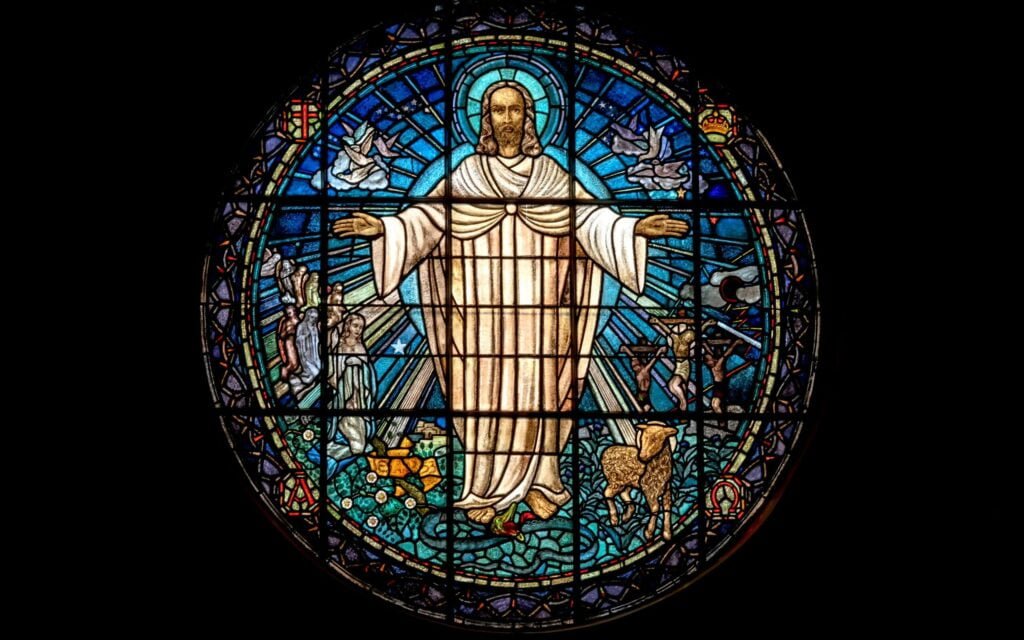
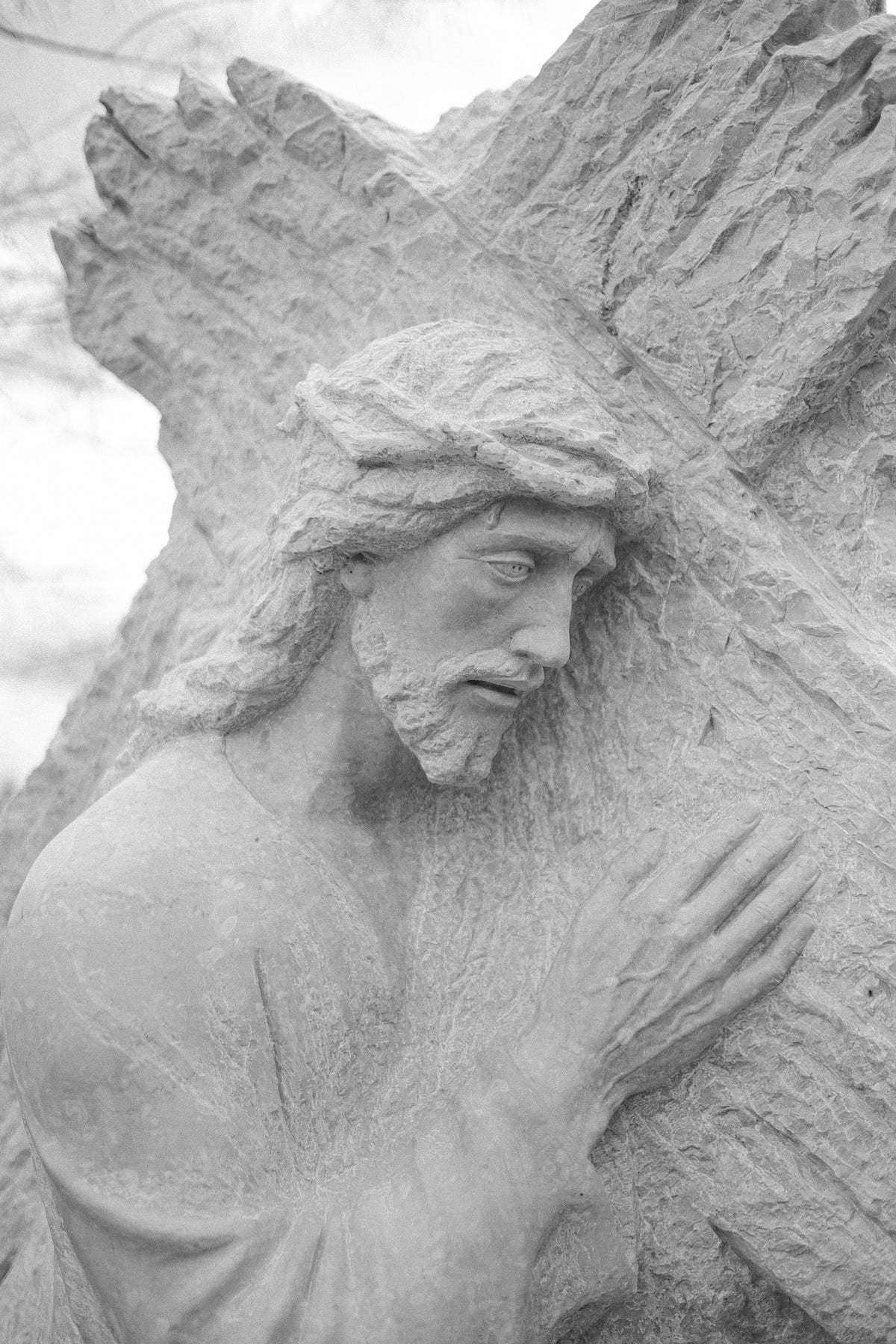
    As Christianity embarked on its transformative journey from the Middle East to the European continent, it was met with a cultural and philosophical environment vastly distinct from its origins. The European emphasis on physical representation and artistic expression subtly yet profoundly influenced the Christian portrayal of the divine. During these formative years in Europe, the once transcendent and intangible God of Judaism and early Christianity began a remarkable evolution, gradually adopting a more human visage as Christians endeavored to craft images of Jesus, Mary, and the saints.

    This metamorphosis in the perception of God signified a notable divergence from the Jewish tradition, which had resolutely upheld God’s incorporeal and ineffable nature. The advent of Christian iconography initially met with skepticism and resistance but eventually found its place within the heart of Christian worship. The visual depictions of Jesus, Mary, and the saints emerged as concrete manifestations of faith, serving as focal points for devotion and channels for prayerful meditation.

    The rise of Christian iconography marked a critical juncture in the religion’s evolution, reflecting the adaptability of faith and its ability to assimilate into diverse cultural and philosophical landscapes. The shift from aniconic to iconic representations of the divine sparked theological debates and ecclesiastical conflicts, yet it also underscored the dynamic nature of religious expression and the profound influence of visual art in conveying spiritual enthusiasm and conviction.

    The transformation within Christian iconography can be attributed to a confluence of factors. With its receptivity to visual representations of the divine, the European cultural context contrasted sharply with Judaism’s aniconic stance. The Greco-Roman tradition, with its rich tapestry of gods and heroes, immortalized in art, provided a fertile ground for early Christians to adapt and reinterpret existing artistic conventions to depict their sacred narratives.

    Furthermore, the dissemination of Christianity to a predominantly non-Jewish populace called for a more approachable and relatable mode of worship. While profound, the abstract and incomprehensible God of Judaism was less accessible to the masses, who found a spiritual connection through more concrete and familiar forms. Introducing images of Jesus, Mary, and the saints offered tangible touchstones for the faithful, enabling a deeper, more personal engagement with the divine.

    The evolution of God’s portrayal into a human-like figure, often rendered as a venerable, bearded man, mirrored the cultural and artistic norms of the era, bridging the gap between the celestial and the terrestrial. This anthropomorphic representation not only made the divine more understandable to the layperson but also facilitated Christianity’s acceptance within the Roman Empire, harmonizing with the prevailing Greco-Roman iconographic traditions.

    In this way, the evolution of God in Christian thought and art reflects a profound transformation—a journey from the untouchable to the touchable, from the mysterious to the known, and from the purely spiritual to the incarnate. It is a testament to the enduring human desire to connect with the divine in terms that resonate with our own experience and understanding.

    Photo by Josh Applegate on Unsplash

    In a Nutshell

    The concept of God has undergone a profound transformation throughout history, mirroring the evolving nature of human spirituality and the intricate interplay between faith and cultural contexts. In the early traditions of Judaism and the nascent stages of Christianity, God was perceived as a transcendent entity — utterly incomprehensible, shrouded in enigma, and existing beyond the grasp of human understanding. Such a portrayal underscored the sheer magnitude of the divine, a being whose essence was veiled in profound mystery, emphasizing the chasm between the mortal and the sacred.

    As Christianity matured, the depiction of God evolved to become more tangible and personified. The incarnation of God in the figure of Jesus Christ marked a pivotal shift from the abstract to the concrete. An embodied god offered a more intimate and approachable form of divine interaction, allowing worshippers to foster a personal connection with the deity through the human-like representation of Christ.

    Each conceptualization of God — whether transcendent or embodied — served as a conduit for the divine, providing distinct perspectives for engaging with the spiritual realm. The transcendent God invited awe and reverence, a reminder of the divine’s boundless nature. In contrast, the embodied God extended an invitation for a closer, more empathetic relationship, reflecting the yearning for a personal connection with the divine.

    Ultimately, these diverse representations of God reflect humanity’s continuous quest to comprehend the ineffable, to bridge the gap between the earthly and the ethereal, and to find meaning in the presence of the ultimate enigma, which is divine.