Tag: Religion

  • Do Atheists Have Beliefs Just Like Believers?

    Do Atheists Have Beliefs Just Like Believers?

    Have you ever found yourself pondering the nature of belief? Maybe you’ve wondered if atheists, who don’t believe in God, actually hold beliefs of their own. Well, you’re not alone! This question has come up in countless debates and discussions, and today, we’re going to give another go to answer it.

    Let’s start with a common assumption: atheists don’t necessarily have ny beliefs. But is that really true?

    Atheism 101

    Before we go any further, let’s clear up what atheism actually is. At its core, atheism is simply the absence of belief in gods or deities. That’s it. It doesn’t necessarily mean a person believes there are definitely no gods; it just means they don’t actively believe in any.

    Now, here’s where it gets interesting. Just because atheists don’t believe in gods, does it inherently mean they don’t have any beliefs at all?

    The Scientific Worldview

    For example, atheists on Medium tend to believe that “There is always natural causes for everything that happens in the world around us.”, which is indeed a common perspective among many atheists in the West, and it’s closely tied to the scientific worldview.

    This belief in natural causes is often called “naturalism,” and it’s a philosophical stance that everything in the universe can be explained through natural processes, without the need for supernatural explanations. That being said, this isn’t unique to atheism — many religious people in the West also accept scientific explanations for natural phenomena to varying extends.

    However the belief in natural causes is itself an assumption. It can’t be proven with 100% certainty, just like the existence of God can’t be definitively proven or disproven. So, in a way, atheists who hold this view are indeed exercising a form of belief.

    It’s Not Just Black and White

    Now, let’s shake things up a bit. Belief isn’t a simple yes-or-no matter. It’s more like a spectrum, with different levels of certainty. Some atheists might say, “I’m absolutely certain there are no gods,” while others might say, “I don’t see any evidence for gods, but I can’t be 100% sure.”

    This spectrum of belief applies to religious people too. Some might have unwavering faith, while others might have moments of doubt. The point is, both atheists and religious believers can have varying degrees of certainty in their positions.

    The Unavoidable Nature of Belief

    To be fair, it’s practically impossible to go through life without some form of belief. We all have to make assumptions about reality to function in our daily lives. For example:

    • We believe our senses generally give us accurate information about the world.
    • We believe that other people have minds and aren’t just robots or figments of our imagination.
    • We believe that the sun will rise tomorrow, based on our past experiences.

    These are all beliefs that most of us have hold in order to function, regardless of our stance on religion or the existence of gods. They’re so fundamental that we often don’t even think about them as beliefs.

    The Role of Evidence and Reason

    Now, you might be thinking, “But wait, aren’t atheists all about evidence and reason?” And you’d be right! Many atheists pride themselves on basing their worldview on empirical evidence and logical reasoning.

    However, the very belief in the importance of evidence and reason is itself a philosophical position. It’s a belief about how we should approach understanding the world. And while it’s a belief that has proven incredibly useful and reliable, it’s still, at its core, a belief.

    The Uncertainty

    All these bring us to an important point: Does this uncertainty mean atheists and theists are in the same boat, both relying on faith without irrefutable evidence? Not exactly. There’s a major difference between believing that a deity walked the earth 2,000 years ago, died, and was resurrected, and believing that the sun will set in the evening.

    What we’ve gone through so far merely suggests that when we dig down to the basics, the nature of reality itself becomes open to question, which demands humility in claiming absolute certainty about anything.


  • Irreligious Americans Are Irrelevant. Here Is Why.

    Irreligious Americans Are Irrelevant. Here Is Why.

    A remarkable demographic shift is occurring in the United States, yet its political impact remains curiously muted. The largest group in this diverse nation isn’t defined by adherence to a particular faith but rather by the absence of religious affiliation. These individuals, often referred to as the “nones,” now comprise approximately 30% of the adult population, with this figure surpassing 40% among Generation Z.

    To contextualize this, evangelical Christians, traditionally viewed as a strong force in American politics, comprise about 25–30% of the population.

    So, why does the evangelical voice resonate loudly across political discourse during election seasons while the potentially larger irreligious demographic seems to fade into the background?

    The root of this disparity lies in a striking statistic: while 70–80% of evangelicals actively participate in elections, a mere 12% of the irreligious population exercises their right to vote. Let that sink in.

    One factor potentially contributing to this imbalance is the renowned rhetoric that “all politicians are the same.” This cynical viewpoint discourages people from participating in elections, and it seems to work wonders.

    In a democratic society, the power to make choices rests with the people. Sometimes, this involves selecting the better option between two favorable candidates; at other times, it’s about choosing the lesser of two perceived evils. Regardless, the fundamental principle remains: people must choose.

    For democracies to remain democratic, the slogan should not be “All politicians are the same,” but rather “If you want to matter, you must vote.”

  • The Rise and Shine of American Nones

    The Rise and Shine of American Nones

    In recent years, a notable cultural shift has occurred in the United States and other Western countries, with an increasing number of individuals identifying as “Nones”, which covers anyone who don’t associate with organized religions.

    Today, approximately 30% of adult Americans fall into this category, with over 40% among Generation Z. But who are these Nones?

    Who Are the Nones?

    The Nones are not a uniform group; they consist of diverse individuals with varying beliefs and to an extent values. While some may identify themselves as agnostics or atheist, the majority — about 22% of the population — simply do not have connections with any religion.

    In other words, 1 in 5 Americans holds spiritual beliefs but reject organized religion due to past experiences or disillusionment with religious institutions.

    Worldviews of the Nones

    The worldview of the Nones is often characterized by a desire for authenticity and a rejection of dogma. Many Nones express an ethical perspective that focuses on doing good and promoting social justice rather than adhering to traditional religious teachings.

    Nones tend to prioritize values such as tolerance, fairness, and the pursuit of a better world, often leading them to be skeptical of both religious and secular institutions that they perceive as corrupt or discriminatory.

    Morality of the Nones

    Morality among the Nones is frequently shaped by first-hand experiences and a commitment to ethical living rather than adherence to religious doctrine. Many Nones believe in a moral obligation to contribute positively to society.

    Actually, Nones often view their ethical stance as more genuine than that of those who strictly follow religious texts.

    Demographics of Nones

    The demographic profile of the Nones is notably mixed, particularly among younger generations. According to PRRI (Public Religion Research Institute):

    Age Distribution

    • 38% of ages 18–29
    • 32% of ages 30–49
    • 20% of ages 50–64
    • 17% of ages 65 and over

    Ethnicity Distribution

    • 63% White
    • 37% People of Color (combined other ethnicities)

    Gender Distribution

    • Men: More likely to identify as atheist or agnostic
    • Women: More likely to describe their religion as “nothing in particular”

    Education Level:

    • Atheists and agnostics: Higher
    • “Nothing in particular”: Lower

    Political Affiliation:

    • 16% Republican
    • 35% Democrat
    • 46% Independent

    Political Force of the Nones

    As the Nones continue to grow in number, their potential as a political force is becoming increasingly evident. Historically, their turnout at the polls has been low, around merely 12%, largely due to their youth and lack of organization.

    Interestingly, however, political scientists draw parallels between the Nones today and the rise of evangelical Christians in the 1970s, suggesting that the Nones could emerge as a powerful voting bloc that shapes the future of American politics.

    That being said, the Nones are already beginning to impact political direction of the US, particularly within the Democratic Party, where their socially liberal views are pushing candidates to adopt more progressive stances.

  • The Religion Business Is Too Big to Fail

    The Religion Business Is Too Big to Fail

    Religion in the United States isn’t just about faith and worship—it’s also an economic force, not to be ignored. From donations to religious institutions to religious media, education, and even tourism, religion plays a major role in the U.S. economy. The stakes are too high for too many who stand to lose if Christianity and others wane in the country.

    Billions in Assets and Donations

    Religious organizations, including churches, synagogues, mosques, and other houses of worship, collectively hold a staggering amount of wealth. In 2020, these institutions were estimated to have assets worth around $1.2 trillion, far more than the GDP of the bottom 50 countries.

    Americans are generous when it comes to supporting their religious communities. In 2022, they donated about $134 billion to religious organizations, which made up roughly 27% of all charitable giving in the country that year.

    A Thriving Industry

    Religious media and publishing are another important part of the religious business market. Religious books, television, radio, and online content have a large and dedicated audience. The Bible, for example, continues to be one of the best-selling books in the United States year after year.

    Christian publishing is a multi-billion-dollar industry, with companies like Harper Collins Christian Publishing, which owns well-known imprints such as Zondervan and Thomas Nelson. Additionally, religious television networks like Trinity Broadcasting Network (TBN) and EWTN reach millions of viewers, bringing in substantial revenue from donations and advertising.

    A Booming Market

    Religious tourism is another area where religion and business intersect. People travel across the country to attend religious conferences, visit holy sites, and participate in pilgrimages, which contribute millions of dollars to local economies.

    Cities like Salt Lake City, home to the headquarters of The Church of Jesus Christ of Latter-day Saints, and Orlando, which features The Holy Land Experience, see significant economic benefits from religious tourists. These visitors spend money on hotels, restaurants, and other local businesses, boosting the local economy.

    Major Revenue Generators

    Many religious organizations in the United States operate schools, universities, hospitals, and charities. These institutions often generate substantial revenue. For example, Catholic healthcare systems are some of the largest in the country, bringing in billions of dollars each year.

    Religious schools and universities also contribute significantly to the economy through tuition fees. These institutions not only provide education but also create jobs and support local economies.

    Religious Retail

    The religious retail market, including books, music, apparel, and other religious-themed products, is another profitable area. Stores like LifeWay Christian Stores and online retailers like Christianbook.com cater to a large and loyal customer base. From Bibles and religious literature to Christian-themed clothing and jewelry, religious retail is a thriving industry.

    More Than Just Worship

    Mega-churches, which are large churches with weekly attendance of 2,000 or more, often operate like businesses. These churches may own real estate, run bookstores and cafes, and offer various services that generate income. Some of the largest mega-churches have annual budgets exceeding $20 million, making them significant players in the religious economy.

    Tax-Exempt Status

    Religious organizations in the United States benefit from tax-exempt status, which allows them to accumulate wealth without paying income or property taxes. This tax advantage helps religious institutions grow their financial assets and expand their operations.

    Reaching Millions

    Religious broadcasting networks, both television and radio, are major players in the media industry. Networks like TBN and Daystar generate significant revenue through advertising and donations. These networks reach millions of viewers and listeners, many of whom contribute financially to support their operations.

    The Takeaway

    Religion in the United States is more than a matter of faith—it’s a major economic force. From the billions of dollars held by religious institutions to the thriving industries of religious media, publishing, and tourism, religion plays an important role in the U.S. economy. Do you think profiteers would sit idly by and watch religion fade, or would they fight back to radicalize their followers and stay relevant?

    #ReligiousEconomy, #FaithAndFinance, #ChurchIndustry

  • How Globalization Shakes Faith to the Core

    How Globalization Shakes Faith to the Core

    Imagine growing up believing that the sun revolves around the Earth. For centuries, this was accepted as absolute truth by nearly everyone. It wasn’t until new ideas spread that people began to see that this truth was, in fact, a misunderstanding. Now, imagine the beliefs you hold about religion—the ones you were taught from childhood. Could they, too, be influenced by where you were born rather than being universal truths? Thanks to globalization, more people are beginning to ask this question.

    The Role of Geography in Shaping Beliefs

    When you were a child, your religion was likely presented to you as the one true path. It was part of your identity, your community, and your world. But if you had been born in a different country or even a different region, chances are your beliefs would have been different, too, thanks to the fact that faith is often closely tied to the culture and geography where it is practiced.

    For example, a child born in Saudi Arabia is likely to be raised as a Muslim, while a child born in India might be brought up as a Hindu. In the United States, a child might grow up as a Christian, while in Japan, they might be raised with Shinto and Buddhist practices. Each of these religions is rooted in the history and culture of its region. But does this mean that one is more true than the others? Or is it possible that what we believe is simply a matter of where we were born?

    Globalization: Bridging the Gaps

    Globalization, the process by which the world is becoming more interconnected through trade, communication, and travel, has had a fundamental impact on how we see the world—including how we view religion.

    In the past, people, more often than not, lived their entire lives without encountering someone of a different faith. Today, on the other hand, it’s common to interact with people from various religious backgrounds, whether in person or online, which has been an eye-opener to many.

    For instance, when someone from a predominantly Christian country befriends someone who is Muslim, they may start to see similarities and differences between their beliefs. They might realize that both religions share values like compassion, charity, and devotion despite having different practices and teachings, leading to the realization that no one religion has a monopoly on truth.

    The Concept of Religious Relativism

    This growing awareness has led to what some call religious relativism—the idea that one’s religion is not the absolute truth but rather one of many possible truths (or fallacies). For many, this is a liberating thought. It allows for the possibility that other religions might offer valuable insights and that one’s faith doesn’t have to be in conflict with others.

    But religious relativism can also be unsettling. It challenges the notion that one’s beliefs are unique or divinely chosen. It forces people to consider that if they had been born in a different part of the world, they might have been just as devoted to a completely different, potentially making individuals uncomfortable, especially if one’s religion has been a central part of their identity.

    The Impact on Faith and Identity

    As more people recognize the role that geography plays in shaping beliefs, they begin to question their faith. They wonder if they believe what they do simply because they were raised to do so rather than because it is the ultimate truth, pushing them into a period of doubt and reevaluation.

    Conversely, for some, this realization strengthens their faith, knowing that they have chosen to follow it despite the existence of other paths.

    The Global Conversation on Religion

    Globalization has also sparked a global conversation about religion. Social media, international travel, and the availability of information online mean that people from different faiths can engage in dialogue like never before.

    Furthermore, people coming from parts of the world where disbelief is seen as an illogical position have met people who were content with their non-religion.

    The Future of Religion in a Globalized World

    As the world continues to become more interconnected, it’s likely that the trend of questioning religion as an accident of geography will spread. Future generations will grow up with an even greater awareness of the diversity of beliefs around the world and the fact that there is no evidence to suggest one religion is supported by stronger evidence than the other.

    The Takeaway

    Globalization is helping people see that their religion, once taught as absolute truth in childhood, is more of an accident of geography, helping them realize there is no good reason to choose one religion over the other on a factual basis.

    Some see science as the true enemy of religion, overlooking the fact that globalization is an infinitely more formidable foe of faith.

  • Why Religions Cannot Be True

    Why Religions Cannot Be True

    According to most religions, God deemed it necessary to provide humanity with a user manual—a set of guidelines for leading a righteous life and understanding that we are here to be tested. For the sake of argument, let’s assume that one of these religions is true and that our existence is indeed a test.

    The Problem of Religious Indoctrination

    If adherence to this divine manual is indispensable and the consequences of failure are eternal damnation, why does God allow the majority of children to be indoctrinated with beliefs that are obviously not true? Why let children be threatened with hellfire for not following teachings that are fundamentally wrong while, in reality, obeying those teachings will cause want to Hell?

    As things are, God must allow, if not encourage, the spread of falsehoods, which would ultimately lead to the eternal punishment of many innocents.

    The Issue of Inconsistencies and Doubt

    If following the divine manual is so important, why did God include so many inconsistencies and points of doubt within religious teachings? For instance, if Islam is the true religion, why would God first tell His subjects that His word is susceptible to human alteration and, in fact, it did happen multiple times before but not have Muhammad inscribe the Quran on endurable tablets, ensuring its integrity and providing absolute confidence that it has remained unchanged, unlike the previous ones?

    Instead, the Quran was compiled from memory long after Muhammad’s death. We are expected to believe in its unaltered state simply because the Quran itself claims so. If it had been altered, it is unlikely that this alteration would be acknowledged within its own text.

    The Question of Christian Foundations

    If Christianity is the true religion, why did Jesus not leave behind a clear and unequivocal user manual? Instead, we are expected to place our trust in Paul, who never met Jesus in person yet made significant changes to Christianity. These changes were so profound that Christianity could no longer be considered a sect of Judaism, which is how Jesus originally presented it. Why expect the subjects to rely on the interpretations and teachings of someone who did not directly know Jesus but had the authority to make changes in his teachings?

    The Problem of Identifying the True Religion

    If sending this divine user manual was so crucial, why does God not help people clearly identify the true religion? Despite claims of signs and miracles, religions primarily grow through reproduction rather than conversion, indicating that God deliberately used signs that did not work.

    The Takeaway

    Given these points, it appears that God, as depicted by many religions, must want the majority of people to fail the test and burn in Hell eternally but have a clear conscience, saying to Himself that He had sent the user manual that the subjects should have followed.

    Despite the presence of a divine manual, the inconsistencies, indoctrination, and ambiguity suggest that these manuals are not divinely inspired, which does not necessarily prove the non-existence of God but strongly indicates that there is no rational reason to believe that any of the gods introduced by any religion is the true one.

    #ReligionDebate #DivineQuestions #FaithandLogic

  • Godless and Goodness: The Connection That’ll Make You Question Everything

    Godless and Goodness: The Connection That’ll Make You Question Everything

    In the minds of many people religion and morality are often intertwined. Not surprisingly, the question frequently arises: Why do atheists follow a moral code instead of simply doing whatever they feel like? Today, we’ll focus on the nature of morality, its origins, and its place in society – both religious and secular.

    That idea that morality and religion are inseparable has been ingrained in many cultures for centuries, so much so that most don’t give it another thought. Consequently, some wonder how those without religious beliefs can possibly navigate the murky waters of right and wrong, as it was their religion that invented morality.

    Does Religion Make People Moral?

    Nearly 3% of the adult population in the United States is either in prison or on parole, which is particularly noteworthy because the US is widely recognized as one of the most religious countries in the Western world, so much so that according to Pew Research 55% American population pray daily while this is merely 6% in the UK, 30% in Greece, 60% in Turkey, and 87% in Iran.

    If the hypothesis that religion is the sole or primary source of morality were to be true, one would expect to see lower rates of incarceration in such a devout nation.

    Conversely, let’s turn our attention to Japan. In this East Asian country, where Abrahamic religions have not made a significant impact, we find one of the most peaceful societies in the world. Japan’s low crime rates and social harmony stand in stark contrast to the assumption that religious belief is necessary for a moral society.

    The plot thickens when we consider certain Middle Eastern countries. Despite having highly religious populations, many of these nations grapple with widespread corruption. This further challenges the notion that religious devotion automatically translates to moral behavior on a societal level.

    Whether religion is detrimental to morality is a separate matter, and I will leave that discussion to others. However, the examples given at least illustrate that religion is not a must for morality, and religiosity does not necessarily translate into moral societies.

    The Universal Thread of Morality

    So, if religion isn’t the sole source of morality, what is? The answer may lie in what we might call “common decency” – a basic sense of right and wrong that seems to transcend cultural and religious boundaries.

    Think about your own circle of friends and acquaintances. Chances are, you know people from various backgrounds – some religious, some not. Among your religious friends, there may be those who are deeply devout yet not extreme in their views. Now, ask yourself: Is it really the fear of divine punishment that keeps these individuals from engaging in harmful or illegal activities?

    For most people, regardless of their beliefs, the decision not to harm others or break laws stems from a more fundamental place. It’s rooted in empathy, social conditioning, and an understanding of the consequences of our actions – both for ourselves and for society at large.

    The Secular Moral Compass

    But what drives people, whether they believe in a god or not, to follow moral codes?

    First, empathy and compassion matter a lot. People naturally understand and share the feelings of others, and this empathy guides many of our moral choices.

    Second, we benefit from living in a stable society. Following moral rules helps keep things stable and makes life better for everyone.


    Third, philosophical thinking provides another reason. Throughout their lives, most people spend a lot of time sorting out what is right and wrong, and, when the time comes, act on their instincts.

    There’s also an evolutionary angle. Some believe our sense of right and wrong comes from the need for cooperation and helping each other, which helped our ancestors survive.

    Additionally, acting morally usually leads to good outcomes for us personally, such as stronger relationships, a good reputation, and a clear conscience.

    Cultural influence plays a role too. We are shaped by the values and norms of our culture, many of which involve moral ideas.

    Finally, acting ethically often aligns with our own long-term interests. It helps build trust, creates positive relationships, and contributes to a healthy society.

    The Universality of Ethics

    One of the most compelling arguments for the independence of morality from religion is the remarkable similarity of basic ethical principles across different cultures and belief systems. Concepts like fairness, reciprocity, and the prohibition of murder are nearly universal, appearing in societies with vastly different religious backgrounds – or none at all.

    This universality suggests that these moral principles arise from something more fundamental than religious texts or traditions. They seem to emerge from our shared human experience, our need to live cooperatively, and our capacity for reason and empathy.

    Criticism

    Of course, discussing morality – religious or secular—is never simple. Both religious and non-religious moral systems face criticism.

    Religious morality is often criticized for being rigid or based on outdated cultural norms, which can lead to conflicts when different religious groups have opposing moral views.

    Secular morality, on the other hand, is sometimes accused of being relativistic or lacking a solid foundation. Critics argue that without a divine authority, moral rules become arbitrary. However, the existence of God does not depend on the utility of the concept of God.

    The Takeaway

    As societies become increasingly diverse and interconnected, it makes sense to move beyond the false dichotomy of religious morality versus moral chaos. Humans – religious and non-religious alike—are capable of moral reasoning, ethical behavior, and compassion.

    Rather than judgementally asking why atheists follow moral codes, perhaps everyone should ask themselves how we can encourage ethical behavior regardless of belief systems.

    #MoralityAndReligion #EthicsWithoutGod #SecularEthics

  • Brainwashed by Belief: Exploitation of Convictions

    Brainwashed by Belief: Exploitation of Convictions

    Hey Everyone,

    Today, I wanted to share some thoughts on something that has been on my mind lately: the similarities between religion, nationalism, and ideology. These topics often come up in conversations, and I’ve noticed that they share some interesting characteristics.

    Beliefs and Their Power

    Religion, nationalism, and ideology are all powerful beliefs. They shape our values, influence our decisions, and give meaning to our lives. On their own, these beliefs can be deeply personal and even beautiful. They can provide a sense of community, purpose, and direction.

    The Dark Side of Conviction

    However, there’s a darker side to these strong convictions. When held in isolation, they can become self-destructive. We’ve all seen instances where extreme beliefs lead to conflict, division, and even violence. It’s a reminder that too much of anything can be harmful.

    Susceptibility to Exploitation

    One thing that really stands out to me is how susceptible these beliefs are to exploitation. People with strong feelings about religion, nationalism, or ideology can be easily manipulated. Leaders and groups with their own agendas often exploit these convictions to gain power and control.

    Examples of Manipulation

    Religion: Sometimes, leaders start groups that take advantage of people’s spiritual needs. They promise enlightenment but end up controlling their followers’ lives, taking their money or manipulating them emotionally. Another example is when groups twist religious teachings to justify harmful actions, convincing followers that they are doing something righteous. This preys on people’s faith in a harmful way.

    Nationalism: Governments and political leaders often use national pride to influence public opinion. They might use propaganda to rally support for wars or strict policies, making anyone who disagrees seem unpatriotic. This usually involves spreading false information and creating an “us versus them” mentality. Politicians might also exploit national pride to promote policies against certain groups, convincing people that these groups are a threat to the nation, which stirs up division and hostility.

    Ideology: Political parties frequently exploit ideological divides to influence society. They create an “us versus them” mentality to distract people from important issues and strengthen their own power. This often involves spreading false information and stirring up fears. Similarly, while many social movements start with good intentions, some leaders might take advantage of their followers’ passion for personal gain. They may push an agenda that benefits only a few rather than the broader cause, using the movement’s energy and resources for their own ends. This can lead to disappointment among followers and weaken the movement’s original goals.

    Vulnerabilities in Convictions

    It’s not just religion, nationalism, or ideology. Any strong conviction can become a vulnerability. When we feel passionately about something, we’re more likely to overlook the nuances and complexities of the situation. This makes it easier for others to manipulate our emotions and actions.

    Finding Balance

    So, what can we do about it? I think the key is finding a balance. It’s important to have strong beliefs and convictions, but we need to remain open-minded and critical. We should question the motives behind the messages we’re receiving and be wary of those who try to exploit our emotions.

    At the end of the day, our values and principles should bring us together, not necessarily our beliefs.

    Thanks for reading. I’d love to hear your thoughts on this topic. Feel free to share your experiences or opinions in the comments below.

    Take care,
    Tamer

    #BeliefManipulation, #BlindFaith, #IdeologicalControl

  • The Secret Life of the Hijab: From Ancient Times to Now

    The Secret Life of the Hijab: From Ancient Times to Now

    The hijab, recognized globally as a symbol of modesty and religious devotion, is a prominent aspect of Islamic culture. While it is predominantly linked to Islam, it may surprise many to learn that the practice of wearing the hijab predates the emergence of Islam. Let’s delve into the historical roots of the hijab and how the Quran, the holy book of Islam, offers guidelines that resonate with pre-existing Arab cultural traditions with little regard for cultures that did not have such a tradition.

    The Pre-Islamic Origins of the Hijab

    The concept of veiling and covering one’s head and body was not exclusive to Islam and has deep historical roots in the pre-Islamic Arabian Peninsula. Various ancient cultures and civilizations practiced veiling as a symbol of modesty, social status, or religious affiliation. In this context, the hijab was worn by both men and women and was often associated with notions of honor, dignity, and protection from harsh desert environments.

    In pre-Islamic Arabia, veiling was not merely a religious practice but also held socio-cultural significance. Tribes and communities had distinct customs and traditions related to clothing, and the veil was an integral part of these customs. For instance, among some tribes, the veil signified a woman’s status and her connection to her tribe or clan. It was worn as a mark of honor and respect.

    Cultural Pervasiveness of Veiling

    Beyond the Arabian Peninsula, the practice of veiling can be traced back to ancient civilizations such as Mesopotamia, Persia, and the Byzantine Empire. In these societies, veiling was often a privilege of the upper classes and was used to signify social status and propriety. Women of higher social standing wore veils as a symbol of their nobility and to distinguish themselves from those of lower social ranks.

    Quranic Verses on Modesty

    The Quran provides specific instructions on modesty, which encompass both behavior and attire. For instance, Surah An-Nur (24:31) advises women to “draw their veils over their bosoms” and not to display their beauty except to their immediate family members. Similarly, Surah Al-Ahzab (33:59) instructs women to “draw their cloaks close around them” to be recognized as honorable and not be harassed.

    Islamic Influence on the Hijab

    With the emergence of Islam in the 7th century CE, the hijab acquired a new dimension. The Quran, regarded as the word of God in Islam, provides guidance on modesty and clothing for both men and women. Surah An-Nur (The Light) in the Quran contains verses that specifically address the issue of modesty and the hijab. It is crucial to note that these verses were revealed in a particular socio-cultural context, seeking to reform existing practices.

    The Quranic guidance on the hijab emphasizes modesty and instructs believing women to cover their hair and adornments in front of unrelated men, echoing the pre-existing practices in the Arabian Peninsula, just making it mandatory.

    Alignment with Existing Arab Traditions

    What is remarkable about the Quranic guidance on the hijab is its alignment with pre-Islamic traditions. By incorporating elements of pre-existing practices, the Quran facilitated the transition to Islamic norms without causing significant cultural upheaval.

    One cannot help but appreciate the kindness of God in making Islam, a religion that is said to have been sent for everyone on Earth, 7th-entury-Arab-society friendly.

    Global Adaptation

    As Islam expanded into regions such as Persia, India, and Africa, the practice of veiling adapted to local customs and traditions. In Persia, for instance, the hijab became integrated with the Persian practice of wearing the chador, a full-body cloak. In South Asia, the hijab was often combined with the traditional dupatta, a long scarf worn over the head and shoulders. This cultural adaptability ensured the widespread acceptance and practice of the hijab across different societies.

    Be fair. How could God have foreseen that one day, the hijab would become a tool for oppressing women?

    In a Nutshell

    The practice of wearing the hijab has a long history that predates the emergence of Islam. Its incorporation into Islamic teachings in a way that aligns with existing Arab cultural traditions is a testament to the fact that Arabs are the true chosen people and God wants everyone to adopt their way of life.

    Praise God!

  • Hitler: The Nazi Messiah

    Hitler: The Nazi Messiah

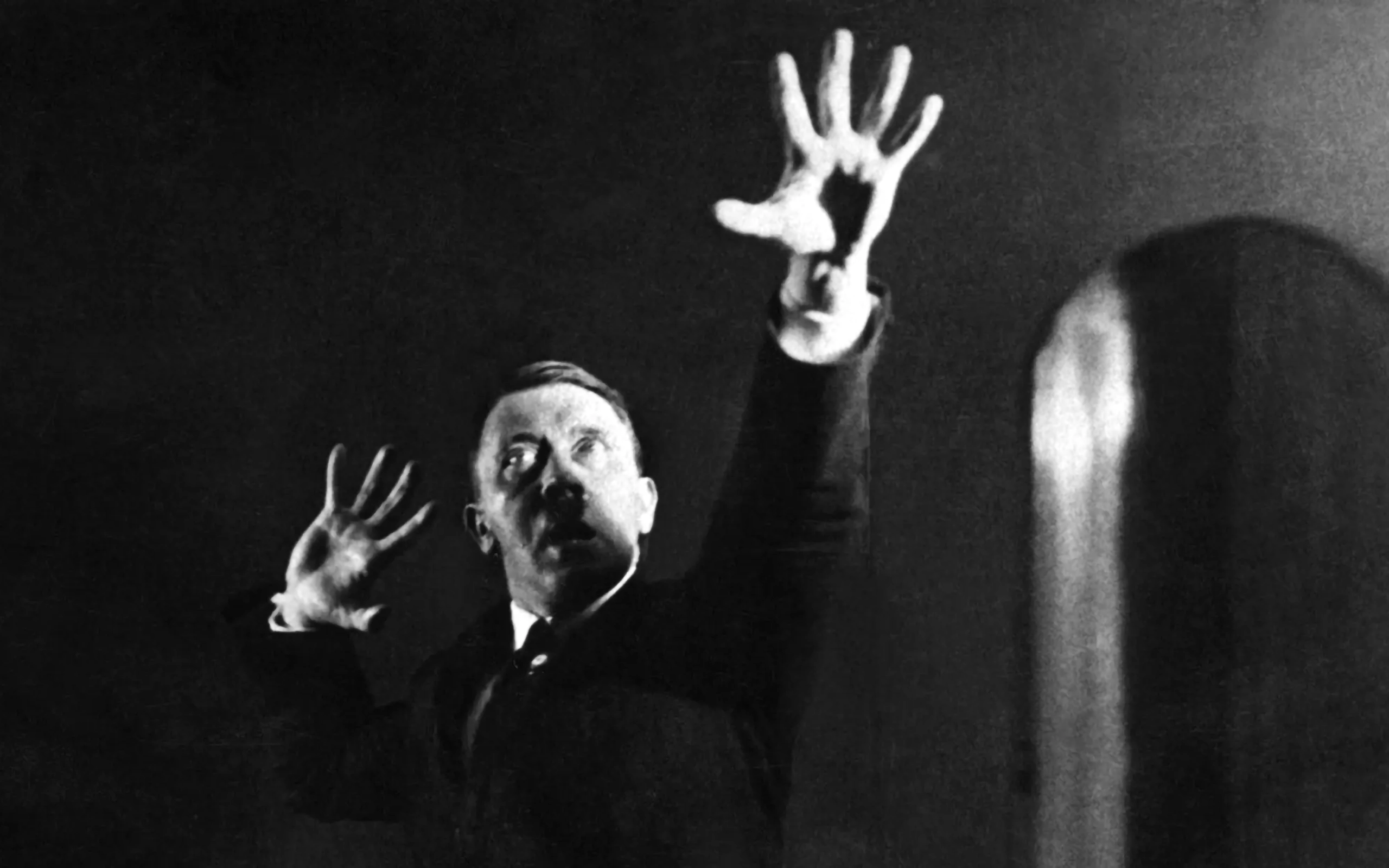
    The figure of Adolf Hitler is shrouded in a mix of myth, horror, and mystery. One aspect of his life that continues to spark debate is his religious beliefs. Was Hitler a devout Christian, or did he merely use religion as a political tool to further his aims? By delving into historical records, speeches, and personal writings, we can attempt to unravel the complexities of Hitler’s relationship with Christianity and religion during his reign.

    The Early Years: Hitler’s Religious Background

    Adolf Hitler was born in 1889 in Austria, a predominantly Catholic region. He was baptized and raised in the Roman Catholic Church, attending church services regularly as a child. His parents, particularly his mother, were devout Catholics. However, as he grew older, Hitler’s relationship with the church and religion began to change.

    During his youth, Hitler’s experiences and interactions with religion were likely influenced by the socio-political climate of the time. The late 19th and early 20th centuries saw significant tension between the Catholic Church and secular authorities, which may have shaped Hitler’s views on religion.

    Hitler’s Public Stance on Christianity

    In his rise to power, Hitler often publicly identified as a Christian and made numerous references to God and divine providence in his speeches. He portrayed himself as a defender of Christian values and often spoke about the need to protect Germany from atheism and secularism. However, many historians argue that these statements were more about political strategy than genuine belief.

    Hitler’s references to Christianity were often intertwined with nationalism. He depicted Jesus not as a traditional religious figure, but as an Aryan fighter against Jewish influence. This reinterpretation of Christian doctrine served to align his anti-Semitic views with a form of twisted religious justification.

    Private Beliefs and Actions

    Despite his public proclamations of faith, there is substantial evidence suggesting that Hitler’s private beliefs were far more complex and contradictory. In his book Mein Kampf and other writings, Hitler rarely delves deeply into personal religious convictions, focusing instead on political ideology and racial theories.

    Several close associates and confidants of Hitler have documented his disdain for traditional Christianity. Joseph Goebbels, Heinrich Himmler, and other high-ranking Nazi officials noted that Hitler was skeptical of organized religion and often spoke derisively about it in private. These accounts paint a picture of a man who saw religion as a means to an end, rather than a core personal belief.

    The Nazi Regime and Religion

    The Nazi regime’s relationship with Christianity was multifaceted and often contradictory. On one hand, the Nazis sought to co-opt and manipulate Christian institutions to serve their purposes. They established the German Christian Movement, which attempted to align Protestant churches with Nazi ideology, promoting a version of Christianity stripped of its Jewish roots.

    On the other hand, the regime was highly suspicious of any religious institutions that could challenge its authority. Many clergy members who spoke out against Nazi policies were persecuted, imprisoned, or executed. The regime’s ultimate goal appeared to be the creation of a state-controlled religion that would replace traditional Christianity.

    The Role of Religion in Nazi Propaganda

    Religion played a significant role in Nazi propaganda. By invoking Christian imagery and language, the regime sought to garner support from the German populace, many of whom were devout Christians. Nazi propaganda often depicted Hitler as a messianic figure, chosen by divine providence to lead Germany to greatness.

    This manipulation of religious sentiment was a powerful tool in the regime’s arsenal. It allowed the Nazis to present their policies as not only politically necessary but also morally justified. The conflation of nationalism and religion helped to create a sense of unity and purpose among the German people.

    Hitler’s Anti-Semitism and Religion

    Hitler’s virulent anti-Semitism is perhaps the most well-documented aspect of his ideology. While his hatred for Jews was rooted in a complex mix of racial theories and socio-political grievances, it also had a pseudo-religious dimension. Hitler often framed his anti-Semitism in terms of a cosmic struggle between good and evil, casting Jews as the embodiment of all that was corrupt and degenerate.

    This pseudo-religious framing allowed Hitler to present his anti-Semitic policies as part of a divine mission. By portraying the extermination of Jews as a moral imperative, he sought to justify the atrocities committed under his regime.

    The Legacy of Hitler’s Religious Views

    The question of Hitler’s true religious beliefs continues to be a subject of debate among historians. Some argue that he was a devout Christian who believed in a form of Christianity distorted by his own ideological views. Others contend that he was fundamentally secular, using religion cynically to manipulate the masses.

    What is clear is that Hitler’s relationship with religion was complex and multifaceted. It was shaped by his upbringing, the socio-political climate of his time, and his own ideological ambitions. Whether or not he was a true believer, he understood the power of religion as a tool for control and manipulation.

    The Takeaway

    In the end, the question of whether Hitler was a devout Christian or not may be less important than understanding how he used religion to further his goals. His ability to manipulate religious sentiment for political gain was a key component of his rise to power and the implementation of his policies.

    By examining Hitler’s relationship with religion, we gain a deeper understanding of the ways in which faith can be co-opted and corrupted by those in power. It serves as a reminder of the importance of vigilance in protecting the integrity of religious institutions and the dangers of allowing ideology to distort fundamental beliefs.

    In exploring the complexities of Hitler’s faith, we are reminded of the broader lessons of history and the enduring importance of critical thinking in the face of propaganda and manipulation. The story of Hitler and religion is not just about one man’s beliefs, but about the broader dynamics of power, ideology, and the human capacity for both faith and deception.

    #WWIIHistory, #ReligiousPolitics, #HistoricalTruth